5-Axis CNC Machining in Vietnam: Capabilities, Costs & Supplier Guide
February 26, 2026 · 14 min read
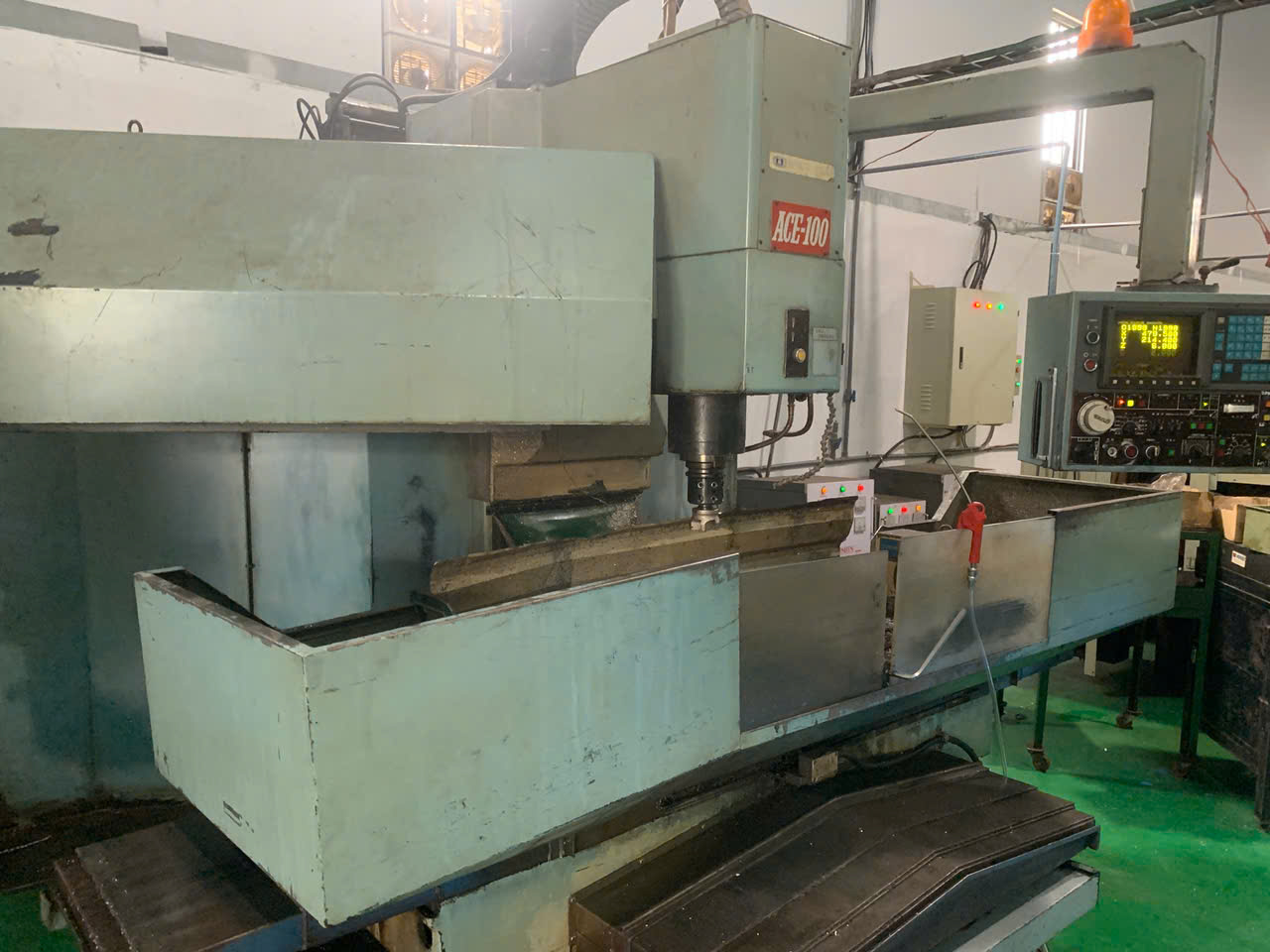
Five years ago, finding a Vietnamese machine shop with genuine 5-axis simultaneous machining capability meant calling a dozen factories and visiting half of them. That's changed dramatically. Vietnam's precision machining sector has invested heavily in multi-axis equipment — driven by aerospace, medical device, and automotive tier-1 contracts migrating from China under the China+1 strategy.
This guide covers what Vietnam's 5-axis shops can actually do in 2026, what it costs, and how to evaluate suppliers when your parts demand true simultaneous 5-axis work — not just 3+2 positional machining marketed as "5-axis."
Vietnam now has a growing base of genuine 5-axis CNC shops running DMG Mori, Mazak, and Makino machines, holding roughly ±0.005–0.05 mm depending on tier, at machine-hour rates about a third of US shops — and with no Section 301 tariff on Vietnam-origin parts.

Inside a Vietnam Technology Manufacturing Plant — CNC & Automation
Watch on YouTube
Real footage from an audited DEWIN partner factory in Vietnam.
5-Axis Simultaneous vs. 3+2 Positional: Why It Matters for Your RFQ
Before requesting quotes, understand the distinction — it directly impacts what you can source from Vietnam:
- 3+2 positional (indexed 5-axis): The two rotary axes lock at a fixed angle, then the machine cuts with 3 linear axes. Good for accessing multiple faces in one setup. Most Vietnamese CNC shops with "5-axis" capability are running 3+2. Adequate for 80% of multi-face parts.
- Simultaneous 5-axis: All 5 axes move simultaneously during cutting. Required for complex contoured surfaces — turbine blades, impellers, aerospace structural brackets with compound curves, bone implant surfaces. Fewer Vietnam shops offer this, but the number is growing fast.
Practical impact: A 3+2 setup for a hydraulic manifold with ports on 5 faces costs $25–50/part at qty 100. The same part on simultaneous 5-axis (if it has curved internal channels) might run $60–120/part. Specify which you actually need — overpaying for simultaneous when 3+2 suffices is the most common quoting mistake.
Vietnam's 5-Axis Machine Fleet: What's Actually on the Shop Floor
The machines installed in Vietnam's top-tier CNC shops tell you what's achievable. Here's what we see across our audited supplier network in 2026:
- DMG Mori DMU 50 / DMU 80: The most common 5-axis machines in Vietnam's export-oriented shops. ±0.005 mm positioning accuracy, 12,000–18,000 RPM spindles. Widely available in HCMC and Binh Duong industrial zones.
- Mazak VARIAXIS i-600 / i-800: Found in Japanese-invested shops and tier-1 auto parts suppliers. Excellent for simultaneous 5-axis with SmoothX CNC control.
- Haas UMC-750 / UMC-1000: More common in cost-competitive shops. Good for 3+2 and light simultaneous work. Lower machine hour rate ($35–55/hr vs. $50–80/hr for DMG/Mazak).
- Fanuc Robodrill α-D21LiB5 ADV: High-speed 5-axis for smaller parts. Popular for medical and electronics components. 24,000 RPM spindle, ±0.002 mm repeatability.
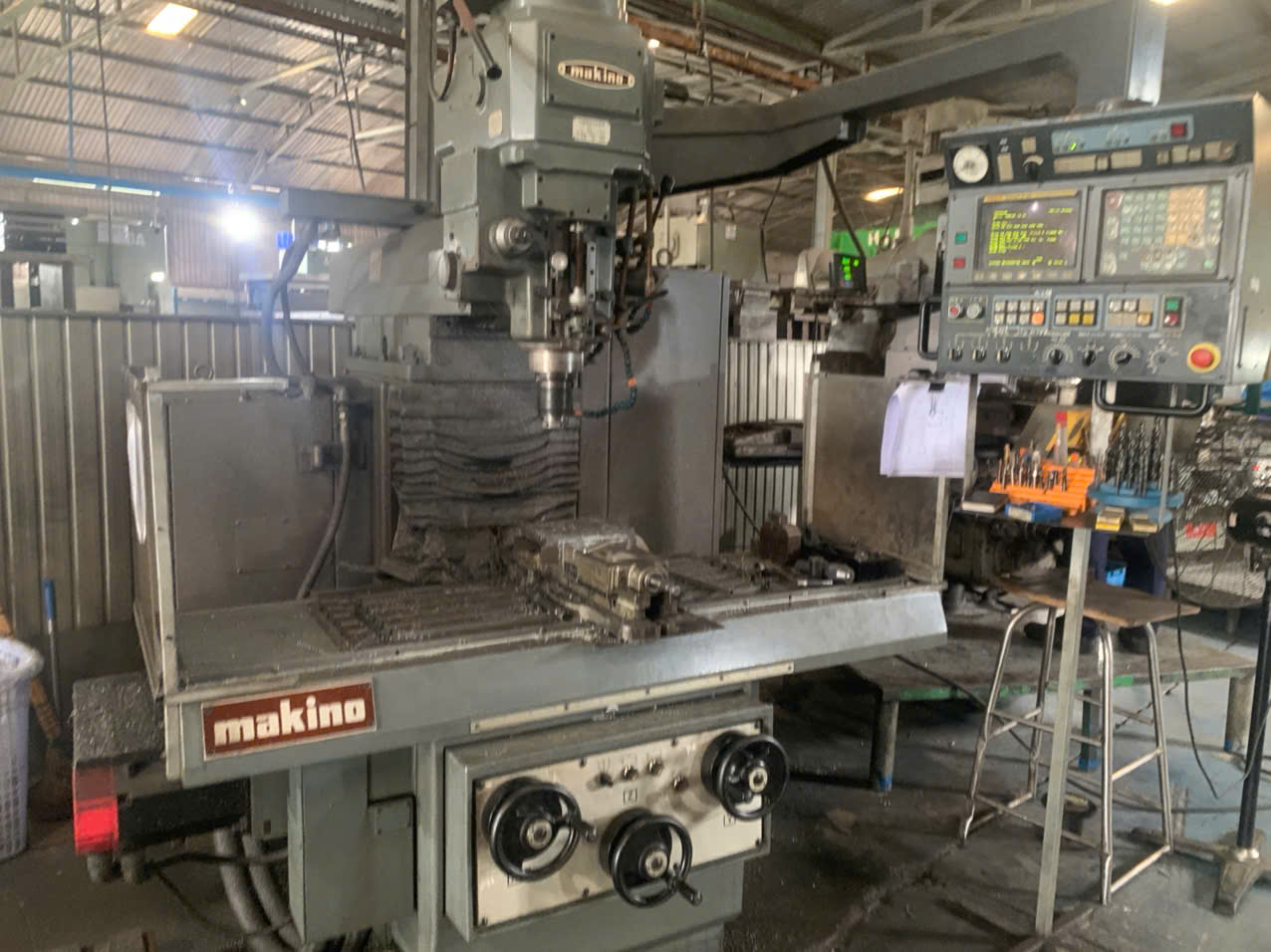
- Makino D500 / a51nx: Premium tier, found in factories serving aerospace clients. These shops typically hold AS9100 certification.
/Essence%20-%20Photo/%E2%80%A2%20NC%20Turning%20Machine%20CS20.jpg)
2026 Pricing: 5-Axis CNC Machining in Vietnam
Machine hour rates and per-part costs based on actual quotes from our supplier network:
Machine Hour Rates
- 3+2 positional: $35–60/hr (Vietnam) vs. $100–200/hr (US)
- Simultaneous 5-axis: $50–80/hr (Vietnam) vs. $150–280/hr (US)
- High-speed 5-axis (medical/electronics): $55–90/hr (Vietnam) vs. $180–320/hr (US)
Per-Part Benchmarks (AL6061-T6, as-machined)
- Aerospace bracket, 150×80×40 mm, 5-face access (3+2): Qty 50: $35–65/part · Qty 500: $18–35/part · Qty 5,000: $10–22/part
- Impeller, Ø120 mm, simultaneous 5-axis: Qty 50: $80–160/part · Qty 500: $45–90/part · Qty 5,000: $28–55/part
- Medical instrument housing, Ti-6Al-4V, ±0.01 mm: Qty 50: $120–280/part · Qty 500: $70–150/part
- Turbine blade, Inconel 718, simultaneous 5-axis: Qty 50: $200–450/part · Qty 500: $120–260/part
Materials Available for 5-Axis Work in Vietnam
Material availability is no longer the bottleneck it was in 2020. Vietnam's top 5-axis shops stock or can source within 1–2 weeks:
- Aluminum alloys: AL6061-T6 (standard, always in stock), AL7075-T6 (aerospace grade, 1–3 day lead), AL2024-T3 (less common, 1 week), AL5083-H111 (marine grade)
- Stainless steels: SS304, SS316L (medical/food grade), SS17-4PH (precipitation hardened, for high-strength applications)
- Titanium: Ti-6Al-4V Grade 5 (most common, imported from Japan/US), commercially pure Ti Grade 2. Expect 1–2 week material lead time and 40–60% cost premium over aluminum.
- Superalloys: Inconel 718, Inconel 625 — available but limited to shops with proper tooling (carbide/ceramic inserts, high-pressure coolant). 3–4x the machining cost of aluminum.
- Engineering plastics: PEEK, Ultem (PEI), Delrin (POM), PTFE — increasingly requested for medical and semiconductor equipment applications.
Tolerance Capabilities: What Vietnam Can Actually Hold
This is where due diligence matters. Not every shop claiming 5-axis can actually hold tight tolerances across all 5 axes. Real capabilities from our audited network:
Vietnam's top 5-axis shops hold ±0.05 mm with no premium, ±0.025 mm routinely with CMM control, and ±0.01 mm or tighter in temperature-controlled, Japanese-invested factories — but the gap between advertised and demonstrated capability is wider here, so always require a first-article inspection report.
- ±0.05 mm: Any competent 5-axis shop. Standard commercial tolerance. No premium.
- ±0.025 mm: Most shops with DMG Mori / Mazak equipment and CMM inspection. 10–15% cost premium for process control.
- ±0.01 mm: Top-tier shops only. Requires temperature-controlled environment (20±1°C), CMM verification on every part, and experienced programmers. 30–50% cost premium. Available in HCMC, Binh Duong.
- ±0.005 mm: Very few shops. Typically Japanese-invested factories or those serving aerospace/medical. Requires jig grinding or precision boring as secondary operations. 80–120% cost premium.
Key insight: Vietnam's tolerance capability has improved dramatically since 2022, but the gap between advertised and actual capability is wider here than in Japan or Germany. Always request a first-article inspection report (FAIR) per AS9102 format, even if your parts aren't aerospace.
Surface Finishing Options After 5-Axis Machining
Vietnam's finishing ecosystem is comprehensive and significantly cheaper than US equivalents:
- As-machined (Ra 0.8–1.6 µm): Included in base price
- Mirror polish (Ra ≤0.2 µm): +$5–15/part, manual polishing common in Vietnam
- Anodize Type II (clear/color): +$2–6/part, widely available
- Hard anodize Type III (50–75 µm): +$5–12/part, fewer suppliers but available
- Nickel plating (electroless): +$3–10/part, good for corrosion resistance on steel parts
- Passivation (stainless steel): +$1–3/part, per ASTM A967
- PVD coating (TiN, TiAlN): +$8–20/part, available through specialized coating houses
How to Evaluate a Vietnamese 5-Axis Supplier
Use this checklist when qualifying suppliers for complex 5-axis work:
- Ask for machine list with brands and year of purchase. A shop running DMG Mori DMU 50s purchased 2021+ is a different proposition from one running retrofitted 2015 machines.
- Request actual 5-axis sample parts — not marketing photos. Ask for dimensional inspection reports (CMM data) on sample parts. Look for Cpk ≥ 1.33 on critical dimensions.
- Check CAM software: Top shops run Hypermill, Mastercam, or Siemens NX. If they're programming in basic Fanuc G-code without CAM simulation, they're not doing real simultaneous 5-axis.
- Temperature control: For ±0.01 mm and tighter, ask about shop floor temperature. If it's not controlled, thermal expansion alone will exceed your tolerance budget.
- Certifications: ISO 9001 is baseline. Look for IATF 16949 (automotive), AS9100 (aerospace), or ISO 13485 (medical) depending on your industry.
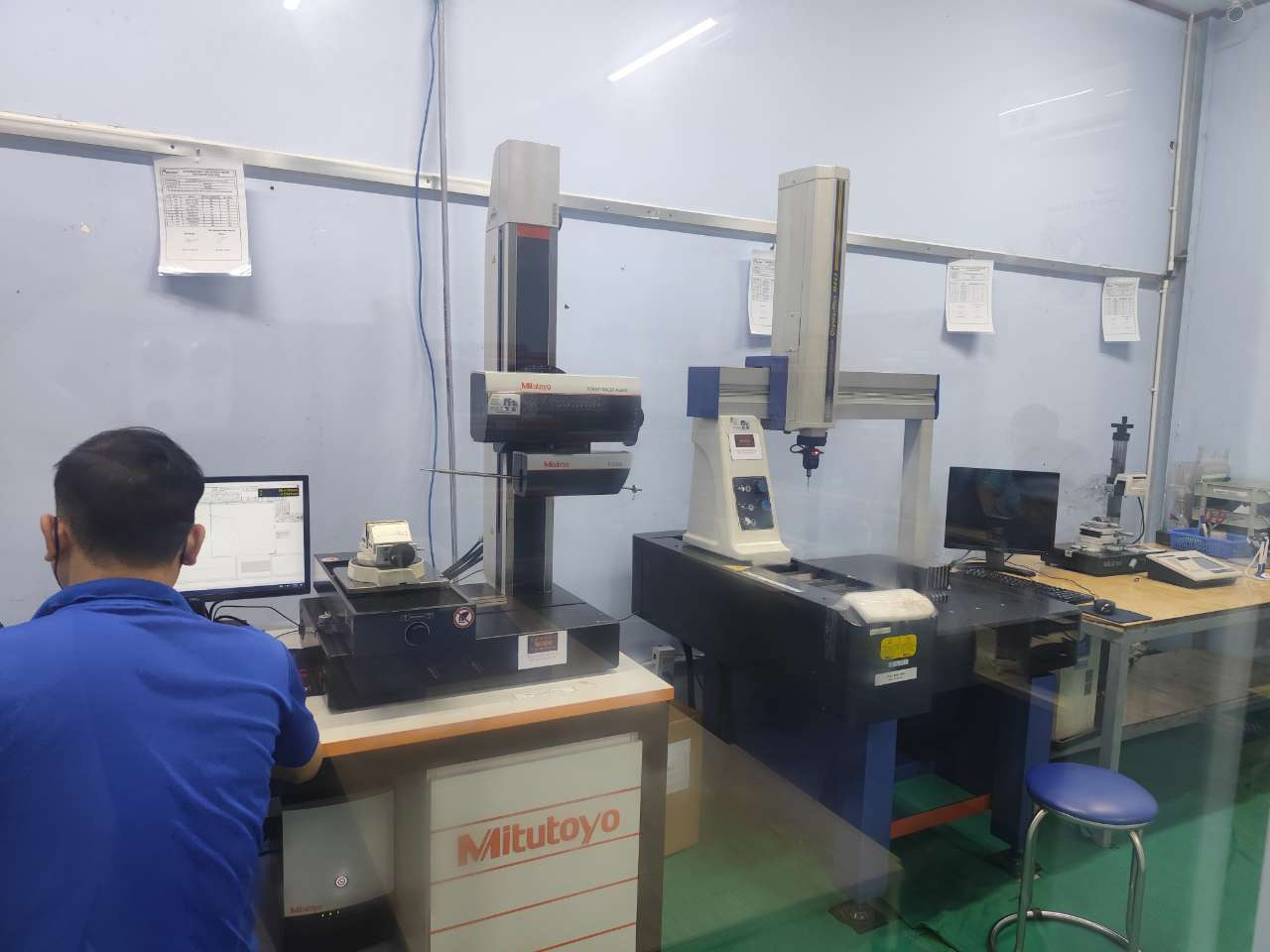
- Metrology equipment: CMM (Zeiss, Mitutoyo, Hexagon), surface roughness tester, hardness tester minimum. Optical measurement (Keyence, OGP) is a strong signal.
Tariff Advantage: Vietnam vs. China for 5-Axis Parts
For US buyers, the tariff math on complex machined parts is compelling:
- China: Section 301 tariffs of 25% still apply to most machined metal components (HTS 8466, 7616, 7318). Combined with base MFN duties of 2.5–5%, total landed duty from China: 27.5–30%.
- Vietnam: No Section 301 tariffs. Base MFN duty only: 0–5% depending on HTS classification. Most machined aluminum parts enter at 2.5% or less.
- Net savings: On a $50/part complex 5-axis component, you save $12.50–15.00/part in duties alone by sourcing from Vietnam instead of China — before the lower machining cost advantage.
Vietnam also benefits from the US Generalized System of Preferences (GSP) for certain product categories, though machined metals are partially excluded. Check HTS codes with your customs broker.
Lead Times: What to Expect
- First article / prototype (1–5 pcs): 10–18 business days from PO, including programming and fixturing
- Production (50–500 pcs): 15–25 business days after first article approval
- Production (500–5,000 pcs): 20–35 business days, depending on machine availability
- Ocean freight to US West Coast: 18–22 days from HCMC port. Add 5–7 days for East Coast via Panama Canal.
- Air freight (urgent): 3–5 days door-to-door. Cost: $5–8/kg. Economical for high-value, low-weight parts under 50 kg.
Industries Sourcing 5-Axis Parts from Vietnam
Vietnam's 5-axis sector serves a growing range of industries for US and European buyers:
- Aerospace: Structural brackets, actuator housings, fuel system components. AS9100-certified shops in Binh Duong.
- Medical devices: Surgical instrument handles, orthopedic implant prototypes (Ti-6Al-4V), endoscope housings. ISO 13485 shops available.
- Automotive (EV): Motor housings, battery cooling plates, inverter enclosures. IATF 16949 certification common.
- Semiconductor equipment: Wafer handling components, vacuum chamber parts (AL6061 with hard anodize). Ultra-clean machining capability.
- Industrial automation: Robot end-effectors, custom actuator bodies, precision linkages.
Get a 5-Axis CNC Machining Quote from Vietnam
DEWIN sources complex 5-axis CNC machined parts from audited Vietnamese manufacturers. We handle supplier qualification, quality control, and logistics — you get competitive pricing with full traceability.
What to include in your RFQ: 3D CAD file (STEP preferred), 2D drawing with GD&T, material specification, quantity tiers, required certifications, and target price if you have one. We typically return quotes within 3–5 business days.
Frequently Asked Questions
How can I verify a Vietnamese shop does true simultaneous 5-axis machining?
Checking the CAM software is the clearest test — top shops program in Hypermill, Mastercam, or Siemens NX, and a shop cutting in basic Fanuc G-code without CAM simulation is not doing real simultaneous 5-axis work. Back that up by asking for the machine list with brands and purchase years, plus CMM inspection reports on real sample parts showing Cpk of 1.33 or better.
What cost premium do titanium and Inconel carry over aluminum on 5-axis parts?
Titanium Ti-6Al-4V carries a 40–60% cost premium over aluminum plus a one to two week material lead time, since the stock is imported from Japan or the US. Inconel 718 and 625 run 3–4x the machining cost of aluminum and are limited to shops with carbide or ceramic inserts and high-pressure coolant, so the supplier pool narrows too.