/Kahong%20-%20Photo/Injection%20machine.JPG)
Vietnam's Injection Molding Ecosystem
Vietnam's plastic injection molding industry has grown explosively, fueled by Samsung, Canon, and other electronics giants establishing massive production bases in the country. This created a deep supplier ecosystem of mold makers and injection molders that now serves the global market.
Vietnamese injection molding factories run modern equipment from JSW, Toshiba, Haitian, and Engel — machines ranging from 50T to 2,500T. They're producing the same quality as Chinese factories, often using the same equipment, but at 30–50% lower costs.
DEWIN partners with 25+ injection molding factories across Vietnam. We match your project to the right facility based on part size, resin type, volume, and industry requirements (automotive, medical, consumer electronics, etc.).
Plastic Injection Molding Shop Floors
Verified photos of injection presses, material handling, and mold shops at audited plastic factories in Vietnam.
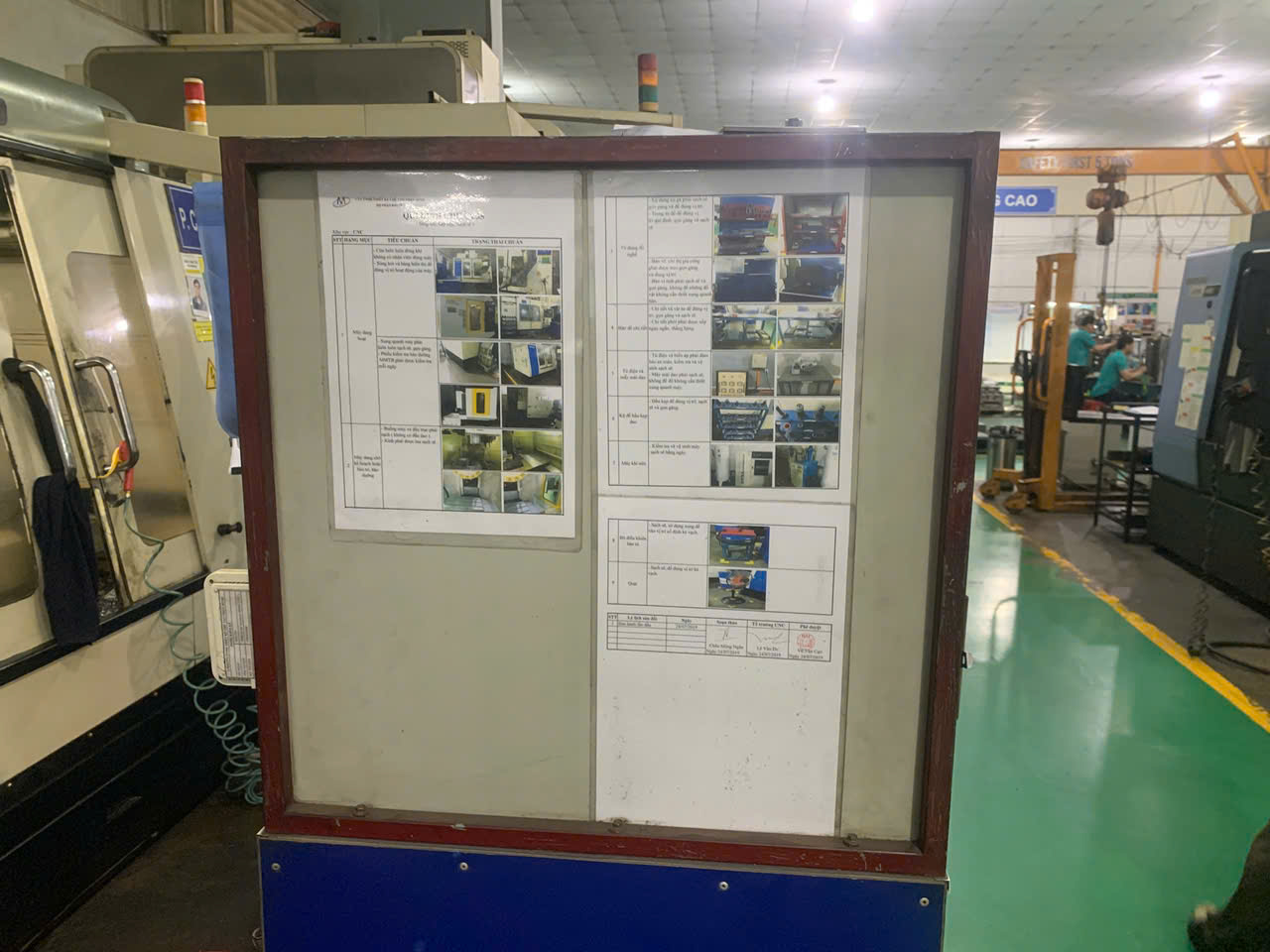
Work Instruction
Nhat Minh Tt Jsc
.jpg)
Sample (16)
Tuong Lai Co Ltd
.jpg)
Workshop Overview (4)
Cncps High Technoligies Joint Stock Company
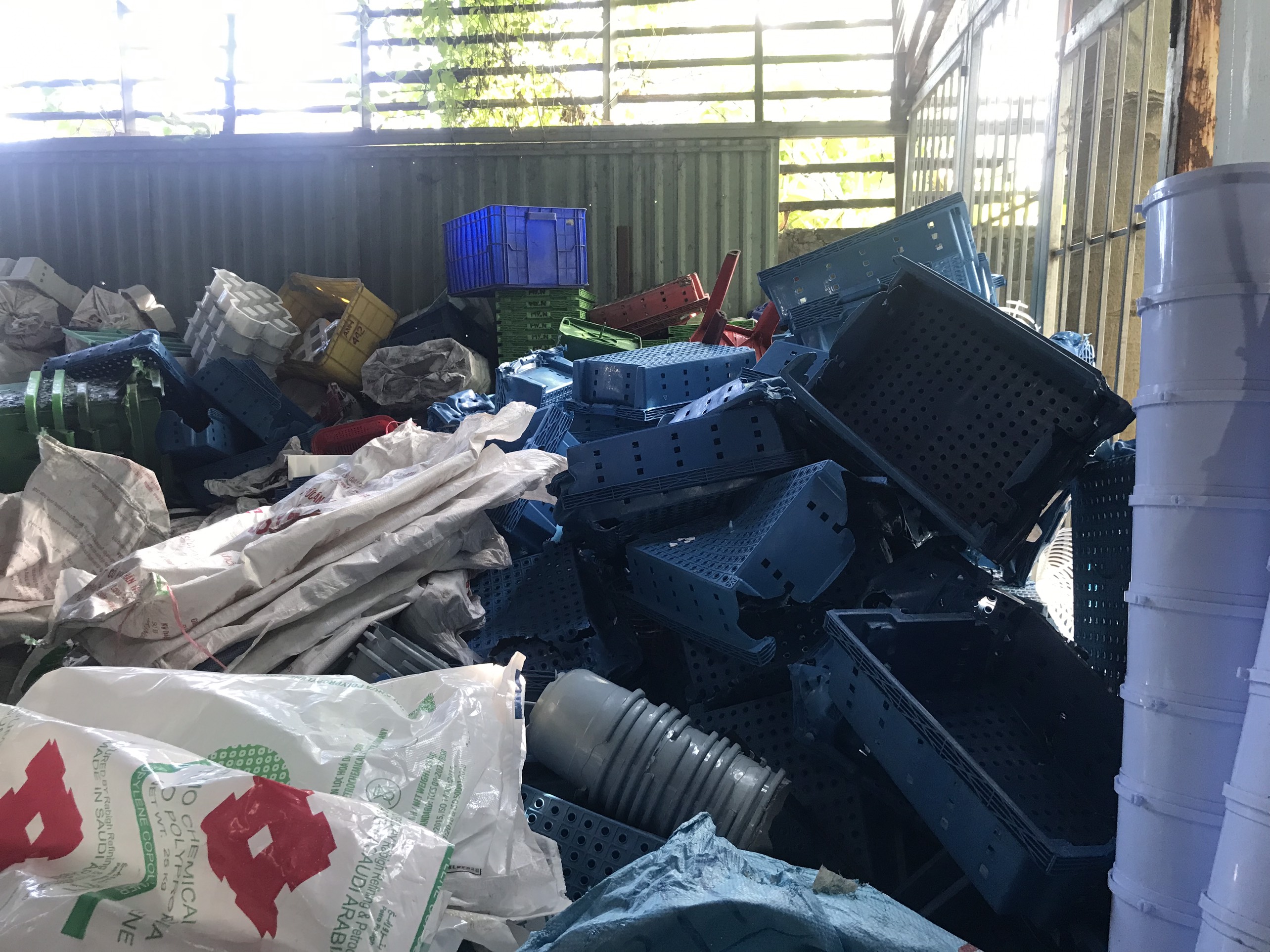
Scrap
An Phuoc Thanh Company Limited
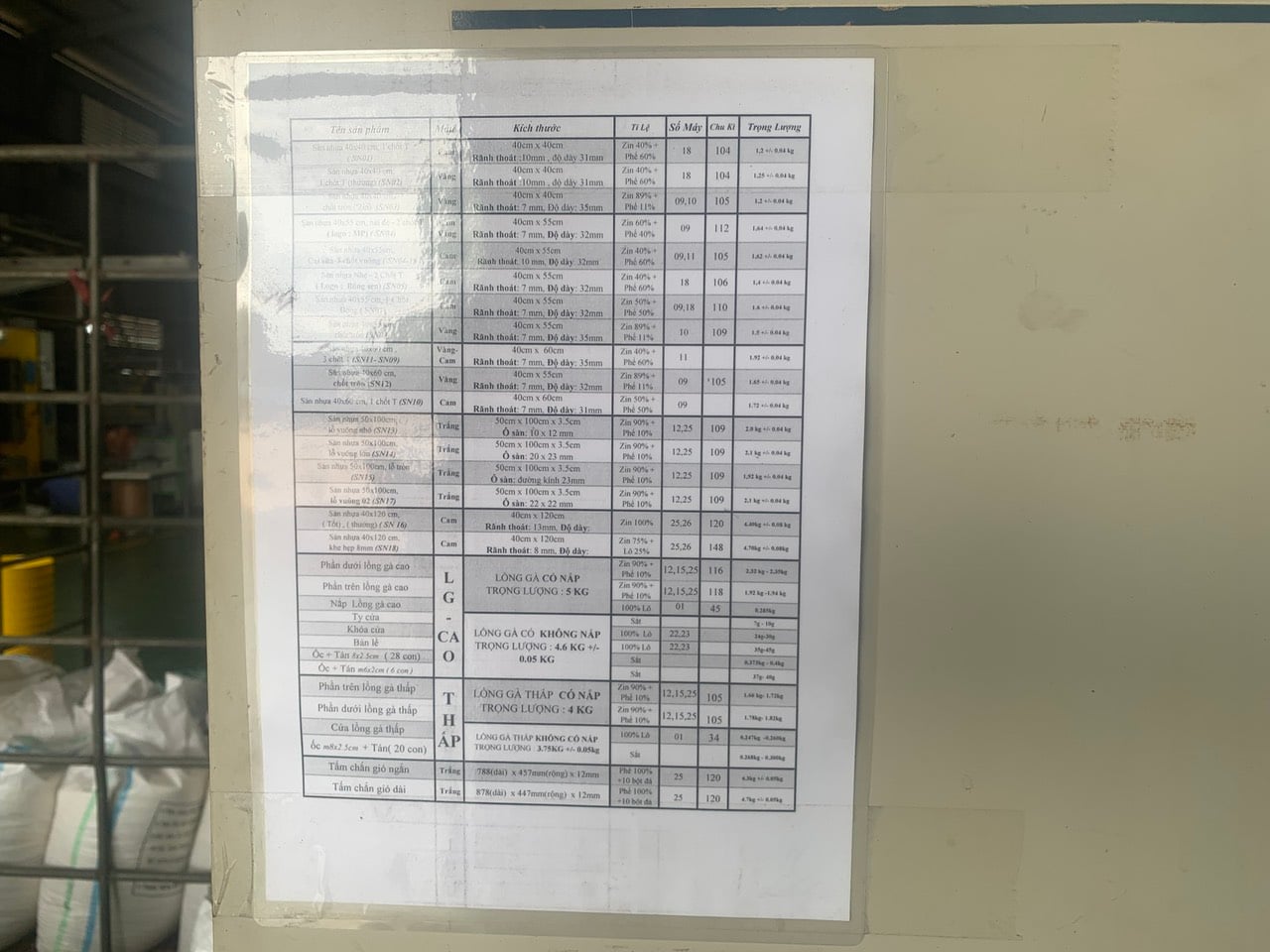
Production Allocated Plan
Minh Phat Huy Company Limited
.jpg)
Product (10)
An Phuoc Thanh Company Limited
See It in Production
Step inside a real Vietnamese plastic processing and die casting factory from our audited network — presses, tooling, and finishing in daily operation.
Vietnam Factory – Plastic Processing & Die Casting
Watch on YouTube
Capabilities
Standard Injection Molding
50T–2,500T machines. Single and multi-cavity molds. Hot runner and cold runner systems. Cycle times optimized for your volume targets.
Insert Molding & Overmolding
Metal inserts, threaded inserts, soft-touch overmolding, and multi-material combinations. Ideal for ergonomic grips, sealed assemblies, and electrical connectors.
Mold Design & Fabrication
In-house mold design with Moldflow analysis. P20, NAK80, S136, and H13 tool steels. EDM, wire EDM, and high-speed CNC for mold making.
Secondary Operations
Pad printing, silk screening, laser engraving, ultrasonic welding, hot stamping, assembly, and packaging — all available in-house.
Technical Specifications & Manufacturing Limits
Our Vietnamese injection molding facilities operate precision presses ranging from 50 to 2,500 tons. We support high-volume production tooling (up to Class 101) as well as rapid prototyping tools. Review our standard dimensional tolerances and tooling limits below:
| Capability Parameter | Standard Specifications | Precision / Tight Limits |
|---|---|---|
| Clamping Force Range | 50T – 2,500 Tons | Micro-molding (< 50T) |
| Max Part Envelope | 1,200 mm × 1,000 mm × 800 mm | Subject to part geometry & flow analysis |
| Dimensional Tolerance | ±0.100 mm (±0.004") | ±0.025 mm (±0.001") for engineered resins |
| Tooling Lead Time | 15 – 25 Business Days (T1 Samples) | 10 – 12 Business Days (Express Tooling) |
| Shot Lifespan Classes | SPI Class 103 (100K–500K shots) | SPI Class 101 (1,000,000+ shots) |
| Mold Tool Steel | P20, NAK80 (Pre-hardened) | S136 (Stainless), H13 (Hardened) |
SPI Mold Tooling Classifications
| SPI Class | Expected Lifespan | Typical Steel | Production Volume | Target Applications |
|---|---|---|---|---|
| Class 101 | 1M+ Shots | S136, H13 (Hardened) | Ultra-High Volume | Medical, high-spec automotive, corrosive resins |
| Class 102 | 500K – 1M Shots | H13, NAK80 | High Volume | Consumer electronics, enclosures, industrial gears |
| Class 103 | 100K – 500K Shots | P20 (Pre-hardened) | Medium Volume | Standard production molds (Most Common) |
| Class 104 | 10K – 100K Shots | P20, QC-10 | Low Volume | Bridge tooling, custom casings, large structural parts |
| Class 105 | < 10K Shots | Alumec 89, 7075-T6 | Prototype | Fitment and functional testing, pilot validation |
Design for Manufacturability (DFM) Rules
Optimizing your CAD model for injection molding reduces cycle times, eliminates cosmetic defects (like sink marks or warping), and decreases tooling costs. Adhere to these fundamental rules when designing your components:
Key Design Parameters
- Draft Angles: Include at least 0.5° minimum draft on all vertical faces. For textured surfaces (SPI sandblast or VDI), specify 3.0° to 5.0° to prevent drag lines during part ejection.
- Rib-to-Wall Ratios: Keep rib thicknesses between 50% and 60% of the adjoining outer wall thickness. Maintain rib heights below 3X the main wall thickness to prevent cosmetic sink marks.
- Boss Placement & Sizing: Design screw bosses with an outer diameter (OD) equal to 2X the screw core diameter (ID). Connect them to external walls using supporting gusset plates.
- Undercuts: Minimize external and internal undercuts to avoid slides and lifters. Use pass-through coring where possible to maintain simple straight-pull open/close mold operation.
Recommended Wall Thicknesses
| Resin Family | Wall Range | Min Wall |
|---|---|---|
| ABS | 1.14 mm – 3.56 mm | 0.76 mm |
| Polycarbonate (PC) | 1.91 mm – 4.75 mm | 1.02 mm |
| Polypropylene (PP) | 0.81 mm – 3.81 mm | 0.64 mm |
| Nylon (PA6/PA66) | 0.76 mm – 2.92 mm | 0.51 mm |
| POM (Delrin) | 0.81 mm – 3.05 mm | 0.38 mm |
SPI Surface Finishes & Textures
We support the complete range of Society of the Plastics Industry (SPI) surface finishes and VDI 3400 spark erosion textures to meet both cosmetic and functional requirements.
Mirror Polish (SPI A-1 to A-3)
Diamond polish (Ra 0.012 – 0.10 µm).
Ultra-glossy, optically clear parts. Used for lenses, light pipes, and high-cosmetic consumer trims.
Semi-Gloss (SPI B-1 to B-3)
Grit paper polish (Ra 0.05 – 0.35 µm).
Medium luster matte finish. Ideal for reducing reflection and hiding minor mold tool marks.
Fine Matte (SPI C-1 to C-3)
Stone polish (Ra 0.35 – 0.80 µm).
Dull, non-reflective surfaces. Provides excellent scratch resistance and masks parting lines.
Sandblast / VDI Textures
Glass bead/flint blast (Ra 0.80 – 3.00 µm).
Satin textures and erosion patterns (VDI 3400). Used for ergonomic grips and heavy industrial parts.
The Vietnam Advantage: Tariff Exemptions & Rigorous Quality Vetting
Manufacturing your injection molds and parts in Vietnam bypasses the **25% US Section 301 tariffs** on Chinese imports. DEWIN mitigates offshore sourcing risks through our local presence and our proprietary 50-Point Dolphin Audit framework, validating quality systems (ISO 9001:2015, IATF 16949, ISO 13485) and equipment calibration on-site.
Applications
Consumer Electronics
Housings, bezels, buttons, connectors, battery covers, lens holders
Automotive
Interior trim, clips, HVAC components, sensor housings, fluid connectors
Medical Devices
Disposable housings, diagnostic cartridges, fluid handling components
Home Appliances
Control panels, handles, structural frames, water/air management parts
Industrial
Enclosures, gears, bearings, cable management, valve components
Packaging
Caps, closures, containers, dispensing mechanisms
Frequently Asked Questions
What plastics can you mold?
ABS, PC, PP, PE, PA (Nylon 6, 66), POM (Delrin), PBT, PEEK, TPU, TPE, PMMA (Acrylic), PPS, LCP, and glass/carbon filled grades. We work with resin suppliers like SABIC, DuPont, and Mitsubishi for material traceability.
How much does injection mold tooling cost in Vietnam?
Simple single-cavity molds start around $2,000–5,000. Multi-cavity production molds typically range $8,000–30,000. Complex tools with hot runners, slides, and lifters can be $20,000–60,000. All significantly less than US or Chinese equivalents.
What's the mold fabrication lead time?
Simple molds: 2–3 weeks. Standard production molds: 3–5 weeks. Complex multi-cavity tools: 5–8 weeks. We provide T1 samples for approval before production begins.
Can you do insert molding and overmolding?
Yes — insert molding (metal inserts molded into plastic), overmolding (soft-touch grips, seals), and two-shot molding are all available at our partner factories.
What about mold maintenance and ownership?
You own the mold. Our factories maintain it at no charge during active production. If you want to move the mold, we'll arrange shipping. Mold maintenance records are provided on request.
Do you offer design for manufacturing (DFM) feedback?
Every quote includes a free DFM analysis. Our mold engineers review wall thickness, draft angles, gate locations, sink marks, and weld lines — and suggest improvements before tooling begins.
Related Articles
Injection Molding Design Rules
Essential design guidelines for moldable parts.
Injection Molding Defects Guide
Common defects and how to prevent them.
Blow Molding Sourcing in Vietnam
Guide to sourcing blow molded parts from Vietnam.
Injection Molding Costs in Vietnam (2026)
Tooling and per-part cost benchmarks for planning budgets.
Injection Mold Tooling in Vietnam
Mold steels, SPI classes, and tooling ownership explained.
Rubber & Silicone Molding in Vietnam
When elastomer molding fits your project better.
Need Injection Molded Parts from Vietnam?
Send your 3D model for a free DFM analysis, tooling quote, and per-piece pricing — within 24 hours.
Get My Free Quote →