
What machining tolerances and alloy steels are specified for rotary actuator spline shafts and sleeves?
Rotary drive components such as star sleeves, core shafts, and trunnions rely on 20CrMnTi or SAE 5120H carburizing alloy steel to maintain a ±0.008 mm spline pitch and raceway concentricity tolerance. Internal spline broaching, EMAG hard turning, and CQI-9 controlled carbonitriding ensure HRC 58 to 62 surface hardness with a 0.85 to 1.25 mm case depth.
Key Takeaways
- Precision internal splines, star-shaped sleeves, and drive shafts machined on robotic CNC turning and broaching cells achieve tolerances down to ±0.008 mm spline pitch concentricity using 20CrMnTi and SAE 5120H carburizing alloy steel.
- Lightweight mechanical components utilize 5-axis CNC machining, metal injection molding, and high-temperature injection molding across titanium, aluminum, 17-4PH, 316L stainless steel, PEEK, and PTFE fluoropolymers.
- Compact rotational and structural joint assemblies integrate crossed-roller and slewing bearings, maintenance-free PTFE fabric lined spherical plain bearings, and oilless bronze composite bushings.
High-torque precision rotary assemblies require exact dimensional control during turning, broaching, and grinding stages. Raw steel bars undergo closed-die warm or cold forging (160T to 630T) with isothermal annealing and normalizing to achieve uniform ferrite-pearlite grain flow before machining.
- Alloy Steels: 20CrMnTi and SAE 5120H carburizing alloy steel for high fatigue resistance and surface durability.
- Tight Tolerances: ±0.008 mm spline pitch and raceway concentricity maintained across DIN 5480 and JIS B 1603 spline standards.
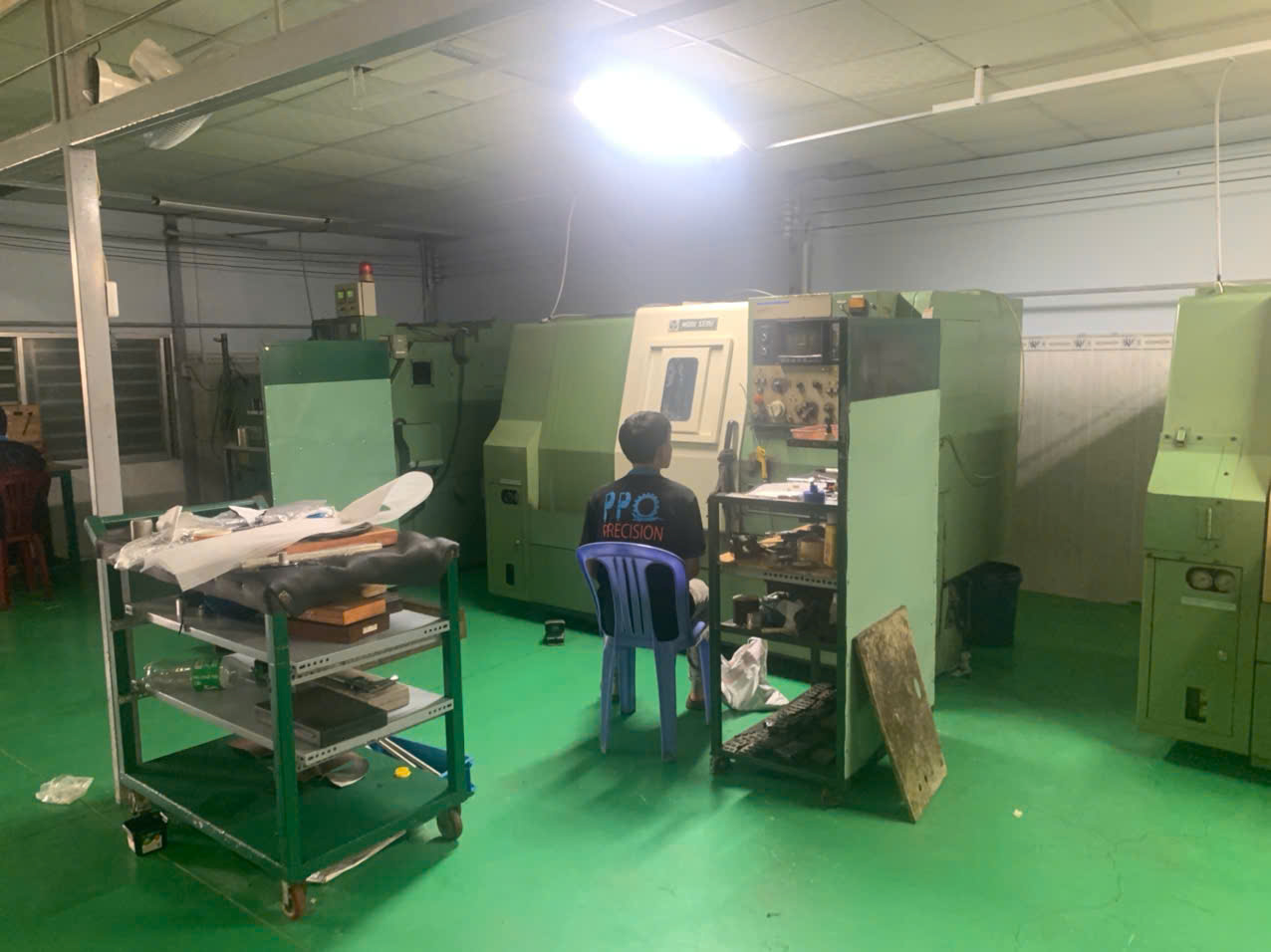
- Machining Equipment: 136 robotic CNC lathes, 4 German EMAG hard turning centers, 72 robotic CNC mills, and hydraulic pull broaching.
- Heat Treatment: CQI-9 continuous furnace carbonitriding achieving HRC 58–62 surface hardness and 0.85–1.25 mm case depth.
Which lightweight materials and processes are utilized for precision electromechanical joint housings?
Electromechanical housings and structural joint frames utilize aerospace-grade aluminum, titanium, Inconel, and stainless steel processed via 5-axis CNC machining, slow-wire EDM, and turn-mill centers. Complex geometries use 17-4PH or 316L metal injection molding alongside high-temperature injection molded PEEK, PFA, and PTFE engineering fluoropolymers to optimize overall structural mass and precision fit.
Minimizing total mechanical mass while preserving rigidity requires a combination of multi-axis CNC subtractive machining, metal injection molding, and high-performance engineering plastics. Production facilities employ cleanroom assembly areas and temperature-controlled metrology labs to verify strict mechanical features.
- Metals & Alloys: Titanium, Inconel, aerospace aluminum, 304/316L stainless steel, and 17-4PH powder metallurgy alloys.
- Machining & Molding: 70+ sets of 5-axis and 4-axis CNC machining centers, slow-wire EDM, metal injection molding (MIM), and PEEK/PFA multi-slider injection molding.
- Engineering Plastics: PTFE, PEEK, PFA, PVDF, PI, and PPS engineering fluoropolymers for low-friction, high-purity structural elements.
- Inspection Protocols: In-house 3D CMM metrology, vacuum degreasing-sintering, and metallographic microstructure verification.
How are rotational bearings and self-lubricating bushings integrated into structural actuator assemblies?
Rotational joints incorporate single or double-row four-point contact ball and crossed-roller slewing bearings, alongside maintenance-free spherical plain bearings and hydraulic rod ends. Self-lubricating interfaces utilize SF-1 or SF-2 PTFE composite bushings, JF-800 bimetal bearings, graphite-plugged bronze, and oil-impregnated sintered bronze bushings to handle combined radial and axial loads across smooth mechanical motions.
Precision joint articulation relies on durable bearing interfaces capable of carrying heavy dynamic loads without excessive wear. Sintered powder metallurgy processes and automated PTFE fabric liner bonding provide low-friction rotational points.
- Slewing Drives & Bearings: Ø200–5,000 mm single/double-row four-point contact ball, three-row roller, and crossed-roller slewing bearings (up to 5,000 sets/month) plus enclosed SE/WE slewing drives.
- Spherical Plain Bearings: GE/GEG/GEZ metric/inch series, GAC angular contact, and GX thrust bearings with bonded PTFE fabric liners and MoS2 phosphating surface treatments.
- Self-Lubricating Bushings: SF-1/SF-2 PTFE composite bushings, JF-800 bimetal bearings, JDB graphite-plugged bronze, and SAE841 / Sint B50 oil-impregnated bronze bushings.
Precision Manufacturing & Sourcing Specification Matrix
| Technical Dimension | Standard Commercial Grade | High-Precision OEM Export Grade | DEWIN Verification Protocol |
|---|---|---|---|
| Machining & Forming Tolerance | ISO 2768-m (±0.10 mm nominal) | ISO 2768-f (±0.01 mm – ±0.025 mm critical bores) | Calibrated 3D CMM & Air/Pin Gauging |
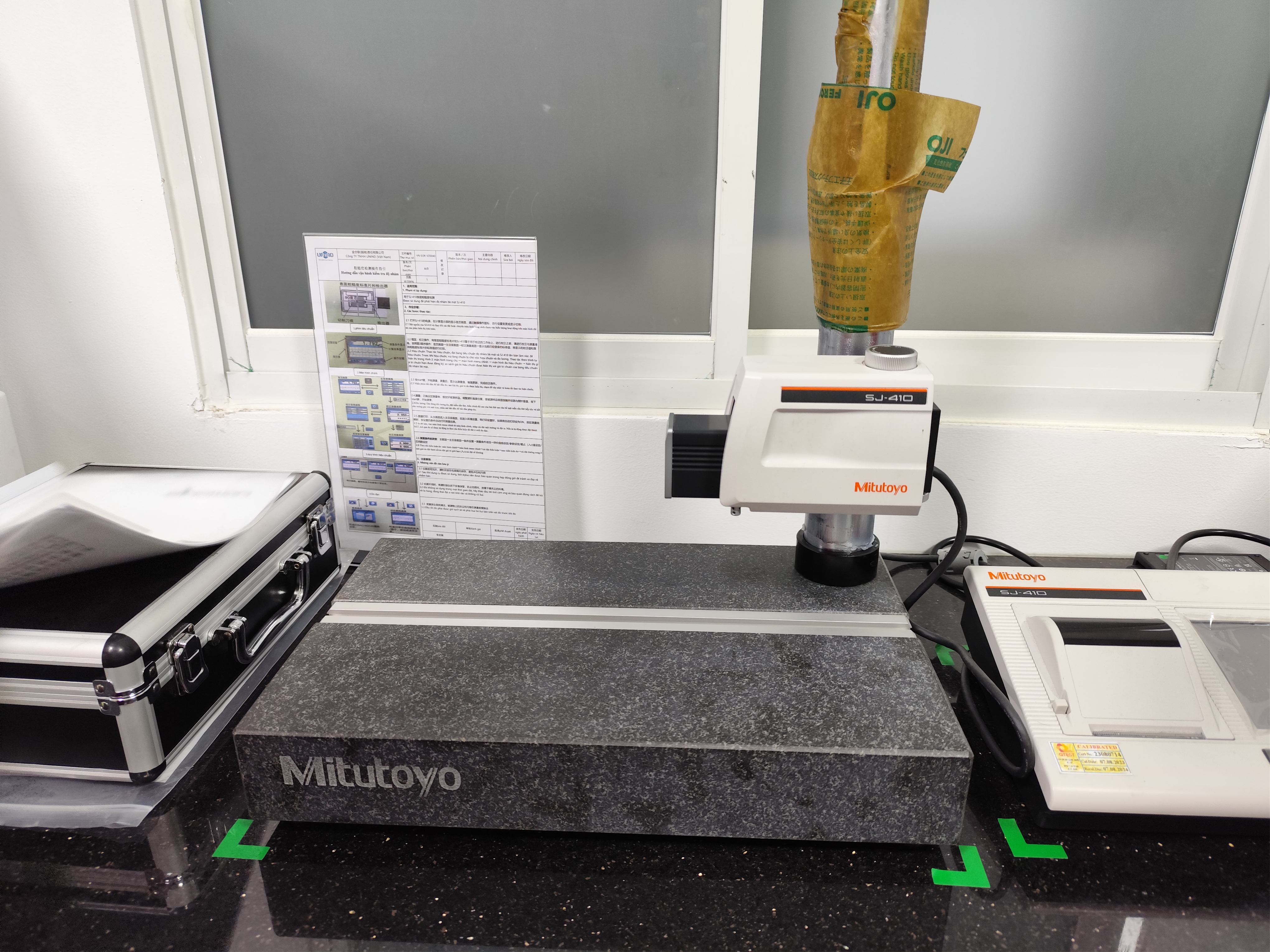
| Surface Roughness & Finish | Ra 1.6 – 3.2 µm as-machined / standard coat | Ra 0.4 – 0.8 µm precision ground / MIL-A-8625 anodized | Profilometer & Coating Thickness Gauge |
| Material & Alloy Certification | Supplier Mill Test Report (MTR) | Independent OES chemical & mechanical verification | EN 10204 3.1 + RoHS/REACH Compliance |
| Batch Inspection & Packaging | ISO 2859-1 (AQL 1.0 Major / 2.5 Minor) | Zero-defect critical features + VCI export crating | Pre-Shipment Inspection (PSI) Report |
Frequently Asked Questions
What quality inspection equipment is used to verify ±0.008 mm tolerances for machined spline components?
Temperature-controlled metrology laboratories utilize ZEISS and Mitutoyo Crysta-Apex S 3D coordinate measuring machines (CMM) alongside contour measurement systems, surface roughness testers, and 100% eddy-current magnetic crack testing to verify spline geometry, pitch accuracy, and metallurgical integrity.
How are heat treatment standards maintained for high-stress alloy steel actuator parts?
Carburizing alloy steel components like 20CrMnTi and SAE 5120H undergo CQI-9 controlled carbonitriding continuous furnace heat treatment and quenching. This achieves a verified case depth of 0.85 to 1.25 mm with a surface hardness of HRC 58 to 62, followed by metallographic microstructure analysis.
What bearing options exist for high-load or maintenance-free structural joints?
Structural joint assemblies utilize Ø200–5,000 mm crossed-roller and four-point contact slewing bearings for high moment loads, as well as maintenance-free spherical plain bearings with bonded PTFE fabric liners and SF-1/SF-2 PTFE composite or graphite-plugged bronze bushings for self-lubricating pivot points.
How are multi-country manufacturing operations managed across Asia?
Regional engineering and service hubs in Xi'an, China (26 staff) and Ho Chi Minh City, Vietnam (7 staff), alongside Singapore headquarters, coordinate DFM reviews, QCLDM factory audits, ZEISS CMM dimensional inspections, and production transfers across audited facilities in China, Vietnam, and Thailand.