Anodizing & Surface Finishing Cost in Vietnam: 2026 Buyer's Guide
March 1, 2026 · 14 min read
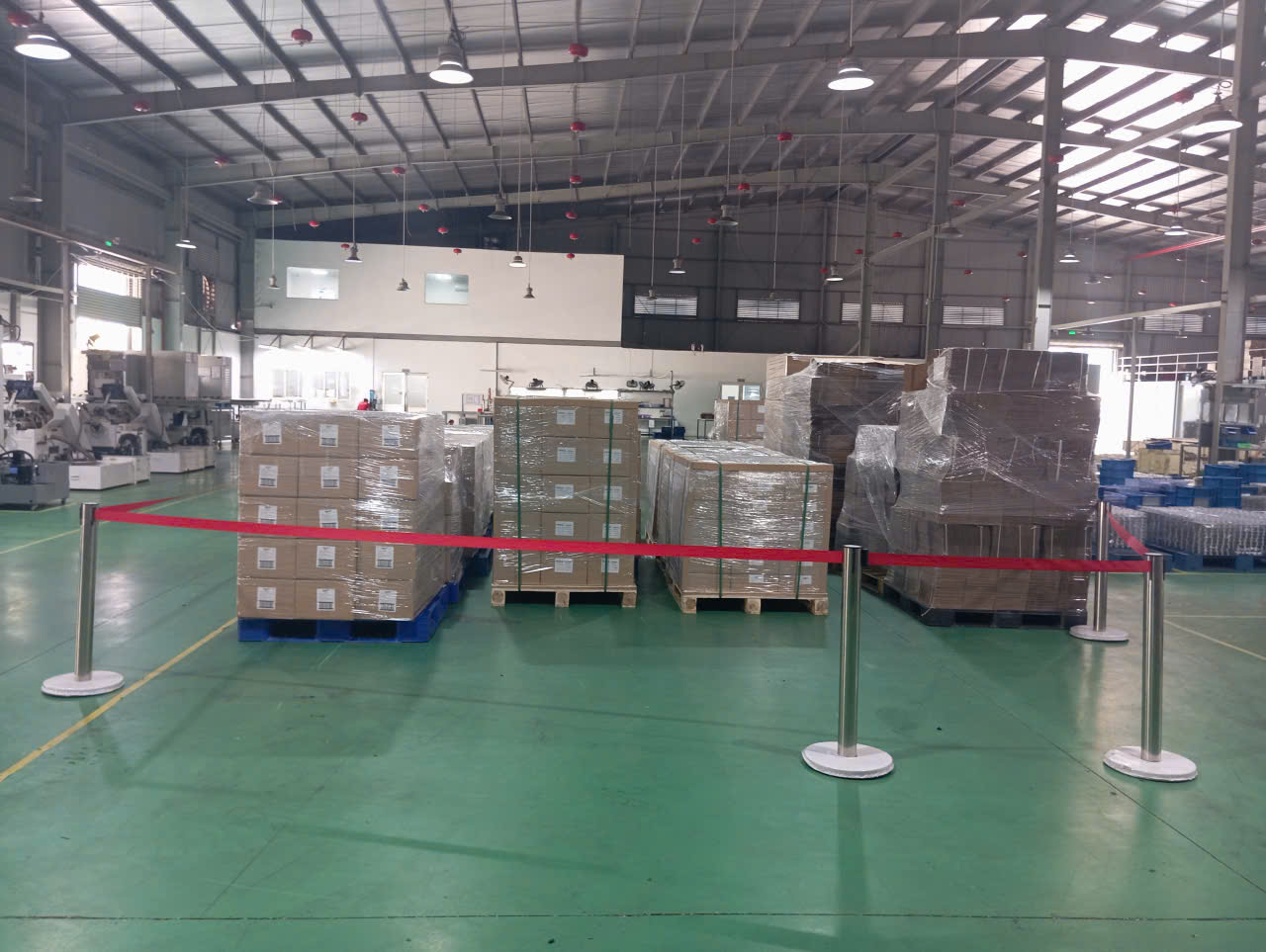
Surface finishing typically adds 15–40% to the cost of a machined or stamped part — yet it's the most commonly under-specified line item in manufacturing RFQs. US buyers sourcing from Vietnam can save 40–65% on finishing costs compared to domestic shops, but only if they specify the right process, coating thickness, and quality standards upfront.
This guide covers real 2026 pricing from our Vietnam finishing partners for every major surface treatment: anodizing (Type II and Type III hardcoat), powder coating, electroplating, passivation, and more.
Surface finishing in Vietnam typically runs 40–65% below US domestic pricing. Type II anodizing costs roughly $0.30–3.50 per part, powder coating $0.15–1.50, and electroplating $0.10–2.50 — provided you specify the right process, thickness, and quality standard upfront to avoid costly rework.
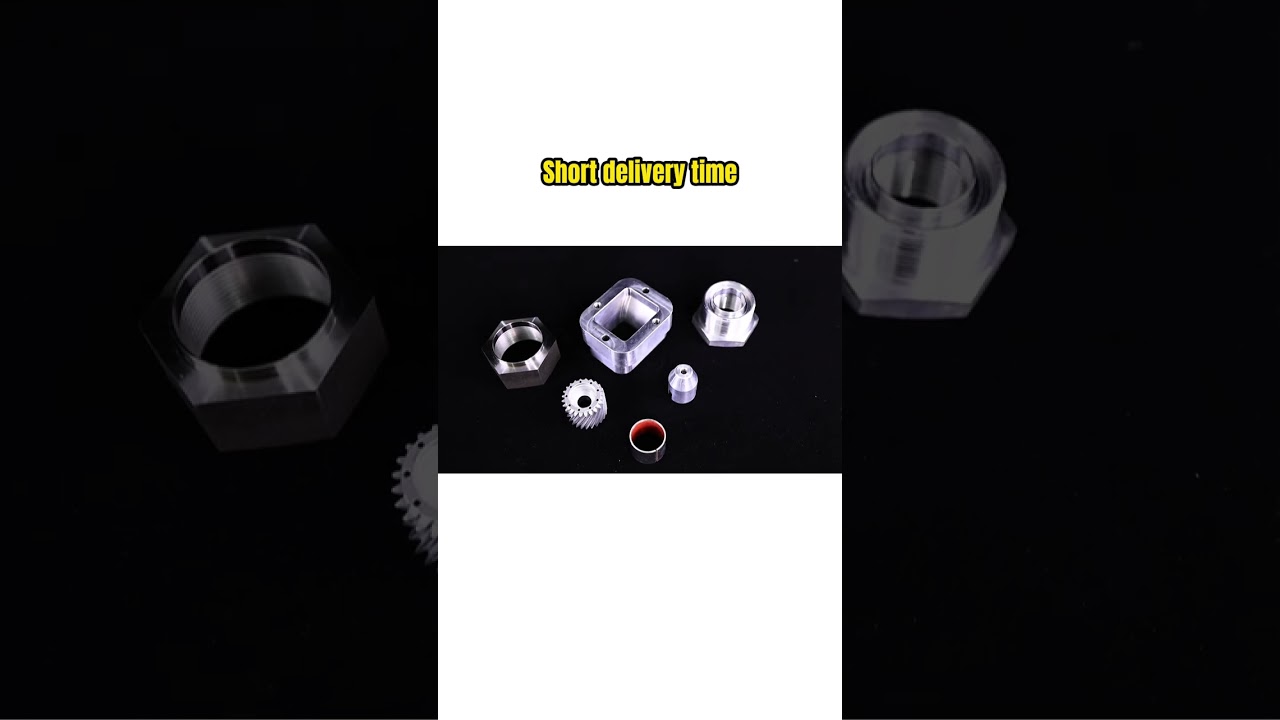
Real Vietnam Factory Samples — Custom Machined & Metal Parts
Watch on YouTube
Real footage from an audited DEWIN partner factory in Vietnam.
Anodizing Costs: Type II vs. Type III Hardcoat
Anodizing is the most requested finish for aluminum CNC parts. The cost difference between Type II (decorative/protective) and Type III (hardcoat) is significant, and getting the spec wrong wastes money.
Type II anodizing (8–25 μm) is a decorative, corrosion-protective finish costing a fraction of Type III hardcoat (25–75 μm), which is far harder and wear-resistant. Specifying Type III where Type II would suffice can triple your finishing cost with no functional benefit.
Type II Anodizing (MIL-A-8625 Type II, 8–25 μm)
Best for: Corrosion protection, color matching, consumer-facing parts. Typical coating thickness 10–25 μm.
- Small parts (≤100 cm²): $0.30–0.80/part at 1,000+ qty in Vietnam vs. $1.50–3.50/part US domestic
- Medium parts (100–500 cm²): $0.60–1.80/part at 1,000+ qty vs. $3.00–8.00/part US
- Large parts (500–2,000 cm²): $1.20–3.50/part at 1,000+ qty vs. $6.00–15.00/part US
- Color anodizing (black, red, blue, gold): Add $0.10–0.30/part for dye cost
- Clear anodizing: No dye surcharge — lowest cost option
Key spec tip: If you only need corrosion protection, specify clear Type II at 10–15 μm. Many buyers over-specify 25 μm when 12 μm meets their salt spray requirements (500+ hours on AL6061-T6). This alone can cut anodizing cost by 20%.
Type III Hardcoat Anodizing (MIL-A-8625 Type III, 25–75 μm)
Best for: Wear surfaces, sliding fits, hydraulic components, aerospace parts. Hardness 60–70 HRC equivalent.
- Small parts: $1.50–3.50/part at 1,000+ qty in Vietnam vs. $6.00–12.00/part US
- Medium parts: $3.00–7.00/part vs. $10.00–22.00/part US
- Large parts: $5.00–14.00/part vs. $18.00–40.00/part US
- PTFE-impregnated hardcoat: Add 30–50% for dry lubricity (bearing surfaces, pistons)
Dimensional note: Type III grows approximately 50% into the substrate and 50% outward. A 50 μm coating adds ~25 μm to each surface. Factor this into your tolerance stack — if your bore is ±0.025 mm, you need to machine it 25 μm oversize per side before hardcoat.
Powder Coating Costs in Vietnam
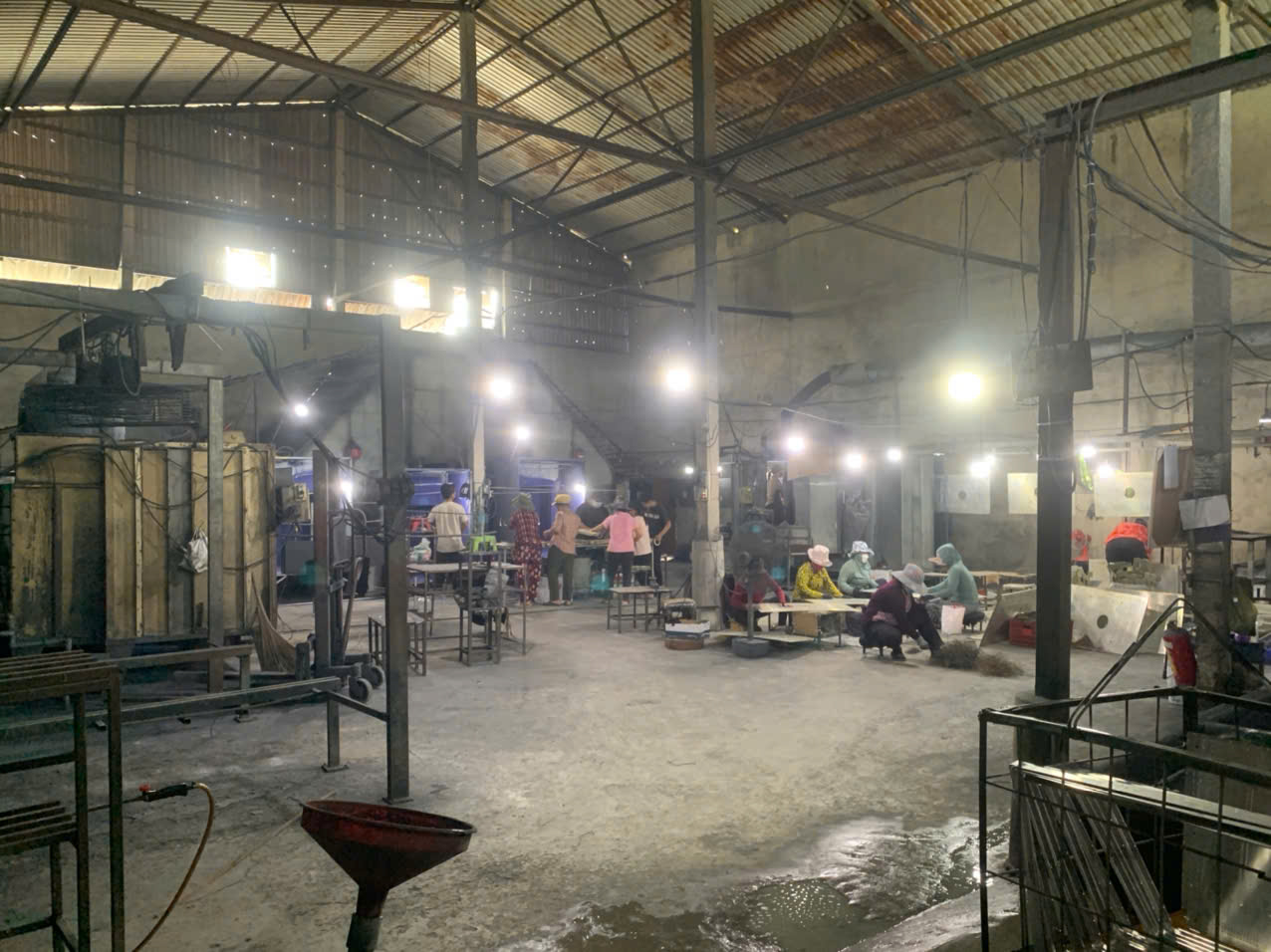
Powder coating is the go-to finish for sheet metal fabrication, die castings, and steel parts. Vietnam has extensive powder coating capacity thanks to its large furniture and appliance export industry.
Powder coating is one of Vietnam's strongest finishing capabilities, priced 60–75% below US shops thanks to the country's large furniture and appliance export base. Standard polyester coats run about $0.15–1.50 per part at volume on automated, conveyorized lines with consistent film thickness.
- Standard polyester powder coat (60–80 μm): $0.15–0.50/part for small parts, $0.40–1.50/part for medium at 1,000+ qty
- Epoxy powder coat (chemical resistance): Add 15–25% over polyester
- TGIC-free polyester (outdoor/UV): Same as standard polyester — now the default in Vietnam
- Zinc-rich primer + topcoat (steel, corrosion-critical): $0.80–2.50/part for dual-coat system
- Custom RAL color matching: One-time setup $50–150 for color sample approval
US comparison: Domestic powder coating for small metal parts runs $2.00–5.00/part at 1,000 qty. Vietnam pricing is 60–75% lower, and most factories run automated conveyorized lines with consistent film thickness.
Electroplating: Zinc, Nickel, Chrome, and Gold
Vietnam has a mature plating industry serving electronics and automotive OEMs. Key processes and 2026 pricing at 1,000+ qty:
- Zinc plating (clear/yellow/black chromate): $0.10–0.40/part — the cheapest corrosion protection for steel
- Nickel plating (electroless, 10–25 μm): $0.80–2.50/part — uniform coating even on complex geometries, 500+ hour salt spray
- Hard chrome plating (25–250 μm): $2.00–8.00/part — for hydraulic cylinders, wear surfaces. Note: increasingly regulated; ask about trivalent chrome alternatives
- Gold plating (0.5–2 μm, electronics): $0.50–2.00/part plus gold material cost — connector pins, contact surfaces
- Tin plating (electronics, solderability): $0.15–0.50/part — RoHS-compliant matte tin for PCB contacts
Other Surface Treatments
- Passivation (SS304/316, per ASTM A967): $0.20–0.60/part — essential for medical and food-contact stainless parts
- Black oxide (steel): $0.08–0.25/part — low cost, minimal dimensional change, mild corrosion protection
- Bead blasting: $0.10–0.40/part — uniform matte finish, often included free with CNC machining quotes
- Tumble deburring/vibratory finishing: $0.05–0.20/part at volume — removes burrs and sharp edges
- Electropolishing (stainless steel): $0.50–2.00/part — mirror finish for medical devices, removes 10–40 μm of surface material
- Painting (wet spray, automotive grade): $0.30–1.50/part — basecoat + clearcoat for color-matched assemblies
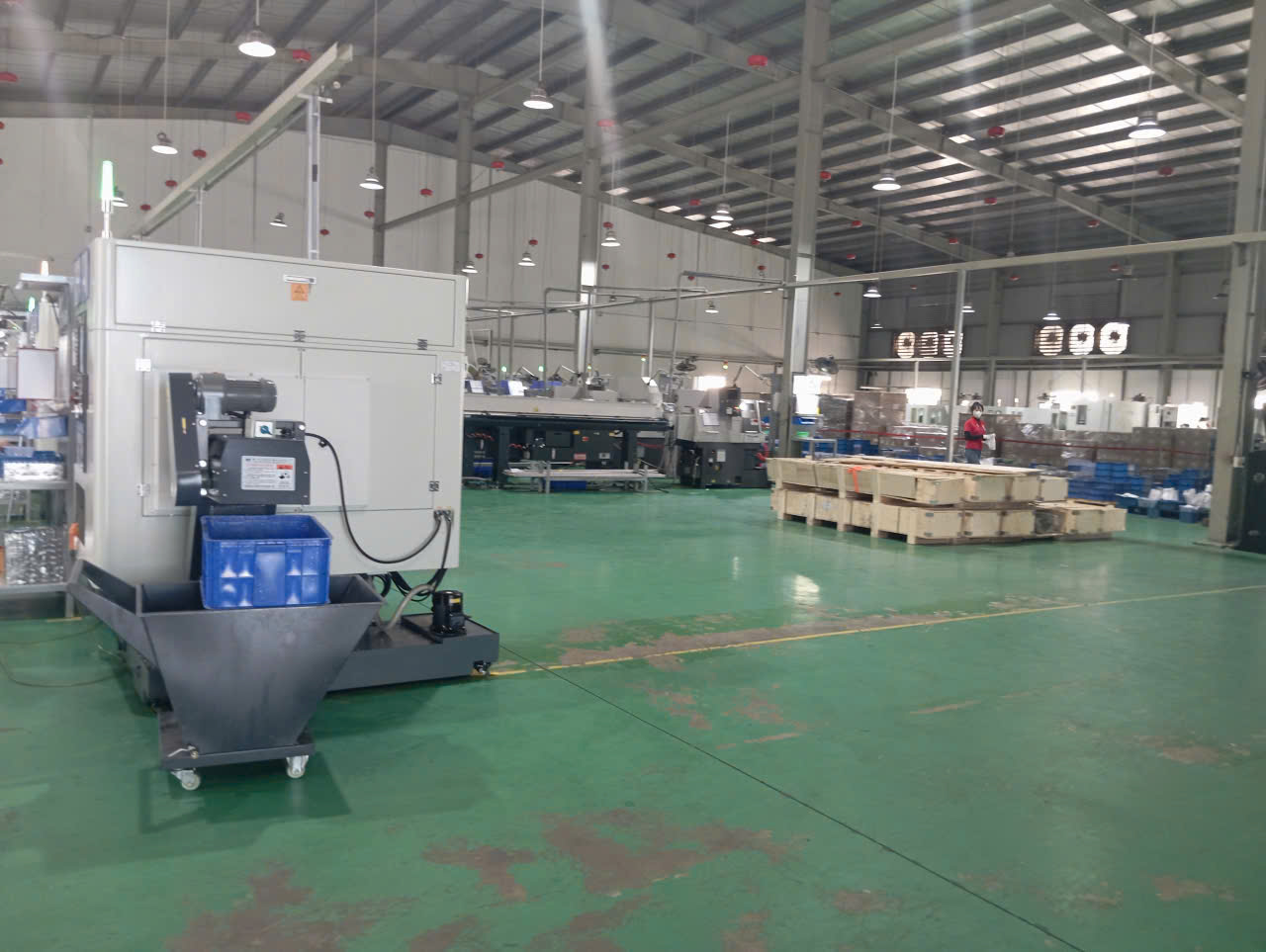
How to Specify Finishing in Your RFQ
Vague finish specs are the #1 cause of quality disputes in offshore manufacturing. Here's exactly what to include:
- Process and standard: "Type II anodize per MIL-A-8625" — not just "anodized"
- Coating thickness: "15 ±3 μm" — not "standard thickness"
- Color: RAL number or Pantone reference with ΔE tolerance (ΔE ≤ 2.0 for color-critical)
- Masking requirements: Call out holes, threads, and surfaces that must NOT be coated. Masking adds $0.10–0.50/part per feature
- Testing requirements: Salt spray hours (ASTM B117), adhesion test (ASTM D3359 cross-hatch), hardness (Type III)
- Cosmetic grade: Define acceptable surface defects per surface zone — A-surfaces (visible), B-surfaces (hidden)
Vietnam vs. China: Surface Finishing Cost Comparison
Vietnam's finishing costs are now comparable to or slightly below China's for most processes, with one major advantage: no Section 301 tariffs. Finished aluminum parts from China face 25% tariffs; from Vietnam, 0% under current MFN rates.
- Anodizing: Vietnam is 5–15% cheaper than Shenzhen/Dongguan for Type II; comparable for Type III
- Powder coating: Vietnam is 10–20% cheaper — large installed capacity from furniture/appliance sector
- Electroplating: China still has a slight edge (5–10%) for specialty plating due to larger chemical supply chains
- Net landed cost (including tariffs): Vietnam saves 25–35% over China on finished parts for US import
Common Mistakes That Cost US Buyers Money
- Over-specifying Type III when Type II suffices: Hardcoat costs 3–4× more. Unless you need wear resistance >1,000 HV or >50 μm thickness, Type II at 20 μm handles most applications
- Not specifying masking: If your supplier anodizes threaded holes, you'll spend time re-tapping. Call out every feature that must stay bare
- Ordering finishing and machining from different suppliers: Consolidate. A factory that machines AND finishes in-house saves 1–3 days of transit, eliminates finger-pointing on defects, and typically discounts finishing 10–20% as part of a bundle
- Ignoring rack marks: Anodized and plated parts must hang on racks. Specify where rack contact points are acceptable (typically a non-cosmetic surface). Otherwise your supplier chooses — and they'll pick the easiest spot, not the best one
- Skipping first-article inspection on finish: Always require a coated first article before production. Color, thickness, and adhesion on a sample panel ≠ results on your actual part geometry
Get a Surface Finishing Quote from Vietnam
Whether you need anodizing for aluminum CNC parts, powder coating for sheet metal fabrications, or electroplating for precision components — our Vietnam finishing partners deliver MIL-spec quality at a fraction of US pricing.
Send your drawings with finishing specs to for a detailed quote within 48 hours. We handle quality control, logistics, and customs clearance to your US facility.
Frequently Asked Questions
How much oversize must I machine a bore before Type III hardcoat anodizing?
Type III hardcoat grows roughly 50% into the substrate and 50% outward, so a 50 μm coating adds about 25 μm to each surface. A bore held to ±0.025 mm therefore needs machining 25 μm oversize per side before coating. Build the same growth into press-fits and any close-tolerance mating feature that will not be masked.
Do I need to specify masking for threaded holes before anodizing?
Masking must be called out explicitly for every hole, thread, and surface that must not be coated. Masking adds $0.10–0.50 per part per feature, which is far cheaper than re-tapping anodized threads after delivery. Rack contact points deserve the same treatment — name an acceptable non-cosmetic surface, or the supplier will pick the easiest spot rather than the best one.
What Type II anodize thickness do I actually need for corrosion protection?
Clear Type II at 10–15 μm is enough when corrosion protection is the only requirement, because 12 μm already meets 500+ hour salt spray on AL6061-T6. Dropping a 25 μm callout to 12 μm can cut anodizing cost by 20% on its own. Clear also avoids the $0.10–0.30 per part dye surcharge that colored anodizing carries.