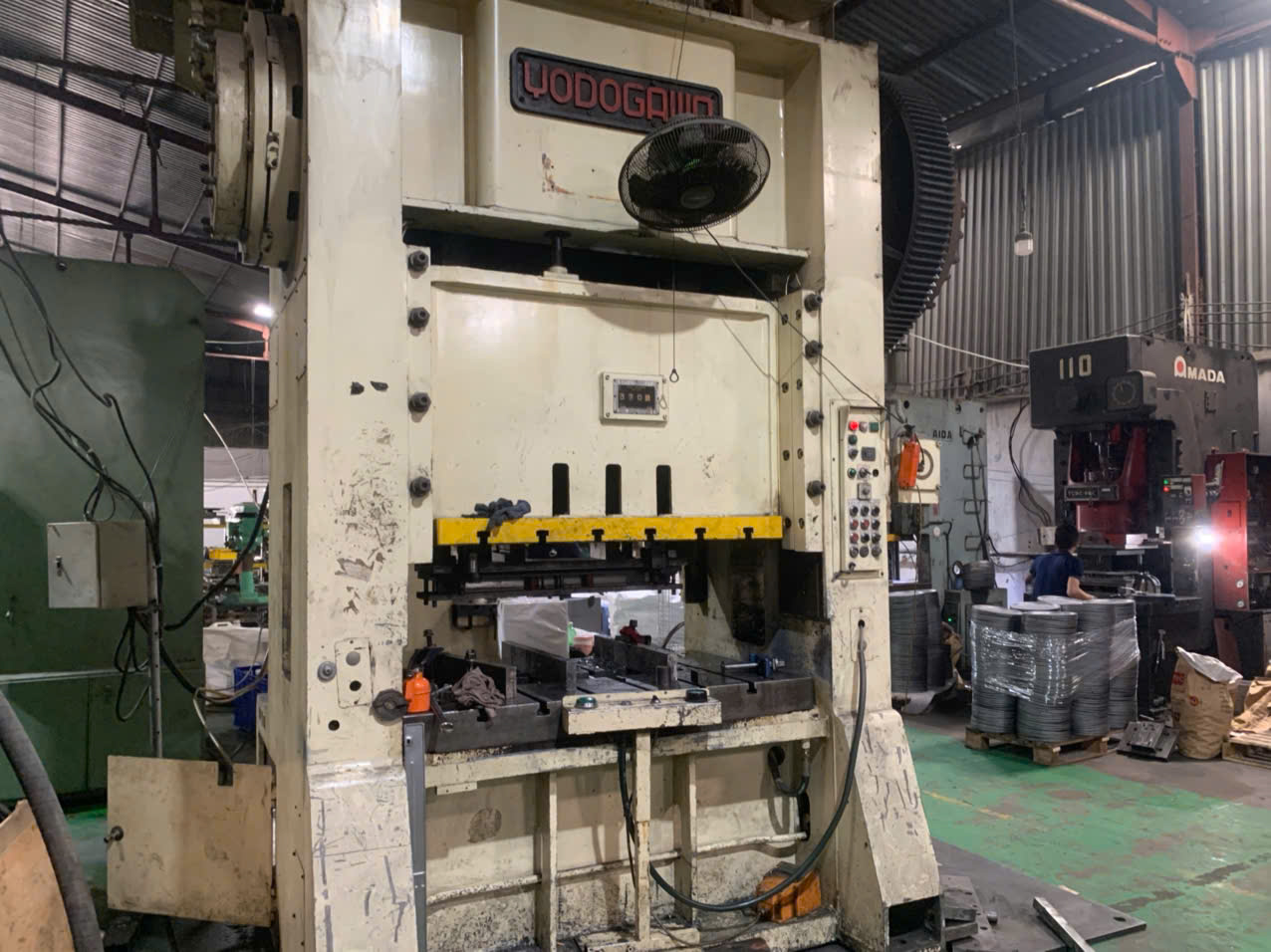
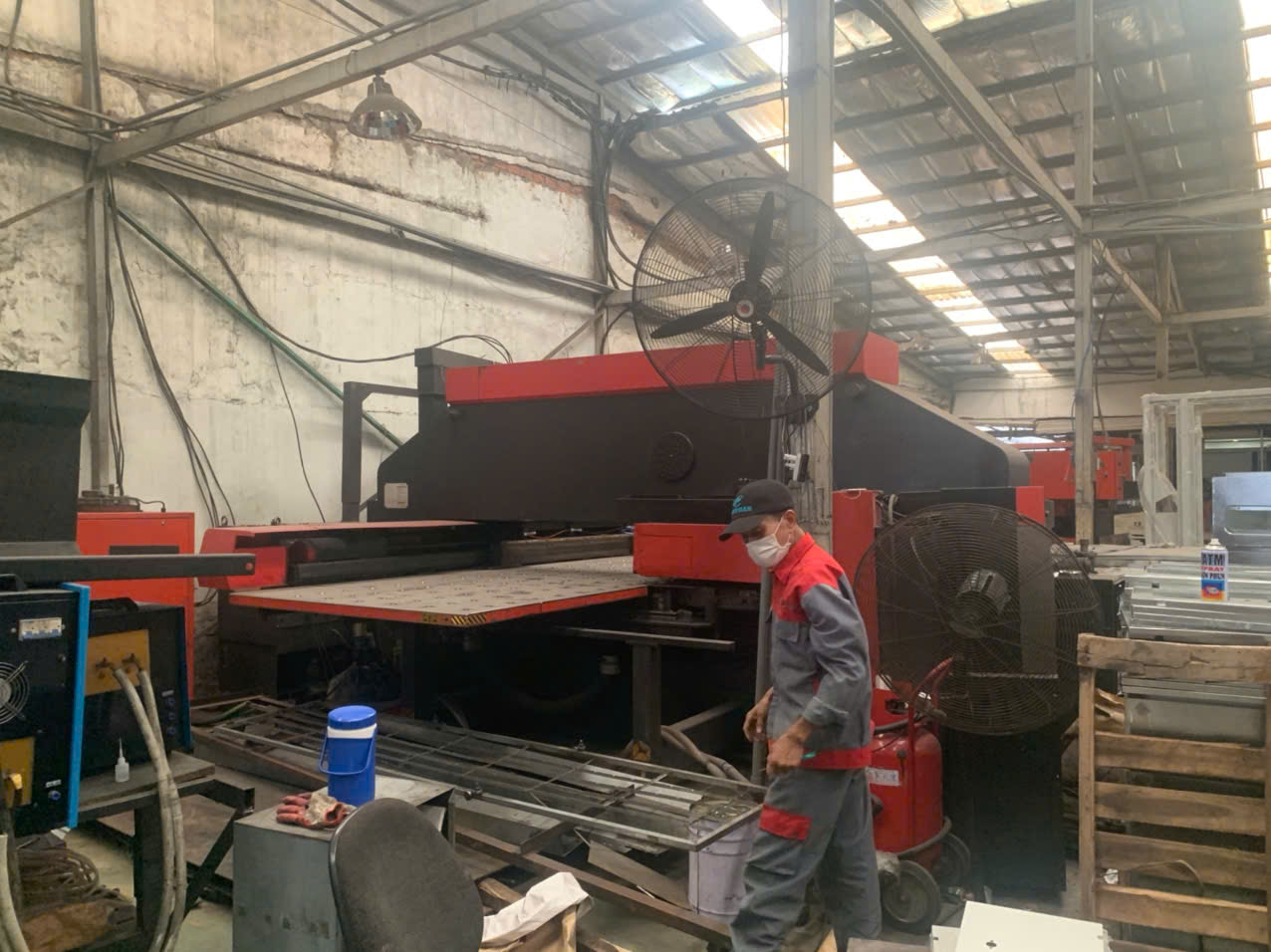
Automotive stamping parts sit at the heart of many sourcing headaches our team handles weekly IATF 16949 certification 1. One certification question keeps coming up, and getting it wrong can be costly.
Automotive stamping parts do not need IATF 16949 by law, but it is commercially mandatory in practice. OEMs and Tier 1 buyers almost always require stamping suppliers to hold IATF 16949 certification from an IATF-recognized body before awarding production part contracts.
That short answer hides a lot of nuance. Let me walk you through what buyers actually face, how to verify a supplier’s claims, and how this affects sourcing from countries like Vietnam and India.
How do I verify if my automotive stamping supplier is truly IATF 16949 certified?
A few years back, our audit team in Vietnam reviewed a stamping plant that proudly displayed a framed "IATF certificate" in its lobby. It turned out to be expired by fourteen months. That visit changed how we screen every supplier.
Verify certification by requesting the certificate copy, then checking the certificate number, scope, site address, and expiry date directly with the issuing certification body. Confirm that the body is IATF-recognized, since self-declared or non-accredited certificates are not accepted in automotive supply chains.

Verification is not complicated, but you must be systematic. Many buyers only glance at a PDF certificate. That is not enough. Certificates get suspended, withdrawn, or forged more often than most purchasing managers assume.
The four-step verification process we use
- Request the full certificate, not a screenshot. It must show the certificate number, the certification body, the audited site address, and validity dates.
- Check the certification body. Only bodies contracted with the IATF can issue valid IATF 16949 certificates. If the body is not IATF-recognized, the certificate has no standing with automotive customers.
- Match the scope and site. A certificate for one plant does not cover a sister plant across town. The scope statement must actually cover metal stamping, not just assembly or trading.
- Confirm current status. Ask the certification body directly, or check the IATF oversight database where available. A certificate can be suspended after a failed surveillance audit while the supplier keeps showing you the paper.
Red flags versus green flags
| Signal | Red Flag | Green Flag |
|---|---|---|
| Certificate source | Screenshot or photo only | Full PDF with verifiable number |
| Site coverage | Address differs from production site | Audited site matches quoting plant |
| Scope wording | Vague, e.g., "metal products trading" | Specific, e.g., "progressive die stamping of automotive components" |
| Status check | Supplier resists third-party confirmation | Supplier offers CB contact details openly |
| Audit history | No surveillance audit records shared | Recent surveillance results available on request |
In our experience, honest suppliers welcome verification. Evasive answers usually mean the certificate covers a different entity, an expired cycle, or nothing at all. We treat verification as a filter before we even discuss pricing, because a fake or lapsed certificate signals deeper quality-culture problems.
What quality risks am I exposed to if I choose a non-IATF 16949 certified stamping supplier?
There is a trade-off we weigh on almost every stamping RFQ: a non-certified shop may quote fifteen to twenty percent lower, and that number tempts every buyer. The real question is what that discount actually buys you.
Choosing a non-certified stamping supplier exposes you to weak process control, missing traceability, inconsistent dimensional capability, unmanaged tooling wear, and no structured defect prevention. These gaps raise the risk of field failures, rejected shipments, chargebacks, and disqualification by your own automotive customers.

The risk is rarely visible in the first sample lot. Stamping is a high-volume process. A supplier can hand-pick fifty perfect brackets for approval, then ship a hundred thousand pieces made on a worn die with no SPC monitoring. IATF 16949 exists precisely to prevent that gap between the sample and the production stream.
Where non-certified suppliers typically fail
Process control. Certified suppliers run statistical process control 3 on critical dimensions. Non-certified shops often rely on end-of-line inspection alone. Inspection catches defects after they exist. It does not prevent them. When a hole position on a mounting bracket drifts by a tenth of a millimeter per ten thousand strokes, only SPC catches the trend before parts go out of tolerance.
Traceability. IATF 16949 requires traceability from raw coil to finished part. If a steel batch is later found defective, a certified supplier can identify exactly which shipments are affected. A non-certified supplier often cannot, which means you recall everything or gamble.
Tooling management. Dies wear. Certified suppliers track die maintenance intervals, validate dies formally, and run capability studies before mass production. We have seen non-certified shops run dies until parts visibly deform.
FMEA and risk thinking. Without failure mode analysis 4, nobody has asked what happens when the strip feed misaligns or the lubricant runs dry. Problems are discovered by your customer instead of prevented at the press.
| Risk Area | Certified Supplier | Non-Certified Supplier |
|---|---|---|
| Dimensional drift | Caught early by SPC trends | Found at final inspection or by customer |
| Bad raw material batch | Isolated via lot traceability | Full-shipment quarantine or recall |
| Die wear | Scheduled maintenance and revalidation | Run to failure |
| Root-cause response | Structured 8D within days | Ad hoc, often blame-shifting |
| Liability exposure | Documented QMS supports defense | Weak documentation worsens claims |
One more point matters. Insurance and product liability 5 assessments increasingly reference IATF 16949 adherence when evaluating supplier risk after recalls tied to structural failures. If a stamped bracket fails in the field, your documentation trail becomes your defense. A non-certified supplier leaves you exposed on that front too.
Can I still source automotive stamping parts from Vietnam or India while meeting IATF 16949 requirements?
A purchasing manager from Ohio asked me this exact question last year. He needed to move a stamped bracket program out of China but worried that Vietnam meant giving up automotive-grade quality. Our local team in Vietnam hears this concern constantly.
Yes, you can source automotive stamping parts from Vietnam or India while meeting IATF 16949 requirements. Both countries have a growing base of IATF-certified stamping plants, though the pool is smaller than in China, so supplier qualification, on-site audits, and scope verification become even more important.

The certified supplier base in both countries is real and growing. Vietnam has attracted major automotive and electronics investment, and stamping plants serving those chains have certified to win the business. India has a mature domestic automotive industry, so IATF-certified stampers are common around hubs like Pune and Chennai. The challenge is not existence. It is density and matching.
What changes when you leave the biggest supply base
In China, you might find twenty certified stampers that fit your part envelope within one province. In Vietnam, you may find three or four that match your tonnage, material, and tolerance needs. That means you cannot rely on volume of options to protect you. You must qualify harder.
Our Vietnam office runs on-site audits before we shortlist anyone. We check the press lineup, die shop capability, coil material sourcing, measurement lab, and the actual living QMS, not just the certificate on the wall. A certificate proves the system passed an audit. It does not prove the system fits your part.
Practical comparison for stamping sourcing
| Factor | Vietnam | India |
|---|---|---|
| Certified stamper density | Growing, concentrated near industrial zones | Established, strong around auto hubs |
| Typical strengths | Small-to-medium brackets, clips, precision parts | Wide range, including larger structural parts |
| Tooling ecosystem | Improving; complex dies sometimes imported | Mature domestic die-making base |
| Tariff position for US buyers | Often favorable versus China | Often favorable versus China |
| Key risk | Fewer backup suppliers per category | Longer logistics lead times to US East Coast in some lanes |
There is one more path worth knowing. Some capable plants hold ISO 9001 6 plus demonstrated automotive core-tool competence but have not completed IATF certification. Whether that is acceptable depends on your end customer's requirements. For true production parts feeding an OEM chain, we steer clients to certified sites. For automotive-adjacent or aftermarket accessory parts, a rigorous ISO 9001 shop with full PPAP capability can sometimes be approved, but only with your customer's written agreement first.
How does IATF 16949 compliance affect PPAP documentation and my supply chain approval process?
Early in one bracket program we managed, a supplier submitted a PPAP package missing the measurement system analysis. The client's SQE rejected the whole submission, and launch slipped three weeks. That lesson shaped how we now front-load every PPAP checklist.
IATF 16949 compliance makes PPAP faster and more reliable because certified suppliers already run APQP, FMEA, control plans, MSA, and SPC as daily practice. Their PPAP submissions arrive complete, with real capability data, which shortens your approval cycle and reduces rejection loops.

PPAP is where certification stops being abstract and becomes paperwork you either receive or chase. A certified stamping supplier generates most PPAP elements as a byproduct of how they already work. A non-certified supplier builds them from scratch, often badly, and often only when you demand them.
What a stamping PPAP package should contain
For a typical stamped bracket, expect these core elements at PPAP Level 3:
- Design records and any authorized engineering changes
- Process flow diagram covering blanking, forming, piercing, and finishing
- Process FMEA identifying failure modes like burrs, cracks, and mislocated holes
- Control plan linking each critical characteristic to a control method
- Dimensional results on a full layout, often via CMM coordinate measuring machine 7
- Material certifications traceable to the coil batch
- Measurement system analysis proving gauges are capable
- Initial process capability studies, commonly Cpk targets around 1.67 for critical dimensions as an industry practice
- Appearance approval where relevant, and the Part Submission Warrant
How compliance changes your approval timeline
A certified supplier treats capability studies and die validation as standard steps before mass production. That means the data you need for approval already exists. With non-certified suppliers, we often see three problems: capability data measured on hand-picked parts, control plans copied from templates that do not match the actual process, and MSA skipped entirely. Each gap triggers a rejection loop, and each loop costs weeks.
For our US clients, we manage PPAP as a gated process. We review the package internally before it ever reaches the client's quality team. The goal is right first time, because a rejected PPAP delays not just the part but the whole program schedule behind it. Customer-specific requirements add another layer: some OEMs demand stricter capability thresholds or extra submission elements beyond the standard. A supplier fluent in IATF 16949 expects that. A supplier who has never lived the standard finds it bewildering.
Conclusion
No law forces IATF 16949 on automotive stamping parts, but the market does. Verify certificates, audit suppliers, and demand complete PPAP. That discipline protects your program and your reputation.
Frequently Asked Questions
How do I verify if my automotive stamping supplier is truly IATF 16949 certified?
A few years back, our audit team in Vietnam reviewed a stamping plant that proudly displayed a framed "IATF certificate" in its lobby. It turned out to be expired by fourteen months. That visit changed how we screen every supplier.
What quality risks am I exposed to if I choose a non-IATF 16949 certified stamping supplier?
There is a trade-off we weigh on almost every stamping RFQ: a non-certified shop may quote fifteen to twenty percent lower, and that number tempts every buyer. The real question is what that discount actually buys you.
Can I still source automotive stamping parts from Vietnam or India while meeting IATF 16949 requirements?
A purchasing manager from Ohio asked me this exact question last year. He needed to move a stamped bracket program out of China but worried that Vietnam meant giving up automotive-grade quality. Our local team in Vietnam hears this concern constantly.
Footnotes
1. Provides background on the automotive quality management standard discussed throughout the article. ↩︎
2. WTO trade resource relevant to sourcing automotive parts internationally from Vietnam and India. ↩︎
3. Background concept explaining the SPC monitoring technique referenced multiple times. ↩︎
4. Explains the FMEA methodology used for risk prevention in stamping processes. ↩︎
5. Background on liability exposure concept relevant to supplier documentation and recalls. ↩︎
6. Official standards body reference for the general quality management certification mentioned as an alternative. ↩︎
7. Clarifies the CMM technology used for dimensional inspection in PPAP submissions. ↩︎