Brass & Copper CNC Machining in Vietnam: 2026 Cost & Sourcing Guide
February 23, 2026 · 13 min read
Brass and copper alloys are everywhere in US manufacturing — electrical connectors, plumbing fittings, hydraulic valve bodies, heat exchangers, marine hardware, and precision instrument components. They machine beautifully, offer excellent corrosion resistance, and provide electrical/thermal conductivity that no other metal family matches.
But material costs are high ($6–18/kg depending on alloy), which makes the manufacturing cost savings from Vietnam sourcing proportionally larger than for steel or aluminum parts. This guide gives US procurement managers and engineers real pricing data, alloy selection advice, and a practical framework for sourcing brass and copper CNC parts from Vietnam.
Because brass and copper stock costs $6–18/kg, the labor savings from Vietnam machining are proportionally larger than for steel or aluminum. Expect roughly 45–55% landed-cost savings versus US shops, with free-machining C36000 brass the lowest-cost default alloy for most turned parts.
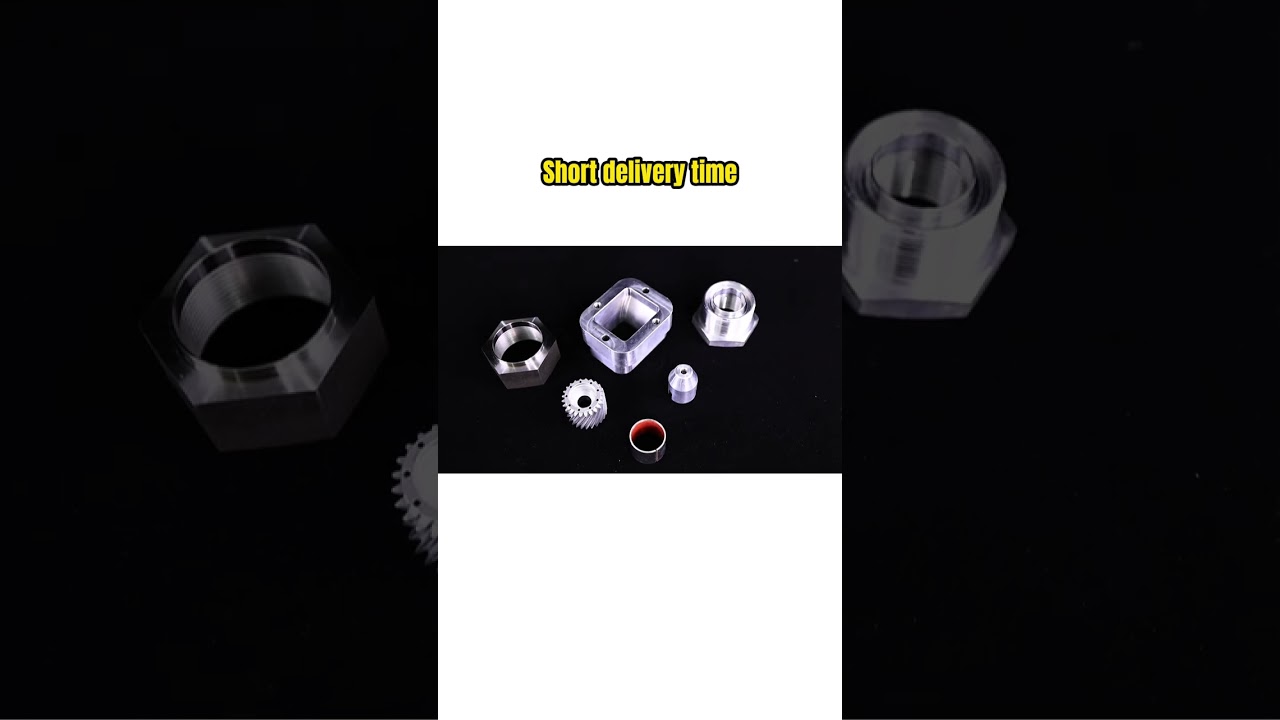
Real Vietnam Factory Samples — Custom Machined & Metal Parts
Watch on YouTube
Real footage from an audited DEWIN partner factory in Vietnam.
Alloy Selection Guide: What to Specify
Choosing the right brass or copper alloy is the most impactful decision you'll make. Here's what's commonly available from Vietnamese CNC shops and when to use each:
For most machined brass parts, free-machining C36000 is the default: it carries the benchmark 100 machinability rating, cuts fast, and finishes cleanly straight off the tool. Switch alloys only when conductivity, lead-free water contact, or spring properties genuinely demand it.
Free-Machining Brass — C36000 (360 Brass)
The default choice for most machined brass parts. C36000 has a machinability rating of 100 (the benchmark all other alloys are rated against). It cuts cleanly, produces short chips, allows high feed rates, and gives excellent surface finish directly off the tool.
- Composition: 61.5% Cu, 35.5% Zn, 3% Pb
- Tensile strength: 340–470 MPa (depending on temper)
- Machinability: 100 (reference standard)
- Material cost (Vietnam): $7–9/kg for bar stock
- Best for: Fittings, valves, connectors, bushings, turned parts, any high-volume brass component
- Limitation: Lead content (3% Pb) makes it non-compliant for potable water contact under NSF/ANSI 61 and California Prop 65. Not suitable for food contact.
Lead-Free Brass — C27450 (ECO Brass) / C69300
When your parts contact drinking water or food, you need lead-free brass. These alloys contain silicon or bismuth instead of lead to maintain machinability.
- Composition: ~76% Cu, 21% Zn, 3% Si (C69300) or similar
- Machinability: 70–80 (vs. C36000 = 100). Still very good.
- Material cost (Vietnam): $9–12/kg — 25–35% premium over C36000
- Best for: Potable water fittings, food processing equipment, medical devices
- Note: Requires different cutting parameters — slower speeds, different chip breakers. Specify lead-free early so the factory plans tooling correctly.
Cartridge Brass — C26000 (260 Brass)
Higher zinc content gives better cold formability but lower machinability. Often used for deep-drawn parts that also need some machining.
- Composition: 70% Cu, 30% Zn
- Machinability: 30 (significantly harder to machine than C36000)
- Material cost (Vietnam): $7–8/kg
- Best for: Drawn housings, ammunition components, radiator cores, decorative hardware
- DFM tip: If your part is pure CNC (no drawing/forming), switch to C36000 and save 40–60% on machining time.
Pure Copper — C11000 (ETP Copper)
When you need maximum electrical or thermal conductivity. 101% IACS conductivity. Used for bus bars, heat sinks, electrical contacts, and RF waveguides.
- Composition: 99.9% Cu, 0.04% O
- Machinability: 20 (very gummy, requires sharp tooling and careful parameter selection)
- Material cost (Vietnam): $10–14/kg (tracks LME copper price)
- Best for: Electrical bus bars, heat sinks, grounding components, RF/microwave parts
- Machining note: Use diamond-coated or PCD tools. Flood coolant mandatory. Expect 2.5–3x the machining time vs. C36000 for similar geometry.
Beryllium Copper — C17200
The high-performance choice. Exceptional spring properties, high strength (up to 1,400 MPa aged), good conductivity (22% IACS), and non-sparking — critical for explosive environments.
- Composition: 97.5% Cu, 1.8–2.0% Be, 0.2–0.6% Co/Ni
- Machinability: 50 (solution-annealed) / 20 (age-hardened)
- Material cost (Vietnam): $45–70/kg — expensive but irreplaceable for its applications
- Best for: Spring contacts, non-sparking tools, injection mold cores, aerospace bushings
- Safety note: Beryllium dust is toxic. Factories must have proper dust extraction and operator PPE. We only route BeCu work to shops with certified beryllium handling programs.
2026 Per-Part Pricing: Vietnam vs. US
All prices below are for C36000 free-machining brass unless noted. These are actual quoted ranges from our supplier network.
Simple turned brass parts run roughly $0.40–3.50 each in Vietnam depending on volume, versus $1.20–8.00 in the US. Complexity, tolerance, and alloy shift the range — pure copper adds 40–60% because of its low machinability and higher stock cost.
Simple Turned Parts (1–2 ops, ±0.05mm)
Fittings, bushings, spacers, adapter nuts — bread-and-butter lathe work.
- Qty 100: $3.50–8/part (US) · $1.50–3.50/part (Vietnam)
- Qty 1,000: $1.80–4.50/part (US) · $0.70–2/part (Vietnam)
- Qty 10,000: $1.20–3/part (US) · $0.40–1.20/part (Vietnam)
Medium Complexity (Turn + Mill, ±0.025mm)
Valve bodies, manifold blocks, multi-port connectors — parts needing both lathe and mill work.
- Qty 100: $12–30/part (US) · $5–14/part (Vietnam)
- Qty 1,000: $7–18/part (US) · $3–8/part (Vietnam)
- Qty 10,000: $4.50–12/part (US) · $1.80–5/part (Vietnam)
High Complexity (Multi-axis, ±0.01mm)
Precision instrument housings, RF waveguide components, tight-tolerance electrical contacts.
- Qty 100: $35–90/part (US) · $16–42/part (Vietnam)
- Qty 1,000: $20–55/part (US) · $9–25/part (Vietnam)
Pure Copper (C11000) — Add 40–60%
Copper's low machinability and material cost push prices up significantly. A bus bar that costs $8/part in brass will cost $12–15 in copper at the same quantity. But there's no substitute when you need that conductivity.
Surface Finish Options for Brass & Copper
Brass and copper parts often need finishing for aesthetics, corrosion protection, or functional requirements. Here's what's available from our Vietnam shops with add-on costs per part at 1,000-unit quantities:
- As-machined: Ra 0.8–1.6 µm. Free. Will tarnish over time in ambient air.
- Tumble polishing: Brightens surface, removes burrs. +$0.30–0.80/part.
- Nickel plating (electroless): 10–25 µm. Excellent corrosion protection, solderable, consistent coverage on complex geometry. +$1.50–4/part.
- Chrome plating: Decorative bright finish. +$2–6/part. Adds hardness (800–1000 HV surface).
- Tin plating: For solderability and contact resistance in electrical applications. +$1–3/part.
- Gold plating: For high-reliability electrical contacts. Flash gold (0.05 µm) +$2–5/part; hard gold (0.5–2.5 µm) +$8–25/part depending on area.
- Passivation / lacquer: Clear coat to prevent tarnishing on decorative brass. +$0.50–1.50/part.
- Black oxide: Aesthetic dark finish, mild corrosion resistance. +$0.50–1.50/part.
DFM Tips Specific to Brass & Copper
Design choices that save money when machining brass and copper:
- Use C36000 unless you have a documented reason not to. It machines 3x faster than C26000 and 5x faster than C11000. A $10 part in C36000 might be $25 in C11000 purely from machining time.
- Specify conductivity requirements, not just alloy. If you need >95% IACS, you must use C11000 or C10200. If you need >15% IACS, C17200 (BeCu) works. If conductivity doesn't matter, C36000 saves the most.
- Design for Swiss turning when possible. If your part is under 32mm diameter and rotationally symmetric, it's a Swiss lathe candidate. Vietnamese shops run Citizen and Star Swiss machines at $15–25/hr. Unit costs drop 30–50% vs. conventional CNC lathe at volumes over 500.
- Avoid thin walls in copper. Copper's gumminess causes tool deflection. Minimum wall thickness: 0.8mm for brass, 1.2mm for pure copper. Going thinner requires EDM or special fixturing at premium cost.
- Consolidate plating specs. If some features need nickel and others need tin, the part requires masking — adding $2–5/part. Design for a single plating spec where possible.
- Call out dezincification resistance if needed. For parts exposed to aggressive water chemistry, specify DZR brass (C35200 or C69300). Standard C36000 can dezincify in high-chloride environments, leading to field failures.
- Thread carefully. Brass threads beautifully but cross-threads easily during assembly due to low hardness. Specify thread gauging requirements in your drawing (GO/NO-GO) and consider nickel plating threads for wear resistance in repeated-assembly applications.
Landed Cost Analysis: Vietnam to US
Brass parts are dense (8.5 g/cm³), which affects shipping costs. Here's a realistic landed cost breakdown for 1,000 brass fittings (C36000, ~50g each, 50kg total):
- Manufacturing cost: $1.80/part × 1,000 = $1,800
- Quality inspection & packing: $120 (included in our quotes)
- Export handling: $45
- Air freight (50 kg, HCM → LAX): $280 (~$5.60/kg)
- US customs clearance + duty: $85 + 0% duty (HS 7419: brass articles, MFN 0–3%)
- Total landed: $2,330 = $2.33/part
Compare to US domestic at $4.50/part = $4,500 total. Vietnam landed cost saves 48%.
For sea freight (slower but cheaper at scale): $85 for a small LCL shipment vs. $280 air. Total landed drops to $2.13/part — a 53% saving.
Industries We Serve for Brass & Copper Parts
- Plumbing & HVAC: Valves, fittings, manifolds, adapters — lead-free C69300 for potable water, C36000 for non-potable
- Electrical & Electronics: Bus bars, terminal blocks, contacts, connectors — C11000 for conductivity, C17200 for spring contacts
- Marine: Through-hulls, seacocks, propeller shaft bushings — naval brass C46400 for seawater resistance
- Oil & Gas: Non-sparking tools, valve stems, instrumentation fittings — BeCu C17200 for ATEX environments
- Automotive: Sensor housings, fuel system fittings, terminal pins — high-volume Swiss-turned parts
Quality Assurance for Brass & Copper Parts
Every brass and copper order from our network includes:
- Material test certificate (EN 10204 3.1) with chemical composition verification via spectrometer
- Dimensional inspection report — CMM for tight-tolerance features, optical comparator for profiles
- Plating thickness verification via X-ray fluorescence (XRF) when finish is specified
- Salt spray test reports for corrosion-critical applications (ASTM B117)
- RoHS and REACH compliance documentation when required
- Pressure test reports for fluid-handling components
Get a Quote for Brass & Copper Parts
Send us your drawings (STEP + PDF with tolerances and finish specs) and we'll return a detailed rapid RFQ response and structured technical quotes — including per-part pricing by quantity, material certification commitment, plating options with costs, and shipping estimate to your US location.
Frequently Asked Questions
When is a brass part a good candidate for Swiss turning in Vietnam?
Parts under 32 mm diameter and rotationally symmetric are Swiss lathe candidates. Vietnamese shops run Citizen and Star Swiss machines at $15–25/hr, and unit costs drop 30–50% versus a conventional CNC lathe at volumes over 500. Design for Swiss turning wherever the geometry allows, rather than assuming a conventional lathe.
How much more does pure copper cost to machine than C36000 brass?
Pure copper C11000 adds 40–60% to part price versus C36000 brass. Its machinability rating is 20 against the C36000 benchmark of 100, and it takes 2.5–3x the machining time for similar geometry. Material also costs more, at $10–14/kg versus $7–9/kg. Diamond-coated or PCD tooling and flood coolant are mandatory, and minimum wall thickness rises to 1.2 mm.
What brass alloy should I specify for aggressive water or seawater?
Dezincification-resistant brass — C35200 or C69300 — must be called out separately for parts exposed to aggressive water chemistry. Standard C36000 can dezincify in high-chloride environments and fail in the field. For seawater specifically, naval brass C46400 is the alloy used on through-hulls, seacocks, and propeller shaft bushings.