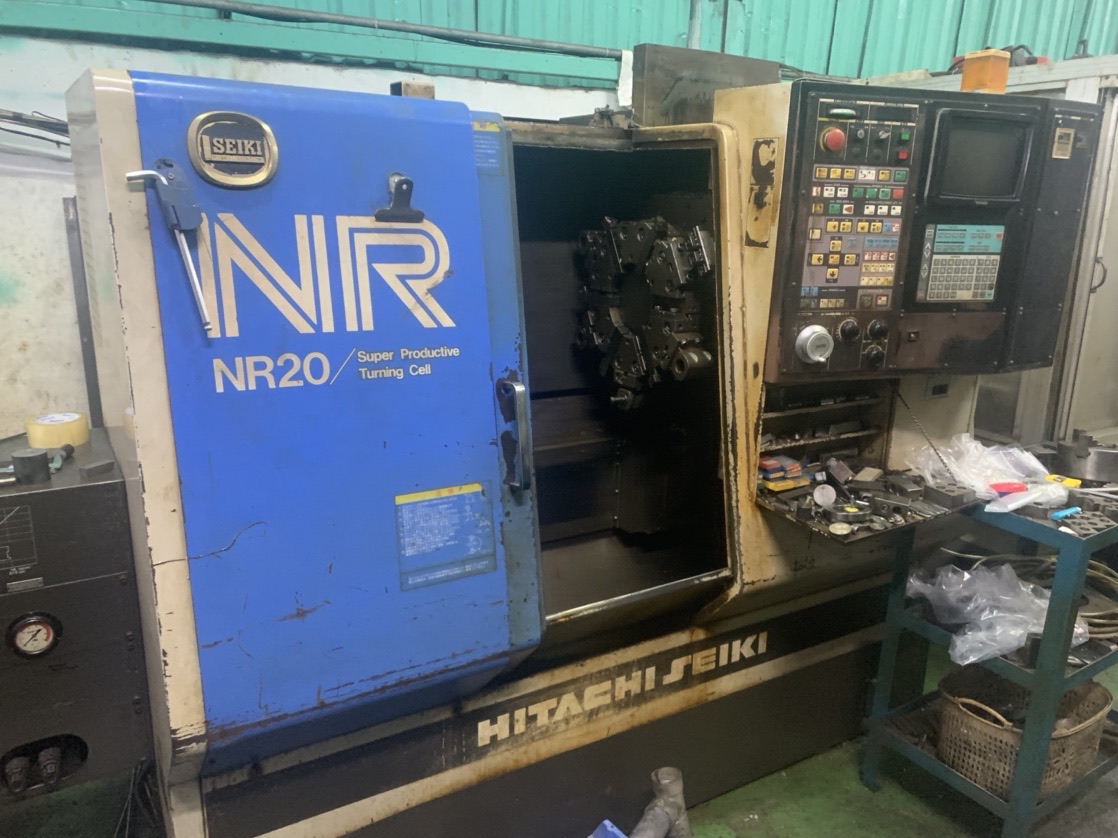
With the development of manufacturing technology, CNC (Computer Numerical Control) machine tool technology has become the core of modern manufacturing industry. Compared with traditional machining methods, CNC technology controls machine tools through computer programming, achieving higher accuracy and efficiency.
Accuracy and Consistency
One of the biggest advantages of CNC machine tools is their excellent accuracy and consistency. By precisely controlling the movement trajectory and machining depth of the machine tool, CNC can produce parts with consistent height and strict tolerance requirements. Traditional machining relies on the skills of operators. Although skilled operators can produce high-quality parts, it is difficult to maintain product consistency in mass production.
Speed and Efficiency
In terms of production efficiency, CNC also demonstrates significant advantages. CNC machine tools can operate continuously without the need for manual intervention, making them particularly suitable for complex or multi process machining tasks. In contrast, the speed of traditional machining is usually limited by the skills and speed of the operator, resulting in lower efficiency in processing complex products.
Operational Requirements
CNC machine tools require programming before operation, which requires operators to have certain computer programming skills and mechanical processing knowledge. However, once programming is completed, the machine tool can automatically complete production, reducing labor costs and operational errors. Traditional machining relies on the manual operation and experience of operators, making it suitable for single piece production and processing of simple parts.
Cost
In terms of cost considerations, the initial investment for CNC machine tools is relatively high, including expensive equipment procurement costs and training costs for operators. However, in the long run, due to its high efficiency and low error rate, CNC can save more production costs and material costs. The initial investment of traditional machine tools is relatively low, but their low efficiency and high error rate may lead to higher indirect costs in large-scale or high-precision production needs.
Conclusion
The choice between CNC machine tools or traditional machining needs to be determined based on specific manufacturing needs, budget, and production volume. For manufacturing environments that require high precision, mass production, and complex products, CNC technology is a more suitable choice. For situations that require high customization or limited budgets, traditional machining is a more economical and practical solution.
Thank you for reading our article. If you need related products or have any questions or suggestions about our products, please don’t hesitate to contact us by sending an email, and we will reply to your email as soon as possible.
Precision Manufacturing & Sourcing Specification Matrix
| Technical Dimension | Standard Commercial Grade | High-Precision OEM Export Grade | DEWIN Verification Protocol |
|---|---|---|---|
| Machining & Forming Tolerance | ISO 2768-m (±0.10 mm nominal) | ISO 2768-f (±0.01 mm – ±0.025 mm critical bores) | Calibrated 3D CMM & Air/Pin Gauging |
| Surface Roughness & Finish | Ra 1.6 – 3.2 µm as-machined / standard coat | Ra 0.4 – 0.8 µm precision ground / MIL-A-8625 anodized | Profilometer & Coating Thickness Gauge |
| Material & Alloy Certification | Supplier Mill Test Report (MTR) | Independent OES chemical & mechanical verification | EN 10204 3.1 + RoHS/REACH Compliance |
| Batch Inspection & Packaging | ISO 2859-1 (AQL 1.0 Major / 2.5 Minor) | Zero-defect critical features + VCI export crating | Pre-Shipment Inspection (PSI) Report |
Frequently Asked Questions
What engineering files are required to quote comparison between cnc and traditional machining with DEWIN?
Provide 3D CAD models (STEP or IGES) along with 2D engineering drawings (PDF/DXF) specifying critical-to-quality (CTQ) tolerances, material grade, surface finish, and annual volume.
How does DEWIN verify dimensional accuracy and material compliance before shipment?
Every production lot undergoes incoming material spectrometer verification (EN 10204 3.1), First Article Inspection (FAI) via 2D/3D coordinate measuring machines (CMM), and AQL pre-shipment audits.
Can DEWIN support both low-volume prototype validation and mass production scaling in Vietnam and China?
Yes. DEWIN coordinates rapid CNC and bridge-tooling prototypes alongside high-tonnage production tooling across audited ISO 9001 and IATF 16949 partner factories in Vietnam and China.