Custom Rubber & Silicone Molding in Vietnam: Complete Sourcing Guide 2026
February 24, 2026 · 15 min read
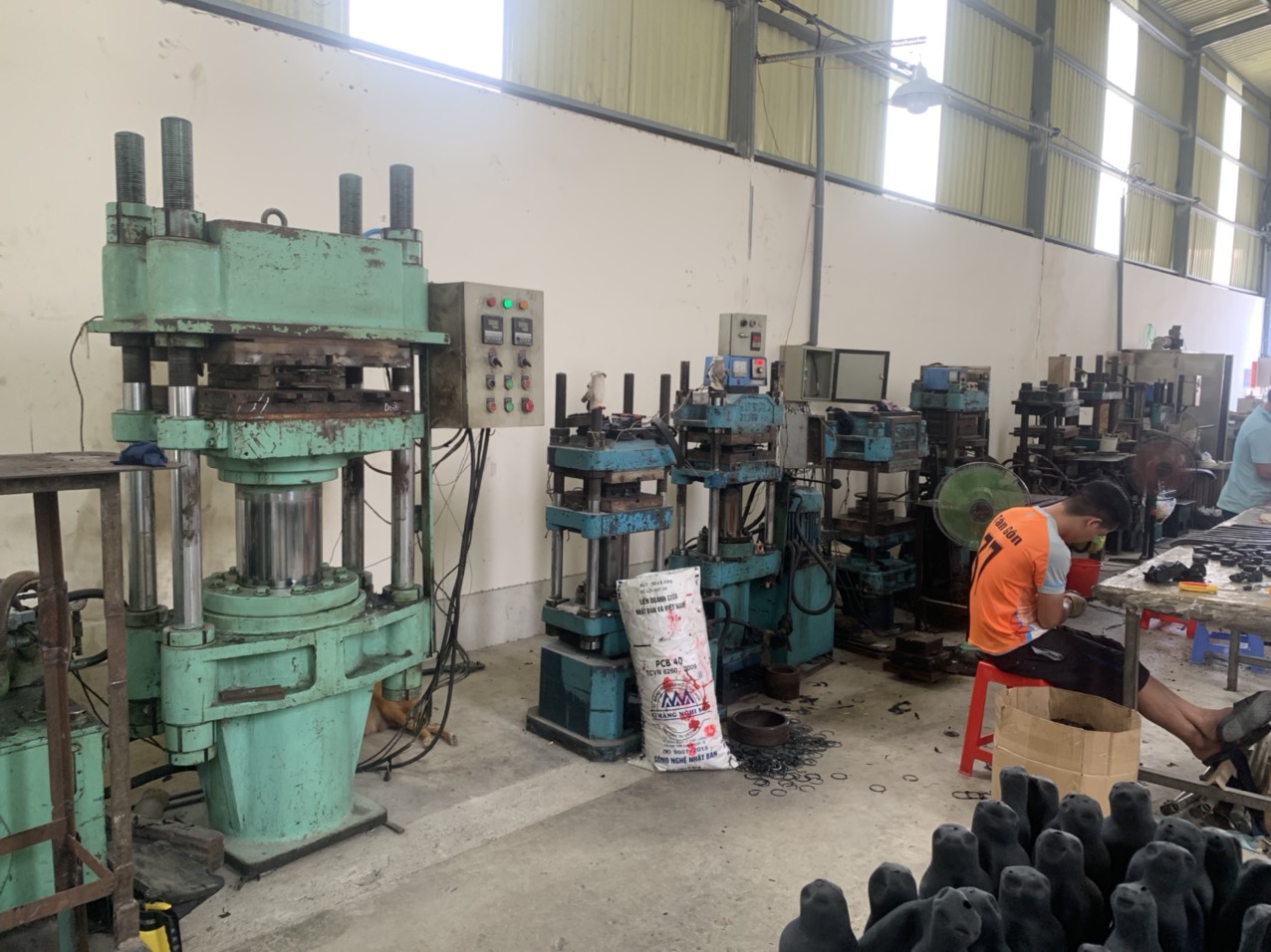
Vietnam is the world's 3rd largest natural rubber producer and is rapidly becoming a serious alternative to China for custom rubber and silicone part manufacturing. With exemption from Section 301 Chinese punitive duties, labor costs 40–55% below China's coastal regions, and a growing base of ISO-certified rubber factories, Vietnam offers US and European buyers a compelling sourcing option.
This guide covers Vietnam's rubber manufacturing capabilities — processes, materials, real factory pricing, quality standards, and what to look for when evaluating suppliers.
Yes — Vietnam factories mold custom rubber and silicone parts by compression, transfer, injection, and LSR, in EPDM, NBR, silicone, FKM, and natural rubber; parts enter the US at relief from Section 301 Chinese punitive tariffs for qualifying goods, reaching near cost parity with China after duties.
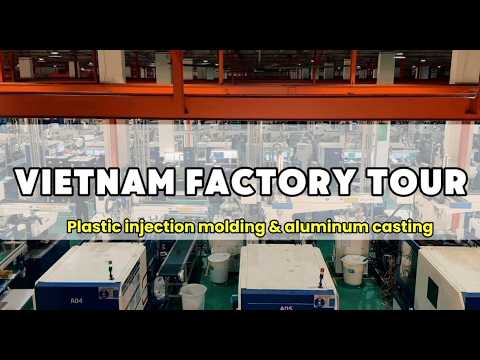
Inside a Vietnam Factory — Plastic Processing & Die Casting
Watch on YouTube
Real footage from an audited DEWIN partner factory in Vietnam.
Vietnam's Rubber Industry: Current Capabilities
Vietnam produced over 1.3 million tons of natural rubber in 2025, making it the 3rd largest producer globally behind Thailand and Indonesia. More importantly for custom parts buyers, downstream rubber product manufacturing has grown at 18% CAGR since 2020:
- 500+ rubber product manufacturers concentrated in Ho Chi Minh City, Binh Duong, Dong Nai, and Long An provinces.
- Japanese and Korean OEM supply chains — Honda, Toyota, Samsung, and LG have established tier-2 rubber part suppliers in Vietnam, raising quality standards industrywide.
- Compression, transfer, and injection molding — All three processes available. LSR (Liquid Silicone Rubber) injection is growing but still less common than in China.
- Extrusion capabilities — EPDM, silicone, and CR profiles for automotive weatherstripping, industrial seals, and construction gaskets.
Material Selection Guide: What Vietnamese Factories Stock
Vietnam factories work with the full range of elastomers, though material sourcing patterns differ from China:
Readily Available (Domestic or Short Lead Time)
- NR (Natural Rubber) — Domestically produced. $1.50–3.00/kg. Vietnam's natural advantage. Excellent for vibration mounts, bushings, and anti-vibration pads where tear strength and fatigue life matter.
- EPDM — Imported from Japan (Sumitomo), Korea (Kumho), or China. $2.50–4.50/kg. 2-week lead time for standard grades. The most common compound for seals and gaskets.
- NBR (Nitrile) — Imported from Japan/Korea. $3.00–5.00/kg. Standard for oil-resistant applications.
- CR (Neoprene) — $4.00–7.00/kg. Available but less commonly stocked than EPDM/NBR.
- HTV Silicone — Imported from Shin-Etsu (Japan), Wacker (Germany), or Chinese sources. $8–15/kg. Available at most factories serving food/medical markets.
Specialty (Longer Lead Time, Fewer Suppliers)
- FKM/Viton® — $25–60/kg. 3–4 week lead time. Available at premium factories serving automotive/chemical industries. Verify compound source — genuine Chemours/Daikin FKM vs. Chinese generic grades have significant performance differences.
- LSR (Liquid Silicone Rubber) — $12–25/kg. Fewer factories have LSR injection capability. Growing fast due to medical device manufacturing expansion in Vietnam.
- Fluorosilicone (FVMQ) — $30–50/kg. Very limited. Usually serviced by factories with aerospace/defense customers.
Vietnam Rubber Molding Costs: Real 2026 Benchmarks
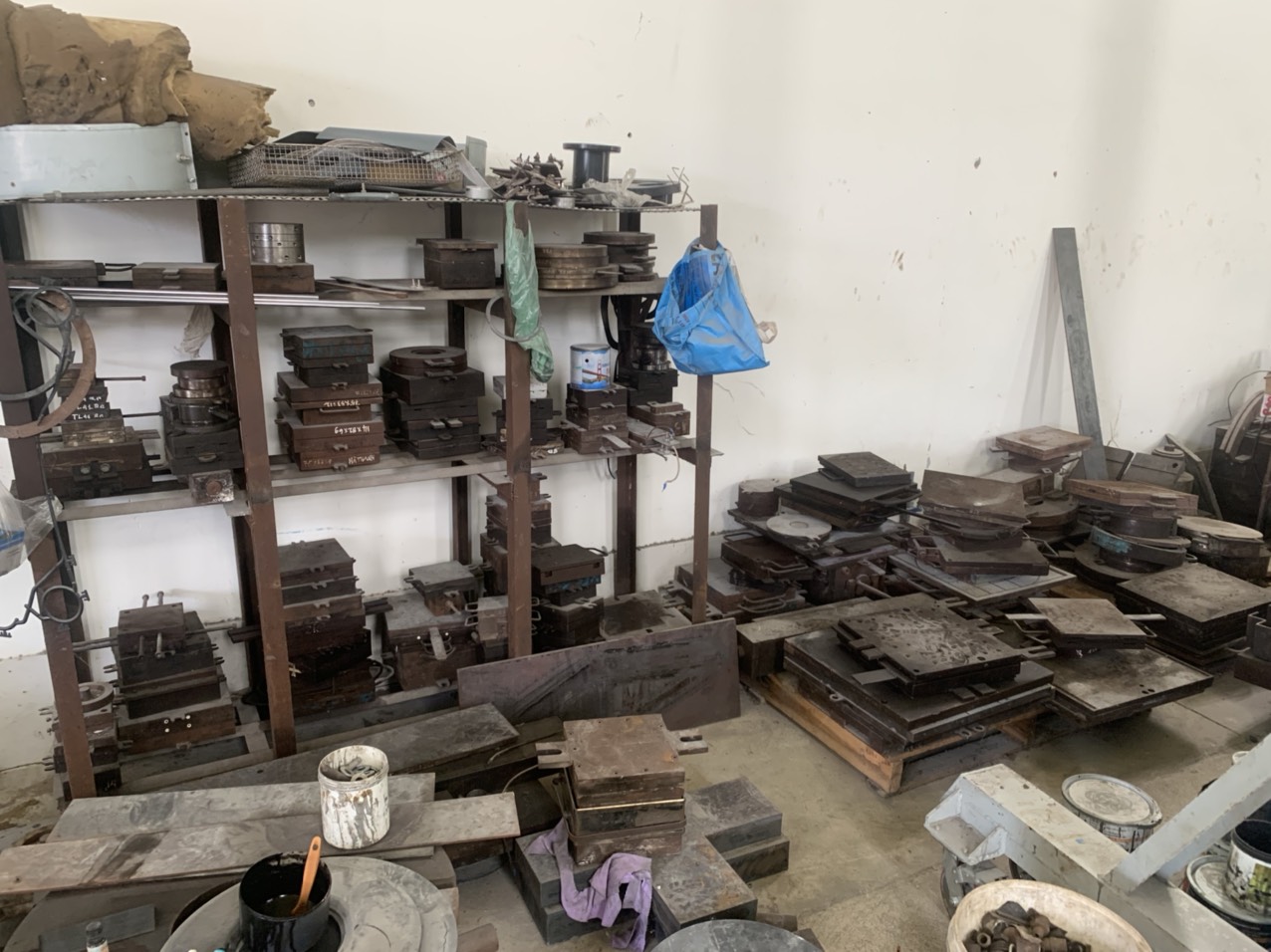
Compression Molding
- Tooling: $1,500–3,000 (single cavity), $5,000–20,000 (multi-cavity production molds)
- Simple gasket (EPDM, 100mm dia): $0.15–0.30/pc at 10,000 qty · $0.08–0.15/pc at 100,000 qty
- Vibration mount (NR, metal-bonded): $0.80–2.50/pc at 5,000 qty · $0.40–1.20/pc at 50,000 qty
- Tolerances: ±0.15–0.25mm standard (ISO 3302-1 M2)
Transfer Molding
- Tooling: $3,000–12,000 (single cavity), $10,000–35,000 (multi-cavity)
- Rubber-to-metal bonded part: $1.50–5.00/pc at 5,000 qty · $0.60–2.00/pc at 50,000 qty
- Tolerances: ±0.10–0.15mm (ISO 3302-1 M1-M2)
Rubber Injection Molding
- Tooling: $8,000–25,000 (single cavity), $20,000–65,000 (multi-cavity)
- Precision seal (LSR, medical): $0.20–0.50/pc at 100,000 qty
- Automotive O-ring (NBR): $0.03–0.08/pc at 500,000 qty
- Tolerances: ±0.05–0.10mm
Extrusion
- Die cost: $500–2,500
- EPDM weatherstrip profile: $0.20–1.50/meter (MOQ: 200–500m)
- Silicone tubing (medical): $0.50–3.00/meter
- Cross-section tolerance: ±0.3–0.5mm
Cost Advantage: Vietnam vs. China vs. US
For a standard custom EPDM gasket (compression molded, Shore A 70, 100mm × 60mm × 3mm):
- Vietnam per-part @ 10K qty: $0.15–0.30
- China per-part @ 10K qty: $0.12–0.25 (+ 7.5–25% Section 301 tariff = preferential tariff treatment.13–0.31 landed)
- US per-part @ 10K qty: $0.60–1.20
After tariffs, Vietnam and China reach near cost parity on rubber parts. Vietnam's labor advantage (rubber production is labor-intensive with manual loading, deflashing, and inspection) offsets slightly higher raw material import costs.
After Section 301 tariffs, Vietnam and China reach near cost parity on molded rubber parts, while Vietnam-origin goods carry tariff-mitigated Section 301 duty and Vietnam's labor-intensive molding, deflashing, and inspection offset its slightly higher raw-material import costs.
Quality Control: What to Verify at Vietnam Rubber Factories
- Rheometer (MDR/ODR) — Non-negotiable. A factory without a rheometer cannot verify cure parameters. Ask to see recent test reports with t90 cure time, minimum/maximum torque, and scorch time.
- Compound mixing — In-house Banbury mixer = compound consistency control. Outsourced mixing = added variable. Top Vietnam factories mix in-house; smaller ones buy pre-mixed compounds from MESNAC or local mixers.
- Hardness testing — Shore A durometer at minimum. Ask them to test across a batch — variation should be within ±3 points for well-controlled compounds.
- Compression set testing — ASTM D395 capability. Critical for any sealing application. If the factory doesn't own a compression set fixture, they can't validate seal performance.
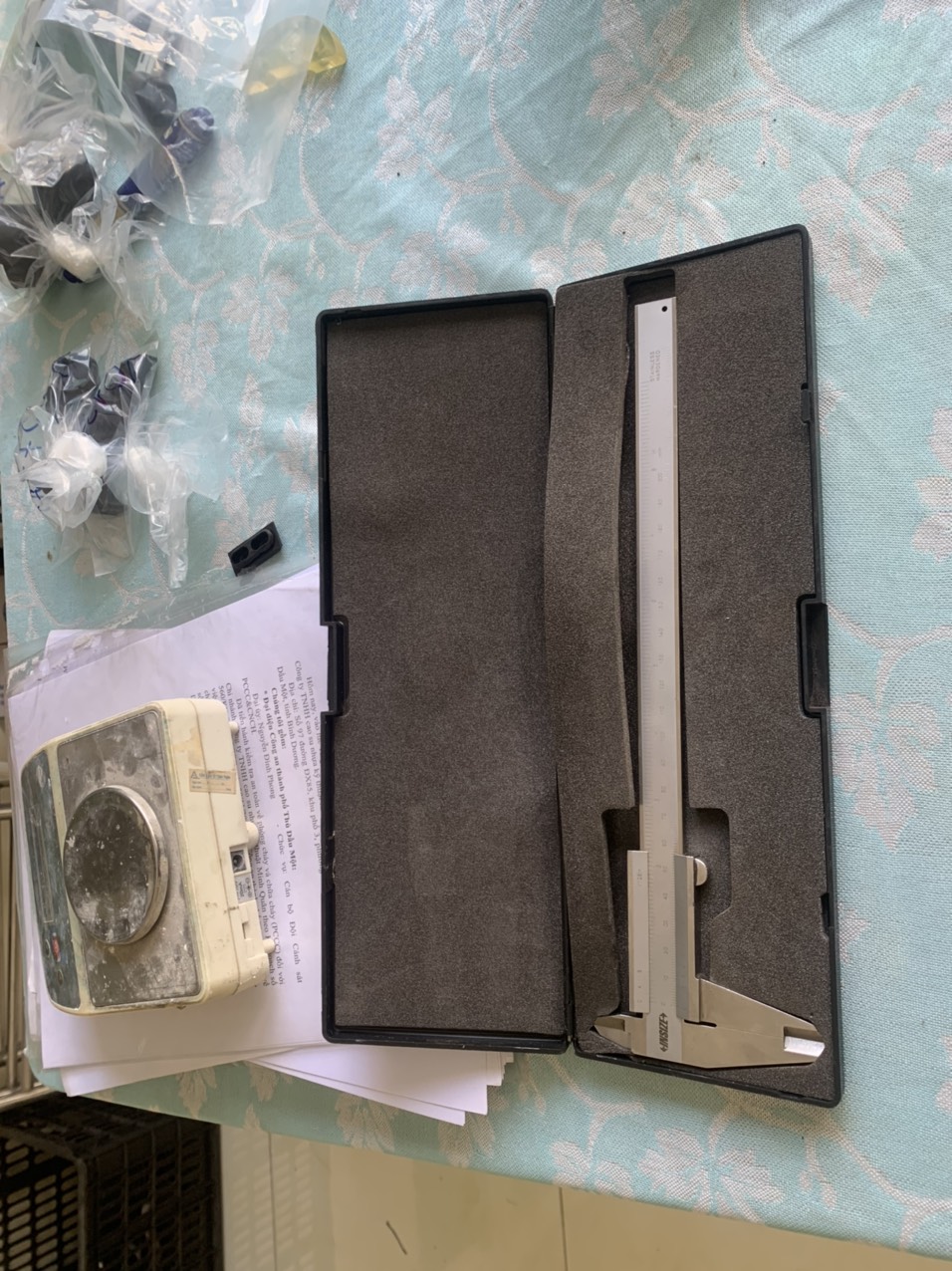
- Dimensional inspection — Profile projector or vision system for cross-section measurements. CMM for bonded assemblies. Calipers alone are insufficient for rubber — parts deform under measurement force.
- Material certifications — Request raw material CoC (Certificate of Conformity) from compound suppliers. Verify FDA/food-grade claims with actual 21 CFR 177.2600 test reports, not just supplier statements.
RFQ Checklist for Vietnam Rubber Suppliers
Include all of these in your RFQ to get accurate, comparable quotes:
- 3D model (STEP) or 2D drawing with tolerances per ISO 3302-1
- Material: compound family + hardness + tolerance (e.g., "EPDM, Shore A 70 ±5")
- Compliance requirements (FDA, UL, REACH, RoHS, automotive specs)
- Annual volume + order batch size + delivery schedule
- Surface finish / flash requirements / color
- Testing requirements with specific ASTM/ISO standards
- Packaging and labeling requirements
- Incoterms preference (FOB HCMC / CIF destination port)
Source Custom Rubber Parts from Vietnam
Dewin Vietnam connects you with audited, ISO-certified rubber manufacturers across Ho Chi Minh City and surrounding industrial provinces. From prototype compression molds to high-volume injection molding, we match your requirements to the right factory — verified with on-site quality audits and rheometer-confirmed process control.
Frequently Asked Questions
What equipment must a Vietnam rubber factory have before I order?
A rheometer (MDR/ODR) is non-negotiable, because without one a factory cannot verify cure parameters such as t90 cure time, torque, and scorch time. Also look for an in-house Banbury mixer for compound consistency, an ASTM D395 compression set fixture for sealing parts, and a profile projector, since calipers deform rubber under measurement force.
What does a compression mold cost versus a rubber injection mold?
Compression tooling is the cheapest entry at $1,500–3,000 single cavity and $5,000–20,000 multi-cavity, but holds only ±0.15–0.25mm. Transfer molds run $3,000–12,000 single cavity at ±0.10–0.15mm, and rubber injection molds $8,000–25,000 single cavity at ±0.05–0.10mm. Tolerance need and annual volume together decide which pays off.
Can Vietnam factories supply LSR and FDA food-grade rubber parts?
LSR injection capability exists in Vietnam but at fewer factories than in China, with material at $12–25/kg and demand growing on the back of medical device manufacturing. For food-grade parts, request actual 21 CFR 177.2600 test reports rather than supplier statements, plus raw material Certificates of Conformity from the compound supplier.