What Is Die Casting? Advantages, Disadvantages and Applications
The estimated reading time for this article is ten minutes.
Die-casting equipment was first invented because people needed to make molds for movable type printing. Then, in 1849, the first small die-casting-related patents for the production of printing press types were issued. Since then, the die casting process has gradually been applied to various industries. However, Japanese, American, and British scholars have made different definitions of the die-casting process. At present, the industry is more familiar with the statement of Japanese scholars, that is, “pressing the molten alloy into the precision casting mold at a high temperature will produce a large amount of casting in a short time,” which is a casting method that produces high precision and excellent surface finish.
Of course, as a professional foreign trade company engaged in die casting for more than ten years, we have our own opinions in the field of die casting. The following content will explain in detail the basic knowledge of die casting technology, the advantages and disadvantages of die casting technology, and the industry applications of die casting technology, so that people outside the industry can easily understand the basic knowledge of die casting.
Definition of Die Casting
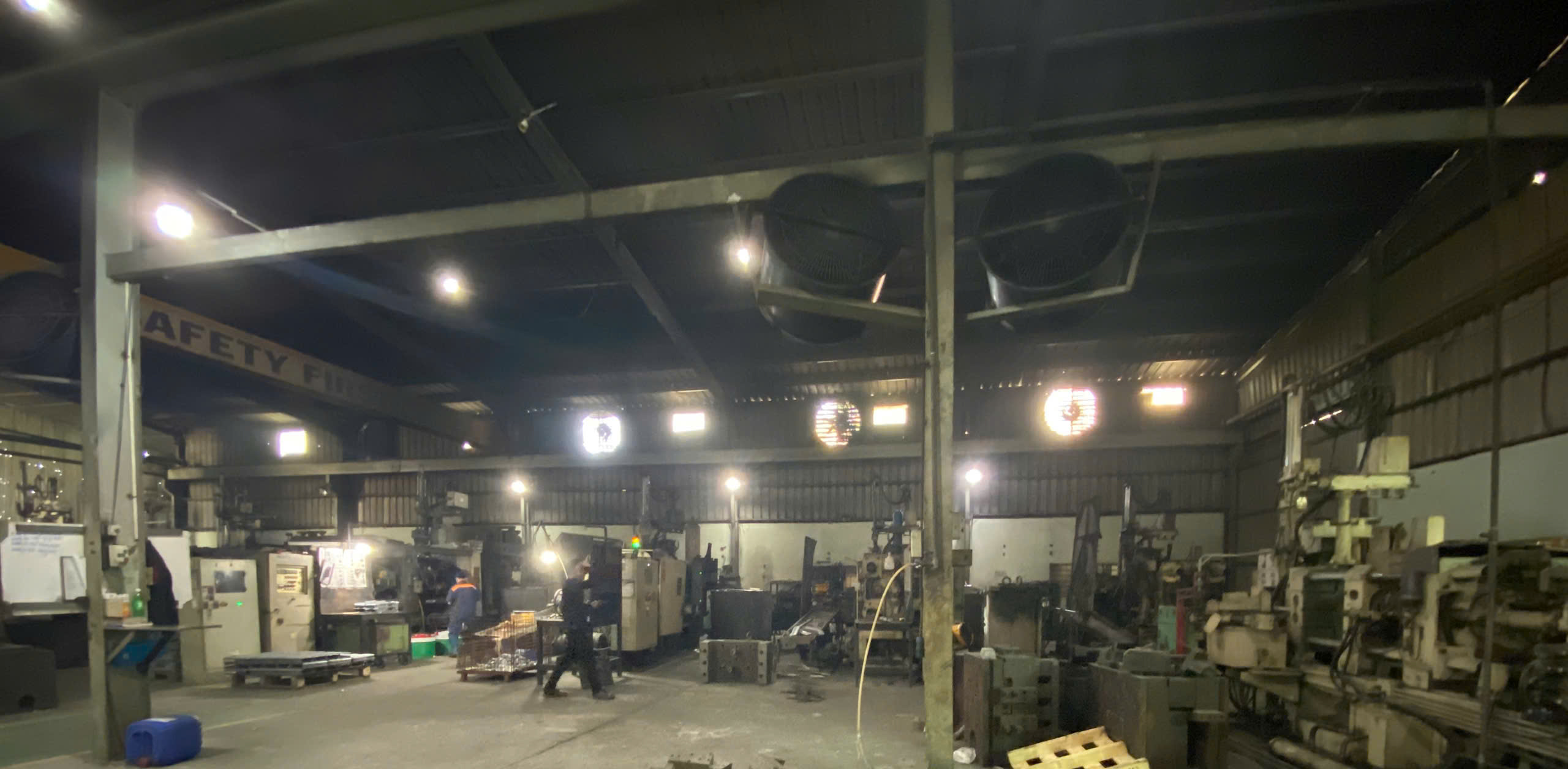
Die casting is a casting method in which molten or semi-molten metal is injected into a metal mold at high speed and high pressure, and the molten or semi-molten metal is cooled and formed under pressure. In simple terms, die casting is used to produce metal parts with good dimensional accuracy and surface finish. If you want to learn more about our die casting services, you can visit our related page for more details.
Advantages of Die Casting
1. Fast production speed and high productivity. The die-casting process utilizes easy-to-implement, high-level automation, and mechanization to rapidly fill the cavity of a steel mold with molten or semi-molten metal using high speed and high pressure, resulting in a high production rate.
2. The casting has high dimensional accuracy and a smooth surface. The dimensional tolerance level of die castings can reach CT3 – CT6, and the surface roughness is generally Ra 0.8 – 3.2μm. The formed die castings can generally be used directly without machining.
3. Parts can be embedded in die castings, which not only saves valuable materials and machining time, but also replaces the assembly process of components, reduces the assembly process, simplifies the manufacturing process, and also reduces or avoids secondary machining.
4. Castings have high tensile strength. The tensile strength of the casting can reach 415 MPa.
Disadvantages of Die Casting
1. The casting cost is high. Die-casting machines, die-casting alloy, and die-casting mold are the three major elements of die-casting production, and none of them are indispensable. Usually, because of the high cost of die-casting machines and die-casting molds, die-casting technology is not suitable for producing small-batch die-casting parts, which means that die-casting products usually require a high MOQ and higher upfront costs.
2. On the one hand, it is limited by the clamping force and mold size of the die-casting machine. On the other hand, the high cost and large investment of the die-casting machine mean that the production of large-scale die-casting parts is limited. In other words, the die casting method is not suitable for the production of large die castings.
3. Under high speed and high pressure filling, it is difficult to completely remove the gas in the cavity of the die-casting mold, and the castings are prone to pores, cracks, and oxidized metal impurities. Furthermore, since die casting is used to form molten or semi-molten metal into die castings, these parts usually cannot be subjected to heat treatment or welding, because the gas in the gap will expand under heat, causing internal defects and even peeling of the surface.
4. The types of casting alloys are limited, and only parts made of aluminum, magnesium, zinc, and copper can be processed.
Characteristics of Various Metals Commonly Used in Die Casting
Aluminum: Lightweight, high dimensional stability when making complex and thin-walled castings, strong corrosion resistance, good mechanical properties, high thermal and electrical conductivity, and high strength at high temperatures.
Magnesium: Easy to machine, high strength-to-weight ratio, and the lightest of commonly used die-cast metals.
Zinc: The easiest metal to die-cast, economical for manufacturing small parts, easy to coat, high compressive strength, high plasticity, and long manufacturing life.
Copper: High hardness, strong corrosion resistance, the best mechanical properties among commonly used die-casting metals, wear resistance, and strength close to steel.
Die Casting Applications
1. Electronic and electrical accessories, such as electronic doors, motors, engines, and similar components.
2. Industrial accessories, such as ship parts, fuel pressure regulators, filter parts, and more.
3. Door and window hardware accessories, such as door handles, window handles, connectors, knobs, and other hardware products commonly used in daily life.
4. Auto parts, such as engine blocks, cylinder head covers, gearbox housings, shell covers, and chain covers.
5. Lampshade accessories, such as the lampshades of UFO lights, spotlights, airport floor lamps, and other lighting products.
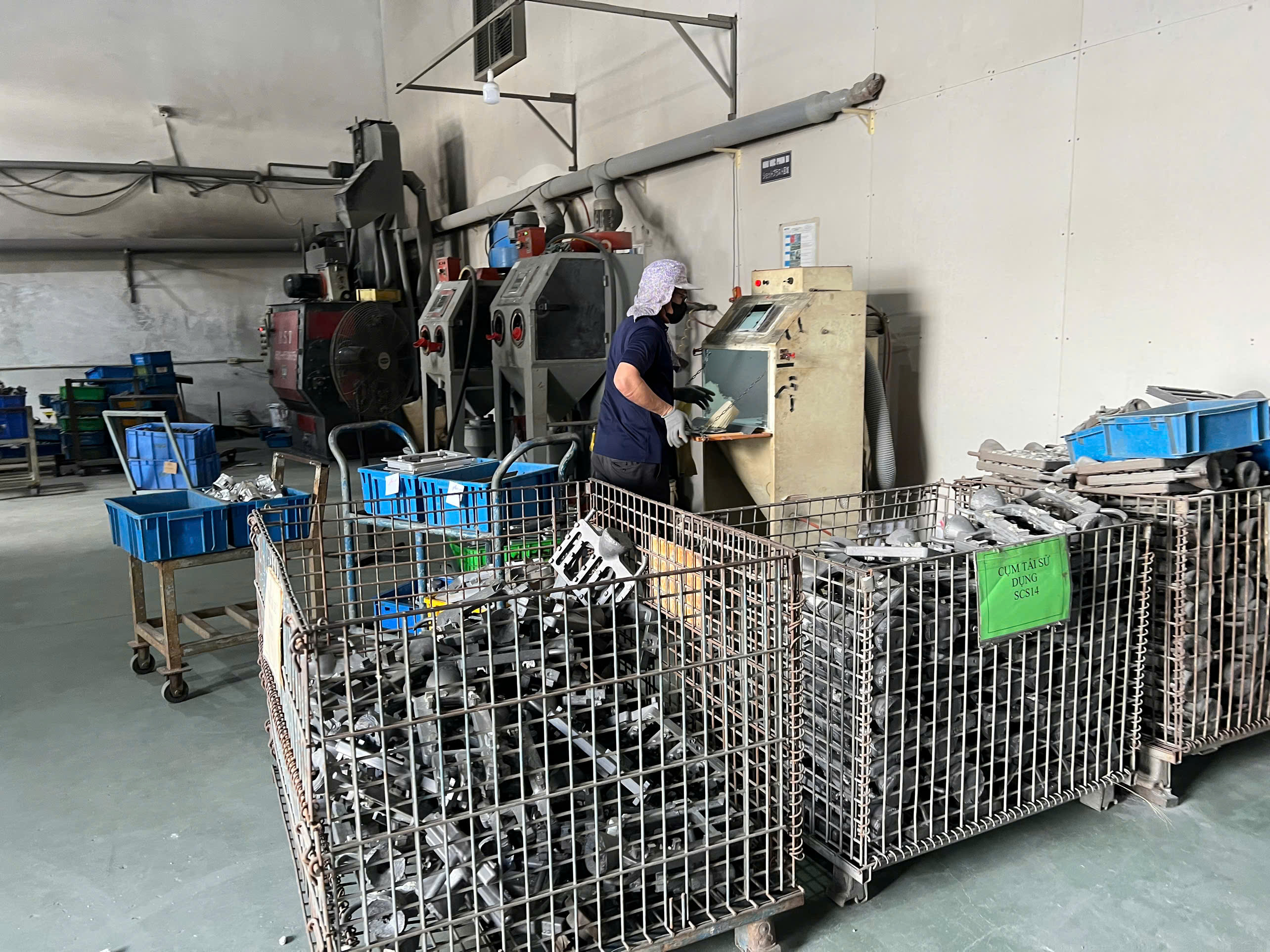
Why Choose Dewin as Your Die Casting Partner?
For a long time, in terms of die casting, Dewin’s main production direction has been die-casting parts in the field of automobiles and motorcycles. With more than ten years of industry accumulation, we have built a large customer base and have cooperated with many internationally well-known automobile, motorcycle, and mobile phone companies. If you are looking for a reliable partner, Dewin with ISO9001 certification will surely satisfy you with professional production capacity. You can also learn more about our die casting factory and manufacturing capabilities.
Inquiry tips: Please send an email to in**@*******ch.com, or leave your contact information, and we will have a professional salesperson get in touch with you.
Precision Manufacturing & Sourcing Specification Matrix
| Technical Dimension | Standard Commercial Grade | High-Precision OEM Export Grade | DEWIN Verification Protocol |
|---|---|---|---|
| Machining & Forming Tolerance | ISO 2768-m (±0.10 mm nominal) | ISO 2768-f (±0.01 mm – ±0.025 mm critical bores) | Calibrated 3D CMM & Air/Pin Gauging |
| Surface Roughness & Finish | Ra 1.6 – 3.2 µm as-machined / standard coat | Ra 0.4 – 0.8 µm precision ground / MIL-A-8625 anodized | Profilometer & Coating Thickness Gauge |
| Material & Alloy Certification | Supplier Mill Test Report (MTR) | Independent OES chemical & mechanical verification | EN 10204 3.1 + RoHS/REACH Compliance |
| Batch Inspection & Packaging | ISO 2859-1 (AQL 1.0 Major / 2.5 Minor) | Zero-defect critical features + VCI export crating | Pre-Shipment Inspection (PSI) Report |
Frequently Asked Questions
Why Choose Dewin as Your Die Casting Partner?
For a long time, in terms of die casting, Dewin's main production direction has been die-casting parts in the field of automobiles and motorcycles. With more than ten years of industry accumulation, we have built a large customer base and have cooperated with many internationally well-known automobile, motorcycle, and mobile phone companies. If you are looking for a reliable partner, Dewin with ISO9001 certification will surely satisfy you with professional production capacity. You can also learn more about our die casting factory and manufacturing capabilities.
What engineering files are required to quote what is die casting? advantages, disadvantages and applications with DEWIN?
Provide 3D CAD models (STEP or IGES) along with 2D engineering drawings (PDF/DXF) specifying critical-to-quality (CTQ) tolerances, material grade, surface finish, and annual volume.
How does DEWIN verify dimensional accuracy and material compliance before shipment?
Every production lot undergoes incoming material spectrometer verification (EN 10204 3.1), First Article Inspection (FAI) via 2D/3D coordinate measuring machines (CMM), and AQL pre-shipment audits.