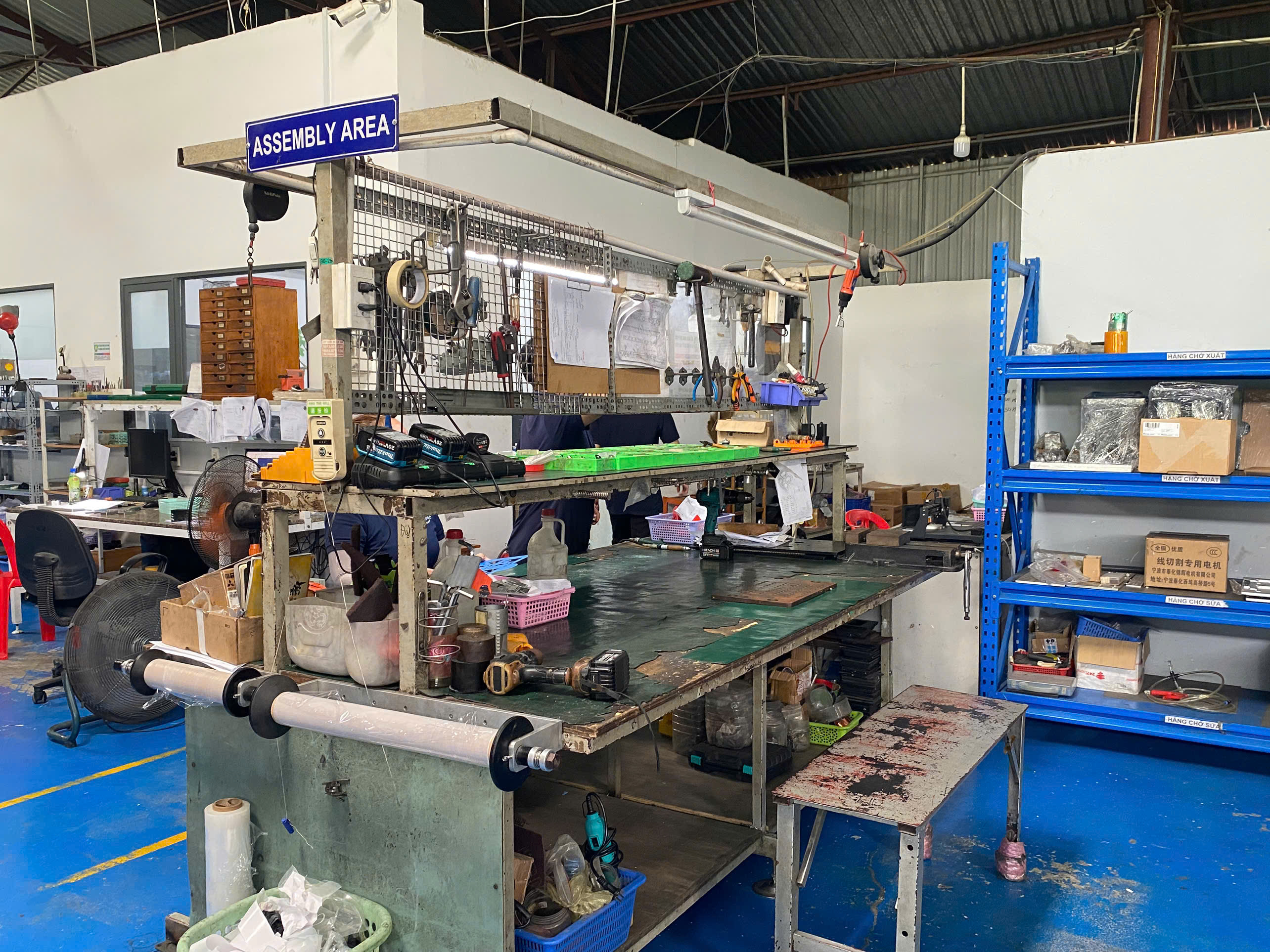

Every week, our Vietnam office fields the same question from US buyers placing orders for custom sheet metal parts: should I buy FOB or CIF?
FOB is the best Incoterm for sourcing sheet metal fabrication from Vietnam. It gives buyers clear risk transfer at the port of loading, lower shipping costs, and full control over freight forwarding and cargo insurance—making it the standard for actual purchase orders.
The answer sounds simple, but the details matter. A wrong choice can inflate your import duties, leave you with inadequate insurance, or create liability gaps that cost thousands of dollars on a single shipment. Below, I break down the mechanics, costs, and real-world trade-offs so you can decide with confidence.
How do I decide if FOB or CIF is more cost-effective for my sheet metal sourcing in Vietnam?
A buyer we work with in the Midwest once received a CIF quote and an FOB quote for the same order of precision mounting brackets. The price gap revealed hidden costs he never expected.
To decide between FOB and CIF, compare the total landed cost. FOB is typically more cost-effective because you negotiate your own ocean freight and cargo insurance rates directly, avoiding the premium a seller bundles into a CIF price.

What FOB Actually Means for Your Order
FOB stands for Free On Board 1 under Incoterms 2020 2. The seller handles everything inside Vietnam: inland haulage from the factory to Cat Lai Port, export customs clearance, and loading the goods onto the vessel. Once the sheet metal parts cross the ship's rail, risk transfers to you. From that point, you arrange and pay for ocean freight and insurance to the destination port.
This structure is clean. You know exactly what the factory charges for the product. You know exactly what your freight forwarder charges for the voyage. There are no bundled markups.
What CIF Actually Means
CIF stands for Cost, Insurance, and Freight 3. The seller pays for ocean freight and minimum insurance to your destination port. That sounds convenient. But here is the catch: risk still transfers at Cat Lai Port, the same as FOB. You bear the risk for the entire ocean voyage even though the seller paid for the freight.
The insurance the seller provides is typically ICC-C, the minimum coverage class 4. It does not cover many common risks like rough handling, container water damage, or theft. On a $50,000 order of custom metal parts, that gap can be devastating.
Side-by-Side Cost Breakdown
| Cost Element | FOB | CIF |
|---|---|---|
| Product cost | Included | Included |
| Inland haulage (Vietnam) | Included | Included |
| Export customs clearance | Included | Included |
| Ocean freight | Buyer pays directly | Seller pays (bundled into price) |
| Cargo insurance 5 | Buyer selects and pays | Seller provides minimum (ICC-C) |
| Freight markup by seller | None | Common—seller adds margin |
| Buyer's control over carrier | Full | None |
The Real Math
When our team in Vietnam sources quotes for clients, we always request both FOB and CIF pricing. On a typical container of sheet metal brackets, the CIF price is often $1,500 to $3,000 higher than the FOB price plus the buyer's own freight and insurance costs. That difference comes from the seller's logistics markup and the cost of minimum insurance you probably need to supplement anyway.
For experienced importers with a trusted freight forwarder, FOB wins every time. You pick the carrier. You pick the schedule. You negotiate rates based on your total volume across all suppliers, not just one order.
When CIF Makes Sense
CIF has a narrow but valid use. If you are a new importer running your first sheet metal order from Vietnam and you have no freight forwarding relationship, CIF simplifies the process. It is also useful for initial budget estimates. When we provide early-stage quotes to engineering firms evaluating Vietnam manufacturing for the first time, a CIF number helps them model landed costs quickly.
But once the project moves to a real purchase order, I always recommend converting to FOB. This is standard practice across the industry.
Will choosing FOB give me better control over the quality inspection of my custom metal parts?
One lesson I learned early in our Vietnam operations is that the inspection window is everything. If you lose visibility between the factory and the vessel, you lose your last chance to catch defects.
Yes, FOB gives you better control over quality inspection. Because you manage the freight forwarder and logistics chain, you can schedule independent inspections at the factory, at the warehouse, or even at the port of loading before the container is sealed.

Why Logistics Control Affects Quality
Quality inspection and logistics are not separate activities. They overlap. Under FOB, you choose when the goods ship. That means you can hold a shipment if final inspection reveals non-conforming parts. You instruct your freight forwarder to delay pickup until rework is complete.
Under CIF, the seller controls the shipping schedule. The seller books the vessel. The seller decides when goods move to the port. If your inspector finds issues at the last minute, you may face a conflict: the seller has already booked freight and wants to ship on time, but you need rework. This tension is real. I have seen it happen on projects involving complex multi-bend brackets with tight tolerances.
Inspection Stages Under FOB vs CIF
| Inspection Stage | FOB (Buyer Control) | CIF (Seller Control) |
|---|---|---|
| In-process inspection at factory | Buyer can schedule freely | Buyer can schedule freely |
| Pre-shipment inspection | Buyer controls timing | Seller may pressure to ship |
| Container loading supervision | Buyer's forwarder can attend | Seller's forwarder handles loading |
| Delay for rework | Buyer can hold shipment | Seller may resist delays |
| Documentation review | Buyer has direct access | Seller provides after shipping |
Our Approach to QC Under FOB
At our Vietnam office, we run a structured quality control process that aligns perfectly with FOB terms. We perform in-process checks during production, a final inspection before packing, and a container loading check before the goods leave for Cat Lai Port. Because the buyer's freight forwarder works on the buyer's schedule, we have the flexibility to hold shipments when something is not right.
This is critical for custom sheet metal fabrication. Parts with multiple bends, weld joints, and powder-coated finishes need careful dimensional verification. A mounting bracket with a 0.5mm deviation on a hole pattern will not fit the buyer's assembly. Under FOB, the buyer has the authority to stop the shipment. Under CIF, that authority is shared, and shared authority leads to disputes.
The PPAP and First Article Connection
For buyers who require PPAP (Production Part Approval Process) 7 or first article inspection reports, FOB is even more important. These buyers need to approve samples before bulk production ships. Using FCA at Tan Son Nhat Airport under Incoterms 2020 is the correct approach for air-shipping prototype samples. Risk transfers when the seller delivers the parts to the airline handler. This gives the buyer full control over the sample approval timeline without the seller pressuring for bulk shipment.
How can I ensure on-time delivery to the US when managing logistics from Vietnam?
A common concern I hear from purchasing managers is this: if I take on freight responsibility under FOB, will my delivery schedule suffer? The short answer surprised many of our clients.
You ensure on-time delivery by working with a reliable freight forwarder, setting clear production milestones with your Vietnam supplier, and building buffer time into your shipping schedule. FOB actually improves delivery control because you manage the carrier directly.
The Delivery Timeline from Vietnam to the US
Understanding the full timeline helps you plan. Here is a typical schedule for a container of sheet metal parts from Ho Chi Minh City to a US port.
| Phase | Duration | Who Controls (FOB) |
|---|---|---|
| Production | 3–6 weeks | Supplier (monitored by buyer) |
| Final inspection and packing | 3–5 days | Buyer's QC team or agent |
| Inland haulage to Cat Lai Port | 1–2 days | Supplier |
| Port handling and customs clearance (Vietnam) | 2–3 days | Supplier |
| Ocean freight to US West Coast | 18–22 days | Buyer's freight forwarder |
| Ocean freight to US East Coast | 28–35 days | Buyer's freight forwarder |
| US customs clearance | 2–5 days | Buyer's customs broker |
| Last-mile delivery | 1–5 days | Buyer's logistics partner |
Why FOB Does Not Mean More Risk of Delay
Many buyers assume that CIF protects them from shipping delays because the seller handles logistics. That is a misconception. Under CIF, if the vessel is delayed, the seller has no liability for the delay. The seller's obligation ends when the goods are loaded at Cat Lai Port. The delay is your problem regardless of whether you or the seller booked the freight.
Under FOB, you pick the carrier. You pick the route. If you know your freight forwarder well, you can choose faster transit options or reroute around port congestion. You have direct access to carrier tracking systems. You get alerts about delays in real time instead of waiting for a supplier to relay information.
Building a Reliable Delivery System
In our experience exporting to the US, on-time delivery depends on three things. First, production discipline at the factory. We use weekly milestone reports and photo updates so buyers see progress before goods hit the port. Second, a competent freight forwarder with strong coverage on the Vietnam-to-US lane. Third, realistic lead-time planning that accounts for Vietnamese holidays, port congestion during peak season, and US customs processing times.
We recommend building a 5-day buffer into every shipment schedule. This absorbs small production delays or port congestion without pushing your delivery date.
Air Freight for Urgent Situations
When delivery is critical—prototype approval, production line downtime, or urgent replacement parts—air freight is the answer. Under Incoterms 2020, the correct term for air cargo is FCA (Free Carrier) 8 at Tan Son Nhat Airport. The seller delivers the parts to the airline handler. Risk transfers at that point. The buyer pays for air freight. Transit time to the US is typically 3–5 days. This is expensive, but for a $2,000 set of sample brackets that unlocks a $200,000 production order, the math works.
Should I look for a partner who handles door-to-door logistics to simplify my sheet metal procurement?
Three years ago, we started offering door-to-door logistics management because too many of our US clients were losing time coordinating between their supplier, freight forwarder, customs broker, and local trucking company. The fragmentation was causing delays and errors.
Yes, a partner who handles door-to-door logistics simplifies procurement significantly. It combines the cost advantages of FOB with the convenience of CIF by giving you a single point of contact who manages freight, insurance, customs clearance, and final delivery on your behalf.
The Problem with Fragmented Supply Chains
When you source sheet metal fabrication from Vietnam, the supply chain has many handoff points. The factory hands off to the inland trucker. The trucker hands off to the port. The port hands off to the shipping line. The shipping line hands off to the destination port. The destination port hands off to your customs broker. The customs broker hands off to your local delivery driver.
Each handoff is a point of failure. Miscommunication between parties causes delays, lost documents, and finger-pointing. I have seen a $30,000 shipment of laser-cut panels sit at a US port for two extra weeks because the customs broker did not have the correct commercial invoice. The supplier thought the freight forwarder would provide it. The freight forwarder thought the supplier would send it directly. Nobody owned the problem.
How Door-to-Door Works with FOB
A door-to-door logistics partner does not change the Incoterm. You can still buy FOB from your Vietnam supplier. The difference is that your logistics partner manages every step after the goods are loaded at Cat Lai Port. They book the freight, arrange cargo insurance (all-risk, not minimum ICC-C), handle US customs clearance, and coordinate last-mile delivery to your warehouse.
This model gives you the cost transparency of FOB—the product price is separate from logistics costs—while eliminating the coordination burden. You deal with one partner for logistics instead of four or five.
The New Importer Pathway
For companies new to importing from Vietnam, I recommend a progression. Start with a partner who provides door-to-door service. Learn how the logistics chain works. Understand the documentation requirements, the import duties structure, and the customs clearance process. After a few successful shipments, you will have the knowledge and confidence to manage your own freight forwarding under pure FOB if you choose.
Many of our clients stay with our door-to-door service even after they gain experience. The time savings alone justify the cost. A purchasing manager's time is better spent on supplier development and quality improvement, not chasing container tracking numbers.
Section 301 Tariff Clarification
One question that comes up often: does the Incoterm affect my tariff exposure? No. Vietnam-manufactured goods are outside the scope of China Section 301 tariffs 9 regardless of whether you buy FOB, CIF, or DAP. Tariff treatment depends on the country of origin, not the shipping terms. Your sheet metal parts fabricated in Vietnam carry a Vietnam origin certificate. The Incoterm determines only who pays for freight and where risk transfers.
However, your Incoterm choice can affect the dutiable value. Under CIF, US Customs may assess import duties on the higher CIF value (which includes freight and insurance), potentially increasing your duty bill compared to the same goods declared at FOB value.
What to Look for in a Logistics Partner
| Capability | Why It Matters |
|---|---|
| Local presence in Vietnam | Can supervise loading and resolve port issues in person |
| US customs brokerage license or partnership | Ensures smooth clearance without handoff gaps |
| All-risk cargo insurance offering | Covers risks that minimum ICC-C insurance misses |
| Single point of contact | Eliminates coordination errors between multiple parties |
| Open account payment terms | Eases cash flow pressure on the buyer |
| Experience with sheet metal and heavy cargo | Understands packaging, weight distribution, and container loading for metal parts |
Our team in Vietnam works directly with freight forwarders at Cat Lai Port. Our Singapore headquarters coordinates documentation and insurance. Our US-facing operations handle the communication. This structure gives our clients a single contact for the entire supply chain while maintaining FOB cost transparency.
Conclusion
FOB is the right choice for actual purchase orders of sheet metal fabrication from Vietnam. It gives you clear risk transfer, lower costs, and full control over supply chain management 10. Use CIF only for early budget estimates, and always pair it with independent all-risk cargo insurance if unavoidable. For the simplest path, work with a partner who combines FOB pricing with door-to-door logistics.
Frequently Asked Questions
How do I decide if FOB or CIF is more cost-effective for my sheet metal sourcing in Vietnam?
A buyer we work with in the Midwest once received a CIF quote and an FOB quote for the same order of precision mounting brackets. The price gap revealed hidden costs he never expected.
Will choosing FOB give me better control over the quality inspection of my custom metal parts?
One lesson I learned early in our Vietnam operations is that the inspection window is everything. If you lose visibility between the factory and the vessel, you lose your last chance to catch defects.
How can I ensure on-time delivery to the US when managing logistics from Vietnam?
A common concern I hear from purchasing managers is this: if I take on freight responsibility under FOB, will my delivery schedule suffer? The short answer surprised many of our clients.
Footnotes
1. Defines the FOB Incoterm and its responsibilities. ↩︎
2. Explains international rules for trade terms. ↩︎
3. Explains the CIF Incoterm and its responsibilities. ↩︎
4. Details the scope and limitations of ICC-C cargo insurance. ↩︎
5. Explains the importance and types of cargo insurance in shipping. ↩︎
6. Defines total landed cost in international trade. ↩︎
7. HTTP 400 ↩︎
8. HTTP 404 ↩︎
9. Provides information on Section 301 tariffs and their scope. ↩︎
10. Defines supply chain management and its role in global trade. ↩︎