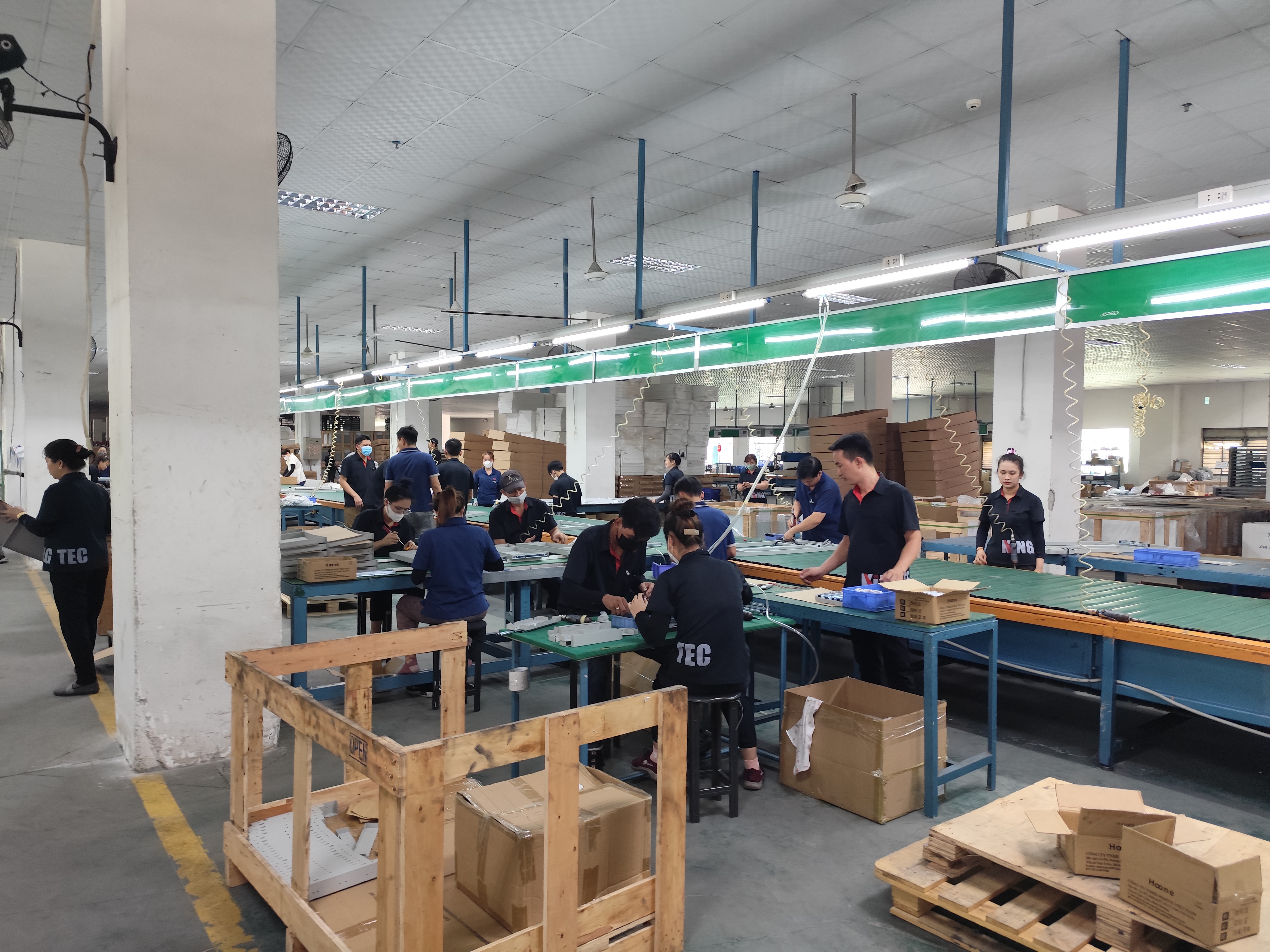

Last quarter, a delayed shipment of precision metal stamping brackets nearly derailed one of our U.S. client’s product launches — and it all traced back to misaligned Vietnam stamping parts supplier schedules.
Aligning Vietnam stamping parts supplier schedules with your OEM timeline requires evaluating production capacity early, establishing weekly communication cadences, building 2–6 weeks of buffer time, and embedding quality control checkpoints directly into the supplier’s production schedule to prevent rework and missed deadlines.
The gap between what OEMs expect and what Vietnam-based stamping suppliers deliver on schedule is rarely about capability. It is about planning, visibility, and structured integration. Below, I walk through the exact practices our team uses to keep production cycle synchronization tight across borders.
How can I evaluate a Vietnam stamping parts supplier's production capacity before committing to my OEM timeline?
A trade-off we weigh on every new project is speed versus depth of supplier vetting. Rushing the qualification phase to save two weeks almost always costs two months later when tooling issues or capacity gaps surface during production ramp-up.
Evaluate a Vietnam stamping supplier's capacity by verifying press tonnage and stroke specifications, confirming in-house tooling capability, reviewing IATF 16949 or equivalent certifications, requesting sample iterations, and conducting a second-party audit of their facility within the first 3–4 weeks of engagement.

Why Press Specifications Matter First
Before anything else, I ask for the supplier's press line details. For the types of brackets and mounting clips we source — multi-planar geometries with tight bend angles and precision-punched holes — the press tonnage directly determines whether the supplier can hold tolerances. Servo press capability is increasingly important, especially when working with Advanced High-Strength Steel 1 or thinner gauge alloys. A supplier running only mechanical presses may struggle with complex progressive die sequences.
The In-House Tooling Question
One lesson we learned early in our Vietnam office operations: suppliers who rely on external tooling shops introduce an uncontrollable variable into your timeline. When the die design, build, and maintenance all happen under one roof, lead time optimization becomes much more predictable. Standard stamping tooling in Vietnam takes 20–30 days. Expedited options can bring that down to 12–18 days. But those numbers only hold when the supplier controls the process.
A Structured Qualification Checklist
Here is the framework our team uses during the qualification window, which typically falls in Weeks 3–4 of the sourcing process:
| Assessment Area | What to Verify | Red Flag If Missing |
|---|---|---|
| Press Capacity | Tonnage range, stroke length, servo capability | Cannot handle AHSS or complex geometry |
| Tooling Independence | In-house progressive die and transfer die design | Relies entirely on external tooling shops |
| Certifications | IATF 16949, ISO 9001 at minimum | No third-party quality system certification |
| Traceability | Coil/blank traceability linked to material test certificates | No lot-level tracking system |
| Sample Capability | Can produce 2–3 sample iterations within Weeks 5–8 | Refuses or delays sample runs |
| Facility Scale | Number of press lines, shift capacity, workforce size | Single-shift operation with no expansion plan |
Second-Party Audits Beat Certificates Alone
We never rely solely on a certificate hanging on a wall. Our Vietnam-based team conducts on-site audits that go beyond what a certification body checks. We look at calibration logs, incoming inspection records, and whether the shop floor matches the documentation. This is especially critical in Vietnam industrial zones where newer suppliers may have obtained certification but have not yet embedded the discipline into daily operations.
The Phased Approach to Commitment
Rather than committing your full OEM timeline to one supplier immediately, I recommend a phased strategy. Start with low-risk stamping parts — basic brackets, simple clips, mounting hardware. Validate process capability on these before moving to complex subassemblies or safety-critical components. This staged localization model matches product risk to supplier maturity, and it protects your timeline from catastrophic failure.
What communication practices help me keep my Vietnam stamping supplier on schedule throughout the project?
During a recent bracket project, a buyer in Ohio told me his previous supplier went silent for three weeks mid-production — he only discovered a tooling crack after the shipping deadline had passed. That single communication failure cost him a full production cycle.
Keep your Vietnam stamping supplier on schedule by establishing weekly synchronization meetings, using a shared digital dashboard for milestone tracking, documenting all production changes in writing, and requesting structured updates at predefined checkpoints rather than waiting for the final completion date.

The Weekly Cadence That Works
Our team runs a formal Sales and Operations Planning 2 cadence with every active Vietnam supplier. Every week, we hold a short synchronization meeting. It does not need to be long — 20 to 30 minutes. The agenda covers three things: current production status against the schedule, any material or tooling issues, and the next milestone target. This rhythm prevents surprises.
Shared Dashboards Over Email Chains
Email is fine for contracts and formal records. But for real-time production tracking, it fails. We use shared digital dashboards 3 where both our team and the supplier update production milestones. This gives our U.S. clients supply chain transparency 4 without requiring them to chase updates across time zones. Digital barcode tracking at the supplier's facility can log finished lots back to raw material mill certificate 5s, giving everyone real-time visibility into what has been produced and what remains.
Milestone-Based Updates vs. Completion-Date Updates
This distinction matters more than most buyers realize. Here is how we structure update points:
| Milestone | Timing | What Gets Reported |
|---|---|---|
| Raw Material Receipt | Day 1–3 of production | Steel grade confirmation, coil/blank quantity, mill cert match |
| Tooling Trial | After die setup | First-off samples, dimensional check results |
| Mid-Production Check | 40–50% completion | In-process inspection data, yield rate, any deviations |
| Pre-Packing Inspection | Before boxing/palletizing | Final dimensional report, surface finish verification |
| Shipping Confirmation | Day of dispatch | Packing list, container photos, freight and customs clearance docs |
Requesting these structured updates at key milestones lets you solve problems before they reach the shipping deadline. If a tooling issue appears at the mid-production check, there is still time to adjust. If you only learn about it when the container is supposed to ship, you have lost weeks.
Documenting Every Change
Every production change — material substitution, tolerance adjustment, finish specification — must be documented in writing. Verbal agreements on the shop floor do not survive shift changes. Our project managers in Vietnam maintain a revision log for every active order. When the golden sample 6 is approved before production starts, all revisions are captured in a formal record. This eliminates the "I thought you said…" problem that causes non-conforming parts.
Bridging Time Zones and Language Gaps
Working with Vietnam stamping suppliers means managing a 10–12 hour time zone difference from the U.S. Our Singapore and Vietnam offices bridge that gap. But even without a local office, you can set up regular supplier communication so that updates arrive in your inbox by morning. The key is setting clear expectations upfront about response windows and escalation paths. If a critical issue arises, who gets called? What is the maximum response time? Define this before production starts, not during a crisis.
How do I build buffer time into my OEM timeline to handle potential delays from Vietnam stamping suppliers?
A lesson we learned the hard way during Tet Lunar New Year 7 in 2023: we had a container of stamped mounting clips scheduled to ship the week before the holiday. The supplier's workforce started leaving three days early. The container missed its vessel. Our client's assembly line waited an extra ten days.
Build buffer time by adding a minimum of 2–6 weeks before your hard shipping deadline, accounting for Tet and local holiday shutdowns, factoring in seasonal shipping congestion at ports like Haiphong and Cat Lai, and planning for at least one additional sample iteration during the product development phase.

The 2–6 Week Buffer Is Not Optional
The buffer range depends on three factors: product complexity, supplier stability, and time of year. Simple brackets with a proven supplier in a non-holiday period may only need two weeks. Complex multi-planar stamped parts from a newer supplier during Q4 shipping season may need the full six weeks. I treat this buffer as non-negotiable in every project plan.
Holiday and Seasonal Factors
Vietnam has specific calendar risks that do not exist in other sourcing countries. Here is what we plan around:
| Risk Period | Timing | Impact on Stamping Production |
|---|---|---|
| Tet Lunar New Year | Late January – Mid February | Full factory shutdown for 1–2 weeks; workforce may leave early or return late |
| Reunification Day / Labor Day | April 30 – May 1 | 2–4 day shutdown depending on how the weekend falls |
| National Day | September 2 | 1–2 day shutdown |
| Monsoon Season (South) | May – November | Potential logistics delays, flooding near some industrial zones |
| Peak Shipping Season | August – October | Port congestion at Cat Lai and Haiphong; vessel space harder to book |
| Provincial Power Shedding | Varies by region, often summer | Unscheduled production pauses during peak electricity demand |
Each of these risks is manageable if you plan for them. They become disasters if you ignore them.
How Buffer Time Fits Into the Full Timeline
The total timeline from initial feasibility to commercial production is 12–18 months for a new Vietnam supplier relationship. But even within an established relationship, every individual order needs its own buffer calculation. Here is how I think about it:
Production lead time is the baseline. Add tooling lead time if new dies are needed. Add shipping transit time from Vietnam to the U.S. (typically 25–35 days by sea). Then add the buffer. The buffer absorbs the unknowns — a delayed material shipment from the steel mill, a die that needs rework after trial, a vessel that skips a port call.
Inventory Buffer Stocks as a Parallel Strategy
For high-volume stamping programs where Just-in-Time delivery 8 is the goal, maintaining a small inventory buffer stock at a U.S. warehouse provides insurance. This does not mean stockpiling months of parts. It means keeping 2–4 weeks of safety stock so that a single delayed container does not shut down the OEM's assembly line. We help clients calculate the right inventory buffer stocks based on consumption rate and replenishment lead time.
The Mixed Production Strategy
During low-demand periods, smart suppliers can build ahead on stable part numbers. This is the mixed production strategy — using quieter months to pre-build inventory for peak demand windows. It stabilizes the supplier's production load and gives the buyer a cushion. We coordinate this through the Master Production Schedule with time fencing rules that prevent last-minute order changes from disrupting the plan.
What quality control checkpoints should I align with my Vietnam supplier's production schedule to avoid rework delays?
A buyer we work with in the Midwest once received 15,000 stamped clips where the slot width was 0.3mm too narrow. The supplier had checked dimensions only on the first-off pieces and never again during the run. The entire lot needed rework. That one quality escape cost more in time than any buffer could recover.
Align quality checkpoints with your supplier's schedule by requiring first-article inspection after die setup, in-process checks at defined intervals during the production run, a pre-shipment inspection before packing, and golden sample approval before any production begins — all documented with traceable inspection records.

Golden Sample Approval: The Non-Negotiable Starting Point
Before a single production piece ships, a golden sample must be approved. This is the physical reference standard that defines what an acceptable part looks like. Our team documents all revisions in writing and archives the golden sample for comparison during inspections. For the types of precision metal stamping brackets we source — parts with multiple bend angles, slotted holes, and mixed finishes — the golden sample captures tolerances, surface finish expectations, and dimensional targets that drawings alone cannot fully communicate.
The PPAP Discipline
For automotive and industrial OEM programs, we follow the Production Part Approval Process 9. This is not just paperwork. It is a structured quality assurance protocol that validates the supplier's process before volume production. Key PPAP elements for stamping parts include dimensional reports, material certifications, process flow diagrams, control plans, and gauge R&R studies. When this discipline is embedded into the supplier's schedule, it front-loads quality verification and prevents rework delays downstream.
Checkpoint Timing That Catches Problems Early
Here is the checkpoint structure we embed into every stamping production schedule:
| Checkpoint | When It Happens | What Gets Inspected | Action If Fail |
|---|---|---|---|
| Golden Sample Approval | Before production start | Full dimensional layout, material cert, surface finish | Production does not begin until approved |
| First Article Inspection | After die setup, first 5–10 pieces | Critical dimensions per drawing, hole positions, bend angles | Adjust die, re-run first article |
| In-Process Inspection | Every 500–1000 pieces or every 2 hours | Key dimensions, visual defects, burr height | Stop production, identify root cause |
| Mid-Run Audit | At 40–50% completion | Statistical sample check, yield rate review | Correct drift before remaining production |
| Final / Pre-Shipment Inspection | Before packing | AQL sampling per agreed level, packaging integrity | Hold shipment, issue CAPA if needed |
Inspection Before Packing, Not After
This is a critical sequencing detail. Inspections must happen before goods are fully packed. Once parts are boxed, palletized, and wrapped, a failed inspection means unpacking everything, sorting, and repacking. That process can add days. We schedule our final inspection when parts are laid out and accessible, not after they are containerized.
Traceability as an Operational Necessity
For every lot, we require traceability back to the raw material mill certificate. This means the supplier must maintain records linking each production batch to the specific coil or blank used, the shift that produced it, and the inspection data for that run. This traceability spine is not just paperwork for contract manufacturing services — it is the mechanism that lets you isolate a problem quickly if a defect surfaces after shipment.
Aligning QC with the Regional Cluster Strategy
Many Vietnam stamping suppliers use secondary processes — plating, coating, heat treatment — that happen at different facilities. If those processes are within the same Vietnam industrial zone, transit time between steps is minimal. But if the plating shop is two provinces away, every transfer adds risk and time. We map out the full process chain and align quality checkpoints at each hand-off point, not just at the stamping supplier's facility. This approach supports the regional cluster strategy, where concentrating processes in one area minimizes the gaps where quality can slip.
IoT and Predictive Maintenance on Stamping Dies
Progressive and transfer dies wear over time. A worn die produces parts that drift out of tolerance gradually — the kind of drift that in-process checks catch if they are frequent enough. Some of our more advanced suppliers deploy IoT-enabled monitoring 10 on their presses that tracks stroke count and die wear indicators. This predictive maintenance approach prevents unscheduled downtime from die failure, which is one of the most common causes of production schedule disruption in precision metal stamping.
Conclusion
Aligning Vietnam stamping parts supplier schedules with your OEM timeline is an engineered process, not a passive hope. Evaluate capacity rigorously, communicate at structured milestones, build honest buffers, and embed quality checkpoints that catch problems before they become delays.
Frequently Asked Questions
How can I evaluate a Vietnam stamping parts supplier's production capacity before committing to my OEM timeline?
A trade-off we weigh on every new project is speed versus depth of supplier vetting. Rushing the qualification phase to save two weeks almost always costs two months later when tooling issues or capacity gaps surface during production ramp-up.
What communication practices help me keep my Vietnam stamping supplier on schedule throughout the project?
During a recent bracket project, a buyer in Ohio told me his previous supplier went silent for three weeks mid-production — he only discovered a tooling crack after the shipping deadline had passed. That single communication failure cost him a full production cycle.
How do I build buffer time into my OEM timeline to handle potential delays from Vietnam stamping suppliers?
A lesson we learned the hard way during Tet Lunar New Year 7 in 2023: we had a container of stamped mounting clips scheduled to ship the week before the holiday. The supplier's workforce started leaving three days early. The container missed its vessel. Our client's assembly line waited an extra ten days.
Footnotes
1. Steel industry association source explaining AHSS grades relevant to stamping tolerance requirements. ↩︎
2. Background on the S&OP methodology referenced as the team’s coordination cadence. ↩︎
3. Authoritative government source (NIST) discussing digital dashboards for real-time manufacturing production visibility and coordination. ↩︎
4. WTO resources cover trade facilitation and visibility principles relevant to cross-border sourcing. ↩︎
5. ASTM International sets material certification standards referenced in supplier traceability requirements. ↩︎
6. ISO 9001:2015 standard underpins the quality reference practices behind golden sample approval. ↩︎
7. Background on the Vietnamese holiday causing predictable factory shutdowns and shipping delays. ↩︎
8. Explains the JIT manufacturing concept underlying buffer stock and delivery strategy. ↩︎
9. AIAG is the industry body that developed and maintains the PPAP quality framework. ↩︎
10. IEEE is the leading authority on IoT and sensor-based industrial monitoring technologies. ↩︎