
Sourcing sheet metal fabrication 1 from Vietnam without a proper factory audit is a gamble most purchasing managers cannot afford to take.
To arrange a factory audit for sheet metal fabrication in Vietnam, define your audit scope, prepare a detailed checklist covering technical capabilities and quality systems, select a qualified third-party auditor with local presence, schedule the visit around Vietnamese holidays, and follow up with a CAPA plan and trial order.
Over the past several years, our team in Vietnam has coordinated dozens of supplier audits for U.S. clients sourcing custom metal parts. We have seen what works, what fails, and where buyers lose money material traceability systems 2. This guide walks you through every step so you can verify your supplier before committing a single dollar.
How do I find a reliable partner to conduct a factory audit in Vietnam for my sheet metal project?
A few months ago, a client in the Midwest asked us to help vet a sheet metal supplier he found on Alibaba ISO 9001 certification 3. The factory's website looked impressive, but our Vietnam office discovered the "factory" was actually a trading company outsourcing to three different workshops.
To find a reliable audit partner, choose a third-party inspection firm with physical offices in Vietnam, ISO 17020 accreditation, and proven experience auditing metal parts manufacturers. Firms like TUV Rheinland, Bureau Veritas, SGS, or specialized agencies such as Asia Quality Focus are strong options.

Why You Cannot Skip the Audit
The audit is often the last critical step in supplier vetting corrective action system 4. It confirms that a real factory exists behind the contact email and that the samples you received actually come from the claimed manufacturing site. Without this step, you risk placing orders with a middleman who has no control over quality or delivery timelines.
For sheet metal projects, due diligence in Vietnam must go deeper than a general compliance check. You need someone who understands welding procedure specifications 5, CNC bending tolerances, and material traceability. A generalist auditor may miss critical gaps in the fabrication workflow.
How to Evaluate an Audit Partner
Here is a comparison of common audit provider types for sheet metal sourcing:
| Audit Partner Type | Pros | Cons | Typical Cost |
|---|---|---|---|
| Global firms (SGS, TUV, Bureau Veritas) | ISO 17020 accredited, global reputation, standardized reports | Higher cost, less flexibility for small orders | $400–$800 per day |
| Regional specialists (Asia Quality Focus, Pro QC) | Deep local knowledge, metal-part experience, faster scheduling | Smaller brand recognition | $300–$500 per day |
| Your own local team in Vietnam | Full control, ongoing relationship, real-time communication | Requires hiring and managing staff | Fixed salary + overhead |
| Freelance inspectors | Low cost, quick availability | Variable quality, limited accountability | $150–$300 per day |
Our approach is to combine our own seven-person Vietnam office with a third-party auditor for the initial qualification. This gives us both objectivity and ongoing access. We verify the auditor's accreditation, ask for sample reports from previous metal-part audits, and confirm they can provide a translator if the factory team does not speak English.
Key Questions to Ask Before Hiring an Auditor
Before you sign a contract with any audit firm, ask these questions:
- Do you have a physical office in Vietnam, and where is it located?
- Can you share a redacted sample report from a recent sheet metal or metal fabrication audit?
- Are your auditors trained in welding inspection, dimensional verification, and material testing?
- What is your lead time for scheduling an audit after I confirm?
- Do you provide follow-up CAPA tracking?
A basic single-day factory audit in Vietnam typically costs between $300 and $500. For that investment, you gain supply chain transparency and avoid the far greater cost of receiving non-conforming parts months down the line.
What specific technical capabilities should I look for when auditing a Vietnam sheet metal fabricator?
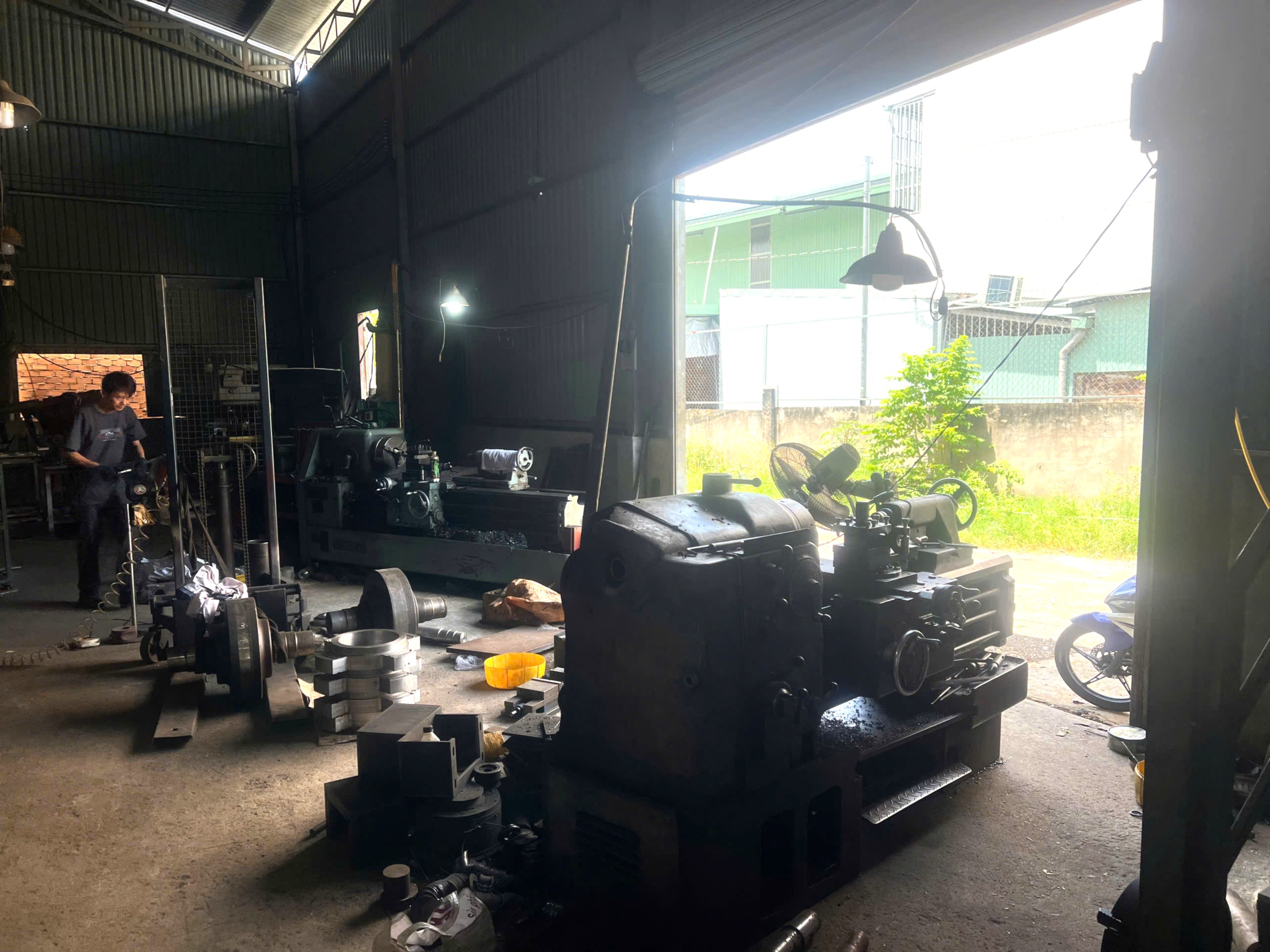
When we walk a factory floor in Vietnam, the first thing we check is not the office or the meeting room. It is the machinery. The age, condition, and calibration status of the equipment tell us more than any brochure.
When auditing a Vietnam sheet metal fabricator, evaluate laser cutting precision, CNC bending and forming equipment, welding capabilities with documented WPS, surface treatment processes, and dimensional inspection tools such as CMMs and laser scanners. Also verify material traceability systems and production capacity for your required volumes.
Equipment and Process Checklist
Sheet metal fabrication involves multiple processes. Each one needs specific equipment and documented controls. Here is a checklist we use during our audits:
| Process Area | What to Inspect | Red Flags |
|---|---|---|
| Laser / plasma cutting | Machine brand, wattage, cutting thickness range, nesting software | Outdated machines, no nesting optimization, manual cutting only |
| CNC bending | Press brake tonnage, back-gauge accuracy, tooling variety | Single press brake for all jobs, no tooling library |
| Welding | WPS documentation, welder certifications, shielding gas setup | No WPS on file, untrained welders, visible porosity in samples |
| Surface treatment | Powder coating line, anodizing, sandblasting booth | Outsourced finishing with no incoming QC on returned parts |
| Assembly | Fixtures, jigs, torque tools, rivet systems | No fixtures, hand assembly without standardized steps |
| Inspection | CMM, calipers, go/no-go gauges, surface roughness tester | No CMM, calibration stickers expired, no first article inspection |
Material Selection and Traceability
Raw material control is critical. We always ask to see mill certificates for the steel, aluminum, or stainless steel the factory uses. The certificates must match the material grade specified in your drawings. We also check for batch number traceability — can the factory trace a finished part back to the specific coil or sheet it came from? Learning how to verify sheet metal suppliers for stainless steel, aluminum, and carbon steel before the audit helps you ask the right questions about material sourcing.
For one U.S. client sourcing heavy-duty mounting brackets similar to the gunmetal grey powder-coated brackets with multiple pre-drilled holes and precise folds, we discovered the factory was mixing steel grades across production runs. The tensile strength varied by over 15 percent between batches. That issue would have caused field failures if we had not caught it during the audit.
Welding and Assembly Standards
Welding quality is where many sheet metal suppliers in Vietnam fall short. We look for welding procedure specifications posted at each welding station. We check for visual defects — porosity, undercut, incomplete fusion — and ask whether the factory performs non-destructive testing such as ultrasonic or X-ray inspection on critical welds.
For complex angular brackets with mirrored geometries and multiple bends, weld marks at joints need to be consistent and structurally sound. Heat distortion from poor welding technique can throw off dimensional accuracy across the entire part.
Dimensional Accuracy Verification
We insist on first article inspections 7 using coordinate measuring machines. Laser scanning is a bonus. The factory should be able to demonstrate that part dimensions match CAD designs within the specified tolerances. For parts with sharp bends and irregular cutouts, even a 0.5 mm deviation can make assembly impossible at the customer's end.
Production capacity also matters. Confirm the factory can handle your volume requirements without subcontracting. Ask how many shifts they run, how many operators are trained on each machine, and what their current utilization rate looks like.
How can I ensure my Vietnam supplier's quality control process will meet my "right first time" standards?
One lesson we learned early in our Vietnam operations is that quality control procedures must be built into every stage of production — not bolted on at the end. A final inspection alone cannot fix upstream problems.
To ensure "right first time" results, verify the supplier holds ISO 9001 certification with active internal audits, uses statistical process control at critical operations, performs in-process inspections at defined checkpoints, and maintains a closed-loop corrective action system. Also confirm they conduct first article and final inspections with documented acceptance criteria.

The "Right First Time" Framework
Getting it right the first time means preventing defects rather than detecting them. Here is how we structure our quality assessment during a factory audit:
Step 1: Review the Quality Management System. Ask for the ISO 9001 certificate and verify it is current. Check who issued it — some certification bodies in Asia are not accredited. Look at internal audit records. Are they finding real issues, or are the reports suspiciously clean? Understanding how to verify authenticity and validity of supplier certifications is essential at this stage.
Step 2: Walk the Production Floor. Observe whether operators follow documented work instructions. Are the instructions posted at each workstation? Are they specific to the part being produced, or are they generic? We look for control plans that define inspection frequency, measurement methods, and acceptance criteria at each process step.
Step 3: Examine In-Process Controls. For sheet metal, critical checkpoints include material incoming inspection, post-cutting dimensional checks, post-bending angle verification, weld inspection, and surface treatment adhesion tests. At each checkpoint, the factory should record data. We ask to see recent inspection records and compare them against the control plan.
Statistical Process Control in Practice
Some factories in Vietnam now use SPC charts to monitor key dimensions during bending and forming. statistical process control 8 This is a strong signal of process maturity. If the factory cannot explain what SPC is, or if they only inspect the first and last piece in a run, that is a concern.
Sampling Plans and Final Inspection
We recommend building a sampling plan before the audit. For example:
- Review 10 random timecards to verify workforce consistency
- Witness final inspection of 50 units to observe the process in real time
- Pull 5 sample parts and measure them independently against the drawing
For final testing, we look at structural integrity tests (load and stress), functional fit testing, and environmental testing for parts exposed to temperature, humidity, or chemical exposure. The audit should verify the factory has the equipment and documentation to perform these tests — or a qualified subcontractor who does.
Regulatory Compliance and Certifications
Depending on your industry, the factory may need additional certifications. ISO 14001 covers environmental management 9. SA8000 and SMETA address social compliance. For parts going into regulated industries, ask about material compliance certificates such as RoHS or REACH.
Our experience is that factories willing to invest in these certifications tend to have stronger internal disciplines overall. The certification process forces them to document procedures, train staff, and undergo regular external audits — all of which support "right first time" manufacturing capabilities.
We also check whether the factory holds valid export licenses for Vietnam and whether their business registration matches the facility address we are visiting. These are basic but essential elements of regulatory compliance that some buyers overlook.
Should I hire a local Vietnam-based team to manage my factory audits and ongoing production inspections?
A trade-off we weigh with every new client is whether third-party inspection alone is enough or whether an on-the-ground team adds real value. The answer depends on order frequency, part complexity, and how much is at stake.
For ongoing sheet metal sourcing from Vietnam, hiring or partnering with a local team provides real-time quality oversight, faster communication with the factory, and the ability to conduct unannounced inspections. This is especially valuable for complex custom parts, high-volume programs, or clients who cannot visit Vietnam regularly.
When a Local Team Makes Sense
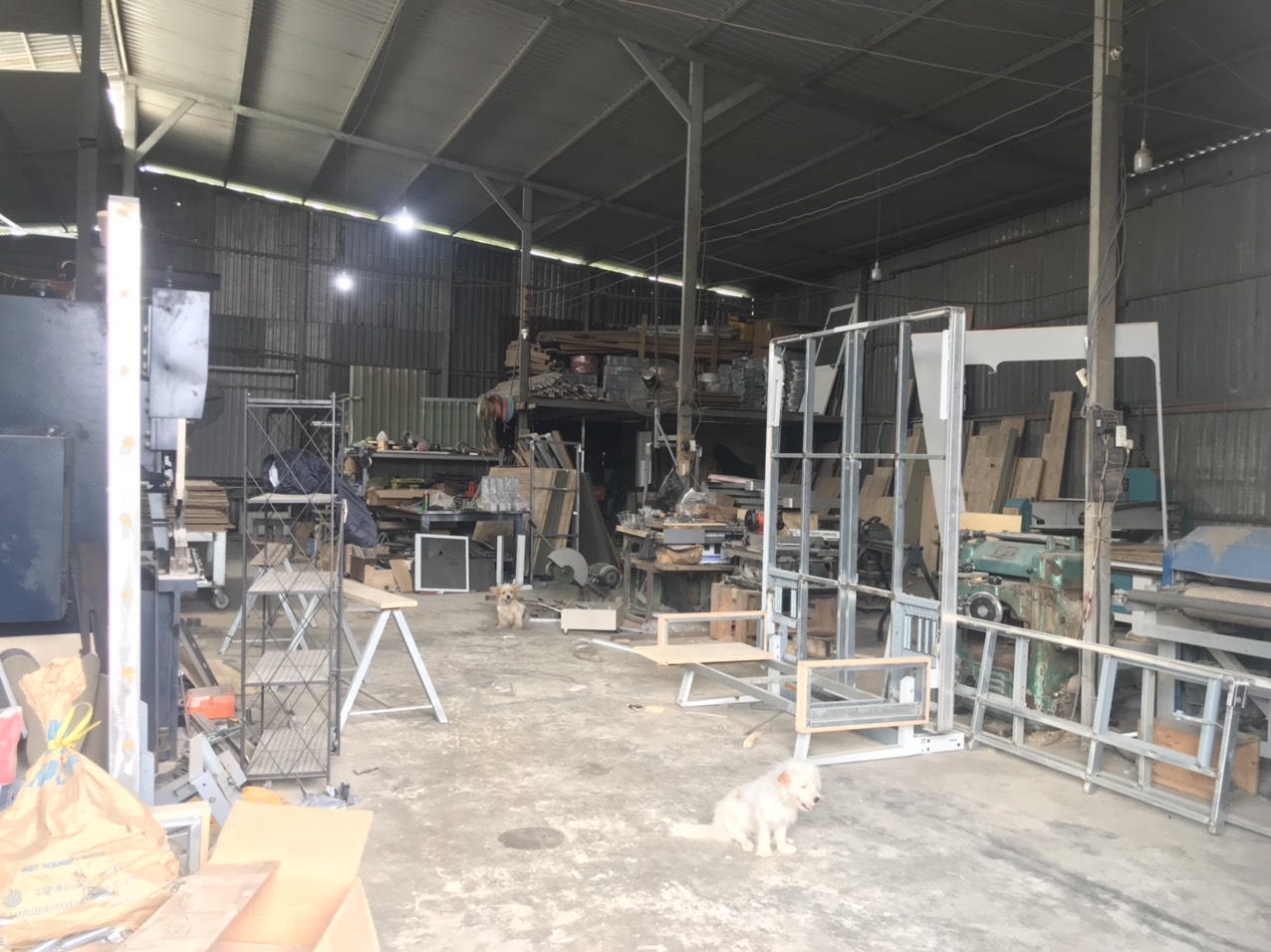
If you place orders once a year and the parts are simple, a single third-party audit and pre-shipment inspection may be sufficient. But if you source multiple SKUs on a quarterly or monthly basis — especially precision sheet metal parts with tight tolerances and critical weld requirements — a local team pays for itself quickly.
Our Vietnam office handles ongoing production inspections, first article approvals, and real-time communication with suppliers for our U.S. clients. When an issue arises at 2 PM in Ho Chi Minh City, our team is on the factory floor the same day. A buyer in Ohio cannot do that. This is one reason why learning how to overcome language and time zone barriers when sourcing Vietnamese sheet metal fabrication is so important.
Comparing Your Options
| Approach | Best For | Limitations |
|---|---|---|
| Third-party audit only | Low-frequency orders, initial supplier qualification | No ongoing oversight, limited relationship building |
| Local sourcing agent | Buyers without their own team, medium complexity parts | Agent may represent multiple clients, divided attention |
| Dedicated local team (own or partner) | High-frequency orders, complex parts, critical quality needs | Higher fixed cost, requires management infrastructure |
| Hybrid (local team + third-party for audits) | Best of both worlds — objectivity plus daily access | Requires coordination between internal and external teams |
What a Local Team Actually Does
A good local team does more than inspect finished parts. They attend production kick-off meetings. They verify that raw material certificates match the purchase order before cutting starts. They witness first article inspections. They check weld quality during production, not after. And they manage the CAPA process when something goes wrong.
For our clients, we also handle logistics coordination, export documentation, and door-to-door shipping management. This end-to-end approach gives purchasing managers a single point of contact instead of juggling a factory, an auditor, a freight forwarder, and a customs broker separately.
Ongoing Audit Cadence
We recommend a structured audit cadence even after the initial qualification:
- Quarterly: Process audit focused on any recent non-conformances or engineering changes
- Semi-annually: Full QMS review including social compliance audit 10 and environmental checks
- Per shipment: Pre-shipment inspection based on the agreed sampling plan
This rhythm keeps the supplier accountable and catches drift before it becomes a systemic problem. It also builds a performance history that helps you make informed decisions about scaling the relationship or adjusting your supply chain.
The cost of maintaining a local presence is real, but it is far less than the cost of a container of defective sheet metal brackets landing at a U.S. port. One of our clients estimated that a single rejected shipment cost him over $40,000 in rework, air freight for replacements, and production line downtime. The annual cost of our local oversight was a fraction of that.
Conclusion
Arranging a factory audit for sheet metal fabrication in Vietnam is a structured process that protects your investment and your reputation. Define your scope, prepare your checklist, choose a qualified auditor, and follow up with corrective actions and a trial order. If you source complex or high-volume parts regularly, a local team in Vietnam — like the one we operate — turns audit findings into lasting quality improvements. The $300–$500 you spend on an audit today can save you tens of thousands in rejected shipments tomorrow.
Frequently Asked Questions
How do I find a reliable partner to conduct a factory audit in Vietnam for my sheet metal project?
A few months ago, a client in the Midwest asked us to help vet a sheet metal supplier he found on Alibaba ISO 9001 certification 3 . The factory's website looked impressive, but our Vietnam office discovered the "factory" was actually a trading company outsourcing to three different workshops.
What specific technical capabilities should I look for when auditing a Vietnam sheet metal fabricator?
When we walk a factory floor in Vietnam, the first thing we check is not the office or the meeting room. It is the machinery. The age, condition, and calibration status of the equipment tell us more than any brochure.
How can I ensure my Vietnam supplier's quality control process will meet my "right first time" standards?
One lesson we learned early in our Vietnam operations is that quality control procedures must be built into every stage of production — not bolted on at the end. A final inspection alone cannot fix upstream problems.
Footnotes
1. Explains the process of transforming flat metal sheets into products. ↩︎
2. Explains tracking materials and products through production and supply chain. ↩︎
3. Describes the international standard for quality management systems. ↩︎
4. Details the methodology for addressing non-conforming events and preventing recurrence. ↩︎
5. Defines formal documents detailing welding procedures for quality production. ↩︎
6. Details the requirements for competence and impartiality of inspection bodies. ↩︎
7. Explains the process of verifying initial production units against specifications. ↩︎
8. Explains using statistical methods to monitor and control process quality. ↩︎
9. Defines a structured approach to managing environmental responsibilities and impacts. ↩︎
10. Explains inspections evaluating workplace compliance with human and labor rights. ↩︎