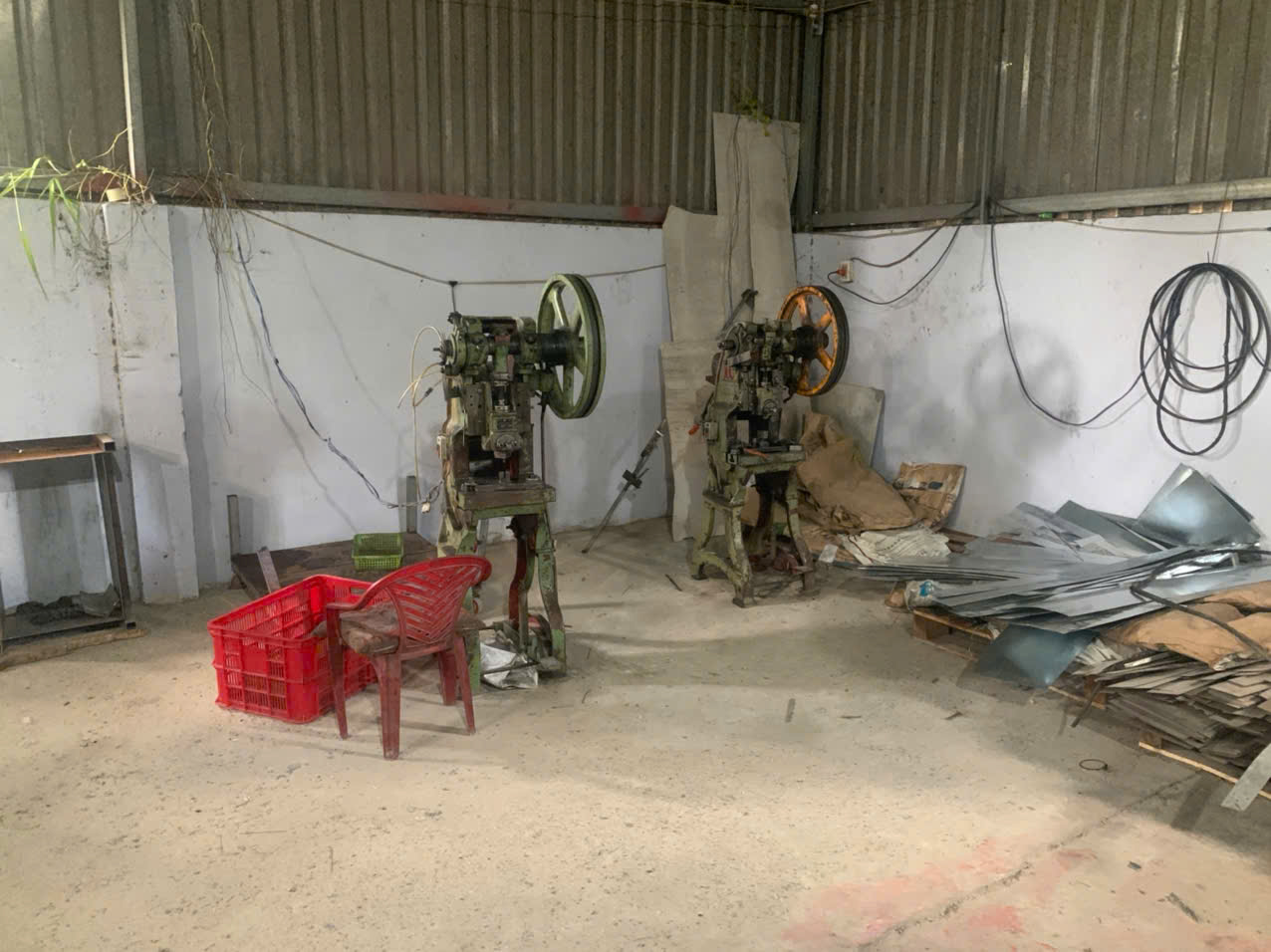

Arranging third-party quality inspections for stamping parts 1 from Vietnam can feel overwhelming — especially when one rejected shipment means weeks of delays, rework costs, and strained client relationships.
To arrange third-party quality inspections for stamping parts from Vietnam, select an ISO 17020–accredited inspection agency with local offices, define clear acceptance criteria in your purchase order, schedule inspections when production reaches 80% completion, and negotiate fees upfront so reports arrive within 24–48 hours.
This guide walks through each step — from choosing the right partner to reading the final report Acceptable Quality Limit 2. Every section draws on real experience managing supply chain quality across Vietnam’s manufacturing regions.
How do I choose the right third-party inspection partner for my metal stamping project in Vietnam?
A buyer once asked our Vietnam office to recommend an inspection company after two failed shipments from a different supplier CMM measurement 3. That conversation taught me how much rides on choosing the right partner — and how few buyers know what to look for.
Choose an inspection partner with ISO 17020 accreditation, physical offices near your factory in Vietnam, proven experience with metal stamping processes, and transparent pricing that includes sampling, photos, and reports — without hidden surcharges for larger lot sizes.

Why Local Presence Matters
Vietnam's manufacturing base is spread across the north (Hanoi, Hai Phong, Bac Ninh) and south (Ho Chi Minh City, Binh Duong, Dong Nai). An inspection agency with offices in these regions can deploy inspectors within 48 hours. Agencies without local teams often subcontract, which adds cost and reduces accountability. When our team coordinates pre-shipment inspections, we always confirm the agency has a full-time inspector within driving distance of the factory.
Key Selection Criteria
Not all agencies are equal. Here is a comparison of what to evaluate:
| Criteria | What to Look For | Red Flags |
|---|---|---|
| Accreditation | ISO 17020 certification | No verifiable accreditation |
| Vietnam Offices | Full-time staff in key industrial zones | Only a headquarters abroad |
| Stamping Expertise | Inspectors trained in metal stamping defects (burrs, cracks, dimensional deviations) | Generalist inspectors with no metalwork experience |
| Pricing Transparency | All-inclusive fee covering sampling, photos, and report | Extra charges for photos, reports, or larger samples |
| Report Delivery | PDF + video within 24 hours | Reports delayed beyond 48 hours |
| Booking Flexibility | Online scheduling; same-day urgent options | Manual-only booking with long lead times |
Agencies With Vietnam Presence
Several well-known quality control services Vietnam buyers rely on include SGS Vietnam, Pro QC International, HQTS Vietnam, Amazing Quality Control, VIS Quality Control, and ECQA. Each varies in cost and specialization. I recommend requesting a sample report before committing. A sample report reveals how thoroughly they document defects, whether they use clear photos, and whether their dimensional accuracy checks match your drawing requirements.
Avoid These Mistakes
Some buyers choose the cheapest option — agencies around $249 per inspection. While this can work for simple consumer goods, stamping parts demand inspectors who understand gauging methods 4, CMM measurement 5, and material specifications. Saving $100 on the inspection fee is not worth it if the inspector misses a critical tolerance on a mounting bracket. Our experience managing supply chain management Vietnam projects has shown that investing in a competent agency pays for itself many times over.
What critical quality standards should I require in my stamping part inspection report?
The trade-off between a thorough report and a fast turnaround is one I weigh on every project. Too many data points slow the process. Too few leave gaps that cause problems at the customer's incoming inspection dock. Finding the right balance requires knowing exactly what to measure and what to document.
Your stamping part inspection report must cover quantity verification, dimensional accuracy against engineering drawings, material certification review, workmanship assessment for defects like burrs and cracks, functional fit testing, and packaging integrity — all evaluated per ANSI/ASQ Z1.4 sampling standards.

The Five Assessment Pillars
Every inspection report for stamping parts should address five core areas. These pillars align with what most accredited agencies evaluate, and they match the defect evaluation criteria our clients in the United States expect.
| Assessment Pillar | What It Covers | Why It Matters for Stamping Parts |
|---|---|---|
| Quantity Verification | Confirm piece count per carton and total order | Prevents shortages that delay assembly lines |
| Workmanship | Visual check for burrs, cracks, surface finish, weld quality | Stamping defects like material thinning or edge cracks are common |
| Dimensional Accuracy | Measure critical dimensions using calipers, gauges, or CMM | Stamped brackets must fit precisely into assemblies |
| Functional / Field Testing | Fit checks, hardness tests, destructive or non-destructive testing | Ensures the part performs under real-world loads |
| Packaging & Labeling | Verify packaging method, labeling accuracy, and carton integrity | Prevents damage during international shipping |
Sampling Standards: ANSI/ASQ Z1.4
This is the statistical sampling standard most agencies use. It defines how many units to pull from a lot based on total quantity and Acceptable Quality Limit 6 (AQL). For stamping parts, I typically recommend:
- AQL 0.65 for critical defects (cracks, wrong material, missing holes)
- AQL 1.0 for major defects (out-of-tolerance dimensions, heavy burrs)
- AQL 2.5 for minor defects (light scratches, cosmetic marks)
Specify these AQL levels in your purchase order. This removes ambiguity. The inspector knows exactly what counts as a pass or fail. Our team includes these levels in every PO we issue for stamping projects.
Stamping-Specific Tests
For parts like mounting clips, angular brackets, or precision sheet metal components, standard visual checks are not enough. You should require:
- CMM measurement for complex geometries with tight tolerances
- Hardness testing (Rockwell or Vickers) to confirm heat treatment
- Salt spray testing if corrosion resistance is specified
- Incoming material inspection verification — confirm the mill certificate matches the material spec on the drawing
A detailed Quality Control Checklist should accompany every inspection. This checklist lists every dimension, tolerance, material spec, surface finish requirement, and functional test. Provide it to both your supplier and your inspection agency before production begins. This is a core part of any effective Production Part Approval Process and prevents misunderstandings downstream.
What a Good Report Looks Like
A professional report includes:
- Clear photos of defects with annotations
- A summary table of pass/fail results per AQL
- Measurement data for all critical dimensions
- Material certification cross-reference
- Packaging condition photos
- Inspector name, date, and factory location
If an agency cannot provide all of these in a single PDF delivered within 24 hours, consider a different partner. You can learn more about how to request English technical documentation and inspection reports to ensure your reports meet international standards.
How much should I budget for professional third-party inspections of my custom parts from Vietnam?
A lesson I learned early in managing factory assessments across Southeast Asia: the inspection fee is never the real cost. The real cost is what happens when you skip the inspection — or hire one too cheap to catch the problems.
Budget $300–$600 per man-day for a qualified third-party inspection of stamping parts in Vietnam; low-cost agencies start around $249, but complex metal parts often require specialized inspectors, CMM equipment, or multi-day visits that push total costs higher depending on lot size and testing scope.

Breaking Down the Costs
Inspection pricing depends on several factors. Here is a general cost framework based on what we have seen coordinating quality control services Vietnam inspections over the years:
| Cost Factor | Typical Range | Notes |
|---|---|---|
| Standard man-day rate | $249–$600 | Varies by agency reputation and accreditation level |
| Travel surcharge | $0–$100 | If factory is in a remote area |
| CMM / lab testing | $100–$500+ | Required for tight-tolerance stamping parts |
| Urgent booking (same-day) | 25–50% premium | Available from some agencies |
| Re-inspection after rework | $200–$400 | Needed if first inspection fails |
| Container loading supervision | $200–$400 per day | Recommended for large or fragile shipments |
Who Pays?
Buyers most commonly pay the inspection fee. However, on repeat orders or high-volume programs, you can negotiate for the supplier to share or fully cover the cost. Include this agreement in your purchase order or contract before production starts. In our experience, Vietnamese factories that are confident in their quality are often willing to share the cost as a sign of good faith.
The Cost of Skipping Inspection
Consider a hypothetical: you import 50,000 stamped steel brackets at $0.15 each — a $7,500 order. You skip the $400 pre-shipment inspection. The parts arrive with burrs exceeding your customer's spec. You face:
- $2,000+ in return shipping or disposal
- Lost production time at your customer's plant
- Potential loss of the account
A $400 inspection to protect a $7,500 order is a 5% insurance premium. On larger orders, that percentage drops even further. This is why we build inspection costs into every project quote and treat them as non-negotiable.
During Production Inspection vs. Pre-Shipment Inspection
For stamping parts, I recommend at least two inspection touchpoints:
- During production inspection — when 20–40% of parts are finished. This catches systemic issues (wrong die setup, material mix-up) before the full run is complete.
- Pre-shipment inspection — when 80%+ is produced and packed. This confirms the final lot meets all specs.
Adding a during production inspection may add one more man-day fee, but it can save the entire order from rework.
Can a third-party inspection team help me ensure my Vietnam supplier meets my strict right first time requirements?
When a client in the Midwest told me his biggest frustration was rework — parts that arrived close but not quite right, again and again — I understood exactly what he meant. "Right first time" is not just a quality slogan. It is the difference between a profitable program and one that bleeds money on every shipment.
Yes, a third-party inspection team directly supports "right first time" goals by verifying raw materials before production, auditing processes during manufacturing, and confirming final parts meet every drawing requirement before shipment — catching deviations before they reach your dock.

Building a Multi-Stage Inspection Strategy
Achieving "right first time" results requires more than a single check at the end. It demands a layered approach across the entire production cycle. Here is how we structure it for our clients' stamping projects:
Stage 1 — Supplier Audit and PPAP
Before any metal is stamped, conduct a factory audit. This is a factory assessment that evaluates the supplier's quality management system 7, equipment condition, workforce skill, and process documentation. Pair it with a Production Part Approval Process submission that includes:
- Control plan
- Process flow diagram
- Measurement system analysis
- Initial sample inspection report
- Material certifications
This is the foundation. Without it, you are guessing.
Stage 2 — Incoming Material Inspection
Verify that the raw steel coil or sheet matches the spec. Check material grade, thickness, hardness, and surface condition. A third-party inspector can confirm this on-site before the stamping press runs. This step alone eliminates one of the most common sources of non-conformance in Vietnam: reliance on imported raw materials where substitution can occur.
Stage 3 — During Production Inspection
Send the inspector when 20–40% of the order is complete. They check dimensional accuracy on the first articles, verify the die condition, and look for early signs of tooling wear. This is where you catch problems while there is still time to adjust.
Stage 4 — Pre-Shipment Inspection
The final gate. The inspector pulls a sample per ANSI/ASQ Z1.4, measures critical dimensions, performs functional checks, and photographs everything. The report is your go/no-go decision.
Stage 5 — Container Loading Supervision
For large shipments, an inspector watches the loading process to ensure correct quantities are loaded, parts are properly protected, and the container is sealed. This prevents mix-ups and shipping damage.
Why Third-Party Beats Self-Audit
Some buyers fly their own engineers to Vietnam for audits. This works — but it is expensive and time-consuming. Third-party inspectors offer several advantages:
- They are already local, so deployment is fast and affordable
- They bring ISO 17020 credibility that holds weight in disputes
- They understand local factory culture and communication nuances
- They provide standardized, downloadable PDF and video reports
Our Vietnam office works alongside third-party agencies 8 regularly. We find that combining our own process knowledge with an independent inspector's objectivity gives clients the strongest quality assurance available.
Leveraging Technology for Continuous Improvement
Modern inspection agencies now offer digital platforms for scheduling, real-time tracking, and multimedia reporting. Some forward-thinking programs integrate IoT sensors on stamping presses to collect real-time process data — monitoring tonnage, stroke count, and temperature. While this is still emerging, it points to a future where defect prediction replaces defect detection.
For now, the practical approach is to establish effective incoming inspection standards as part of a long-term supplier development program. Work with your supplier and your inspection partner to build feedback loops. Share inspection data. Identify recurring defects. Adjust tooling or process parameters. Over time, this continuous improvement cycle is what truly delivers "right first time" — consistently, not just occasionally.
Conclusion
Arranging third-party quality inspections for stamping parts from Vietnam comes down to four actions: choose an accredited local partner, define clear standards, inspect at multiple stages, and treat inspection costs as essential — not optional — insurance for your supply chain.
Frequently Asked Questions
How do I choose the right third-party inspection partner for my metal stamping project in Vietnam?
A buyer once asked our Vietnam office to recommend an inspection company after two failed shipments from a different supplier CMM measurement 3 . That conversation taught me how much rides on choosing the right partner — and how few buyers know what to look for.
What critical quality standards should I require in my stamping part inspection report?
The trade-off between a thorough report and a fast turnaround is one I weigh on every project. Too many data points slow the process. Too few leave gaps that cause problems at the customer's incoming inspection dock. Finding the right balance requires knowing exactly what to measure and what to document.
How much should I budget for professional third-party inspections of my custom parts from Vietnam?
A lesson I learned early in managing factory assessments across Southeast Asia: the inspection fee is never the real cost. The real cost is what happens when you skip the inspection — or hire one too cheap to catch the problems.
Footnotes
1. Provides broad background on the metal stamping manufacturing process. ↩︎
2. Explains the statistical concept of AQL used in sampling standards. ↩︎
3. Technical background on coordinate-measuring machines used for precision inspection. ↩︎
4. ISO standard for inspection by measurement and gauging equipment. ↩︎
5. Provides background on coordinate measuring machines used in precision inspection. ↩︎
6. Explains the statistical sampling concept and acceptable quality limits. ↩︎
7. Official ISO page for the ISO 9001 quality management standard. ↩︎
8. Authoritative WTO guidelines on the use of pre-shipment inspection agencies. ↩︎
9. Official ISO page detailing quality management system standards. ↩︎