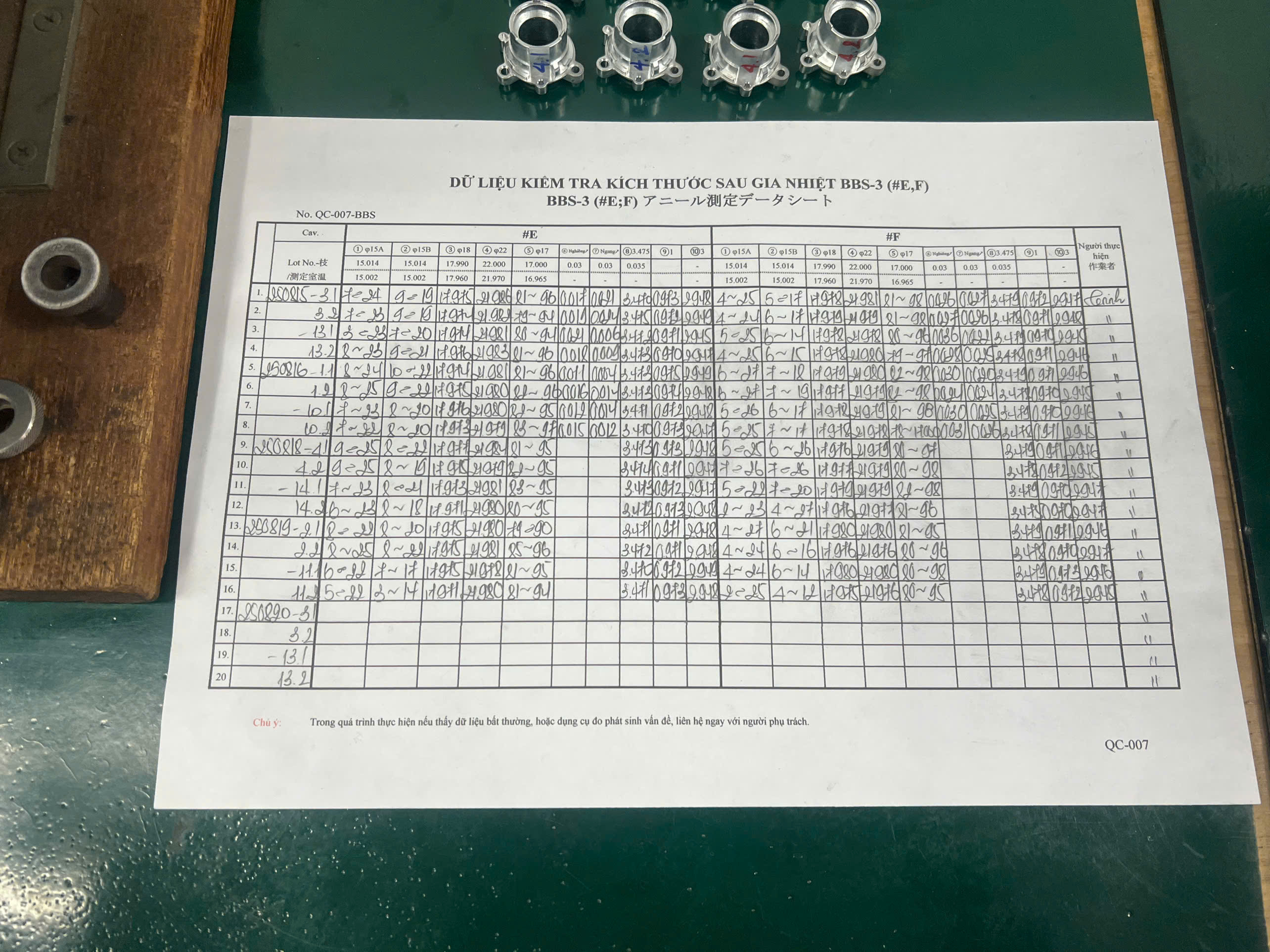

Last quarter, a client’s welding frame shipment from Vietnam arrived with misaligned joints and visible porosity — problems our team could have caught before the container was sealed.
To arrange third-party quality inspections for Vietnam welding parts, define your inspection scope and welding standards, select an ISO/IEC 17020-accredited agency with a local Vietnam office, book inspections at key production stages, and review detailed welding inspection reports before authorizing shipment.
Getting welding parts right the first time is not optional when you are importing custom steel frames, brackets, and fabricated hardware from Vietnam. This guide walks you through every step — from finding qualified inspectors to integrating checks into your supply chain without delays. Let me share what our team has learned managing quality for complex welding projects across Southeast Asia.
How do I find a qualified third-party inspector for my custom welding parts in Vietnam?
A buyer once asked our Vietnam office to recommend an inspection agency, and within two days we had three accredited firms with local inspectors ready to visit the factory floor.
Find a qualified third-party inspector by shortlisting agencies with ISO/IEC 17020 Type A accreditation, a physical office in Vietnam, proven welding inspection experience, certified welding inspectors on staff, and a track record of serving export-oriented metal fabrication projects.

Why Accreditation Matters
Not all inspection agencies are equal. ISO/IEC 17020 Type A accreditation 1 means the agency operates independently from the buyer and supplier. This independence is key. It ensures unbiased results. Look for agencies that also hold ILAC MRA 2 (International Laboratory Accreditation Cooperation Mutual Recognition Arrangement) recognition. This means their reports are accepted worldwide.
Where to Start Your Search
You can find agencies through trade fairs like Vietnam Manufacturing Expo, sourcing platforms like Alibaba's inspection services directory, or direct referrals from your supply chain partner. Our Singapore office maintains a vetted list of agencies we have worked with across Ho Chi Minh City, Hanoi, and Da Nang. When we evaluate an agency, we look at five things:
| Criteria | What to Check | Why It Matters |
|---|---|---|
| Accreditation | ISO/IEC 17020 Type A, ILAC MRA | Ensures independence and global acceptance |
| Local Presence | Physical office in Vietnam | Enables fast mobilization and local knowledge |
| Welding Expertise | Certified welding inspectors 3 (AWS CWI, IWI, CSWIP) | Understands weld defect identification and welding procedures |
| Report Speed | Delivery within 24 hours | Keeps your timeline on track |
| Cost Transparency | Clear fee structure, no hidden charges | Avoids budget surprises |
Verifying Inspector Qualifications
Ask for the inspector's personal certifications. A good welding inspector should hold at minimum a visual testing (VT) certification and ideally qualifications in non-destructive testing methods 4 such as ultrasonic testing (UT), magnetic particle testing (MT), or radiographic testing (RT). Welder qualification records from the factory should also be reviewed as part of the supplier vetting process.
Trial Before Commitment
Before signing a long-term agreement, run a trial inspection on a smaller order. Evaluate the report quality, the inspector's communication, and how well they understand your specific welding parts. Our experience shows that a single trial order reveals more about an agency than any sales presentation. We have used this approach for every new inspection partner across our Vietnam operations.
What specific quality standards should I require during a third-party inspection of my Vietnam-made components?
One lesson we learned early: if you do not spell out the exact standards in your purchase order, the factory will apply its own interpretation — and that interpretation will almost always be looser than what your end customer expects.
Require compliance with international welding standards such as AWS D1.1 for structural steel, ISO 3834 for quality in fusion welding, and ISO 5817 for weld imperfection classification. Specify AQL levels, dimensional tolerances, NDT methods, and surface finish criteria in your inspection checklist.

Matching Standards to Your Product
The right standard depends on what you are making. A structural steel frame for construction has different requirements than a decorative bracket. Here is a quick reference:
| Product Type | Recommended Standard | Key Focus |
|---|---|---|
| Structural steel frames | AWS D1.1 5 / EN 1090 | Weld strength, joint integrity, dimensional accuracy |
| Pressure vessels / piping | ASME Section IX | Welder qualification, welding procedures, NDT |
| General fabricated parts | ISO 3834 6 (Parts 2–4) | Quality management of welding processes |
| Weld imperfection grading | ISO 5817 7 | Acceptance levels for weld defects (B, C, D) |
| Aluminum welding | AWS D1.2 | Specific to aluminum alloy welding |
Building Your Inspection Checklist
A strong checklist covers six areas. Each one targets a common failure mode we have encountered on Vietnam welding projects.
1. Visual Weld Inspection (VT): Check weld profile, alignment, bead consistency, and surface defects. Look for cracks, undercuts, spatter, porosity, and incomplete fusion. This is the first line of defense and catches the majority of issues.
2. Dimensional Verification: Measure weld size, throat thickness, leg length, fit-up gaps, and overall part dimensions. Welding deformation and shrinkage are common in heavy-gauge steel assemblies. Verify critical dimensions against your drawing tolerances.
3. Non-Destructive Testing (NDT): For critical welds, specify NDT methods. Ultrasonic testing detects subsurface flaws. Magnetic particle testing finds surface and near-surface cracks. Dye penetrant testing reveals surface-breaking defects. Radiographic testing provides a permanent record of internal weld quality. The inspector should witness or perform these tests and document results in the welding inspection report.
4. Material Verification: Confirm material certificates (mill test reports) match the specified grade. For the brushed aluminum or galvanized steel parts we frequently handle, this step prevents substitution of cheaper alloys.
5. Workmanship and Finish: Evaluate grinding, deburring, surface preparation, and coating. For parts with a matte charcoal black or brushed silver finish, consistency matters. Oil stains and grinding marks are common defects.
6. Packaging and Labeling: Verify that packing protects welded joints from transit damage. Check labels match the purchase order and destination requirements.
Setting AQL Levels for Welding Parts
Acceptable Quality Limits 8 (AQL) define how many defects are tolerable in a sample. For welding parts, we recommend tighter AQL levels than for general consumer goods:
| Defect Category | Recommended AQL | Examples |
|---|---|---|
| Critical (safety) | 0 | Cracks in structural welds, wrong material |
| Major (function) | 1.0 | Undersized welds, misalignment beyond tolerance, porosity |
| Minor (cosmetic) | 2.5 | Minor spatter, light surface scratches, slight bead irregularity |
A critical defect AQL of 0 means zero tolerance. If the inspector finds even one crack in a structural weld, the lot fails. This is standard practice for metal fabrication quality control on safety-critical components.
How can I integrate third-party inspections into my Vietnam supply chain without delaying my delivery schedule?
The trade-off between quality checks and on-time delivery is something our project managers deal with every week. The good news is that with proper planning, inspections add days — not weeks — to your timeline.
Integrate third-party inspections without delays by scheduling them at natural production milestones — Pre-Production Inspection before material cutting, During Production Inspection at 40–60% completion, and Pre-Shipment Inspection at 80–100% completion — and booking your inspector 48–72 hours in advance.

The Four-Stage Inspection Framework
Most quality assurance services offer four standard inspection stages. You do not always need all four. The key is to pick the stages that match your risk level.
Pre-Production Inspection (PPI): Conducted before production starts. The inspector verifies raw materials, material certificates, welding procedure specifications 9 (WPS), and welder qualifications. This is where you catch material substitution and confirm the factory is ready.
During Production Inspection (DUPRO): Performed when 40–60% of the order is complete. The inspector checks work-in-progress for dimensional accuracy, weld quality, and process adherence. This is the most valuable stage for welding parts because it catches systematic defects — like consistent misalignment or wrong bevel angles — before the entire batch is finished.
Pre-Shipment Inspection (PSI / FRI): Conducted when 80–100% of goods are finished and packed. This is the final gate. The inspector verifies quantity, samples against AQL, checks packaging and labeling, and reviews all test reports.
Container Loading Supervision (CLS): Witnesses the loading process to ensure proper stacking, protection, and container condition. For heavy welding parts like multi-level steel frames, improper loading can cause transit damage that voids all your upstream quality work.
Scheduling Without Delays
Here is how we build inspections into a typical 6-week production timeline:
| Week | Production Stage | Inspection Type | Booking Lead Time |
|---|---|---|---|
| Week 1 | Material procurement | PPI | Book 72 hours before material arrival |
| Week 3 | 50% production complete | DUPRO | Book 48 hours before target date |
| Week 5 | 90% finished, packing started | PSI / FRI | Book 48 hours before ship date |
| Week 6 | Container loading | CLS | Book 24–48 hours before loading |
The critical step is communication. We share the production schedule with both the factory and the inspection agency at the start of every project. When the factory hits 40% completion, they notify our Vietnam team, and we trigger the DUPRO booking. This parallel workflow means inspections happen within the natural production rhythm — not as an afterthought that pushes the ship date.
Digital Tools for Real-Time Visibility
Many agencies now offer digital booking platforms where you submit your purchase order, drawing specs, HS code, and destination country. Reports arrive within hours of the inspection — sometimes the same day. Some agencies also offer live video inspections where you can watch the inspector examine welds in real time from your office. Our team has used this for urgent projects where the turnaround was too tight for a full on-site visit.
Handling Re-Inspections
If the first inspection fails, you need a re-inspection after the factory corrects the defects. This is where delays can creep in. To mitigate this, negotiate re-inspection terms upfront. A common arrangement: if the order exceeds $10,000 and serious defects are found, the supplier reimburses the re-inspection fee. This motivates the factory to get it right the first time. Typical inspection fees start around $249 per man-day, but vary based on scope, location, and agency.
Will a third-party inspection help me ensure my welding parts are right the first time to avoid costly returns?
A client once returned an entire shipment of heavy-duty mounting brackets because the weld beads on the gusset joints were undersized and could not support the rated load. The return shipping alone cost more than the original inspection would have.
Yes, third-party inspections significantly reduce the risk of costly returns by catching defects — such as welding deformation, porosity, misalignment, and weak joints — before shipment. They enforce your standards at the factory gate and create accountability that drives right-first-time manufacturing.
The Real Cost of Skipping Inspections
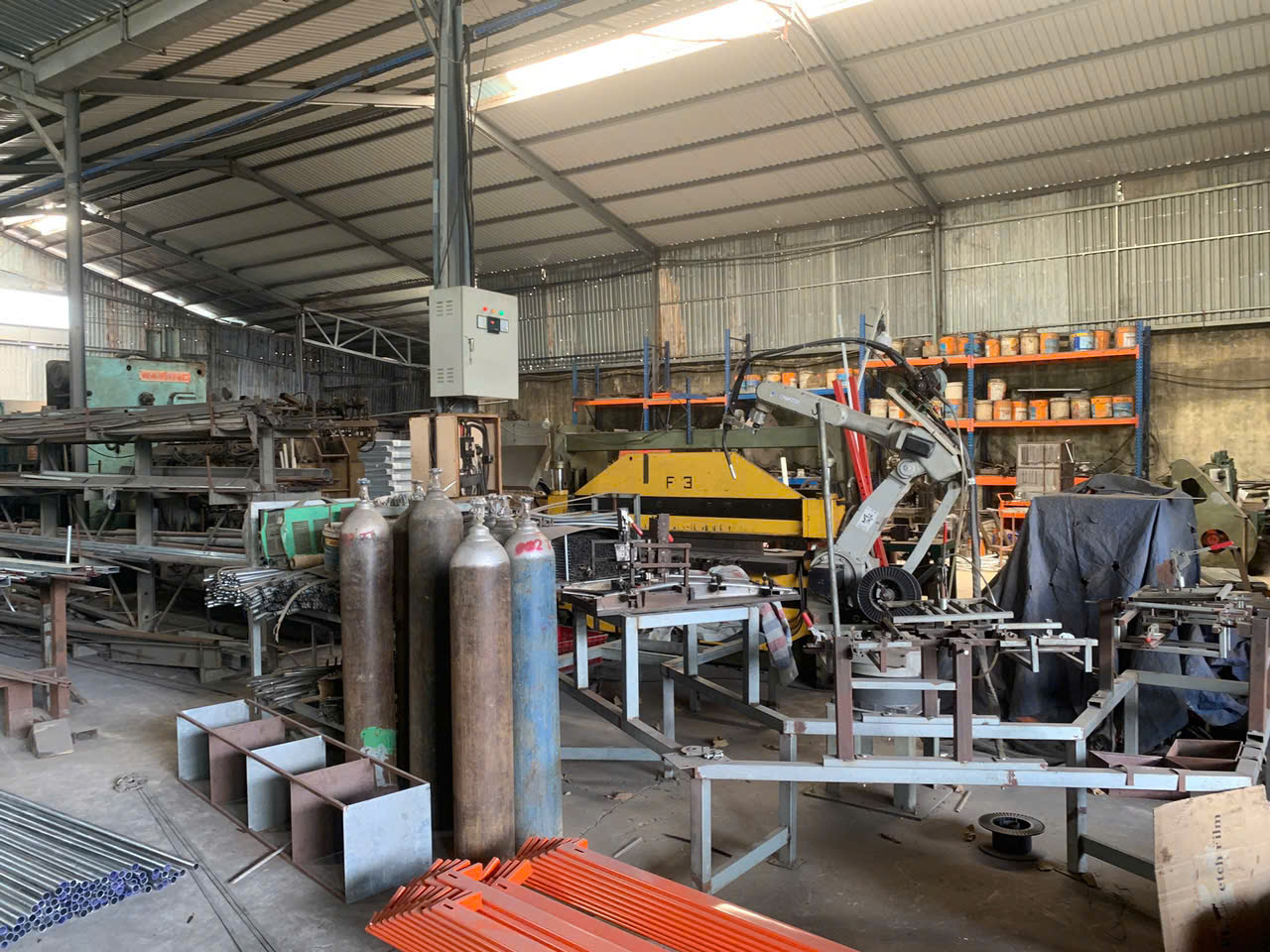
Returns are expensive. You pay for inbound freight, warehousing, return freight, rework or replacement, and lost time. For custom welding parts — like the complex geometric frames and L-shaped mounts our clients order — there is often no secondary market. Defective parts become scrap. When you add the damage to your relationship with your end customer, the total cost is far higher than any inspection fee.
Common Defects Our Inspectors Catch
Through our quality control work on Vietnam welding projects, we have built a pattern of the most frequent defects:
- Welding deformation and compression distortion — especially on thin-gauge parts and long horizontal beams
- Surface porosity — caused by contaminated base metal or insufficient shielding gas
- Undersized welds — throat thickness or leg length below specification
- Misalignment — fit-up gaps and offset joints exceeding tolerance
- Incomplete fusion — weld metal does not fully bond to the base metal
- Oil stains and surface contamination — leftover cutting fluid or handling residue
- Incorrect bevel or gap angles — deviating from the approved welding procedure specification
- Poor weld on rejected items — attempted repairs that do not meet original standards
How Inspections Drive Right-First-Time Results
Third-party inspections create a feedback loop. When a factory knows an independent inspector will check every weld profile and measure every critical dimension, they pay more attention during production. Over time, this raises the baseline quality.
We have seen this firsthand. When we introduced during production inspections on a recurring bracket order, the defect rate at final inspection dropped noticeably within three production cycles. The factory adjusted its welding procedures and added internal checks at the stages where the inspector previously found issues.
Framing Inspections as Policy, Not Distrust
Some Vietnamese suppliers initially resist third-party inspections. They see it as a sign of distrust. The best approach is to frame it as your company's standard operating procedure — a non-negotiable policy for all suppliers worldwide, not a judgment on their specific factory. In our experience, most ISO 9001-certified Vietnamese factories that serve export markets accept this readily. They are accustomed to factory audits and understand that quality assurance services protect both parties.
You can also offer to share inspection reports with the supplier. This transparency builds trust and gives them actionable data to improve. Over time, the relationship shifts from buyer policing to collaborative quality improvement.
Sample Contract Language for Inspection Clauses
Include clear language in your purchase agreement:
- "Buyer reserves the right to arrange third-party inspections at any stage of production."
- "Supplier shall provide reasonable access to the production facility and cooperate with the appointed inspection agency."
- "If the pre-shipment inspection reveals critical or major defects exceeding the agreed AQL, supplier shall rework or replace defective units at no additional cost and reimburse the re-inspection fee."
This language protects your position without creating an adversarial relationship. It sets expectations early and avoids disputes later.
Conclusion
Arranging third-party quality inspections for Vietnam welding parts protects your investment, prevents costly returns, and builds long-term supplier accountability — when you plan the scope, standards, and schedule upfront.
Frequently Asked Questions
How do I find a qualified third-party inspector for my custom welding parts in Vietnam?
A buyer once asked our Vietnam office to recommend an inspection agency, and within two days we had three accredited firms with local inspectors ready to visit the factory floor.
What specific quality standards should I require during a third-party inspection of my Vietnam-made components?
One lesson we learned early: if you do not spell out the exact standards in your purchase order, the factory will apply its own interpretation — and that interpretation will almost always be looser than what your end customer expects.
How can I integrate third-party inspections into my Vietnam supply chain without delaying my delivery schedule?
The trade-off between quality checks and on-time delivery is something our project managers deal with every week. The good news is that with proper planning, inspections add days — not weeks — to your timeline.
Footnotes
1. Explains the highest level of independence for inspection bodies. ↩︎
2. Describes the international mutual recognition arrangement for accredited results. ↩︎
3. Details the qualifications and certification process for welding inspectors. ↩︎
4. Explains techniques for evaluating materials without causing damage. ↩︎
5. Defines the structural welding code for steel. ↩︎
6. Specifies quality requirements for fusion welding of metallic materials. ↩︎
7. Replaced with the official ISO page for the latest version (2023) of the ISO 5817 standard. ↩︎
8. Replaced with a Wikipedia article providing a clear and authoritative definition of Acceptable Quality Limit (AQL). ↩︎
9. Explains the formal document outlining welding procedures and parameters. ↩︎