Late deliveries from sheet metal fabrication 1 suppliers have cost our clients thousands in idle production time. When parts arrive a week late, the entire downstream schedule collapses ERP data 2. We learned that JIT delivery 3 only works when you ask the right questions before placing the first order.
To ask sheet metal fabrication suppliers to support your JIT delivery, clearly define your delivery frequencies, assess their in-house processing capabilities, establish inventory buffers, integrate demand forecasting data, and build long-term agreements with performance metrics tied to on-time delivery targets.
This article walks you through the exact steps we use when onboarding sheet metal suppliers for JIT programs. Each section tackles a real challenge buyers face — from evaluating infrastructure to managing overseas logistics risks. Let’s get into it.
How do I evaluate if a sheet metal supplier has the infrastructure to support my JIT delivery needs?
A few years ago, one of our U.S. clients switched to a new sheet metal supplier who quoted 30% lower. Within two months, three shipments arrived late because the supplier outsourced laser cutting 4 to a third party. That experience taught us exactly what infrastructure signals to look for.
Evaluate a sheet metal supplier's JIT infrastructure by checking for in-house processing capabilities, raw material inventory depth, quality certifications like ISO 9001, dedicated logistics coordination, and a proven track record of on-time delivery performance above 95%.
What In-House Capabilities Matter Most?
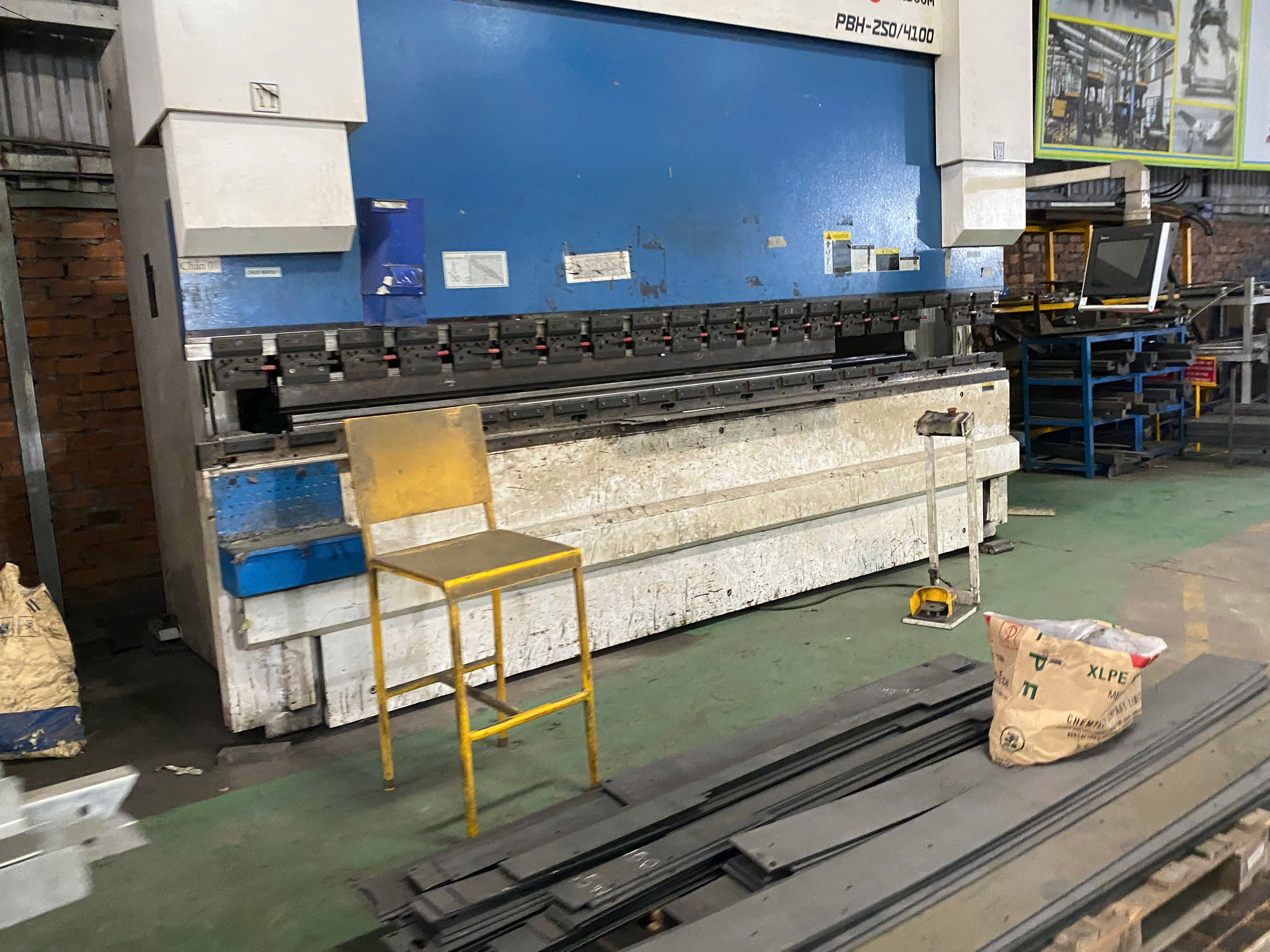
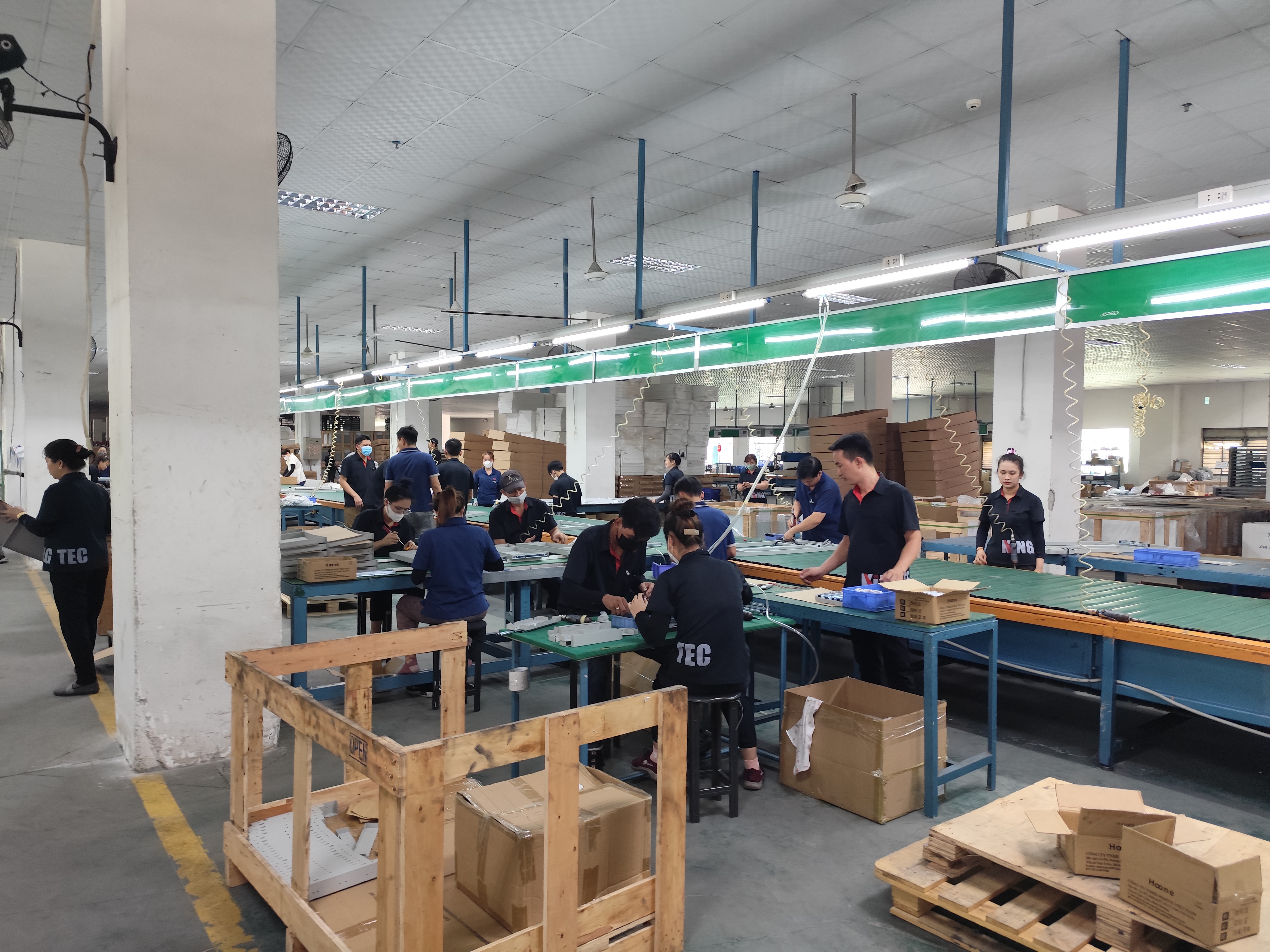
A supplier who outsources critical processes introduces delays you cannot control. When we audit factories in Vietnam and across Asia, the first thing we check is whether laser cutting, CNC punching, forming, welding, and surface finishing all happen under one roof. Turn-key fabrication under a single manufacturer simplifies logistics and makes coordinated JIT shipping realistic.
If the supplier relies on subcontractors for even one step — say powder coating or hardware insertion — that step becomes a bottleneck. Ask for a process flow map. A capable supplier will show you exactly where each operation happens and how long it takes.
Key Infrastructure Checklist
| Infrastructure Element | Why It Matters for JIT | Red Flag If Missing |
|---|---|---|
| In-house laser cutting and CNC punching | Eliminates wait time for outside vendors | Outsourced cutting adds 3–7 days |
| Raw material stock (stainless, aluminum, alloys) | Supports rapid production starts | Long material procurement delays |
| ISO 9001 5 or equivalent quality system | Ensures consistent first-pass yield | High rejection rates disrupt schedules |
| Dedicated shipping/logistics team | Coordinates delivery windows precisely | Ad-hoc shipping causes missed dates |
| Warehousing or staging area | Enables vendor managed inventory 6 programs | No buffer capacity for demand spikes |
| Welding and assembly capabilities | Reduces handoffs between facilities | Multiple locations increase transit time |
Supplier Performance Metrics to Request
Do not take a supplier's word for it. Ask for actual supplier performance metrics. Request their on-time delivery rate for the past six months. Ask for their average lead time by part complexity. A strong JIT supplier will track these numbers and share them without hesitation. You can learn more about what supplier capacity metrics ensure on-time delivery to know exactly which data points to request.
We also look at quoting quality. A supplier who asks thoughtful questions about tolerances, material specs, and annual volumes during the quoting stage is more likely to deliver on time. A supplier who sends a fast quote with no questions is often guessing — and guessing leads to delays later.
Vendor managed inventory is another strong signal. Suppliers who offer VMI or consignment inventory programs have already invested in the systems to support JIT. They understand demand forecasting 7 and are willing to hold stock on your behalf. This level of supply chain resilience 8 is hard to build overnight, so it tells you a lot about their maturity.
What communication steps should I take to ensure my supplier stays aligned with my JIT schedule?
We once managed a custom bracket program where the client changed quantities three times in one month. The supplier never got a single update because the buyer assumed the original PO covered everything. Parts showed up in the wrong quantities, and two production lines sat idle. That project taught us that supplier collaboration lives or dies on communication cadence.
Ensure JIT alignment by establishing weekly status calls, sharing rolling demand forecasts, integrating your ERP data with the supplier's production planning, setting clear escalation protocols for delays, and documenting all schedule changes in writing within 24 hours.
Build a Communication Rhythm
JIT does not work with quarterly check-ins. It requires a structured rhythm. Here is the cadence we recommend to our clients:
| Communication Type | Frequency | Purpose |
|---|---|---|
| Rolling forecast share | Monthly | Gives supplier visibility into upcoming demand |
| Production status update | Weekly | Confirms parts are on track for next delivery |
| Shipping notification | Per shipment | Confirms dispatch, carrier, and ETA |
| Quality review meeting | Monthly or quarterly | Reviews first-pass yield, NCRs, and corrective actions |
| Escalation call | As needed | Addresses delays, material shortages, or spec changes |
| Annual business review | Yearly | Evaluates overall performance and plans for next year |
Share Your Demand Forecast — Even If It's Imperfect
Many buyers hesitate to share forecasts because the numbers change. But an imperfect forecast is far better than no forecast. When we work with our partner factories, we share a rolling three-month outlook. This gives the supplier time to procure raw materials and reserve machine capacity.
Demand forecasting does not need to be exact. Even a rough estimate of monthly volumes lets the supplier stage materials for quick release. It also enables lead time reduction because the supplier can pre-cut blanks or pre-form components before the official PO arrives.
Proactive vs. Reactive Communication
The best JIT suppliers communicate proactively. They flag potential issues before they become problems. During our supplier audits, we specifically assess whether a factory has a system for notifying buyers about material shortages, equipment downtime, or quality holds.
If your supplier only calls when something has already gone wrong, that is a reactive culture. You need a partner who sends updates even when things are going well. This builds trust and keeps your schedule safe.
One practical step: ask your supplier to assign a dedicated project coordinator. This person should know your parts, your schedule, and your quality requirements. Having a single point of contact eliminates the confusion that comes from rotating contacts who each have incomplete information.
Packaging and Labeling Alignment
Communication also covers physical details. For sheet metal parts with sharp edges or polished finishes, secure packaging prevents damage during transport. We have seen JIT deliveries arrive on time but with scratched surfaces — which is just as bad as arriving late.
Agree on packaging specs in advance. Specify labeling requirements so parts can go straight to the production line without re-sorting. Custom labeling with part numbers, revision levels, and lot codes saves your receiving team valuable time.
How can I guarantee my custom parts meet all specs the first time to prevent JIT disruptions?
The most expensive delivery delay is the one caused by a part that arrives on time but fails inspection. I recall a project involving a pair of complex angular mounting brackets — mirrored counterparts with multiple precise folds, sharp bends, and irregular cutouts. The first batch came in with two bend angles out of tolerance. Every piece had to be reworked. That wiped out a full week of production.
Guarantee first-time conformance by conducting thorough design-for-manufacturability reviews, establishing a PPAP process before production, defining critical-to-quality dimensions with clear tolerances, requiring in-process inspections, and performing a final inspection with documented measurement reports before shipment.
Design for Manufacturability Comes First
Before any metal is cut, your supplier should review your drawings and flag potential issues. Our engineering team routinely identifies risks like tight bend radii near holes, features too close to edges, or tolerance stacks that are difficult to hold in production. This is a design for manufacturability review, and it is non-negotiable for JIT programs.
A good DFM review catches problems that would otherwise surface during production — when it is too late to fix them without a delay. If your supplier accepts drawings without questions, be cautious. That either means the drawings are perfect (rare) or the supplier is not experienced enough to spot risks.
The PPAP Approach to First-Time Quality
We use a Production Part Approval Process 9 adapted from the automotive industry. PPAP forces both parties to align on specifications before mass production begins. Here is a simplified version of what we include:
| PPAP Element | What It Covers | JIT Benefit |
|---|---|---|
| Engineering drawing review | Confirms all dimensions, materials, and finishes | Prevents spec misunderstandings |
| Process flow diagram | Maps every production step | Identifies bottleneck risks early |
| Control plan | Defines in-process inspection points | Catches defects before final assembly |
| First article inspection report | Measures sample parts against all specs | Validates the process before volume runs |
| Material certifications | Confirms alloy grade and properties | Eliminates material substitution risk |
| Capability study (if needed) | Proves the process can hold critical tolerances | Builds confidence in repeatability |
This approach aligns with lean manufacturing principles 10. You invest time upfront to prevent waste downstream. The result is consistent first-pass yield, which is the foundation of any JIT program.
In-Process and Final Inspection
For parts like heavy-duty mounting brackets with pre-drilled holes, weld joints, and powder-coated finishes, you need inspection at multiple stages. Check hole positions after punching. Verify bend angles after forming. Inspect weld quality before finishing. And perform a final dimensional check before packing.
Our teams in Vietnam and China follow documented inspection procedures for every custom part. We measure critical-to-quality dimensions using calibrated tools and record the results. These measurement reports ship with the parts so the buyer can verify conformance on arrival.
Inventory optimization in a JIT system depends entirely on quality. If parts fail inspection and need rework, your safety stock evaporates. The only reliable way to reduce buffer inventory is to ensure parts are right the first time.
How do I manage the lead time and logistics risks when sourcing JIT sheet metal parts from overseas?
One trade-off we weigh constantly is the cost savings of Asian sourcing versus the delivery risk of longer supply chains. A bracket fabricated in Vietnam might cost 40% less than the same part made domestically. But if it takes four weeks by sea and clears customs in six days instead of two, your JIT window just evaporated. Managing this tension is the core challenge for buyers sourcing internationally.
Manage overseas JIT risks by combining ocean freight with strategic safety stock, using bonded warehousing near your facility, negotiating long-term agreements with fixed lead times, monitoring shipments with real-time tracking, and maintaining a backup domestic supplier for emergency orders.
The Lead Time Reality for Overseas Sourcing
Typical lead times for sheet metal fabrication range from a few days to a couple of weeks at the factory level. But when you add international shipping, customs clearance, and inland transport, the total lead time can stretch to six to eight weeks. That does not sound like JIT. So how do you make it work?
The answer is a hybrid approach. You combine the cost advantages of overseas production with local inventory buffers. This is where vendor managed inventory and consignment inventory programs become critical. Your supplier ships in bulk on a regular cadence and holds finished goods at a warehouse near your facility. You draw from that stock as needed.
Hybrid JIT Model for Overseas Parts
Here is the model we recommend for our U.S. clients:
- Forecast and order in bulk. Place orders based on a rolling three-month forecast. This gives the factory time to produce efficiently.
- Ship by ocean freight. Use scheduled container shipments to keep freight costs low.
- Stage at a U.S. warehouse. Use a bonded warehouse or third-party logistics provider near your facility.
- Release weekly or daily. Pull parts from the warehouse on a JIT schedule that matches your production.
- Replenish continuously. Each new ocean shipment replenishes the warehouse buffer before it runs out.
This approach delivers the inventory optimization benefits of JIT without exposing you to the full risk of a six-week ocean transit.
Evaluating Total Landed Cost
When you source overseas, unit price is only part of the picture. You need to evaluate total landed cost — which includes fabrication cost, freight, duties, inspection, warehousing, and the cost of potential delays. Understanding how to negotiate tiered pricing with sheet metal fabrication suppliers can further optimize your cost structure as volumes grow.
| Cost Element | Domestic Supplier | Overseas Supplier (Asia) |
|---|---|---|
| Unit fabrication cost | Higher | Lower (often 30–50% less) |
| Freight cost | Low (truck) | Higher (ocean + inland) |
| Lead time | 1–3 weeks | 5–8 weeks (including transit) |
| Customs and duties | None | Variable by material and country |
| Warehousing buffer cost | Minimal | Moderate (required for JIT buffer) |
| Quality risk cost | Lower (easier to audit) | Manageable with on-site QC team |
| Communication speed | Same time zone | 10–14 hour time difference |
Even with the added logistics cost, many of our clients find that overseas sourcing with a well-managed supply chain delivers a 20–35% net savings on total landed cost. The key is having boots on the ground at the factory. Our teams in Vietnam and China handle process control, in-line inspection, and final inspection so that parts are confirmed good before they leave the factory.
Building Supply Chain Resilience
Long-term agreements with your sheet metal supplier provide stability for both sides. The supplier gets predictable volume and can invest in holding raw material stock. You get fixed lead times and priority scheduling.
We also encourage clients to maintain a backup domestic supplier for emergency orders. This is not a contradiction of JIT. It is supply chain resilience. If a typhoon delays a shipment by two weeks, you need a rapid fabrication option to bridge the gap. To prepare for such scenarios, it helps to understand how to evaluate sheet metal fabrication supplier flexibility for urgent and expedited orders.
Real-time tracking is another tool. IoT sensors and shipment tracking platforms give you end-to-end visibility. You can see exactly where your container is and adjust your production schedule if transit times shift. This level of transparency turns a reactive supply chain into a proactive one, and it directly supports the lean manufacturing principles that underpin JIT.
Conclusion
JIT delivery for sheet metal fabrication is not just a supplier capability — it is a partnership you build through clear communication, rigorous quality processes, smart logistics planning, and long-term commitment from both sides. Start the conversation early, ask the tough questions, and choose a supplier who invests in getting it right.
Frequently Asked Questions
What In-House Capabilities Matter Most?
A supplier who outsources critical processes introduces delays you cannot control. When we audit factories in Vietnam and across Asia, the first thing we check is whether laser cutting, CNC punching, forming, welding, and surface finishing all happen under one roof. Turn-key fabrication under a single manufacturer simplifies logistics and makes coordinated JIT shipping realistic.
How do I evaluate if a sheet metal supplier has the infrastructure to support my JIT delivery needs?
A few years ago, one of our U.S. clients switched to a new sheet metal supplier who quoted 30% lower. Within two months, three shipments arrived late because the supplier outsourced laser cutting 4 to a third party. That experience taught us exactly what infrastructure signals to look for.
What communication steps should I take to ensure my supplier stays aligned with my JIT schedule?
We once managed a custom bracket program where the client changed quantities three times in one month. The supplier never got a single update because the buyer assumed the original PO covered everything. Parts showed up in the wrong quantities, and two production lines sat idle. That project taught us that supplier collaboration lives or dies on communication cadence.
Footnotes
1. Defines the process of transforming flat metal sheets into specific shapes. ↩︎
2. Describes ERP integration for seamless data sharing and exchange between systems. ↩︎
3. Replaced with a working URL from a logistics company explaining JIT delivery. ↩︎
4. Replaced with a working URL from TWI (The Welding Institute), an authoritative source in materials joining technology. ↩︎
5. Official standard for quality management systems, ensuring consistent product/service quality. ↩︎
6. Replaced with a working URL from Wikipedia, a highly authoritative and general source. ↩︎
7. Explains demand forecasting as predicting future customer demand using historical data and trends. ↩︎
8. Ability of a supply chain to anticipate, adapt, and recover from disruptions. ↩︎
9. Replaced with a working URL from Wikipedia, a highly authoritative and general source. ↩︎
10. Replaced with a working URL from Wikipedia, a highly authoritative and general source that discusses lean manufacturing principles. ↩︎