Finding a reliable Vietnamese stamping parts supplier can feel like navigating a minefield — one wrong choice and you face months of delays, scrap parts, and burned budgets.
To assess Vietnamese stamping parts suppliers, buyers should verify legal registration, conduct factory audits (on-site or third-party), test technical fluency through drawing reviews, confirm quality certifications directly with issuing bodies, and place small pilot orders to measure dimensional accuracy, delivery timelines, and communication quality before scaling.
The sections below break this process into clear, actionable steps. Each one reflects real lessons from years of helping U.S. buyers source precision metal stamping from Vietnam — and from watching what goes wrong when steps get skipped.
What Should I Look for During a Vietnamese Stamping Supplier Audit?
A few years ago, our Vietnam office arranged a facility visit for a U.S. client who had been quoted an impossibly low price on stamped brackets. The "factory" turned out to be a rented warehouse with one hydraulic press and no quality lab.
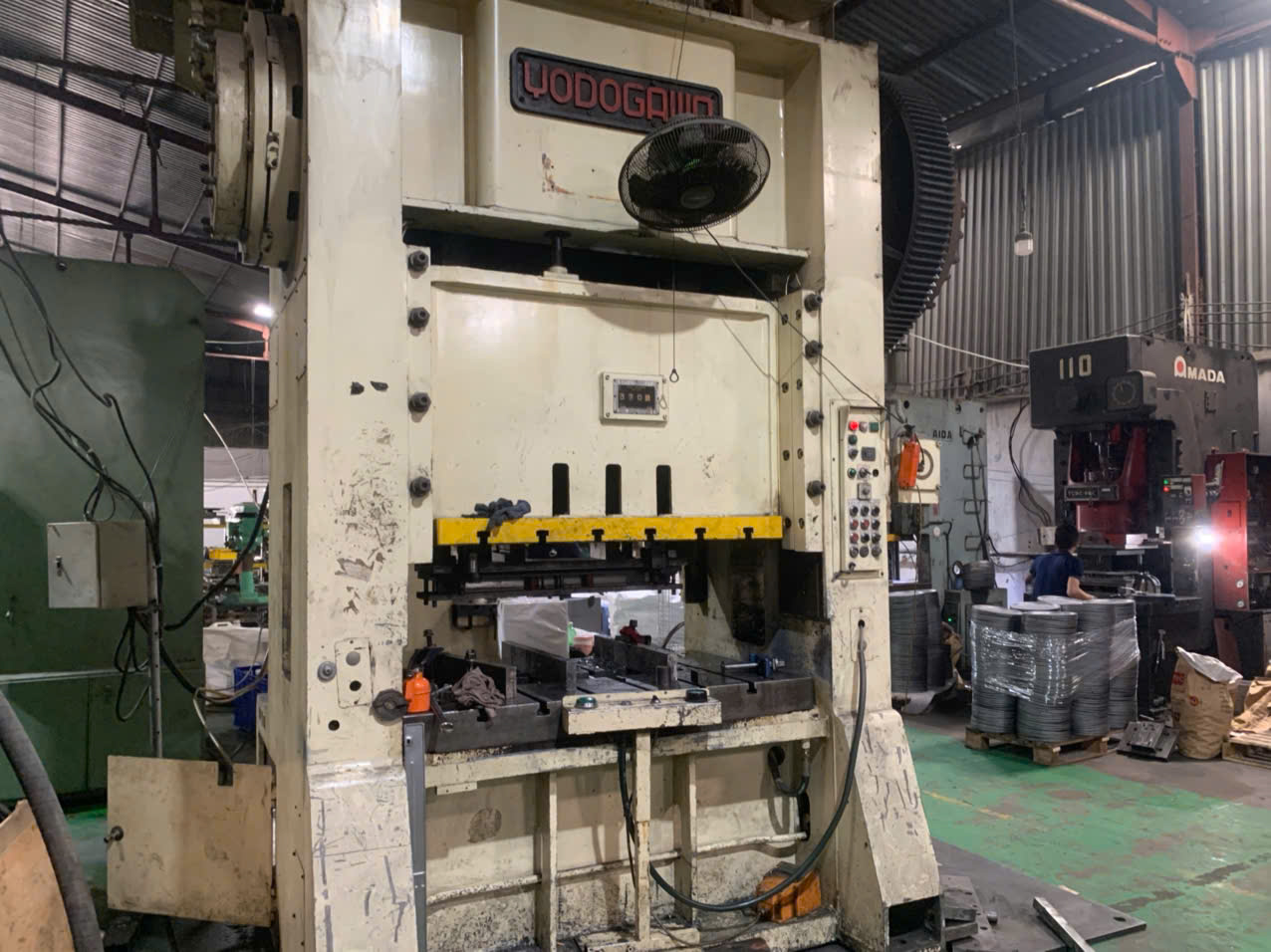
During a Vietnamese stamping supplier audit, look for facility ownership proof, specific stamping equipment relevant to your part, a functioning quality lab with CMM or gauges, material traceability records, organized workflows, and clear evidence that the supplier manufactures in-house rather than subcontracting to unknown third parties.

The Drawing Test: Your Single Best Filter
Before you ever set foot in a factory — or hire someone to do it — send the supplier your actual engineering drawing. Do not ask generic questions like "Can you do stamping?" Instead, ask them to walk you through how they would produce your specific part.
What separates a professional supplier from a pretender is technical fluency. A credible supplier will engage with your tolerances, call out potential issues with your tool and die design 1, and explain which stamping press they would use. A trading house will send back a vague quote with no technical commentary.
When we evaluate suppliers for our clients, we score drawing responses on four criteria:
| Criteria | What a Strong Response Looks Like | Red Flag |
|---|---|---|
| Tolerance Discussion | References specific dimensions, names gauges or CMM methods | Says "we can meet all tolerances" with no detail |
| Material Sourcing | Names steel grade, mill source, or provides mill certs | Vague — "we use good material" |
| Tooling Ownership | States whether they build tooling in-house or outsource | Avoids the question entirely |
| Timeline Breakdown | Provides phased timeline (tooling → samples → production) | Gives a single lump number with no explanation |
We typically give suppliers 24 to 48 hours to respond. A fast but empty quote is worse than a slower, detailed one. Speed matters — but depth matters more.
Physical Verification: Proving the Factory Is Real
If you cannot visit Vietnam yourself, hire a third-party audit firm. Companies like V-Trust, SGS, or Bureau Veritas can verify production capacity 2, labor conditions, and whether the supplier actually owns the stamping equipment. This is not optional — it is essential. Many suppliers listed on Alibaba are trading houses that subcontract everything.
Use Google Maps satellite imagery to cross-check the factory address against the registered business address. Request timestamped photos of the shop floor and specific machines. Ask directly: "Do you own this facility?" A legitimate manufacturer will answer without hesitation.
Our team in Vietnam performs these checks regularly. We look at the age and maintenance records of stamping presses, the organization of the production floor, and whether workers appear trained and equipped. A messy, disorganized shop floor almost always correlates with poor quality output.
The Factory Audit Checklist
Here is a condensed factory audit checklist we use internally:
| Audit Area | Key Questions |
|---|---|
| Legal Status | Does the Enterprise Registration Certificate match the entity name and address? |
| Equipment | Are stamping presses, CNC punchers, and finishing equipment on-site and operational? |
| Quality Lab | Is there a dedicated inspection area with CMM, calipers, and go/no-go gauges? |
| Material Storage | Are raw materials labeled, stored properly, and traceable to purchase orders? |
| Workforce | Are operators trained? Is there a skill matrix or training log? |
| Subcontracting | Does the supplier disclose any outsourced processes? |
| Export Track Record | Can they show shipping documents or customs records for prior exports? |
An export track record to your specific region is a strong trust signal. It means the supplier already understands documentation, packaging standards, and logistics for your market.
How Can I Verify a Supplier's Quality Control Processes Before Placing an Order?
One lesson that keeps repeating itself in our work: a supplier can have shiny machines and still ship non-conforming parts. The difference is almost always in their quality management system — or the lack of one.
To verify a supplier's quality control processes, request their inspection procedures, ask for sample inspection reports with actual measurement data, confirm they use calibrated instruments like CMMs and SPC software, and run a small pilot order to test dimensional accuracy, surface finish, and defect rates against your specifications.

Ask for Evidence, Not Promises
When I ask a Vietnamese stamping supplier about their QC process, I am not looking for a brochure. I want to see a real inspection report from a recent production run. It should include measured values compared against drawing tolerances, the instrument used, the operator's name, and the date.
A supplier practicing statistical process control 3 will track Cpk values and control charts. This tells you whether their stamping process is stable and capable — not just whether the last part happened to pass. If they look confused when you mention SPC, that is your answer.
The Sample Order as a Quality Gate
Before committing to volume, place a small pilot order. Treat it as a formal quality gate. Define your KPIs upfront:
- Dimensional accuracy: Are critical dimensions within tolerance?
- Surface finish: Does the powder coat or plating meet your spec?
- Tooling sophistication: Are blanking edges clean? Are bends consistent?
- Defect rate: What percentage of parts fail inspection?
When we manage pilot orders for clients, we conduct a full first-article inspection 4 using a PPAP-style approach. We measure every critical dimension on the first production samples and compare them to the drawing. This is where problems surface — and where you learn whether the supplier can get it right the first time.
What to Look for in Their Quality Lab
A well-equipped quality lab for precision metal stamping should include:
| Instrument | Purpose |
|---|---|
| Coordinate Measuring Machine (CMM) | Verifies complex geometries and tight tolerances |
| Optical Comparator | Checks profiles and contours against drawings |
| Surface Roughness Tester | Measures Ra values for finish specifications |
| Hardness Tester | Confirms material hardness after heat treatment |
| Calibrated Calipers & Micrometers | Everyday dimensional checks |
| Go/No-Go Gauges | Rapid hole diameter and pin verification |
If the supplier cannot name their instruments or show calibration certificates, their quality claims are hollow. Material traceability is equally critical — ask to see how they link a finished stamped bracket back to the original steel coil and its mill certificate.
Digital Quality Transparency
Modern suppliers are adopting ERP and MES systems that allow real-time order tracking and data-driven quality reporting. Ask whether the supplier can share inspection data digitally. Can they send you measurement reports in a structured format? Can you log in and check production status? This level of transparency is increasingly common among Vietnam's better manufacturers.
What Certifications Should I Require from Vietnamese Stamping Parts Manufacturers?
A client once forwarded us an ISO 9001 certificate from a potential supplier. The certificate looked perfect — clean PDF, proper formatting, correct scope. We contacted the issuing body. They had never heard of the company.
Require ISO 9001 at minimum for any stamping supplier. For automotive parts, require IATF 16949. For electronics-related components, require CE and RoHS compliance. Never accept a PDF certificate at face value — always verify the certificate number, factory name, scope, and expiration date directly with the issuing certification body.

Certification Is a Starting Point, Not a Finish Line
Certifications matter because they establish that a supplier has implemented a structured quality management system. But they are only as trustworthy as the verification behind them. Fake certificates are disturbingly common in Southeast Asian sourcing.
Here is how we approach certification verification:
- Request the certificate. Get the PDF, but do not stop there.
- Check the issuing body. Is it an accredited certification body? Look them up on the IAF (International Accreditation Forum 6) database.
- Contact the issuer directly. Provide the certificate number and factory name. Ask if the certificate is active and what scope it covers.
- Match the scope to your product. A supplier might hold ISO 9001 for "general metal fabrication" but not for the specific stamping process you need.
- Request the most recent audit report. A certificate without a supporting audit report is like a diploma without transcripts.
Which Certifications Matter Most?
The certifications you should require depend on your industry:
| Industry | Required Certification | Why It Matters |
|---|---|---|
| General Industrial | ISO 9001 | Confirms a documented quality management system is in place |
| Automotive | IATF 16949 | Covers automotive-specific requirements including PPAP, APQP, and FMEA |
| Electronics / Electrical | CE, RoHS, REACH | Ensures material compliance with EU environmental and safety directives |
| Aerospace | AS9100 | Addresses traceability, risk management, and configuration control |
| Medical Devices | ISO 13485 | Requires design controls and validated processes for medical components |
For most U.S. buyers sourcing custom stamped brackets, mounting hardware, or structural components, ISO 9001 certification is the baseline. If any parts go into vehicles, IATF 16949 standards become non-negotiable.
Beyond Certificates: ESG and Compliance Trends
Global import regulations 7 are tightening. Buyers — especially those in Europe and North America — increasingly ask about Environmental, Social, and Governance (ESG) practices. This includes carbon footprint data 8, ethical labor practices, and conflict mineral sourcing. While not every project requires formal ESG reporting, a supplier who is aware of these trends and preparing for them signals long-term viability.
Our approach is to treat certifications as a filter, not a guarantee. They narrow the field. But real confidence comes from the supplier vetting process: drawing reviews, sample testing, and ongoing performance monitoring during production.
How Do I Evaluate a Supplier's Communication and Project Management Capabilities?
The most technically capable factory in Vietnam is useless to you if they cannot communicate clearly, respond promptly, or manage a project timeline. I have seen this pattern repeatedly — a supplier nails the sample, then falls apart during production because nobody on their side is tracking deliverables.
Evaluate a supplier's communication by measuring RFQ response time (24–48 hours is professional), the technical depth of their replies, their willingness to ask clarifying questions, their English proficiency, and their defined process for handling problems such as defects, delays, or design revisions during production.

Response Quality Over Response Speed
When we send an RFQ to a new Vietnamese stamping supplier, we track two things: how fast they reply and what their reply contains. A response within 24 hours that includes a detailed cost breakdown, production lead times, tooling approach, and clarifying questions about the drawing is a strong signal. A same-day response that contains only a price and a vague delivery promise is a warning sign — it likely came from a sales team with no engineering support behind it.
Here is what a professional RFQ response should include:
- Unit price with clear assumptions (material grade, order quantity, surface treatment)
- Tooling cost and ownership terms
- Production lead times broken into phases (tooling, sampling, mass production)
- Questions about unclear or ambiguous drawing details
- Suggested alternatives if they see a more efficient approach
A supplier who asks no clarifying questions is either not reading your drawing carefully or does not have the technical depth to spot issues. Either way, that supplier is unlikely to get it right the first time.
Project Management: The Hidden Differentiator
Stamping projects involve multiple stages: tool design, tool fabrication, sample production, sample approval, mass production, inspection, packing, and shipping. Each stage has dependencies. A delay in tooling cascades into every downstream step.
A professional supplier assigns a dedicated project manager 9 or coordinator. They provide a project timeline with milestones. They proactively update you when something changes — before you have to chase them.
In our experience managing custom parts projects across Vietnam, we use structured milestone tracking. Every project has defined checkpoints: tool design approval, T1 sample submission, dimensional report review, and final inspection before shipment. We push suppliers to follow the same cadence. Suppliers who resist structured project management tend to deliver late and blame external factors.
Problem Communication Protocol
How a supplier handles problems tells you more about them than how they handle smooth orders. Ask upfront: "What happens if you find a defect during production?" or "How do you handle a revision request?"
A trustworthy supplier will describe a defined protocol:
- Stop production on the affected batch.
- Notify the buyer within a set timeframe.
- Provide root cause analysis.
- Propose a corrective action plan.
- Confirm the fix before resuming production.
If the answer is vague or dismissive, that supplier will hide problems until they become your problems at the receiving dock.
The Reference Check
Finally, ask for references from buyers in the last 12 months. A credible manufacturer will provide contactable references without hesitation. If they dodge the request or offer only testimonials on their website, proceed with caution. A five-minute phone call with a real buyer can tell you more than a hundred emails with the supplier.
Conclusion
Assessing Vietnamese stamping parts suppliers requires structured verification across technical capability, legal legitimacy, quality systems, certifications, and communication. Skip any step and you risk costly failures. Trust is built through evidence, not claims.
Frequently Asked Questions
Which Certifications Matter Most?
The certifications you should require depend on your industry:
What Should I Look for During a Vietnamese Stamping Supplier Audit?
A few years ago, our Vietnam office arranged a facility visit for a U.S. client who had been quoted an impossibly low price on stamped brackets. The "factory" turned out to be a rented warehouse with one hydraulic press and no quality lab.
How Can I Verify a Supplier's Quality Control Processes Before Placing an Order?
One lesson that keeps repeating itself in our work: a supplier can have shiny machines and still ship non-conforming parts. The difference is almost always in their quality management system — or the lack of one.
Footnotes
1. Technical overview of the design process for stamping tools and industrial dies. ↩︎
2. Explains the concept of production capacity and its measurement in manufacturing environments. ↩︎
3. Authoritative Wikipedia entry for statistical process control methodology. ↩︎
4. Standardized process for verifying that a production process can produce parts meeting requirements. ↩︎
5. Official ISO page for the world’s most recognized quality management standard. ↩︎
6. The global authority for accreditation of bodies certifying quality management systems. ↩︎
7. Official U.S. government portal for business import and export regulations. ↩︎
8. The EPA provides standards and data for greenhouse gas reporting and carbon footprint tracking. ↩︎
9. The Project Management Institute defines the roles and responsibilities of project managers in industry. ↩︎