

Finding a flexible sheet metal fabrication 1 partner is a problem I watch our U.S. clients struggle with every quarter — one rigid supplier can stall an entire product launch, burn cash on rework, and erode trust across the supply chain.
To assess supplier flexibility when sourcing sheet metal fabrication, evaluate the vendor’s production capacity range, equipment redundancy, engineering support for design changes, material sourcing strategies, quality control processes, and willingness to handle both prototypes and high-volume runs under transparent lead time management.
Below, I break this assessment into four practical areas supply chain management 2. Each section gives you specific questions to ask, metrics to track, and red flags to avoid — drawn from real project experiences across our Vietnam and China operations.
How do I evaluate if a sheet metal supplier can scale from my initial prototypes to high-volume production?
A trade-off I weigh on nearly every new custom parts project is whether the supplier who nails the prototype can actually deliver when volumes jump from 50 pieces to 5,000 raw material traceability 3.
Evaluate scalability by reviewing the supplier's equipment list, production capacity utilization, workforce flexibility, and track record with past ramp-ups. Ask for case studies showing prototype-to-volume transitions and confirm they maintain buffer capacity for demand spikes.
Why Prototype Excellence Does Not Guarantee Volume Success
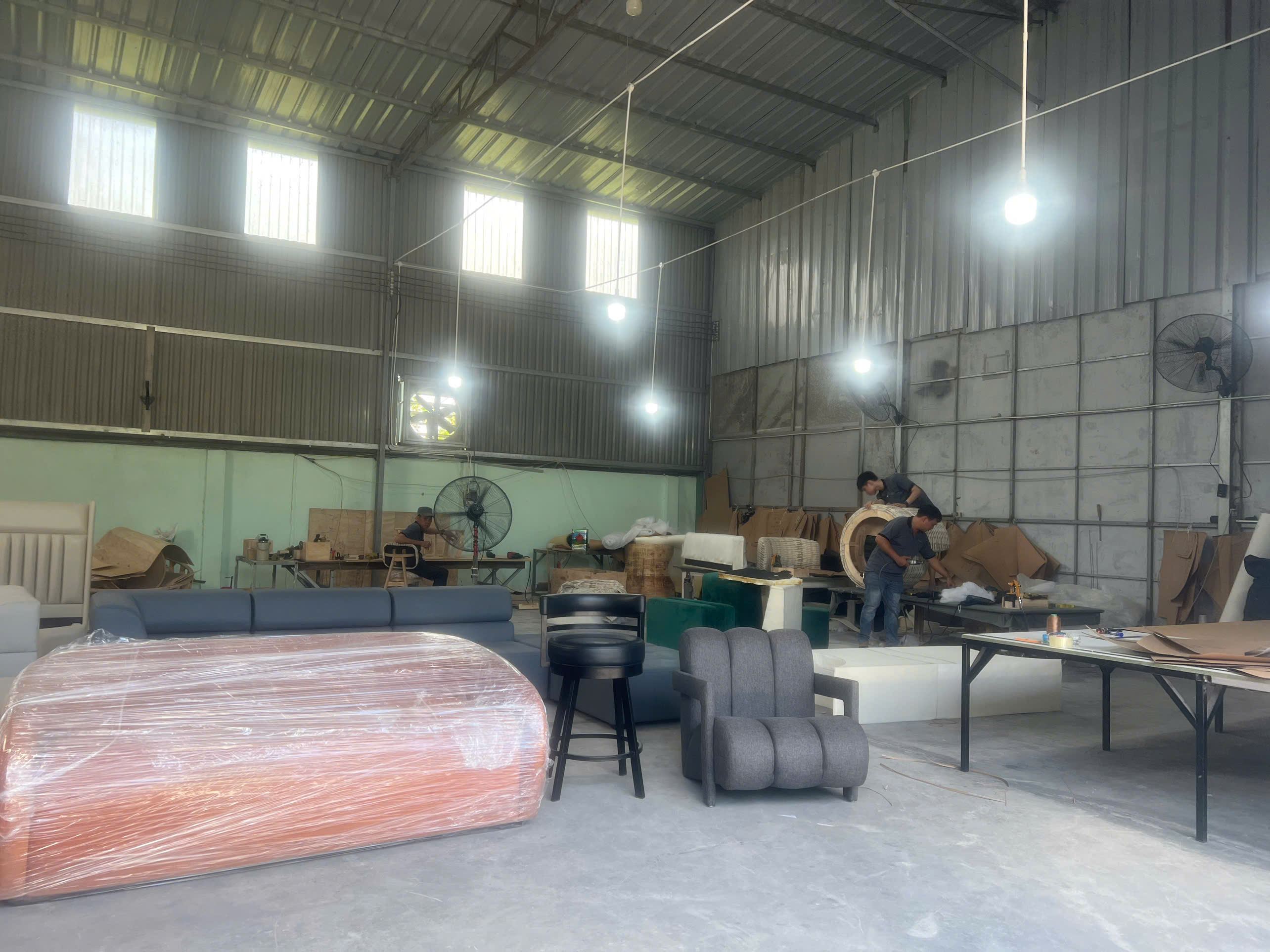
Many fabricators excel at one-off work. They have a skilled welder, a single laser cutter, and a small team that gives every part personal attention. But when your order grows, that same shop hits a ceiling. The welder is overloaded. The laser runs double shifts. Quality slips.
I have seen this pattern repeatedly when onboarding new suppliers in Vietnam. A shop produces beautiful sample brackets — precise bends, clean weld marks, exact hole placement — but cannot sustain that quality at 2,000 units per month. The root cause is usually a lack of redundant equipment and no formal production planning system.
Key Indicators of Scalability
Here is a quick framework I use when our team audits a potential sheet metal partner:
| Scalability Factor | What to Ask | Green Flag | Red Flag |
|---|---|---|---|
| Equipment redundancy | How many laser cutters, press brakes, and welding stations do you operate? | Multiple machines of the same type | Single machine for critical processes |
| Capacity utilization | What percentage of your current capacity is in use? production capacity utilization 4 | 60–75% utilization with buffer | Over 90% utilization with no room for growth |
| Workforce model | Can you add shifts or temporary skilled labor? | Flexible shift structure, cross-trained operators | Fixed single-shift operation only |
| Production planning | Do you use ERP or MRP software 5? | Digital scheduling with real-time tracking | Manual scheduling on whiteboards |
| Past ramp-up examples | Can you share a case where you scaled 5x or more? | Documented case study with timelines | Vague answers or no examples |
Start with a Pilot Project
One practice that has saved our clients significant headaches is starting with a controlled pilot. Instead of committing a full-year contract, we place an initial order of 100–200 pieces. We track lead time management, first-pass yield, and supplier communication responsiveness during this pilot. If the supplier handles the pilot well — and shows they have room to grow — we move forward with confidence.
About half of parts in a typical custom order program are repeat designs. A supplier who invests in fixturing and process documentation for those repeat parts can scale much faster than one who treats every order as a fresh start.
What should I look for to ensure a fabricator can adapt quickly to my engineering design changes?
During a recent project for a U.S. client, the engineering team revised the bracket design three times in six weeks — adding mounting holes, changing bend angles, and switching from mild steel to stainless steel. The supplier who survived that process earned a long-term contract.
Look for fabricators with in-house engineering support, DFM expertise, digital file management, and agile manufacturing practices such as cross-functional teams and short production cycles. Their ability to re-quote and re-tool quickly is the clearest sign of design-change adaptability.
The Real Cost of Design Inflexibility
When a supplier cannot adapt to design changes, the costs compound fast. You wait weeks for a new quote. Tooling must be rebuilt from scratch. The production schedule resets. Meanwhile, your end customer's launch date does not move.
I have learned that the suppliers who handle changes best are the ones who invest in a "digital thread" — a seamless data flow from CAD files 6 through CAM programming to the shop floor. When our engineering team sends an updated STEP or DXF file, a capable supplier can update their laser cutting program within hours, not days.
What DFM Capability Really Means
Design for Manufacturability 7 is not just a buzzword. A fabricator with genuine DFM expertise will review your drawing and proactively flag issues:
- A bend radius that is too tight for the specified material thickness
- A hole placement too close to a fold line, which will distort during bending
- An unnecessary tight tolerance that drives cost without functional benefit
Our team in China regularly collaborates with suppliers on DFM reviews before production starts. This step alone has prevented costly rework on projects involving complex angular brackets with multiple pre-drilled holes and precise folds — exactly the type of parts shown in multi-bend mounting components.
Measuring Design-Change Responsiveness
| Metric | Target for Flexible Supplier | Concern Level |
|---|---|---|
| Re-quote turnaround after design change | Within 24–48 hours | More than 5 business days |
| CAM reprogramming time | Same day for minor changes | Requires external programming service |
| Engineering review feedback | Proactive suggestions included | Only confirms "we can do it" without input |
| Revision tracking system | Digital version control with timestamps | No formal tracking — relies on email threads |
| Cross-functional team availability | Engineer, programmer, and QC review together | Departments work in silos with slow handoffs |
The Value of Engineering Integration
One trend I have noticed among the most successful sourcing programs is that final supplier selection now includes engineering and operations teams, not just procurement. When your engineers can talk directly to the supplier's engineers — discussing tolerances, material properties, and weld specifications — changes happen faster and with fewer errors. This kind of engineering support is a competitive advantage that separates good fabricators from great ones.
How can I verify a supplier's ability to handle my urgent rush orders without compromising quality?
A buyer I work with in the Midwest called on a Friday afternoon last year. His customer had moved up a delivery date by three weeks. He needed 300 custom sheet metal housings — laser cut, bent, welded, and powder coated — in 10 business days instead of the usual 25.
Verify rush-order capability by examining the supplier's buffer capacity, scheduling flexibility, quality control processes under compressed timelines, and their documented non-conformance handling procedures. A reliable partner will give you an honest yes or no — and back it up with a realistic plan.

Why Rush Orders Break Weak Suppliers
Rush orders expose every weakness in a supplier's system. If they lack buffer capacity, they must bump other customers — creating a domino effect of delays. If they skip inspection steps to save time, defective parts ship. If their material sourcing strategies depend on a single distributor with long lead times, they cannot even start cutting.
On our side, when a client requests an expedite, we immediately contact the supplier and ask three specific questions:
- Do you have the raw material in stock or can you source it within 48 hours?
- Which production steps will run in parallel rather than sequence?
- Will you maintain your standard inspection protocol, or do you need to modify it?
The third question is the most important. A supplier who says "we'll skip final inspection to meet the date" is not a partner — they are a liability.
Quality Control Under Pressure
The key to maintaining quality during rush orders is having a documented quality system 8 that does not depend on extra time. This means:
- In-process inspection checkpoints built into each fabrication step, not just a final check
- Calibrated inspection equipment that can verify specs quickly — CMMs, optical comparators, go/no-go gauges
- Raw material traceability so you know exactly what alloy and thickness went into every part
- A clear non-conformance process that kicks in immediately when a defect is found — containment, root cause, corrective action
I have visited suppliers who have beautiful ISO certificates on the wall but no actual procedure for handling a non-conforming part during a rush run. The certificate means nothing if the process is not lived on the shop floor.
Scheduling Flexibility Indicators
Transparent communication about capacity is the clearest sign of a well-organized operation. When we audit suppliers, we look for:
- A production scheduler who can show us the current load and identify open windows
- Evidence of cross-trained operators who can move between laser cutting, bending, and welding
- A history of successful expedites with documented outcomes (on-time delivery rate, reject rate)
- Willingness to provide daily progress updates during rush production
Supply chain resilience is built over time. The suppliers who handle emergencies well are the ones who planned for them before the emergency happened.
How do I assess if a partner has the equipment and material flexibility to meet my diverse custom specifications?
A lesson we learned early in our Vietnam operation was that a supplier's claimed manufacturing capabilities often look very different from what actually sits on their shop floor.
Assess equipment and material flexibility by conducting facility tours, reviewing the full machine list with specifications, confirming in-house versus subcontracted processes, and testing the supplier with a diverse sample order covering multiple materials, thicknesses, and secondary operations.
The In-House vs. Subcontracted Question
This is one of the most revealing questions you can ask a potential sheet metal partner: "Which processes do you perform in-house, and which do you subcontract?"
A fabricator who controls laser cutting, CNC bending, welding, and surface finishing under one roof gives you speed, quality consistency, and accountability. When they subcontract electroplating or CNC machining to a third party, you lose visibility. Lead times extend. Quality becomes harder to trace.
Our preference — and the preference of most experienced purchasing managers we work with — is to find suppliers who handle as many critical steps in-house as possible. This does not mean every supplier must do everything. But the critical steps that affect dimensional accuracy and structural integrity should be controlled internally.
Equipment Checklist for Sheet Metal Fabrication
| Equipment Category | What to Verify | Why It Matters |
|---|---|---|
| Laser cutting | Fiber laser with multi-kW power, bed size, material thickness range | Determines cut quality, speed, and max part size |
| CNC press brakes | Tonnage range, bed length, CNC back gauge accuracy | Affects bend precision on complex angular parts |
| Welding | TIG, MIG, robotic welding cells, certified welders | Critical for structural integrity and cosmetic finish |
| CNC machining | 3-axis or 5-axis mills, lathes for secondary features | Needed for tight-tolerance holes and mating surfaces |
| Surface finishing | Powder coating line, anodizing, sandblasting, electroplating | Affects corrosion resistance and aesthetic requirements |
| Inspection | CMM, optical comparator, surface roughness tester, hardness tester | Ensures parts meet drawing specifications |
Material Flexibility
Custom order fulfillment often requires working with a range of materials — mild steel, stainless steel (304, 316), aluminum (5052, 6061), and sometimes specialty alloys. A flexible supplier maintains relationships with multiple material distributors and keeps common gauges in stock.
When we evaluate a new supplier's material sourcing strategies, we ask:
- Which materials and thicknesses do you stock regularly?
- What is your lead time for non-stock materials?
- Can you provide mill certificates for traceability?
- Have you worked with the specific alloy and gauge our project requires?
For the gunmetal-grey powder-coated brackets and mounting components typical in industrial applications, the supplier also needs proven finishing capabilities. Sandblasting or powder coating must be consistent across batches — not just acceptable on a single sample.
Certifications and Industry Standards
Industry certifications like ISO 9001 9 provide a baseline, but they are not the whole story. What matters is whether the quality management system is actively used. During facility tours, I look for evidence: controlled document stations, calibration stickers on measuring tools, training records, and corrective action logs. These details reveal whether the supplier treats quality as a living system or a wall decoration.
Cost-effective solutions emerge when a supplier has the right equipment for your specific needs — not necessarily the newest or most expensive machines, but the right ones, properly maintained. Predictive maintenance programs and redundant machines for critical processes signal a supplier who takes uptime seriously and can deliver consistently even when one machine goes down for service.
Conclusion
Assessing supplier flexibility in sheet metal fabrication requires looking beyond price and promises — examine capacity, equipment, engineering support, and quality systems through audits, pilots, and targeted questions to build a supplier evaluation system for a resilient supply chain partnership.
Frequently Asked Questions
How do I evaluate if a sheet metal supplier can scale from my initial prototypes to high-volume production?
A trade-off I weigh on nearly every new custom parts project is whether the supplier who nails the prototype can actually deliver when volumes jump from 50 pieces to 5,000 raw material traceability 3 .
What should I look for to ensure a fabricator can adapt quickly to my engineering design changes?
During a recent project for a U.S. client, the engineering team revised the bracket design three times in six weeks — adding mounting holes, changing bend angles, and switching from mild steel to stainless steel. The supplier who survived that process earned a long-term contract.
How can I verify a supplier's ability to handle my urgent rush orders without compromising quality?
A buyer I work with in the Midwest called on a Friday afternoon last year. His customer had moved up a delivery date by three weeks. He needed 300 custom sheet metal housings — laser cut, bent, welded, and powder coated — in 10 business days instead of the usual 25.
Footnotes
1. Replaced with a comprehensive explanation of sheet metal fabrication from Cadrex. ↩︎
2. Defines SCM as design, planning, execution, control, and monitoring of activities. ↩︎
3. Explains traceability as tracking a product’s history from raw materials through production. ↩︎
4. Explains capacity utilization as the ratio of actual to maximum potential output. ↩︎
5. Differentiates ERP and MRP as software solutions for business efficiency. ↩︎
6. Describes CAD files as digital representations of designs with geometric and other data. ↩︎
7. Explains DFM as designing products to optimize manufacturing processes and reduce costs. ↩︎
8. Explains how a documented quality system ensures consistent product standards. ↩︎
9. Describes ISO 9001 as a globally recognized standard for quality management systems. ↩︎