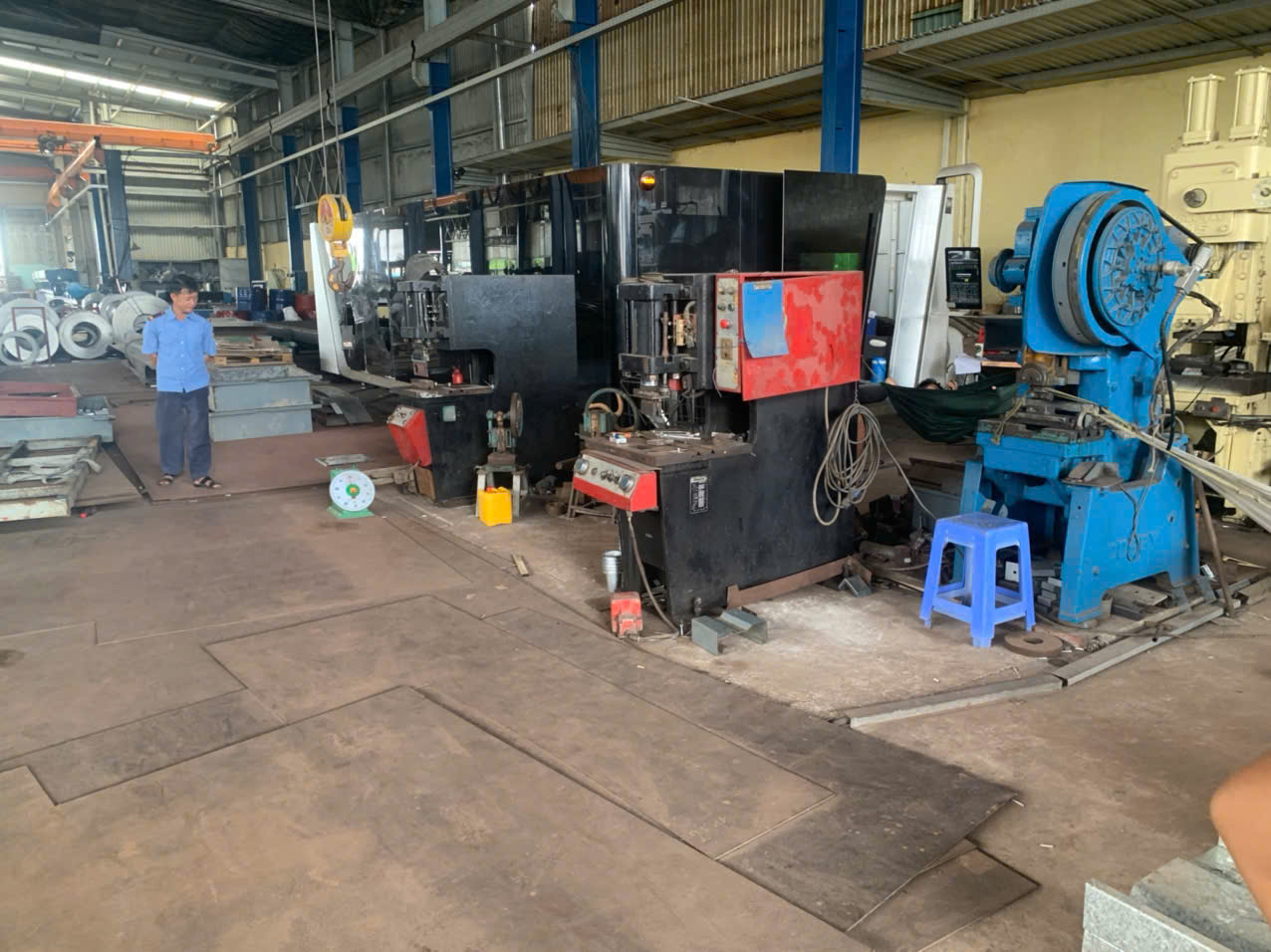

I’ve watched U.S. buyers lose tens of thousands of dollars because their “metal stamping manufacturer 1” turned out to be a two-person trading office in a Shanghai high-rise.
To avoid unreliable trading middlemen when sourcing stamping parts, treat every supplier as a middleman until proven otherwise. Verify factory ownership through live video tours, technical questioning, business license checks, on-site factory inspections, and sample turnaround analysis before signing any contract.
The steps below come from years of hands-on supplier audits our team has run across Vietnam and China. Each section gives you a specific, repeatable method to separate real factories from empty shells. Let’s walk through them one by one.
How can I tell the difference between a real stamping factory and a trading middleman before I sign a contract?
A few months ago, one of our U.S. clients forwarded me a supplier's Alibaba page and asked, "Does this look legit?" The product catalog listed stamped brackets, CNC-machined housings, injection-molded plastic parts, and even LED lighting. That scattered range was the first red flag.
A real stamping factory focuses on a narrow product range — metal forming only — and can provide a live video tour, immediate samples, an industrial-zone address, and specific technical answers. A trading middleman offers unrelated product categories, delays samples, and avoids showing the shop floor.

The Specialization Test
The simplest filter is the product catalog. A genuine metal stamping manufacturer invests in progressive die 2s, coil feeders, and press tonnage. That equipment does one thing well: stamp metal. If the supplier also sells plastic molds, PCB assemblies, and finished consumer goods, they are almost certainly a trading company 3 aggregating orders from multiple unrelated factories.
When our team reviews a potential stamping supplier in Vietnam or China, we start by listing every product category on their website. If the list looks like a department store, we move on.
The Address Check
Factories need space. They sit in industrial zones or development parks, not downtown office towers. Before any phone call, we drop the supplier's address into Google Maps. If it lands in a commercial district in Hong Kong, Shanghai, or Ho Chi Minh City, that is a sales office — not a production floor.
Quick Red-Flag Comparison
| Indicator | Real Stamping Factory | Trading Middleman |
|---|---|---|
| Product range | Stamped metal parts only | Mixed: CNC, plastic, electronics |
| Address location | Industrial zone / manufacturing hub | City-center office building |
| Sample turnaround | Immediate or under 3 days | Over 10 days ("need to arrange production") |
| Video tour response | Agrees to live, real-time walkthrough | Refuses, sends pre-recorded clips |
| Technical depth | Answers die maintenance, springback, tolerance questions instantly | Says "let me check with the factory" |
| Business license 4 scope | Lists "Manufacturing" (生产) | Lists only "Trading" (贸易) |
Alibaba Assessment Reports
If you find the supplier on Alibaba, download their third-party assessment report. It explicitly states the "Business Type" — Manufacturer or Trader. Cross-reference the address on the report with the address on the supplier's website. Mismatches are a clear warning. Our sourcing coordinators do this as a standard first step for every Request for Quotation we process.
What questions should I ask a supplier to confirm they actually own the stamping equipment and quality control process?
During a recent supplier qualification for a U.S. engineering firm, I asked the contact person one question: "What is your typical die maintenance interval for a 400-ton progressive die running 1.2 mm cold-rolled steel?" The line went silent for 15 seconds. Then they said, "I'll get back to you." They never did.
Ask specific technical questions about stamping press tonnage, die maintenance schedules, material springback compensation, stroke speed, and in-house tooling capabilities. A real factory answers immediately with precise numbers. A middleman stalls, deflects, or promises to "confirm with the engineering team."

The Technical Question Script
You do not need to be a stamping engineer to use this method. You just need a short list of questions that only a factory operator can answer on the spot. Here is a script we use internally when vetting new stamping suppliers.
| Question | Expected Factory Answer | Middleman Response |
|---|---|---|
| What press tonnage range do you run? | "We have 80-ton, 200-ton, and 400-ton presses from [brand]." | "We can handle any tonnage." |
| How do you compensate for springback on SPCC steel at 1.5 mm? | Describes overbending angle or simulation software used | "I'll check with engineering." |
| Do you build your own progressive dies in-house? | Shows photos of tool and die shop, names die makers | Vague: "Yes, we have tooling capability." |
| What is your stroke rate for a typical bracket run? | Gives specific SPM (strokes per minute) for a given part | Generic: "Very fast, high efficiency." |
| Can you share a recent Mill Test Report for your steel coil inventory? | Provides MTR with heat number, chemistry, and mill name | "We can get one for you later." |
Confirming Quality Control Standards
Beyond stamping knowledge, probe their quality control process. Ask about their inspection equipment 5 — calipers, CMMs, optical comparators, go/no-go gauges. Ask who performs first-article inspection 6 and how they document it. If they hold ISO 9001 certification, request the certificate number and verify it with the issuing body.
On our projects, we run a full PPAP (Production Part Approval Process 7) before any volume shipment. We ask the factory to submit dimensional reports, material certs, control plans, and process flow diagrams. A middleman cannot produce these documents without exposing that someone else made the parts.
The Die Ownership Proof
One method we recommend to clients: ask the factory to engrave your project code or company name directly onto the die set, then send a photo. This proves physical possession. A trading company cannot do this because they do not own the tooling. Tooling and die costs are a major investment — whoever paid for the die should be able to show it at any time.
Why do so many U.S. buyers get burned by hidden middlemen when sourcing stamping parts from Asia, and how do I avoid it?
A lesson I keep learning: price is the most common trap. A buyer sends out an RFQ, gets five quotes, and picks the lowest. Six months later, the parts arrive with wrong tolerances, no traceability, and the "factory" stops answering emails. The cheapest quote came from a one-person trading company that subcontracted to the lowest bidder.
U.S. buyers get burned because middlemen disguise themselves with polished websites, fluent English, and aggressive pricing. Buyers avoid this by demanding supply chain transparency — verifying business licenses, requiring live video tours, checking customs shipping records, and insisting on contractual audit rights before placing any order.

Why the Problem Persists
Several structural factors make this problem worse in Asia-to-U.S. sourcing:
Language and distance. Most U.S. purchasing managers cannot read a Chinese or Vietnamese business license. They rely on the supplier's self-description. Middlemen exploit this gap.
Platform incentives. On Alibaba and similar platforms, trading companies invest heavily in Gold Supplier memberships, professional photography, and SEO. They outrank many legitimate factories in search results. The platform does not always make the distinction obvious.
Price pressure. When a buyer's boss demands a 15% cost reduction, the buyer gravitates toward the lowest quote. Middlemen can undercut real factories on the initial quote by cutting corners later — thinner material, skipped inspections, or a cheaper subcontractor.
The "Virtual Factory" Trend
Trading companies now use AI-generated content, stock photos of factory floors, and even rented factory space for occasional buyer visits. Our team in China has seen cases where a trading company rented a workshop for a single day to host a customer tour, then returned the keys.
This is why a single visit is not enough. Factory direct sourcing requires ongoing verification — not a one-time check.
How to Protect Yourself
Here is a practical checklist we share with our clients:
- Verify the business license. Request the Chinese business license (营业执照) and check if the "Business Scope" includes "Manufacturing" (生产). Confirm the registered capital is high enough to support heavy stamping equipment.
- Use customs data. Services like ImportGenius or Panjiva let you search Bill of Lading 8 records. See if the supplier consistently appears as the "Shipper" for metal stamping parts. If they never ship directly, they are a broker.
- Demand contractual audit rights. Write into the contract that you or your representative can visit the production site at any time without prior notice, and that the production location cannot change without your written approval.
- Separate service cost from production cost. If a supplier cannot break down their quote into material, tooling, labor, and margin, they may be hiding a middleman markup.
- Request ESG or energy data. Carbon footprint documentation and shop-floor energy metrics require direct access to the factory. Middlemen rarely possess this information.
The Real Cost of a Middleman Failure
| Cost Category | Typical Impact |
|---|---|
| Defective parts (rework/scrap) | 5–20% of order value |
| Production lead time delay | 2–6 weeks added |
| Re-sourcing to a new supplier | 3–6 months lost |
| Tooling duplication (if die is held by unknown subcontractor) | $5,000–$50,000+ |
| Customer complaints / lost contracts | Unquantifiable |
When we manage a sourcing project, we build these risk costs into the total cost of ownership 9 model. The cheapest unit price almost never delivers the lowest total cost. Understanding how to balance price, quality, and delivery time when evaluating stamping parts suppliers is essential to avoiding this trap.
What steps can I take during a factory audit to verify my stamping parts supplier isn't just outsourcing my order to someone else?
Last year, our Vietnam team audited a stamping supplier outside Hanoi. Everything looked fine until we noticed the business cards the contact person handed to the floor supervisor. The supervisor looked confused — he had never seen the contact before. That single moment told us the "supplier" was a visitor, not the owner.
During a factory audit, verify ownership by checking if staff recognize the contact person, inspect business cards for name consistency, confirm raw material inventory matches current orders, review in-house die storage, and cross-reference the business license posted on the wall with the one provided to you.

Before You Arrive: Preparation Steps
A good on-site factory inspection starts before you board the plane. Here is what we do:
- Confirm the exact address and check it against the business license and any Alibaba assessment report. Arrive unannounced if the contract allows it.
- Prepare a supplier audit checklist that covers facility ownership, equipment lists, quality control standards, material traceability, and workforce verification.
- Bring part drawings. Ask the floor engineer to read the drawing and explain the stamping sequence. If they cannot, the real production happens elsewhere.
On the Floor: What to Look For
Walk the entire facility. Do not let the guide restrict you to a conference room and a showroom. Here are specific things to check:
Raw material inventory. A real stamping factory has steel or aluminum coils stored near the press line. Check if the coil tags match the material grades on your drawings. If the warehouse is empty or the coils are for a completely different product, ask why.
Die storage and maintenance records. Open the die rack. A working factory maintains dozens of dies, each tagged with a part number, last maintenance date, and shot count. Ask to see the die for your specific part. If they cannot locate it, your order may be produced elsewhere.
Worker familiarity. Talk to machine operators. Ask them what parts they are running today. Ask how long they have worked there. In a real factory, operators know the product. In a rented or borrowed facility, they look confused.
Quality lab. Check for calibration stickers on measuring instruments. Verify the calibration dates are current. Look for inspection records from recent production runs — not just samples prepared for your visit.
The Business Card Test
This is a small but powerful technique. During the tour, watch whether your supplier contact hands out business cards to factory staff. In a real factory, the owner or sales manager is known to every worker. If the contact has to introduce themselves, they do not belong there.
Post-Audit Verification
After the visit, follow up with these steps:
- Request production photos at random intervals during your order run.
- Ask for shipping documents that show the factory address as the origin.
- Hire a third-party inspection service to visit during production — not just before shipment.
- Compare the quality of audit samples with the quality of the first bulk shipment. A sudden drop signals the order was moved to a cheaper subcontractor.
Our approach at DEWIN is to maintain local staff in both Vietnam and China specifically for this kind of ongoing verification. A single audit is a snapshot. Continuous presence is what keeps the supply chain transparent and production lead times on track. If you are new to sourcing and looking for the right stamping parts suppliers, building these verification habits from the start will save you significant time and money.
Conclusion
Sourcing stamping parts without verifying your supplier is a gamble you cannot afford. Use the specialization test, live video tours, technical questions, document checks, and on-site audits to confirm you are working with a real factory — not an unreliable middleman.
Frequently Asked Questions
How can I tell the difference between a real stamping factory and a trading middleman before I sign a contract?
A few months ago, one of our U.S. clients forwarded me a supplier's Alibaba page and asked, "Does this look legit?" The product catalog listed stamped brackets, CNC-machined housings, injection-molded plastic parts, and even LED lighting. That scattered range was the first red flag.
What questions should I ask a supplier to confirm they actually own the stamping equipment and quality control process?
During a recent supplier qualification for a U.S. engineering firm, I asked the contact person one question: "What is your typical die maintenance interval for a 400-ton progressive die running 1.2 mm cold-rolled steel?" The line went silent for 15 seconds. Then they said, "I'll get back to you." They never did.
Why do so many U.S. buyers get burned by hidden middlemen when sourcing stamping parts from Asia, and how do I avoid it?
A lesson I keep learning: price is the most common trap. A buyer sends out an RFQ, gets five quotes, and picks the lowest. Six months later, the parts arrive with wrong tolerances, no traceability, and the "factory" stops answering emails. The cheapest quote came from a one-person trading company that subcontracted to the lowest bidder.
Footnotes
1. Authoritative Wikipedia entry providing a comprehensive overview of the metal stamping industry. ↩︎
2. Authoritative Wikipedia entry explaining progressive die stamping technology and tooling. ↩︎
3. A business that works with different kinds of products which are sold for consumer, commercial, or government purposes. ↩︎
4. Authoritative Wikipedia entry defining business licenses and legal requirements for companies. ↩︎
5. Authoritative Wikipedia entry for metrology, covering the science and equipment used for industrial inspection. ↩︎
6. Reliable Wikipedia definition for the FAI quality control process used in manufacturing. ↩︎
7. A standardized process used in manufacturing to ensure that a supplier can consistently meet the design and specification requirements. ↩︎
8. A legal document between a shipper and a carrier that details the type, quantity, and destination of goods. ↩︎
9. Authoritative Wikipedia entry explaining the TCO financial estimate for sourcing and procurement. ↩︎