

Last quarter, one of our U.S. clients lost three days of production because a single stamping bracket ran out—a part that costs under $2 but shut down an entire assembly line.
Balancing inventory costs vs stockout risk for stamping parts requires calculating the total operational cost—combining carrying cost of inventory with expected production downtime costs—and finding the specific stock level where that combined figure hits its absolute minimum, not simply targeting the lowest inventory or highest fill rate.
This problem is familiar to every purchasing manager who sources custom stampings 1 from Asia. You want lean inventory, but you also cannot afford a line stoppage. The answer is not gut feeling. It is math, strategy, and supplier coordination working together. Let me walk you through the framework our team uses to help clients get this right.
How do I calculate the right safety stock level for my stamping parts inventory?
A client in Ohio once asked me to help figure out why they kept running out of a powder-coated mounting bracket—the exact type we produce in volume—despite ordering "plenty" each quarter. The root cause was simple: they had never calculated a proper safety stock 2 level.
Calculate safety stock levels by multiplying the Z-score for your desired service level by the standard deviation of lead time demand. For stamping parts specifically, factor in tooling maintenance downtime, supplier lead time variability, and the criticality of each part number to your production line.

Why Standard Formulas Need Adjustment for Stampings
The textbook safety stock formula works like this:
Safety Stock = Z × σ_LTD
Where Z is the service factor tied to your service level targets (e.g., 1.65 for 95%), and σ_LTD is the standard deviation of demand during lead time. But stamping parts have quirks that generic formulas miss.
First, stamping dies require periodic maintenance. Every 50,000 to 100,000 hits, a die may need sharpening or refurbishment. During that window—often one to two weeks—no parts can be produced. If your safety stock does not account for this scheduled downtime, you will run dry.
Second, lead time variability is not just about shipping. It includes raw material procurement (steel coil or aluminum sheet), press scheduling, secondary operations like powder coating or welding, and final inspection. In our experience coordinating production across Vietnam and working with suppliers in Southeast Asia, we have seen lead times swing by two to three weeks depending on material availability alone.
A Step-by-Step Approach
Here is the process I recommend to our clients:
- Gather 12 months of consumption data for each stamping part number.
- Record actual lead times for the last 10 orders—not the quoted lead time, the real one.
- Calculate the standard deviation of both demand and lead time.
- Choose your service level based on part criticality (more on that below).
- Apply the formula and then add a buffer for die maintenance 3 cycles.
Criticality Drives Service Level
Not every stamping part deserves the same safety stock. We use a criticality matrix:
| Criticality Level | Impact if Stocked Out | Recommended Service Level | Safety Stock Approach |
|---|---|---|---|
| Critical | Shuts down production line | 99% | High buffer + backup supplier |
| Important | Slows production or causes rework | 95% | Moderate buffer |
| Standard | Can substitute or delay without line stop | 90% | Minimal buffer |
| Non-critical | No immediate production impact | 85% | Order on demand |
For that Ohio client, their mounting bracket was a "Critical" part—it held together the main assembly fixture. Once we reclassified it and recalculated safety stock at a 99% service level, the stockouts stopped.
The Binary Decision for Expensive Spares
Some stamping parts are expensive and rarely needed—like a large custom die-cast bracket that costs $200 each and is only replaced when damaged. For these, the decision is binary: hold one or hold none.
The rule is straightforward. Hold the spare if:
Expected Annual Stockout Cost > Annual Holding Cost
If the part fails once every two years and each failure costs $10,000 in production downtime costs, your expected annual stockout cost is $5,000. If holding one spare costs $200 × 25% carrying rate = $50 per year, the answer is obvious. Hold the spare.
What inventory strategies can I use to reduce carrying costs without risking stockouts?
When we help clients build sourcing programs for custom stampings, the conversation always circles back to one tension: "I do not want to tie up cash in inventory, but I cannot afford to stop production." This is the fundamental trade-off, and there are proven strategies to ease it.
Reduce carrying cost of inventory without stockout risk by combining ABC analysis to prioritize stock levels, Economic Order Quantity (EOQ) to optimize batch sizes, Kanban-based replenishment triggered by actual consumption, and strategic bulk buys timed to favorable raw material pricing windows.

Strategy Comparison at a Glance
Before diving into details, here is how the main approaches compare:
| Strategy | Carrying Cost Impact | Stockout Risk | Best For |
|---|---|---|---|
| ABC Analysis 4 | Reduces overstock on low-value items | Low (focuses safety stock where it matters) | All stamping part portfolios |
| Economic Order Quantity 5 (EOQ) | Optimizes order size to minimize total cost | Moderate (does not address variability) | High-volume, stable demand parts |
| Just-in-Time (JIT) Manufacturing | Very low holding costs | Higher (depends on supplier reliability) | Parts with short, reliable lead times |
| Kanban / Consumption-Based | Low to moderate | Low (responds to real demand) | Repetitive production environments |
| Bulk Buy on Price Dips | Temporarily higher | Very low (builds buffer) | When steel or aluminum prices are favorable |
ABC Analysis: Focus Your Dollars
I have seen clients carry the same safety stock percentage for every part number—whether it is a $0.05 washer or a $15 welded bracket assembly. That is a waste of capital.
ABC analysis sorts parts into three tiers by annual consumption value. "A" items (top 20% of SKUs, often 80% of spend) get tight monitoring and reorder point calculation. "B" items get moderate oversight. "C" items get simplified rules—sometimes just a two-bin Kanban system.
For stamping parts, this matters because tooling amortization skews costs. A part with an expensive progressive die might have a low piece price at high volumes but a very high piece price at low volumes. Your ABC classification should use the total landed cost, not just the piece price.
EOQ: The Math of Batch Sizing
Economic Order Quantity helps you find the order size where total ordering costs and holding costs are minimized. The formula is:
EOQ = √(2DS / H)
Where D is annual demand, S is the cost per order (including tooling setup, shipping, and inspection), and H is the annual holding cost per unit.
For stamping, "S" is not trivial. Setup costs include die loading, first-article inspection 6, and sometimes a trial run if the die was in storage. These can range from $200 to $2,000 depending on complexity. So the EOQ for stampings tends to be larger than for off-the-shelf parts, pushing toward less frequent but bigger orders.
Kanban vs. Forecast-Based Replenishment
Our team has worked with clients who run both systems. Forecast-based systems rely on demand forecasting accuracy—and forecasts are always wrong by some margin. Kanban systems trigger replenishment based on actual consumption. When a bin empties, you reorder.
For repetitive stamping parts with steady demand, Kanban is excellent. It eliminates the "firefighting" that comes from forecast errors. But for parts with lumpy or seasonal demand, you still need a forecast-driven buffer stock optimization approach layered on top.
Timing Material Purchases
Steel and aluminum coil prices fluctuate. When prices drop, it can make sense to increase finished goods inventory—effectively locking in lower material costs. We have helped clients save 8–12% on annual material spend by coordinating production runs with favorable pricing windows. The trick is to budget a 10–15% buffer for material cost variations and build that into your inventory model.
How do I work with my stamping parts supplier to improve lead time reliability?
A few years ago, one of our clients shared their frustration: "My supplier quotes four weeks, but it is never four weeks. Sometimes it is three, sometimes it is seven. I cannot plan around that." This unpredictability is what makes lead time variability the silent killer of inventory plans.
Improve lead time reliability by establishing clear communication protocols, requiring production milestone updates, conducting periodic supplier audits, sharing your demand forecast with your supplier, and building contractual incentives around on-time delivery performance.

Where Lead Time Breaks Down
In our work managing stamping supply chains across Asia, we have mapped the typical lead time for a custom stamped bracket. Here is where delays actually happen:
| Lead Time Phase | Typical Duration | Common Delay Causes |
|---|---|---|
| Raw material procurement | 1–2 weeks | Steel coil shortage, price negotiation delays |
| Die setup and trial run | 2–3 days | Die maintenance backlog, operator scheduling |
| Production run | 3–7 days | Press breakdowns, quality holds |
| Secondary operations (coating, welding) | 3–5 days | Outsourced process queues |
| Final inspection and packing | 1–2 days | QC rework, missing documentation |
| Shipping and customs | 2–4 weeks (ocean) | Port congestion, customs holds |
Total quoted lead time might be six weeks. But if three of those phases slip by even a few days each, you are suddenly at eight weeks. And your safety stock was calculated for six.
What You Can Do as a Buyer
The most effective step is to share your rolling demand forecast with your supplier. Not just the next order—give them a 3- to 6-month outlook. When we receive forward visibility from clients, our production planning team can pre-order materials, schedule press time, and avoid the scramble that causes delays.
Second, require milestone updates. Do not wait until the delivery date to find out there is a problem. Ask for confirmation at each phase: material received, production started, secondary operations complete, inspection passed, shipped. Our project management team sends these updates proactively, but not every supplier does. You may need to build this into your purchase order terms.
Third, conduct supplier audits. Not just initial qualification audits—periodic process audits. When our team in Vietnam audits a stamping supplier, we look specifically at press utilization rates, die maintenance logs, and WIP flow. A supplier running presses at 95% capacity has no slack for your rush order. That is a lead time risk you want to know about before it becomes a problem.
Contractual Levers
Consider tying a small percentage of payment to on-time delivery performance. This does not need to be punitive. A simple structure—such as a 2% early payment discount for orders delivered on or before the confirmed date—aligns incentives. We have seen this approach reduce late deliveries by roughly a third with suppliers we manage.
The Role of Machine Health Data
Integrating machine health monitoring data 7 into your planning is an emerging practice. If sensors on a stamping press detect abnormal vibration or die wear, you can preemptively increase your safety stock before a breakdown forces an extended lead time. This is still early-stage for most small and mid-size suppliers, but it is worth asking about during your next supplier review.
Should I use vendor-managed inventory to balance cost and supply risk for custom stampings?
During a recent project review, a U.S. client asked whether we could hold finished stamping parts at a warehouse near their facility and replenish automatically. They wanted the benefits of Just-in-Time manufacturing 8 without managing the replenishment themselves. This is the core promise of vendor-managed inventory 9 (VMI).
Vendor-managed inventory works well for high-volume, repetitive custom stampings where the supplier has reliable demand data and the trust relationship is strong. It shifts carrying cost of inventory to the supplier, maintains availability, and reduces your administrative burden—but it requires transparent data sharing and clear contractual terms.
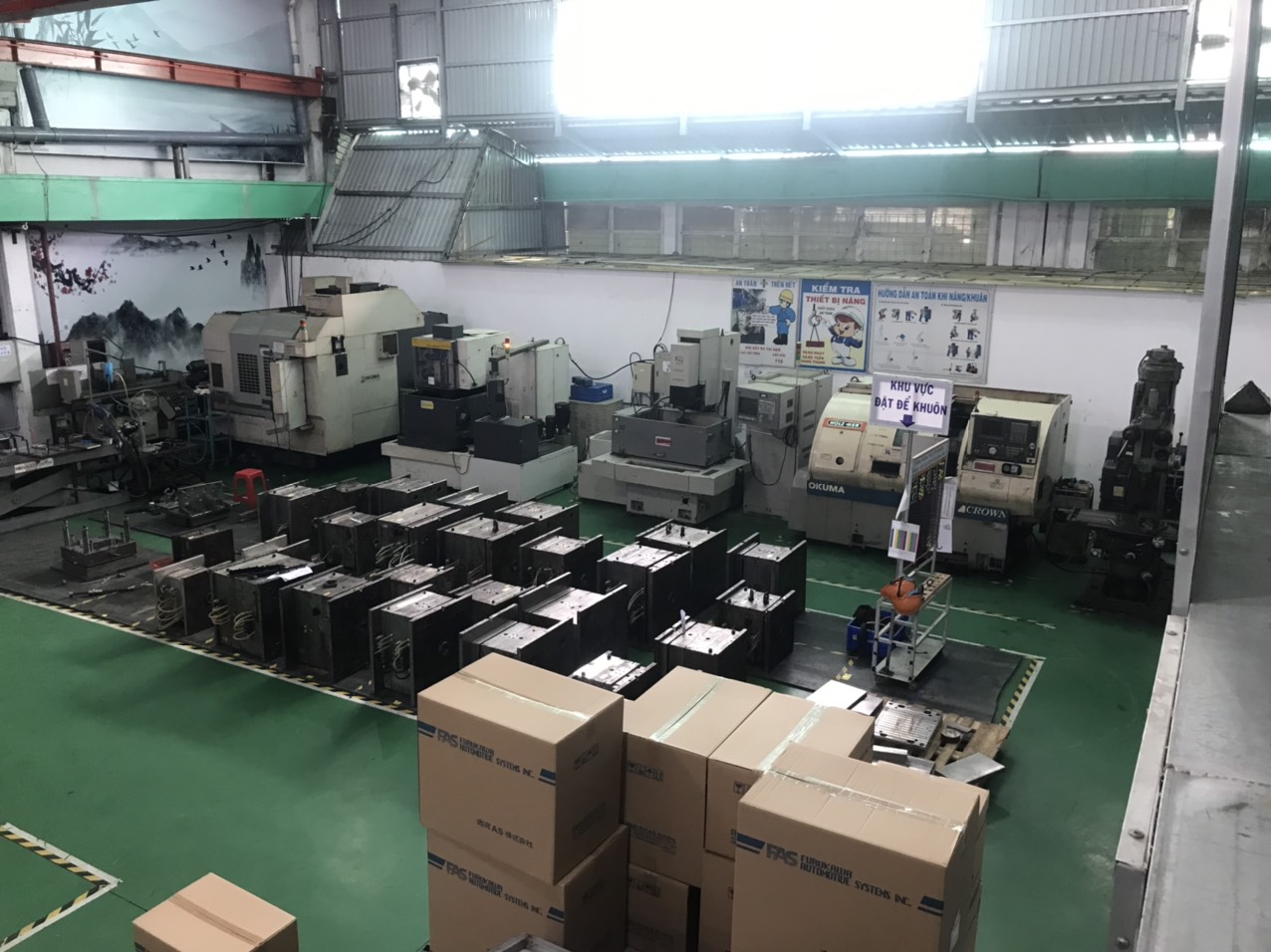
How VMI Works for Stamping Parts
In a VMI arrangement, the supplier monitors your inventory levels (or you share consumption data regularly) and decides when and how much to replenish. You do not place purchase orders in the traditional sense. Instead, the supplier ships against a blanket agreement, and you pay upon consumption or at agreed intervals.
For custom stamping parts—like the powder-coated mounting brackets and structural base plates we produce—VMI makes particular sense when:
- The part is used repetitively (at least monthly consumption).
- Annual volume exceeds 50,000 pieces, making production planning predictable.
- The tooling is already amortized, so the supplier is not carrying tooling risk on top of inventory risk.
- Both parties have a mature relationship with transparent communication.
VMI vs. Traditional Ordering vs. Consignment
| Factor | Traditional PO | Vendor-Managed Inventory | Consignment |
|---|---|---|---|
| Who decides when to order | Buyer | Supplier | Supplier |
| Who owns inventory at buyer site | Buyer | Buyer (after receipt) | Supplier (until consumed) |
| Carrying cost borne by | Buyer | Shared or supplier | Supplier |
| Demand data sharing required | Minimal | High | High |
| Administrative effort for buyer | High | Low | Low |
| Risk of overstock | Buyer's risk | Shared risk | Supplier's risk |
| Best for | Low-volume or new parts | High-volume repetitive parts | Critical parts, expensive spares |
When VMI Does Not Fit
VMI is not a universal solution. For low-volume custom stampings—say, fewer than 10,000 parts per month—the economics often do not support it. The supplier cannot justify holding finished goods inventory for a part that only ships quarterly.
Also, VMI requires excellent demand forecasting accuracy on someone's end. If neither you nor your supplier can predict consumption within a reasonable range, VMI just shifts the stockout risk to the supplier without solving it. And if the supplier gets burned by overstock, they will either raise prices or exit the arrangement.
Making VMI Work in Practice
From our experience supporting U.S. clients with supply chain management 10 from Asia, here are the practical requirements:
- Agree on min/max stock levels at the VMI location. The supplier replenishes to the max when stock hits the min.
- Share real consumption data weekly, not monthly. Monthly data creates information lag that defeats the purpose.
- Define who pays for obsolete stock. If your design changes or demand drops, unsold VMI inventory is a cost that needs a clear owner.
- Set service level targets contractually. A 97% fill rate from VMI stock, for example, with defined remedies if the supplier falls short.
- Review quarterly. Adjust min/max levels as demand patterns shift. Buffer stock optimization is not a set-and-forget exercise.
The Modular Die Strategy Connection
One advanced approach that pairs well with VMI is a modular die strategy. If your stamping supplier uses dies with interchangeable inserts, they can pivot between part variants quickly. This means the supplier can hold less finished goods inventory for each individual SKU while still maintaining short response times. It reduces both your stockout risk and their carrying cost—a genuine win-win.
We have helped clients explore this approach when they have families of similar brackets or mounting plates that share a common base geometry but differ in hole patterns or bend angles. Instead of carrying safety stock for ten SKUs, the supplier carries stock for three base configurations and swaps inserts on demand.
Conclusion
Balancing inventory costs vs stockout risk for stamping parts comes down to quantifying both sides—carrying costs and true downtime costs—then using data-driven tools like safety stock formulas, EOQ, ABC analysis, and strong supplier partnerships to find your minimum total cost point.
Frequently Asked Questions
How do I calculate the right safety stock level for my stamping parts inventory?
A client in Ohio once asked me to help figure out why they kept running out of a powder-coated mounting bracket—the exact type we produce in volume—despite ordering "plenty" each quarter. The root cause was simple: they had never calculated a proper safety stock 2 level.
What inventory strategies can I use to reduce carrying costs without risking stockouts?
When we help clients build sourcing programs for custom stampings, the conversation always circles back to one tension: "I do not want to tie up cash in inventory, but I cannot afford to stop production." This is the fundamental trade-off, and there are proven strategies to ease it.
How do I work with my stamping parts supplier to improve lead time reliability?
A few years ago, one of our clients shared their frustration: "My supplier quotes four weeks, but it is never four weeks. Sometimes it is three, sometimes it is seven. I cannot plan around that." This unpredictability is what makes lead time variability the silent killer of inventory plans.
Footnotes
1. Alibaba.com is a leading global sourcing platform for custom manufactured parts. ↩︎
2. Background concept explaining buffer inventory used to prevent stockouts. ↩︎
3. ISO provides standards guidance relevant to equipment and tooling maintenance practices. ↩︎
4. ASCM is an authoritative supply chain body covering inventory classification methods. ↩︎
5. Explains the classic model for calculating optimal order size and costs. ↩︎
6. NIST covers manufacturing quality inspection standards referenced in this process. ↩︎
7. IEEE documents predictive maintenance research using sensor-based monitoring data. ↩︎
8. Toyota originated the Just-in-Time production system referenced here. ↩︎
9. Defines the supply arrangement described in this section of the article. ↩︎
10. Authoritative government resource from NIST focusing on supply chain optimization and risk mitigation for manufacturers. ↩︎