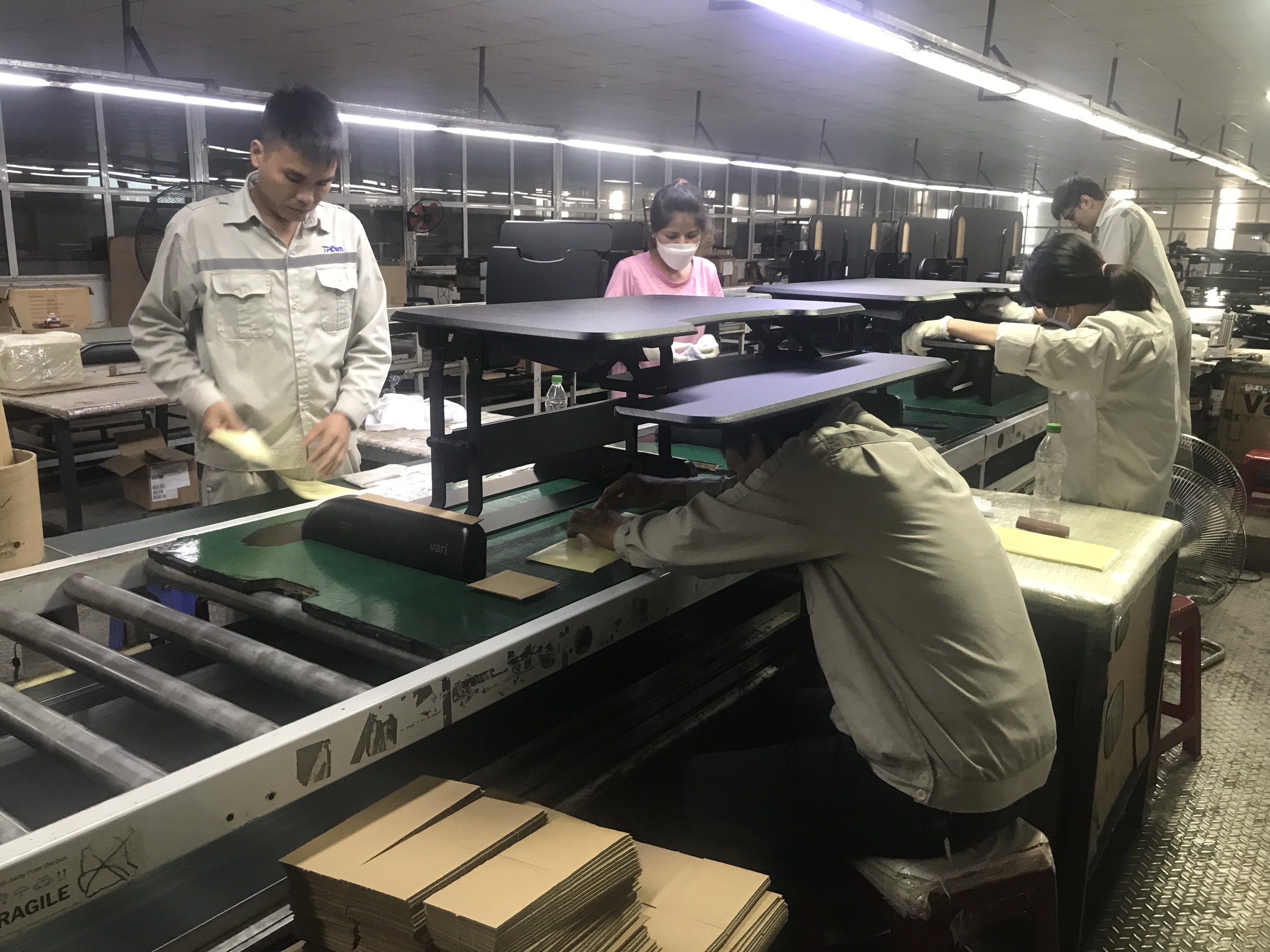

Last quarter, a client’s welding frame shipment failed incoming inspection — every joint showed porosity relevant industry certifications 1. The root cause was a supplier chosen purely on price, and the rework cost three times the original savings on OEM welding parts suppliers.
To balance price and quality when selecting OEM welding parts suppliers, evaluate total cost of ownership — not just unit price. Prioritize suppliers with proven quality control processes, relevant industry certifications, material traceability, and the technical capabilities to meet your exact engineering specifications the first time.
This article breaks down the key decisions you face when sourcing custom welding parts from Asia weld procedure specifications 2. We will cover structural integrity 3 risks, QC expectations, Vietnam sourcing advantages, and payment flexibility — all from real project experience.
How can I determine if a lower price for OEM welding parts will compromise the structural integrity of my product?
A conversation with a U.S. buyer last year stuck with me. He said, "I got a quote 40% cheaper than my current supplier, but I'm terrified of field failures." That fear is justified — and the answer lies in what sits behind the price PPAP documentation 4.
A lower price compromises structural integrity when the supplier cuts corners on base material grade, weld filler compatibility, welder qualification, or post-weld inspection. Request mill certificates, welder certifications, and weld procedure specifications (WPS) to verify that cost savings come from efficiency — not from reduced material or process quality.

Where Do Price Cuts Actually Come From?
Not every low price signals danger. In our experience sourcing custom welding frames and brackets from Vietnam, we have seen legitimate cost advantages from lower labor rates, newer equipment with higher throughput, and streamlined factory layouts. These savings do not touch the weld itself.
The problem starts when a supplier reduces cost by substituting a cheaper base metal, skipping preheat cycles, using underqualified welders, or eliminating non-destructive testing 5. These shortcuts are invisible in a photograph but show up fast under load.
A Simple Diagnostic Framework
When we evaluate a potential welding supplier on behalf of our clients, we run through a checklist that separates safe savings from risky ones.
| Cost Reduction Source | Risk to Structural Integrity | How to Verify |
|---|---|---|
| Lower regional labor rates | Low | Compare hourly rates across regions |
| Newer, more efficient equipment | Low | Request equipment list and age |
| Thinner base material than drawing spec | High | Check mill certificates against drawings |
| Skipping post-weld heat treatment | High | Ask for process flow and heat treatment records |
| Using unqualified welders | High | Request welder qualification certificates (AWS D1.1 or equivalent) |
| Eliminating X-ray or UT inspection | High | Ask for inspection plan and sample reports |
| Bulk purchasing of raw material | Low | Verify with supplier purchase orders |
How We Approach Material Traceability
On every welding project we manage, our team insists on full material traceability 6. This means each steel plate or aluminum extrusion can be traced back to the mill, heat number, and chemical composition. If a supplier cannot provide this, the low price is a red flag.
We also cross-check the weld procedure specification against the client's drawing requirements. The WPS must name the exact filler metal, shielding gas, amperage range, and travel speed. If any of these are left vague, the supplier is not controlling the process tightly enough to guarantee repeatable quality.
The Real Cost of a Failed Weld
One rejected shipment of welding frames can cost a buyer tens of thousands of dollars in rework, air freight for replacements, and production line downtime. When I calculate total cost of ownership 7 for our clients, I always factor in the probability of rejection. A supplier quoting 20% less but delivering a 10% defect rate is actually more expensive than a reliable partner.
Risk mitigation in welding starts at the quoting stage. If a supplier's quote does not include line items for inspection and testing, ask why. Silence on quality costs usually means those steps are missing from the process entirely.
What specific QC processes should I look for to ensure my welding supplier gets the specifications right the first time?
One lesson we learned early in our supply chain management 8 work: the biggest quality failures rarely happen during welding. They happen before welding, during drawing review and fixture setup, or after welding, when no one checks dimensions against the print.
Look for a supplier that follows a structured QC flow: incoming material inspection, first-article inspection (FAI), in-process weld monitoring, dimensional verification with calibrated instruments, and final inspection against a checklist tied directly to your drawing. PPAP documentation and a formal corrective action process are essential for right-first-time results.

The QC Timeline That Matters
Quality control is not a single event at the end of production. It is a series of checkpoints. Here is the sequence we enforce on every custom welding project we manage:
| QC Stage | What Gets Checked | Tools / Methods |
|---|---|---|
| Drawing Review | Tolerances, weld symbols, material callouts, surface finish | Engineering team cross-check |
| Incoming Material Inspection | Mill certificates, material dimensions, surface condition | Calipers, spectrometer |
| Fixture and Setup Verification | Fixture alignment, clamp positions, tack weld placement | Go/no-go gauges, laser alignment |
| First Article Inspection 9 (FAI) | All critical dimensions on the first completed unit | CMM, height gauge, weld gauge |
| In-Process Monitoring | Weld parameters (amperage, voltage, travel speed), visual weld quality | Weld monitors, visual inspection per AWS D1.1 |
| Post-Weld Inspection | Dimensional check, weld bead profile, surface defects | Fillet gauges, UT, dye penetrant |
| Final Inspection | Full dimensional layout, cosmetic check, packing verification | Per approved inspection plan |
Why First Article Inspection Is Non-Negotiable
When our Vietnam team sets up a new welding project, the first article is the moment of truth. We measure every critical dimension on the first completed part and compare it to the drawing. If anything is off, we stop production and adjust before a single additional piece is made.
This step alone prevents the most common pain point our U.S. clients describe: receiving a full shipment only to discover that a hole pattern is shifted or a bracket angle is two degrees off. The cost of catching that error on piece number one versus piece number five hundred is enormous.
Welder Qualification and Process Control
Industry certifications matter, but so does the individual welder's skill. We verify that every welder assigned to a project holds a valid qualification for the specific joint type, position, and material called out on the drawing. A welder qualified for flat-position mild steel fillet welds is not automatically qualified for overhead stainless steel groove welds.
Process control extends to the welding machine itself. Modern inverter-based welders can log amperage and voltage in real time. We look for suppliers who use this data to confirm that every weld was made within the approved parameter window. This kind of production capacity discipline is what separates a shop that gets it right the first time from one that relies on luck.
The Role of PPAP in Custom Welding
For our clients who require Production Part Approval Process documentation, we prepare a full PPAP package before mass production begins. This includes the control plan, process flow diagram, measurement system analysis, and the FAI report. It is a rigorous process, but it builds the foundation for long-term supplier relationships built on trust and data rather than hope.
How do I balance the cost savings of sourcing from Vietnam with the need for high-quality custom welding standards?
When we opened our Vietnam office seven years ago, the first question every U.S. buyer asked was the same: "Can they really weld to the same standard as my current supplier?" The answer is yes — but only if you manage the supply chain correctly.
Balance Vietnam's cost savings with quality by partnering with a sourcing team that conducts thorough supplier audits, enforces documented weld procedures, stations local QC personnel at the factory, and manages lead time proactively. Vietnam's labor cost advantage is real, but it only translates to value when paired with disciplined process control and clear communication.
Why Vietnam Is a Strong Alternative
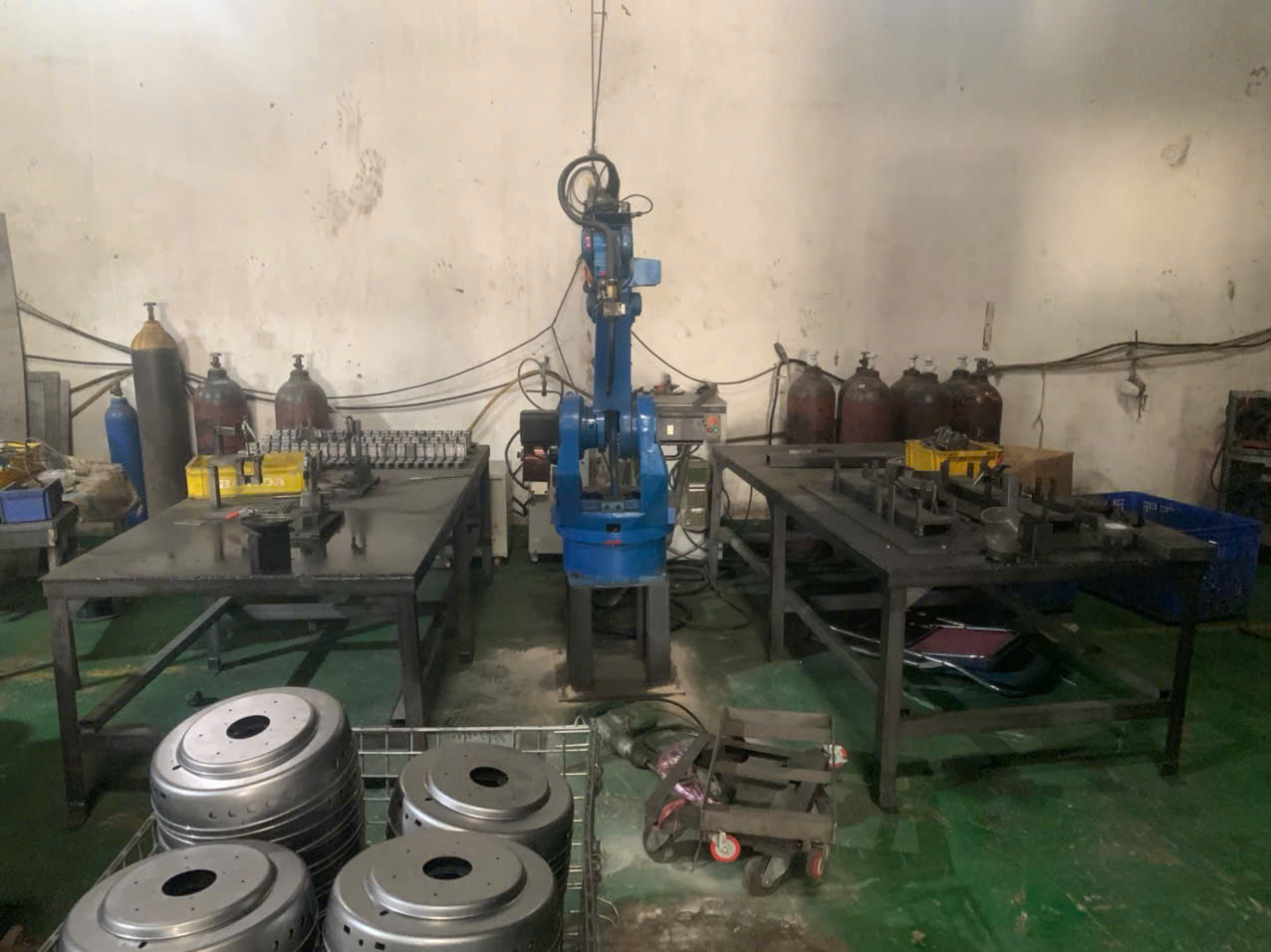
Vietnam's manufacturing sector has grown rapidly. For welding, the country now has factories equipped with modern MIG, TIG, and robotic welding systems. Labor rates are significantly lower than in the U.S. or Europe, and many shops have experience serving Japanese and Korean OEMs — industries known for strict quality expectations.
Our local team in Vietnam conducts supplier audits before we onboard any new welding factory. We assess equipment condition, welder qualifications, raw material sourcing practices, and existing QC documentation. We also review past export records to verify experience with international standards.
The Communication Gap and How to Close It
The biggest risk in offshore welding sourcing is not capability. It is communication. Drawing requirements get lost in translation. Tolerances are misread. Surface finish expectations are assumed rather than confirmed.
We address this by assigning a bilingual project engineer to every welding project. This person reviews the drawing with the factory's production team, confirms every weld symbol and geometric tolerance, and creates a bilingual inspection checklist. This step is critical for lead time management as well — catching ambiguities early prevents delays caused by mid-production questions.
Cost Reduction Without Quality Compromise
Here is how we structure cost reduction strategies when sourcing welded assemblies from Vietnam:
| Strategy | Impact on Cost | Impact on Quality |
|---|---|---|
| Source raw steel locally in Vietnam | Reduces material cost by 10–15% | Neutral, if mill certificates are verified |
| Use semi-automated welding fixtures | Reduces labor time per unit | Improves consistency |
| Consolidate shipments for ocean freight | Reduces per-unit logistics cost | Neutral |
| Batch similar parts together in production runs | Reduces setup time | Neutral to positive |
| Skip incoming material inspection | Reduces overhead | Negative — increases defect risk |
| Use lowest-cost filler metal | Marginal savings | Negative — may not meet spec |
The top four rows are safe. The bottom two are traps. Our job is to make sure our clients capture the real savings without falling into the traps.
Building Long-Term Supplier Relationships in Vietnam
Short-term, transactional sourcing rarely works for custom welding. The best results come from long-term supplier relationships where the factory invests in fixtures, trains welders on your specific products, and continuously improves their process. We facilitate this by sharing production feedback, conducting periodic on-site reviews, and helping factories invest in technical capabilities that benefit both sides.
Vietnam is not a magic bullet. It is a real manufacturing base with real advantages — and real risks. The key is having a local team on the ground who speaks the language, understands the culture, and holds the factory accountable to your standards every single day.
Can I find a welding partner that offers open account payment terms while still meeting my strict engineering requirements?
A buyer in the Midwest once told me, "Every supplier who offers me credit terms delivers junk. Every supplier who delivers quality demands full prepayment." That frustration is common — but it reflects a broken market, not an impossible requirement.
Yes, you can find a welding partner that offers open account payment terms — typically 60 to 90 days — while meeting strict engineering requirements. The key is working with a supply chain partner that has the financial stability to extend credit and the technical discipline to enforce rigorous quality control on every order.

Why Payment Terms and Quality Are Usually Disconnected
Most Asian welding factories operate on thin margins. They ask for 30% deposits and balance before shipment because they lack working capital. This model forces buyers to pay before they can inspect the goods. If quality is poor, the buyer has limited leverage.
On the other end, large trading companies may offer credit terms but add a markup without adding any quality oversight. The buyer gets cash flow relief but no assurance that the product meets spec.
Our model at DEWIN is different. We sit between the factory and the buyer. We pay the factory on their terms, and we offer our qualified clients open account payment with 60 to 90 day terms. This means the buyer receives the goods, inspects them, and only then pays. The risk shifts from the buyer to us — which is exactly why we invest so heavily in getting quality right before shipment.
What Makes This Possible
Three things enable us to offer credit without compromising quality:
- Financial stability. Our Singapore headquarters provides the working capital base to fund production cycles without requiring buyer prepayment.
- On-site QC presence. Our team in Vietnam and China conducts inspections at the factory. We do not rely on the factory's self-inspection alone. This catches problems before goods ship.
- Contractual accountability. Our contracts with factories include clear penalty clauses for non-conformance. Factories know we will enforce them because we have long-term supplier relationships and ongoing volume to offer.
Comparing Payment Models
| Payment Model | Buyer Cash Flow Impact | Quality Assurance Level | Buyer Leverage if Defects Found |
|---|---|---|---|
| 100% prepayment to factory | Severe — full exposure | Low — no third-party oversight | Minimal |
| 30/70 deposit + balance before shipment | Moderate — partial exposure | Low to moderate | Limited |
| Letter of Credit (L/C) | Moderate — bank-mediated | Moderate — tied to document compliance | Moderate |
| Open account via sourcing partner (e.g., DEWIN) | Minimal — pay after receipt | High — partner conducts QC on-site | Strong — inspect before paying |
How Engineering Requirements Are Protected
Payment flexibility does not mean looser specs. Every project we manage goes through the same rigorous flow: drawing review, supplier audit, PPAP, first article inspection, in-process monitoring, and final inspection. The payment terms are a commercial arrangement. The quality control processes 10 are an engineering discipline. We keep them separate.
Our clients — typically purchasing managers at U.S. sourcing companies — need both. They need to preserve cash flow while proving to their own customers that every welded bracket, frame, and mounting plate meets the drawing. That dual requirement is exactly what our service is designed to fulfill.
The open account model also supports cost reduction strategies over time. When buyers are not tying up capital in prepayments, they can invest in tooling, fixture improvements, or engineering changes that improve product quality and reduce per-unit cost in future orders.
Conclusion
Balancing price and quality in OEM welding parts comes down to transparency, process discipline, and the right partner. Choose suppliers who prove their quality with data, not just promises — and who align their commercial terms with your business needs. If you're just starting the supplier search, learning how new OEM procurement professionals find the best welding parts suppliers can help you build a strong foundation for that process.
Frequently Asked Questions
Where Do Price Cuts Actually Come From?
Not every low price signals danger. In our experience sourcing custom welding frames and brackets from Vietnam, we have seen legitimate cost advantages from lower labor rates, newer equipment with higher throughput, and streamlined factory layouts. These savings do not touch the weld itself.
How can I determine if a lower price for OEM welding parts will compromise the structural integrity of my product?
A conversation with a U.S. buyer last year stuck with me. He said, "I got a quote 40% cheaper than my current supplier, but I'm terrified of field failures." That fear is justified — and the answer lies in what sits behind the price PPAP documentation 4 .
What specific QC processes should I look for to ensure my welding supplier gets the specifications right the first time?
One lesson we learned early in our supply chain management 8 work: the biggest quality failures rarely happen during welding. They happen before welding, during drawing review and fixture setup, or after welding, when no one checks dimensions against the print.
Footnotes
1. Replaced with an article detailing professional welding certifications, which is highly relevant to the article context. ↩︎
2. Explains WPS as a detailed document providing instructions for welding operations. ↩︎
3. Replaced with an article from the original domain that defines structural integrity and its importance. ↩︎
4. Explains PPAP as a process to validate supplier capability and required documentation. ↩︎
5. Outlines common non-destructive testing methods for defect detection without damage. ↩︎
6. Replaced with an article from the original domain that explains traceability in manufacturing, its importance, benefits, and best practices. ↩︎
7. Defines TCO as a comprehensive financial estimate beyond initial purchase price. ↩︎
8. Defines supply chain management as the design, planning, execution, and monitoring of supply chain activities. ↩︎
9. Details FAI as a process to verify manufacturing capability for consistent part conformity. ↩︎
10. Replaced with a relevant article on how to establish quality control processes in manufacturing. ↩︎