When one of our long-standing U.S. clients lost three weeks of production because their sole sheet metal supplier missed a critical delivery, it forced a hard conversation about backup supplier lists and sourcing risks that many purchasing managers avoid until it is too late.
Building a backup supplier list to mitigate sheet metal fabrication sourcing risks requires strategic supplier diversification across regions, rigorous qualification processes covering quality certifications and financial health, pre-approved material substitutions, and proactive contingency planning that keeps alternate suppliers engaged through small-volume orders.
The truth is, most companies know they need a Plan B financial stability 1. Few actually build one before the crisis hits. This article walks through a practical framework — the same one we use to help U.S. buyers source custom parts from Vietnam and other Asian markets — so you can protect your manufacturing supply chain before a single-source failure costs you real money.
How do I identify the best alternative sheet metal fabricators for my backup list?
A lesson we learned early in our sourcing work across Asia: the fastest way to find a great backup supplier is to stop looking for a carbon copy of your primary one and start looking for complementary strengths instead Production Part Approval Process (PPAP) 2.
Identify the best alternative sheet metal fabricators by evaluating five critical factors — years of experience, quality certifications like ISO 9001, end-to-end manufacturing capability, financial stability, and communication responsiveness — then obtain at least three quotes from qualified candidates to compare costs and capabilities.
Start With a Clear Capability Assessment
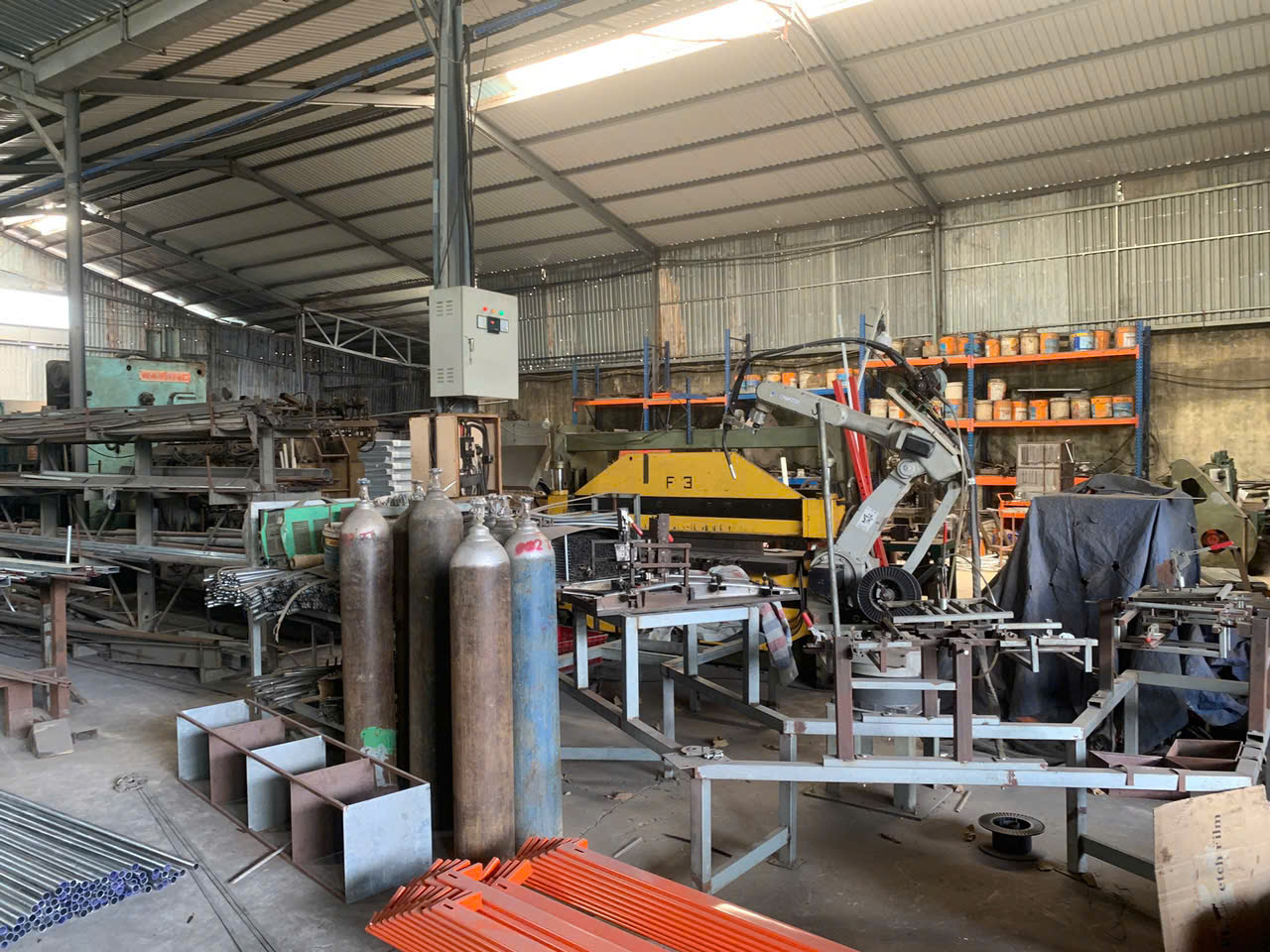
Before you contact a single new vendor, document what your current supplier actually does for you. This sounds obvious. But many purchasing managers cannot list every process their primary fabricator handles. Does your supplier cut, bend, weld, powder coat, and assemble? Or do they outsource finishing and leak testing to a third party? Every outsourced step is a hidden risk node. When we onboard a new sheet metal project for a U.S. client, our team maps the entire process chain first. We ask: which steps happen under one roof, and which ones travel?
The Five-Factor Evaluation Framework
Use these five factors as your supplier qualification scorecard:
| Factor | What to Check | Why It Matters |
|---|---|---|
| Experience | Years in business, portfolio of similar parts | Indicates material knowledge and process maturity |
| Quality Systems | ISO 9001 3, inspection procedures, third-party audit history | Ensures consistent output and fewer rejects |
| Communication | Response time, English fluency, ability to read complex drawings | Prevents costly misinterpretation of tolerances and specs |
| Scalability | Prototype-to-production range, equipment capacity | Confirms they can grow with your demand |
| Financial Health | Recent capital investments, payment history, credit references | Reduces risk of mid-project supplier collapse |
Apply the Three-Quote Rule
A reliable rule of thumb in strategic sourcing 4 is to always collect at least three quotes from highly qualified partners. This is not just about price. It reveals differences in lead time, tooling costs, and how each vendor interprets your drawings. I have seen two fabricators quote the same bracket — one priced 18% higher but included in-house powder coating and full dimensional inspection. The cheaper quote excluded both. Without three quotes side by side, you miss these gaps entirely.
Do Not Overlook Supplier Performance Evaluation
Once you shortlist candidates, run a small trial order. Send a drawing with tight tolerances and a few complex bends — something that tests their real capability. Our Vietnam office routinely manages these trial runs for clients. We inspect first articles against the original drawing, flag deviations, and generate a performance report before the client commits to production volumes. This step alone eliminates suppliers who talk a good game but cannot deliver.
Why should I consider Vietnam as a primary location for my secondary sourcing?
Last year, a client asked us to re-quote a set of heavy-duty mounting brackets — the same angular, powder-coated steel pieces with precise folds and multiple mounting holes — that they had been sourcing from a single factory in eastern China for five years. Their concern was not price. It was concentration risk.
Vietnam deserves priority as a secondary sourcing location because it offers competitive labor costs, a growing base of capable sheet metal fabricators, favorable trade agreements with the U.S., geographic proximity to other Asian supply hubs, and significantly lower tariff exposure compared to China-only sourcing strategies.

The Strategic Case for Vietnam
Supply chain resilience depends on geographic diversification. If your primary and backup suppliers both sit in the same country — or the same industrial zone — a single typhoon, power grid failure, or policy change can shut down both. Vietnam sits in a different trade corridor. It benefits from multiple free trade agreements. And it has invested heavily in manufacturing infrastructure over the past decade.
Our own office in Vietnam, staffed with seven team members, was established precisely for this reason. We saw U.S. buyers asking for alternatives to China well before tariffs became front-page news. Having local personnel on the ground means we conduct supplier audits, manage vendor relationships, and run quality checks without the delays that come from remote oversight.
Vietnam vs. Other Regional Options
| Criteria | Vietnam | India | Taiwan | Thailand |
|---|---|---|---|---|
| Labor Cost | Low | Low | Medium-High | Medium |
| Sheet Metal Fabrication 5 Maturity | Growing rapidly | Moderate | Advanced | Moderate |
| U.S. Tariff Exposure | Low | Low-Medium | Low | Low |
| English Communication | Moderate (improving) | Strong | Strong | Moderate |
| IP Protection Framework | Developing | Developing | Strong | Moderate |
| Time Zone Overlap with U.S. | Minimal | Minimal | Minimal | Minimal |
| Local DEWIN Presence | Yes (7 staff) | No | No | No |
Addressing the Common Concerns
The two objections we hear most often about Vietnam sourcing are communication barriers and intellectual property protection. Both are valid. Both are manageable. On communication, our local team bridges the gap. We translate technical drawings into shop-floor instructions, run pre-production reviews, and hold regular alignment meetings with both the supplier and the client. On IP, we work with suppliers who sign enforceable NDAs and we control drawing distribution tightly. We never share full assemblies with a single vendor when the design is sensitive.
Vietnam is not a silver bullet. But as part of a broader supplier diversification strategy, it fills a critical gap. It gives you a production-ready alternate supplier in a different political and economic zone from your primary source. That is what business continuity planning 6 looks like in practice.
How can I ensure my backup suppliers follow my strict QC protocols to get it right the first time?
One trade-off we weigh constantly is speed versus control. A new backup supplier wants to impress you with fast turnaround. But rushing the first production run without embedding your quality protocols is how you end up with 500 non-conforming brackets and a three-week delay while they rework the lot.
Ensure backup suppliers follow your strict QC protocols by requiring a Production Part Approval Process (PPAP) before volume production, conducting first-article inspections against your original drawings, embedding hold points at critical process steps, and performing regular on-site or third-party audits to verify compliance.
Why "Right First Time" Is Non-Negotiable
The cost of getting it wrong is not just the scrap material. It is the air freight to replace the rejected parts. It is the production line sitting idle at your customer's plant. It is the trust you lose with your end buyer. Our clients — mostly U.S. purchasing managers sourcing custom parts — tell us that supplier failures in quality control are their single biggest pain point. They do not want to inspect incoming goods and find that critical hole positions are off by 0.5mm because the supplier did not read the GD&T callouts on the drawing.
Building a QC Framework for New Suppliers
Here is the process we follow when onboarding a backup sheet metal supplier:
-
Drawing Review Meeting. Before any metal is cut, we sit down with the supplier's engineering team and walk through every critical dimension, tolerance, and surface finish requirement. We confirm they understand the drawing — not just that they received it.
-
PPAP Submission. The supplier produces a small batch and submits a full PPAP package: dimensional reports, material certifications, process flow diagrams, and control plans. We review this against the client's specifications.
-
First Article Inspection (FAI). Our quality team — either in Vietnam or coordinated through our China office — inspects the first articles using calibrated instruments. First Article Inspection (FAI) 7 We check every dimension flagged as critical. If it fails, we stop. No volume production until the FAI passes.
-
In-Process Hold Points. For complex parts like the multi-bend mounting brackets with weld joints and powder coating, we define specific hold points. The supplier cannot proceed past welding until weld quality is verified. They cannot proceed past coating until adhesion and thickness tests pass.
-
Final Inspection and Reporting. Before shipment, we perform a final inspection using AQL sampling 8 or 100% inspection depending on the part criticality. We generate a detailed inspection report with photos and measurements that the client reviews before we release the shipment.
The Communication Link That Most Buyers Underestimate
Risk assessment for quality is not only about measurement tools. It is about whether the supplier can translate your digital drawing into accurate shop-floor instructions. We have seen experienced fabricators misinterpret a bend radius or miss a note about grain direction simply because the drawing format was unfamiliar. This is why our team re-draws or annotates client drawings into the format the supplier's shop floor uses. It adds a step. It prevents rework. That is the definition of contingency planning at the process level.
| QC Step | Timing | Who Performs It | What Gets Checked |
|---|---|---|---|
| Drawing Review | Pre-production | DEWIN + Supplier Engineering | All dimensions, tolerances, material specs |
| PPAP | Before volume approval | Supplier, reviewed by DEWIN | Dimensional report, material certs, control plan |
| First Article Inspection | After sample run | DEWIN QC team | Critical dimensions, surface finish, fit |
| In-Process Hold Points | During production | Supplier QC + DEWIN oversight | Weld quality, bend accuracy, coating adhesion |
| Final Inspection | Pre-shipment | DEWIN QC team | AQL sampling or 100% check per client spec |
How do I manage the communication and logistics risks when adding new suppliers to my roster?
A buyer interaction that stuck with me: a client in the Midwest forwarded us a chain of 14 emails between his team and an overseas supplier, spanning two weeks, trying to clarify a single tolerance note on a bracket drawing. The part was simple. The communication breakdown was not.
Manage communication and logistics risks by assigning a dedicated project coordinator who bridges language and time zone gaps, establishing standardized reporting formats, defining clear escalation protocols, and using staged shipments to validate logistics reliability before committing to full-volume deliveries.
The Real Cost of Miscommunication
When a supplier misreads a critical dimension or overlooks a drawing note, the result is not just a bad part. It is a cascade: rejected shipment, expedited replacement order, possible line stoppage at the end customer, and a strained relationship that may never fully recover. For Just-In-Time manufacturers, even a 48-hour delay can be catastrophic. This is why we treat communication infrastructure as seriously as machine capability when evaluating alternate suppliers.
How We Structure Communication for New Vendor Onboarding
Our approach at DEWIN is to insert a bilingual project coordinator between the U.S. client and the Asian supplier. This person handles three things:
- Drawing translation and clarification. They ensure the supplier's shop floor receives instructions in the format and language they work in, with all critical notes highlighted.
- Weekly status updates. A standardized report goes to the client every week during production. It covers progress against milestones, any deviations flagged, and photos of work in process.
- Escalation routing. If a problem arises — a material is unavailable, a dimension is out of spec — the coordinator escalates it to the client within 24 hours with a proposed solution, not just a notification of the problem.
This structure works because it removes ambiguity. The supplier does not need to guess what the client wants. The client does not need to chase the supplier for updates.
Logistics Risk Mitigation
Adding a new supplier to your roster also means adding a new logistics path. New freight forwarders, new customs documentation, new transit times. Here is how to reduce that risk:
- Run a pilot shipment. Before committing to production volumes, ship a small batch through the full logistics chain. Measure actual transit time, customs clearance speed, and packaging integrity on arrival.
- Pre-clear documentation. Ensure harmonized tariff codes 9, country-of-origin certificates, and material test reports are prepared before the goods leave the factory. Documentation errors cause more port delays than physical inspections.
- Maintain strategic buffer inventory. For critical parts, keep a two-to-four-week safety stock while the new supplier ramps up. This buffers against the inevitable learning-curve delays in early shipments.
Keeping Backup Suppliers "Warm"
A backup supplier who has not heard from you in 18 months is not really a backup. They have moved on. Their pricing is outdated. Their capacity may have shifted. The most effective vendor management strategy is to keep secondary suppliers engaged with small, non-critical orders — prototype runs, sample batches, or secondary components. This keeps the relationship active, tests their systems periodically, and ensures they can scale up quickly when you need them. We call this a "warm backup" strategy, and it is one of the most overlooked elements of business continuity planning in sheet metal sourcing.
Strategic procurement timing also plays a role here. If you know steel prices are volatile, placing a small staged order with your backup supplier during a price dip serves two purposes: it locks in material at a favorable cost and it keeps that supplier's production team familiar with your parts. For a deeper look at how to evaluate risk resilience in sheet metal fabrication suppliers, understanding financial health and operational redundancy is equally critical to maintaining a reliable backup network.
Conclusion
Building a backup supplier list for sheet metal fabrication is not a one-time task — it is an ongoing discipline of supplier diversification, rigorous qualification, structured communication, and proactive engagement that protects your supply chain before disruptions strike. To sustain this effort over time, consider how to build long-term strategic partnerships with sheet metal fabrication suppliers so that both primary and backup vendors remain invested in your success.
Frequently Asked Questions
How do I identify the best alternative sheet metal fabricators for my backup list?
A lesson we learned early in our sourcing work across Asia: the fastest way to find a great backup supplier is to stop looking for a carbon copy of your primary one and start looking for complementary strengths instead Production Part Approval Process (PPAP) 2 .
Why should I consider Vietnam as a primary location for my secondary sourcing?
Last year, a client asked us to re-quote a set of heavy-duty mounting brackets — the same angular, powder-coated steel pieces with precise folds and multiple mounting holes — that they had been sourcing from a single factory in eastern China for five years. Their concern was not price. It was concentration risk.
How can I ensure my backup suppliers follow my strict QC protocols to get it right the first time?
One trade-off we weigh constantly is speed versus control. A new backup supplier wants to impress you with fast turnaround. But rushing the first production run without embedding your quality protocols is how you end up with 500 non-conforming brackets and a three-week delay while they rework the lot.
Footnotes
1. Explains the ability of financial systems to provide services reliably, even under stress. ↩︎
2. Standardized framework for demonstrating a supplier’s manufacturing process can consistently produce parts. ↩︎
3. Explains the international standard for quality management systems and its requirements. ↩︎
4. Describes a systematic approach to procurement focusing on long-term value and objectives. ↩︎
5. Defines the process of transforming flat metal sheets into specific shapes. ↩︎
6. Outlines actions and processes to ensure stability during operational interruptions. ↩︎
7. Production validation process to verify new or modified processes produce conforming parts. ↩︎
8. Explains the statistical method for determining acceptable quality limits in inspections. ↩︎
9. Replaced HTTP unknown with an authoritative explanation from the International Trade Administration (.gov). ↩︎