

Every week, our engineering team in Vietnam reviews cost breakdowns for custom fabrication projects — and the most common problem we see is buyers underestimating the true cost of complex sheet metal structural parts 1. The gap between an initial estimate and the final invoice can be 20–40%, causing budget overruns and strained supplier relationships. That frustration is avoidable once you understand how each cost layer builds on the last.
To calculate custom fabrication costs for complex sheet metal structural parts, break the production cycle into phases — material, cutting, forming, welding, finishing, and assembly — then estimate raw material usage including scrap, apply hourly machine and labor rates per phase, add tooling and surface finishing expenses, and sum all accumulated phase costs for the total price.
Below, I will walk you through each cost driver in detail, share the formulas our team uses daily, and point out the hidden expenses that catch most purchasing managers off guard PPAP documentation 2. Whether you source from Southeast Asia or domestically, this guide will help you build a reliable cost model.
How do I accurately break down the material and labor expenses for my complex sheet metal designs?
A lesson we learned early while managing contract manufacturing projects 3: if you skip even one production step in your cost model, the final number will be wrong. Our China office once reviewed a bracket project where the buyer's estimate omitted secondary bending operations entirely — that single oversight created a 15% cost gap Design for Manufacturability (DFM) optimization 4.
To accurately break down material and labor expenses, calculate raw sheet area per part plus a 10–20% scrap factor, apply square-inch pricing for material cost, then multiply hourly machine rates by cycle time divided by efficiency for each production process, and add labor hours at the applicable labor rate plus any setup fees.
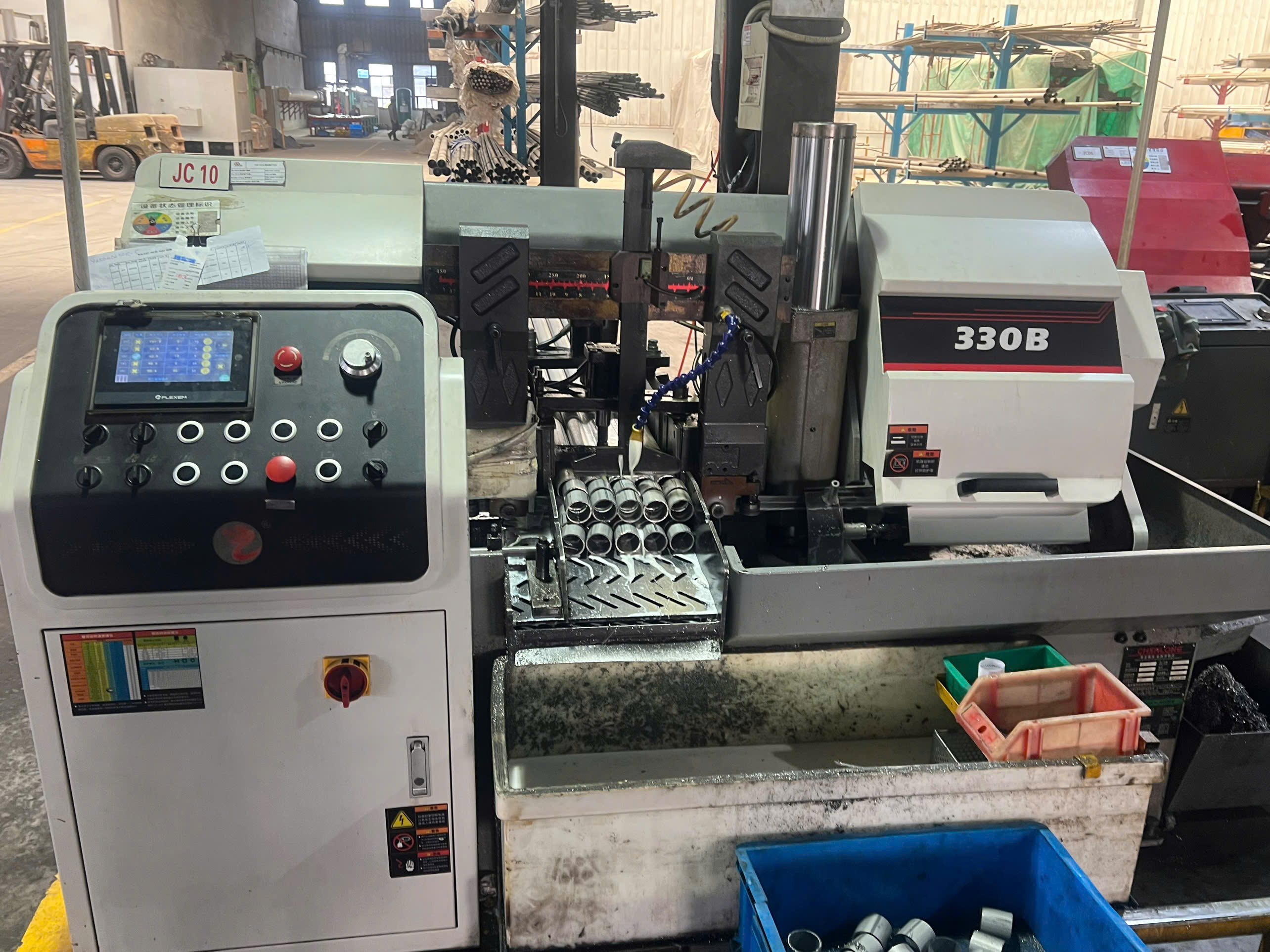
Starting with Raw Material Cost
The foundation of any cost estimate is the material itself. Material selection drives everything downstream. A part made from 304 stainless steel 5 costs very differently than one made from mild carbon steel or aluminum 5052.
Here is how I calculate material cost step by step:
- Determine the flat pattern area of your part (length × width of the unfolded blank).
- Get the cost of a full sheet in your chosen material and material thickness.
- Divide the full-sheet cost by its total square inches to get cost per square inch.
- Multiply cost per square inch by your part's blank area.
- Add a scrap factor 6 — typically 10–20% for parts with complex geometries, cutouts, or irregular shapes.
| Cost Element | Formula | Example |
|---|---|---|
| Full sheet cost | Supplier quote per sheet | $85.00 (4×8 ft, 1.5 mm 304 SS) |
| Sheet area | 48 in × 96 in = 4,608 sq in | 4,608 sq in |
| Cost per sq in | $85.00 ÷ 4,608 | $0.0184 |
| Part blank area | Flat pattern dimensions | 112 sq in |
| Raw material cost | 112 × $0.0184 | $2.06 |
| With 15% scrap | $2.06 × 1.15 | $2.37 |
One tip from our sourcing experience: standardize your material thickness choices (e.g., 1.0 mm, 1.5 mm, 2.0 mm). This makes sourcing simpler and keeps material cost predictable. Exotic thicknesses trigger longer lead times and higher prices.
Also remember that most suppliers apply a material markup of 35–50%, especially on low-volume jobs. Ask your supplier to separate material cost from markup so you can benchmark it.
Calculating Labor and Machine Costs
Labor and machine time are where design complexity really shows up in the price. Every bend, every weld, every cut adds time. Time is money.
The core formula is:
Machining cost = (Hourly machine rate × Cycle time per piece) ÷ Efficiency
Efficiency is typically 0.75–0.90, depending on the shop and the process. It accounts for setup, changeover, and minor downtime.
For labor, the calculation is simpler:
Labor cost = (Hours × Hourly labor rate) + Flat fees (drafting, programming, setup)
| Production Process | Typical Hourly Machine Rate | Key Cost Driver |
|---|---|---|
| Laser cutting | $75–$150/hr | Material thickness, cut length |
| CNC punching | $50–$100/hr | Number of hits, tool changes |
| CNC bending | $40–$80/hr | Number of bends, complexity |
| TIG welding | $60–$120/hr | Weld length, welding requirements |
| Spot welding | $30–$60/hr | Number of spots |
| Assembly | $25–$50/hr | Number of components, hardware |
For a part with 5 bends, 24 inches of laser cut perimeter, and 8 inches of TIG weld, you would calculate each process separately and then sum them. Order quantity matters enormously here — setup time gets amortized over more parts in a larger batch, dropping the per-unit cost.
One real-world example: for a run of 500 mounting brackets, our team found that switching from laser cutting to CNC punching reduced the cutting cost per part by about 40% after tooling was amortized. But for a prototype run of 10 pieces, laser cutting was far cheaper because no tooling investment was needed. Understanding how prototyping and mass production differ in sheet metal fabrication is critical to choosing the right process for your volume.
What hidden quality control and inspection costs should I factor into my custom part budget?
During a recent project for a U.S. client, we discovered that four separate inspection steps — incoming material verification, in-process dimensional checks, weld quality testing, and final inspection — added nearly 8% to the total part cost. The buyer had not accounted for any of them in the original budget request.
Hidden quality control costs include incoming material certification, first-article inspection (FAI), in-process dimensional checks, weld inspection, final inspection reports, PPAP documentation, and third-party testing — collectively adding 5–15% to total fabrication cost, depending on the complexity and industry requirements of your custom parts.
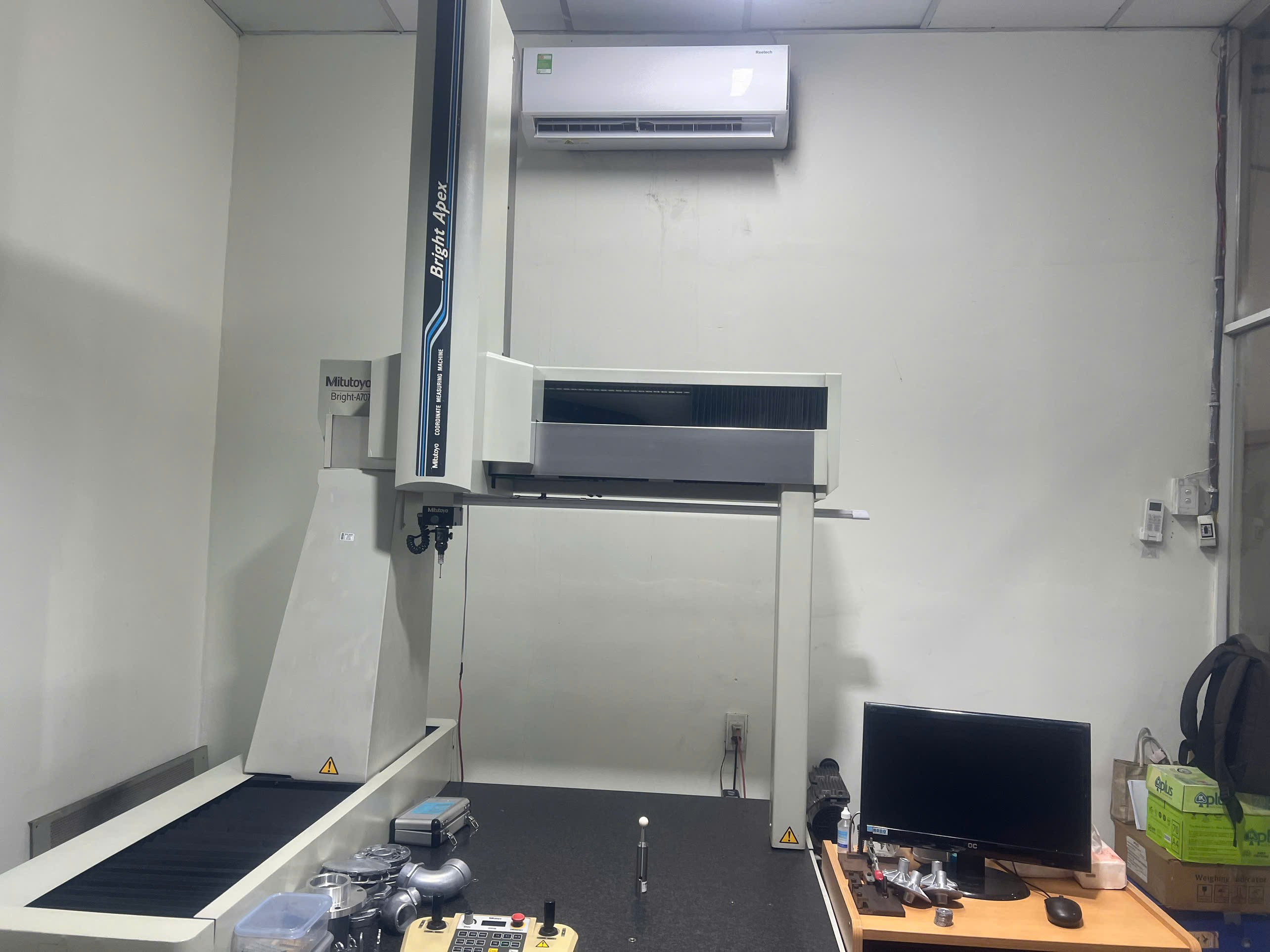
Why QC Costs Are Easy to Miss
Most cost estimation software and quick online quoting platforms focus on material, cutting, forming, and finishing. They rarely itemize the inspection overhead. But for mid-to-high quality requirements — the kind our clients in the U.S. and Europe demand — quality control is not optional.
Here is a breakdown of common QC-related costs:
| QC Activity | Typical Cost Impact | When It Applies |
|---|---|---|
| Material certification (mill certs) | $5–$25 per cert | Every material lot |
| First Article Inspection (FAI) 7 | $100–$500 per part number | New parts, engineering changes |
| In-process checks | 2–5% of labor cost | Every production run |
| CMM dimensional report | $50–$150 per report | Tight tolerance parts |
| Weld inspection (visual/X-ray) | $25–$200 per part | Structural weld joints |
| PPAP package | $300–$1,500 per part number | Automotive, aerospace clients |
| Final inspection | 1–3% of total cost | Every shipment |
| Third-party lab testing | $100–$1,000+ | Specific compliance needs |
The Cost of Getting It Wrong
Our team has seen what happens when QC is skimmed. A supplier ships 2,000 brackets without checking flatness after laser cutting. Half are out of tolerance. The rework cost — re-cutting, re-shipping, expedited freight — dwarfs what a proper in-process check would have cost.
This is exactly why our process control approach focuses on "right first time." We build inspection gates into each production phase. Yes, it adds cost upfront. But it eliminates the much larger cost of rework, returns, and missed delivery dates.
Design for Manufacturability and QC
Design for Manufacturability (DFM) also reduces QC cost indirectly. When you simplify geometry, relax tolerances where high precision is not critical, and reduce the number of welds, you reduce the number of inspection points. Fewer inspection points mean less overhead expense.
For example, combining two welded pieces into a single bent part eliminates the weld inspection step entirely. That saves both fabrication time and QC time.
If your parts go into a regulated industry (medical, automotive, aerospace), expect QC documentation costs to be substantial. PPAP alone can run over $1,000 per part number for a full submission. Factor this into your project budget from day one.
How will sourcing my structural components from Southeast Asia impact my total landed cost?
A trade-off we weigh on nearly every project: should the client source from China, Vietnam, or another Southeast Asian country? The answer depends on far more than just the unit price. When we opened our Vietnam office, we quickly learned that labor rates are only one piece of the puzzle.
Sourcing structural sheet metal components from Southeast Asia typically lowers labor and production costs by 20–50% compared to U.S. domestic fabrication, but your total landed cost must include ocean freight, customs duties, import tariffs, inspection travel, packaging, insurance, lead time carrying costs, and potential rework risk — which can narrow or even eliminate the savings if not managed carefully.
Building a Total Landed Cost Model
Many purchasing managers make the mistake of comparing the FOB (Free on Board) price from Asia to the ex-works price from a domestic shop. That is not an apples-to-apples comparison. You need to calculate the total landed cost 8 — the price of the part when it arrives at your warehouse in the U.S., ready to use.
Here are the cost layers you must include:
- Unit price (FOB) — the fabrication cost at the supplier's dock.
- Inland freight — from the factory to the port of export.
- Ocean freight — container or LCL (less than container load) shipping.
- Marine insurance — typically 0.3–0.5% of shipment value.
- Customs duties and tariffs — varies by HTS code and country of origin. Parts from China may face 25% Section 301 tariffs 9; Vietnam and other ASEAN countries often have lower or zero duty rates.
- Customs brokerage fees — $150–$400 per entry.
- Domestic delivery — port to your facility.
- Quality inspection — either in-country or upon arrival.
- Packaging — export-grade crating for heavy structural parts.
- Lead time cost — the cash tied up during 4–8 weeks of ocean transit.
A Comparative Example
Let us compare a hypothetical order of 1,000 custom mounting brackets:
| Cost Element | U.S. Domestic | Vietnam (via DEWIN) | China (Direct) |
|---|---|---|---|
| Unit price | $12.50 | $7.80 | $6.90 |
| Tooling (amortized) | $0.50 | $0.40 | $0.35 |
| Shipping per unit | $0.00 | $0.95 | $1.10 |
| Tariff per unit | $0.00 | $0.00 | $1.73 (25%) |
| QC/Inspection per unit | $0.20 | $0.35 | $0.35 |
| Packaging per unit | $0.10 | $0.25 | $0.25 |
| Total landed cost/unit | $13.30 | $9.75 | $10.68 |
This example shows why Vietnam has become a compelling alternative. Lower labor rates combined with favorable tariff treatment can deliver meaningful savings. But the savings only materialize if you have reliable production processes on the ground, quality oversight, and logistics management.
Why a Local Team Matters
Without a local presence, you are flying blind. Our seven-person team in Vietnam conducts supplier audits, monitors production, and performs final inspection before shipment. This hands-on approach keeps quality consistent and catches problems before they become expensive.
When we compare surface finishing costs, for instance, powder coating in Vietnam runs roughly 30–40% less than equivalent U.S. pricing. But the quality must be verified on-site. A $0.50 per-unit savings on finishing means nothing if 5% of parts arrive with coating defects.
The bottom line: Southeast Asian sourcing can lower your fabrication price significantly, but only if you manage the full supply chain. Otherwise, overhead expenses from rework, delays, and quality failures eat into the margin.
Can I lower my fabrication price by involving a professional engineering team in my project development?
One of our most impactful client interactions happened when a U.S. engineering firm sent us a bracket design with 14 bends and 6 separate welded sub-assemblies. Our engineering team in China reviewed it and proposed a redesign that achieved the same structural performance with 8 bends, 2 sub-assemblies, and zero welds. The cost dropped by 35%.
Yes — involving a professional engineering team early in project development can lower your fabrication price by 15–40% through Design for Manufacturability (DFM) optimization, which simplifies geometry, reduces unnecessary bends and welds, relaxes non-critical tolerances, standardizes material selection and thickness, and optimizes nesting to maximize sheet utilization and minimize scrap.

How DFM Reduces Cost at Every Phase
The cheapest way to cut fabrication cost is at the design stage. Once a part is in production, every change is expensive. But before production begins, design changes cost almost nothing.
Here are the key DFM strategies and their typical cost impact:
| DFM Strategy | What Changes | Typical Savings |
|---|---|---|
| Reduce number of bends | Fewer press brake operations | 5–15% labor reduction |
| Combine welded parts into bent parts | Eliminates welding and weld inspection | 10–25% total cost reduction |
| Relax tolerances on non-critical features | Reduces rejection rate and inspection time | 3–8% QC cost reduction |
| Standardize material thickness | Simplifies sourcing, reduces inventory | 2–5% material cost reduction |
| Optimize nesting layout | Increases sheet utilization | 5–15% material cost reduction |
| Use standard tooling radii | Avoids custom tooling costs | Eliminates $500–$5,000 in tooling |
| Reduce intricate cut features | Shorter laser cut time | 5–10% cutting cost reduction |
The Engineering Team's Role in Co-Development
Our co-development process works like this: the client sends us their design files (3D CAD, typically STEP or SolidWorks format). Our engineers review every feature — bend radii, hole placement relative to bends, weld access, and surface finishing requirements. We then provide a DFM report with specific, actionable recommendations.
This is not just theoretical. We run the revised design through cost estimation software to quantify the savings. The client sees a before-and-after comparison with actual numbers.
Quick Estimation vs. Detailed Modeling
There are two schools of thought on cost estimation. The first is a quick method: group similar parts by size and design complexity, get quotes on a few representative samples, and extrapolate. This works well for large catalogs of similar parts and gives you a ballpark fast.
The second is the detailed step-by-step method I have described throughout this article. You calculate every phase — material, cutting, forming, welding, finishing, assembly, QC — individually. This approach is more accurate, especially for complex structural parts where small design differences create big cost swings. Learning to understand sheet metal fabrication quotes and cost breakdowns will help you evaluate whether a supplier's pricing aligns with the actual cost drivers.
For most of our clients — purchasing managers who need to justify budgets to their leadership — the detailed method is worth the effort. It also gives you leverage when negotiating with suppliers, because you understand the cost structure as well as they do. If you have ever wondered why sheet metal fabrication supplier quotes vary so much, this level of cost knowledge is the key to getting consistent, fair pricing.
Tools That Help
Modern cost estimation tools have made this process faster. Platforms that accept 3D CAD uploads 10 can generate instant quotes. Software like Costimator offers hundreds of cost models specific to sheet metal production processes. These tools are useful for validation, but I always recommend cross-checking automated estimates with an experienced engineering team. Automated tools sometimes miss context — like the fact that a specific bend sequence requires a special fixture, or that a tight internal corner will crack during forming.
The combination of professional engineering review and modern estimation tools gives you the most reliable cost picture. It also ensures you are not paying for unnecessary complexity.
Conclusion
Calculating custom fabrication costs for complex sheet metal structural parts requires a disciplined, phase-by-phase approach. Account for material, labor, tooling, QC, finishing, logistics, and engineering optimization to build a budget that holds up through production and delivery.
Frequently Asked Questions
How do I accurately break down the material and labor expenses for my complex sheet metal designs?
A lesson we learned early while managing contract manufacturing projects 3 : if you skip even one production step in your cost model, the final number will be wrong. Our China office once reviewed a bracket project where the buyer's estimate omitted secondary bending operations entirely — that single oversight created a 15% cost gap Design for Manufacturability (DFM) optimization 4 .
What hidden quality control and inspection costs should I factor into my custom part budget?
During a recent project for a U.S. client, we discovered that four separate inspection steps — incoming material verification, in-process dimensional checks, weld quality testing, and final inspection — added nearly 8% to the total part cost. The buyer had not accounted for any of them in the original budget request.
How will sourcing my structural components from Southeast Asia impact my total landed cost?
A trade-off we weigh on nearly every project: should the client source from China, Vietnam, or another Southeast Asian country? The answer depends on far more than just the unit price. When we opened our Vietnam office, we quickly learned that labor rates are only one piece of the puzzle.
Footnotes
1. Explains precision sheet metal fabrication and complex assembly processes. ↩︎
2. Replaced with a detailed explanation of the Production Part Approval Process (PPAP) from Quality-One, a leading quality management resource. ↩︎
3. Provides a comprehensive guide to understanding contract manufacturing. ↩︎
4. Explains core principles and benefits of Design for Manufacturability (DFM). ↩︎
5. Details the properties, fabrication, and applications of 304 stainless steel. ↩︎
6. Explains what scrap factor is and its importance in manufacturing. ↩︎
7. Provides a comprehensive guide to First Article Inspection (FAI) in manufacturing. ↩︎
8. Defines total landed cost and explains how to calculate its various components. ↩︎
9. Provides a comprehensive guide to Section 301 tariffs and their implications. ↩︎
10. Explains what 3D CAD software is and its applications in manufacturing design. ↩︎