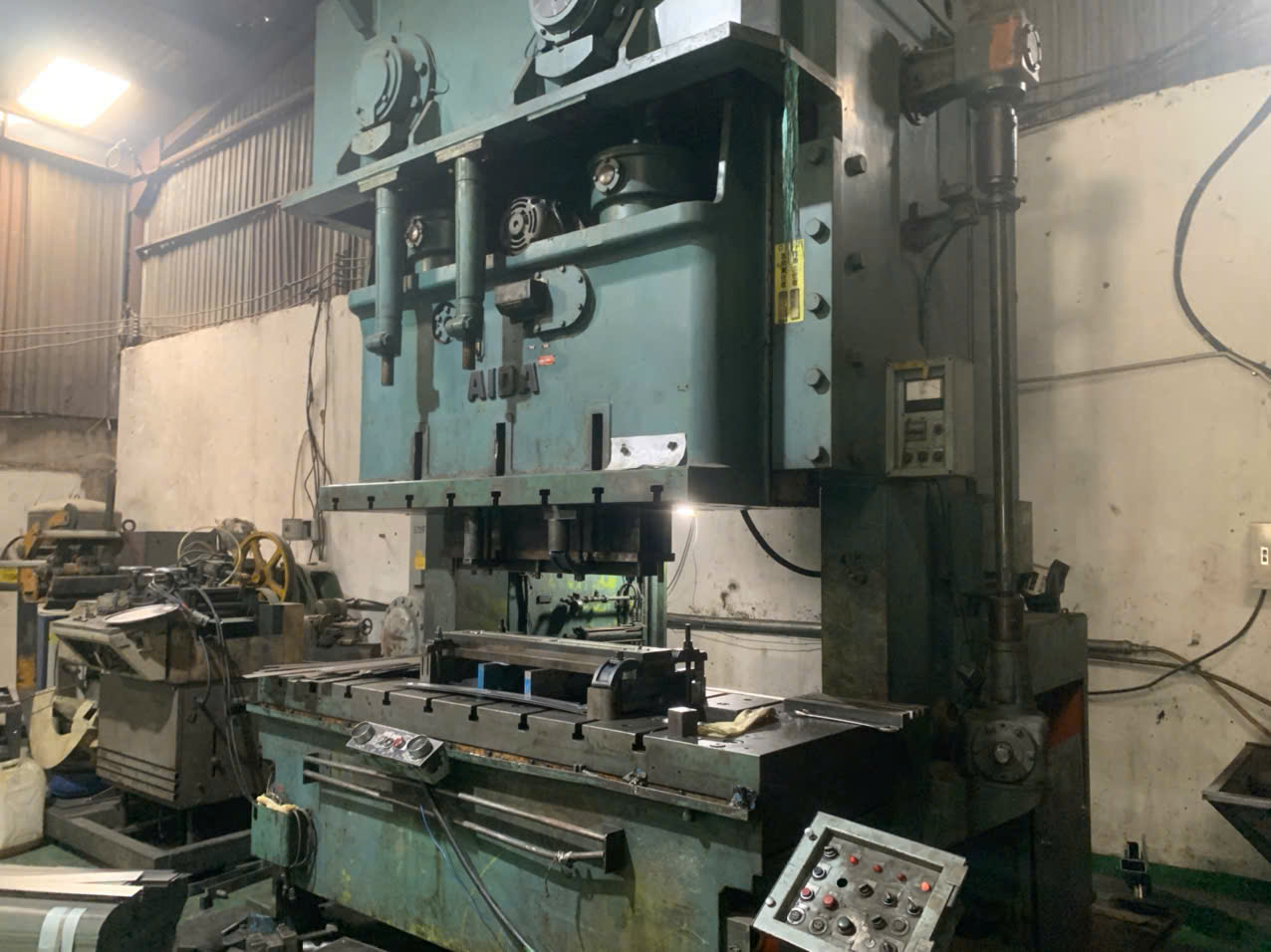

Every week, our team in Vietnam fields calls from US buyers who were shocked by the gap between the quoted unit price and what they actually paid after their stamping parts 1 cleared customs. The problem is simple: most purchasing managers compare factory quotes side by side. They pick the lowest number. Then, months later, international freight charges, customs duties, rework costs, and hidden fees pile up and crush the margin they thought they had locked in EXW (Ex Works) 2. We have watched this cycle repeat for years, and it does not have to happen.
To calculate total landed cost when sourcing stamping parts from Vietnam, sum the factory price, international shipping, customs duties and import taxes, cargo insurance, quality control expenses, tooling costs, and overhead such as currency exchange fees and payment processing — the formula is: Landed Cost = Product Cost + Shipping + Customs + Risk + Overhead.
This guide breaks every cost layer down. I will walk you through freight, tariffs, quality budgeting, and payment terms so you can build a reliable landed cost model before you commit a single purchase order.
What shipping and logistics fees must I include to get my stamping parts from Vietnam to my US warehouse?
A recent shipment of precision brackets from our Ho Chi Minh City partner factory taught me something I keep repeating to buyers: the freight line on a quote is never the full logistics cost First Article Inspection 3. Port handling, fuel surcharges, drayage at the US end, and warehouse receiving fees added nearly 18 percent on top of the ocean rate our client expected.
You must include ocean or air freight, fuel surcharges, port handling at origin and destination, customs brokerage fees, drayage or inland trucking, warehouse unloading, and cargo insurance — each line item can shift dramatically with production volume and seasonal rate swings.

Understanding Incoterms Before You Compare Quotes
The first thing I clarify with every new US client is which Incoterm 4 the Vietnamese supplier is quoting. EXW (Ex Works) means you pay for everything from the factory gate onward. FOB (Free On Board) 5 means the supplier covers costs to the Vietnamese port. CIF (Cost, Insurance, Freight) 6 includes ocean freight and basic insurance. If you compare an EXW quote from one supplier with a CIF quote from another, you are not comparing the same thing. Always normalize quotes to the same Incoterm before making decisions.
| Incoterm | Supplier Covers | Buyer Covers |
|---|---|---|
| EXW | Factory gate only | Local trucking, export clearance, ocean freight, insurance, US import, drayage, delivery |
| FOB | Local trucking + export clearance + loading at port | Ocean freight, insurance, US import, drayage, delivery |
| CIF | All of FOB + ocean freight + basic insurance | US import clearance, customs brokerage, drayage, delivery |
| DDP | Everything to buyer's warehouse | Nothing (but price is highest) |
Breaking Down the Freight Cost Stack
Ocean freight is usually the biggest logistics line item for heavy stamping parts. A 20-foot container from Ho Chi Minh City to Los Angeles typically costs between $2,500 and $5,500 depending on the season, carrier, and contract type. But the container rate alone is misleading. Here is what else you must budget:
- Origin charges: Terminal handling at the Vietnamese port, bill of lading fees, and export documentation. These run $150–$400 per shipment.
- Fuel surcharges (BAF/CAF): Carriers add bunker adjustment and currency adjustment factors. These can swing 5–15 percent of the base rate.
- US destination charges: Terminal handling, chassis rental, and port congestion surcharges at Long Beach or other ports.
- Customs brokerage: A licensed broker files your entry with US Customs. Expect $150–$350 per entry, plus fees for HS code 7 classification review.
- Drayage: Trucking the container from port to your warehouse. Within 50 miles of the port, this runs $400–$900. Longer hauls cost more.
- Cargo insurance: Typically 0.3–0.5 percent of the shipment's declared value. I always recommend it — one lost container of custom tooled parts is a devastating loss.
Last-Mile Logistics Inside Vietnam
One cost that surprises many buyers is inland transport within Vietnam. If the stamping factory is in a northern province like Bac Ninh, moving a full container to Hai Phong port is straightforward. But factories in smaller industrial zones may face road congestion or weight restrictions. Our local team scouts these routes before we finalize supplier selection. For heavy stamping parts, road quality and distance to port can add $200–$600 to the origin logistics cost. To learn more about managing these trade-offs, see our guide on how to balance logistics cost and time when sourcing sheet metal fabrication from Vietnam.
All of these fees belong in your landed cost model. Skip one, and your margin erodes.
How do I calculate the impact of US import duties and tariffs on my total landed cost?
One conversation changed how I present cost comparisons to US buyers. A purchasing manager in Ohio showed me his spreadsheet: he had picked a Chinese stamping supplier at $10 per unit over our Vietnam option at $13. On paper, he saved 30 percent. But after Section 301 tariffs 8 hit his Chinese parts with an additional 25 percent duty, his actual landed unit cost jumped to $12.50 — and that was the low end. Some categories now face tariffs as high as 145 percent from China.
Calculate the tariff impact by identifying the correct HS code for your stamping parts, confirming the country of origin, and applying the corresponding duty rate — Vietnam-origin parts often enter the US at 0% under current trade policy, while China-origin parts face 25–145%+ in combined Section 301 tariffs.

The Vietnam vs. China Tariff Advantage
This is the single biggest reason US buyers are shifting stamping part orders to Vietnam. Section 301 tariffs were imposed on Chinese imports to address trade imbalances. They apply on top of any normal Most Favored Nation (MFN) duty rate. Vietnam is not subject to Section 301 tariffs. For many metal stamping parts, the MFN duty from Vietnam is 0 percent or very low. For a deeper dive into US import regulations and tariffs that apply when sourcing stamping parts from Vietnam, see our dedicated guide.
Here is a concrete example using real-world pricing:
| Cost Element | China Source | Vietnam Source |
|---|---|---|
| Factory unit price | $10.00 | $13.00 |
| Normal MFN duty rate | 2.5% | 0% |
| Section 301 tariff | 25% | 0% |
| Total duty per unit | $2.75 | $0.00 |
| Landed unit cost (before freight) | $12.75 | $13.00 |
At a 25 percent Section 301 rate, the gap is razor thin. At 50 percent or higher — which applies to many categories now — the China part costs $15.00+ landed while the Vietnam part stays at $13.00. Buyers who run this math often see a 40–60 percent landed cost difference once all tariff layers are applied.
How to Verify Your HS Code Classification
Getting the HS code wrong means paying the wrong duty rate. It can also trigger a customs audit. I always recommend these steps:
- Start with the supplier's suggested HS code. Vietnamese factories usually provide one, but verify it independently.
- Cross-check on the US International Trade Commission's Harmonized Tariff Schedule database. Search by material (steel, aluminum), function (bracket, clip, mounting hardware), and manufacturing process (stamped, formed).
- Consult your customs broker. A good broker will confirm the classification and flag any Section 301 or anti-dumping exposure.
- Request a binding ruling from US Customs (CBP) if the value is high. This gives you legal certainty on the duty rate.
Rules of Origin and Free Trade Agreements
Vietnam has signed multiple Free Trade Agreements, but the US-Vietnam trade relationship does not currently have a bilateral FTA. The 0 percent tariff advantage for many stamping parts comes from MFN rates under the WTO framework plus the absence of Section 301 penalties. However, if your stamping parts use raw materials imported into Vietnam from China, be careful. US Customs may challenge the country of origin if the parts were not "substantially transformed" in Vietnam. Our quality team in Vietnam tracks raw material sourcing at the factory level to ensure origin documentation is airtight.
Import Taxes Beyond Tariffs
Customs duties are not the only government charge. You should also account for:
- Merchandise Processing Fee (MPF): 0.3464 percent of the declared value, with a minimum of $31.67 and a maximum of $614.35 per entry.
- Harbor Maintenance Fee (HMF): 0.125 percent of the cargo value for ocean shipments.
These are small percentages, but on a $200,000 shipment, the MPF alone is $614.35 and the HMF is $250. Include them in your model.
What hidden costs for quality control and PPAP should I budget for to ensure my parts are right the first time?
The most expensive stamping part is the one you have to make twice. I learned this early in my career when a shipment of custom brackets arrived at a US distributor with a critical dimension out of tolerance. The rework cost more than the original order. Since then, our process includes PPAP documentation 10, first article inspection, and in-process checks at every Vietnamese factory we work with. These steps cost money upfront. But they cost far less than a rejected shipment.
Budget 3–8 percent of your total order value for quality control costs including supplier audits, PPAP documentation, first article inspection, in-process checks, final inspection, and third-party testing — this investment prevents rework and returns that can exceed 20 percent of order value.

Why Quality Risk Belongs in Your Landed Cost Formula
Many buyers treat quality as a separate line item — or worse, assume the supplier handles it for free. In reality, quality control is a landed cost component. If you do not budget for it, you are gambling. Here is how to think about supply chain risks related to quality:
- Supplier audit (pre-qualification): Before placing your first order, visit the factory or hire an auditor. Cost: $800–$2,000 per audit. This catches capability gaps before they become your problem.
- PPAP (Production Part Approval Process): For automotive or precision stamping parts, PPAP documentation is standard. It includes dimensional reports, material certifications, process flow diagrams, control plans, and capability studies. Our engineering team in Vietnam manages this process. The cost depends on complexity but typically runs $1,500–$5,000 per part number for the initial submission.
- First Article Inspection (FAI): Measuring the first production samples against the drawing. This catches tooling errors before full production begins. Cost: $200–$800 per part number.
- In-process inspection: Checks during production to catch drift. Our Vietnam office staff conduct these at the factory. If you use a third party, expect $300–$500 per man-day.
- Final inspection: Before shipment, a full inspection per your AQL (Acceptable Quality Level) standard. Cost: $300–$600 per inspection day.
The Cost of Getting It Wrong
Here is a comparison that makes the math clear:
| Scenario | Upfront QC Investment | Cost of Failure | Total Quality-Related Cost |
|---|---|---|---|
| No QC budget — rely on supplier self-inspection | $0 | Rework + re-shipment + lost time: $15,000–$50,000 | $15,000–$50,000 |
| Basic QC — final inspection only | $500 | Catches 70% of issues; remaining 30% cost $5,000–$15,000 | $5,500–$15,500 |
| Full QC — audit + PPAP + in-process + final | $4,000–$8,000 | Catches 95%+ of issues; residual risk under $2,000 | $6,000–$10,000 |
The full QC approach is always cheaper than the "no QC" approach. Always. The numbers above are based on patterns we have seen across hundreds of shipments.
Tooling and Die Maintenance — A Forgotten Cost
Stamping parts require tooling — progressive dies, compound dies, or transfer dies. The initial tooling cost is usually quoted separately and can range from $3,000 to $50,000+ depending on complexity. But many buyers forget to budget for ongoing tooling maintenance. Dies wear. Punches dull. After 50,000–100,000 hits, you may need sharpening or component replacement. After 500,000+ hits, a full die rebuild may be necessary. Include a tooling maintenance reserve of 5–10 percent of the original tool cost per year in your landed cost model.
Sustainability and ESG Compliance
An emerging cost that more US buyers are factoring in is ESG (Environmental, Social, Governance) compliance. Some end customers require documentation on waste management practices, energy consumption, and labor conditions at the factory. If your Vietnamese supplier does not already have these certifications, you may need to fund an assessment or choose a supplier who does. This is still a small cost today — typically $500–$2,000 for a basic social compliance audit — but it is growing.
How do my payment terms and credit options influence the final landed cost of my custom parts?
A buyer I work with in Texas once told me his biggest sourcing headache was not the price — it was the cash flow timing. His Chinese supplier demanded 30 percent upfront and 70 percent before shipment. That meant his capital was tied up for 90+ days before parts even reached his warehouse. When we offered 60-day open account terms, his effective cost of capital dropped significantly, even though our unit price was slightly higher.
Payment terms directly affect landed cost through cash flow timing, wire transfer fees, currency exchange rate exposure, and financing costs — open account terms of 60–90 days can reduce your effective cost by 2–5 percent compared to full prepayment, because your capital stays working longer.

How Different Payment Structures Change Your Real Cost
Most international stamping part transactions use one of four payment methods. Each has a different impact on your landed cost:
| Payment Method | Typical Terms | Cash Flow Impact | Hidden Cost Factors |
|---|---|---|---|
| Wire Transfer (T/T) — Full Prepayment | 100% before production | Capital locked 60–120 days | Wire fees ($25–$50), currency exchange spread (0.5–2%), zero leverage if quality fails |
| T/T Split — Deposit + Balance Before Shipment | 30% deposit, 70% before shipping | Capital partially locked 30–90 days | Same wire and FX fees, limited leverage |
| Letter of Credit (L/C) | Payment upon document presentation | Capital locked until documents clear | Bank fees (1–3% of L/C value), amendment fees, document discrepancy charges |
| Open Account (Net 60–90) | Pay 60–90 days after shipment | Capital stays free until parts arrive and are verified | Minimal fees; supplier absorbs financing risk |
The Cost of Capital Is a Real Number
If you prepay $100,000 for stamping parts and your cost of capital is 8 percent annually, locking that money up for 90 days costs you roughly $2,000 in opportunity cost. On a tight-margin distribution business, that is meaningful. Open account terms eliminate this cost entirely. We offer 60–90 day credit terms to qualified US buyers specifically because we understand this math. It is one of the reasons our clients' true landed cost is lower than it appears on the unit price alone. For a broader framework on how to estimate total landed cost for sheet metal fabrication from Vietnam to the US, including payment term impacts, see our detailed walkthrough.
Currency Exchange Rate Exposure
Most Vietnamese suppliers quote in US dollars, which simplifies things for American buyers. But if your supplier quotes in Vietnamese Dong (VND), you face currency exchange rate risk. The VND has historically been relatively stable against the USD, but fluctuations of 2–3 percent in a year are common. Strategies to manage this include:
- Negotiate USD-denominated contracts. This shifts the FX risk to the supplier.
- Use forward contracts through your bank. Lock in an exchange rate for future payments.
- Build a 1–2 percent FX buffer into your landed cost model. This is simple and effective.
Wire transfer fees also add up. Each international wire typically costs $25–$50 on the sending side and $10–$20 on the receiving side. If you split payments across multiple milestones, those fees multiply.
Why Payment Terms Are a Competitive Advantage
From our perspective, offering credit terms is not charity — it is a strategic tool. When a US purchasing manager can delay payment until after parts arrive and pass inspection, they have leverage and cash flow freedom. This makes the total sourcing relationship more sustainable. It also means buyers can commit to larger production volume orders without straining their balance sheet, which lowers per-unit costs across the board.
Conclusion
Calculating total landed cost for stamping parts from Vietnam requires adding every layer — freight, tariffs, quality, tooling, and payment terms — to the factory price. The unit price alone never tells the full story. Build the complete model, and your margins are protected.
Frequently Asked Questions
What shipping and logistics fees must I include to get my stamping parts from Vietnam to my US warehouse?
A recent shipment of precision brackets from our Ho Chi Minh City partner factory taught me something I keep repeating to buyers: the freight line on a quote is never the full logistics cost First Article Inspection 3 . Port handling, fuel surcharges, drayage at the US end, and warehouse receiving fees added nearly 18 percent on top of the ocean rate our client expected.
How do I calculate the impact of US import duties and tariffs on my total landed cost?
One conversation changed how I present cost comparisons to US buyers. A purchasing manager in Ohio showed me his spreadsheet: he had picked a Chinese stamping supplier at $10 per unit over our Vietnam option at $13. On paper, he saved 30 percent. But after Section 301 tariffs 8 hit his Chinese parts with an additional 25 percent duty, his actual landed unit cost jumped to $12.50 — and that was the low end. Some categories now face tariffs as high as 145 percent from China.
What hidden costs for quality control and PPAP should I budget for to ensure my parts are right the first time?
The most expensive stamping part is the one you have to make twice. I learned this early in my career when a shipment of custom brackets arrived at a US distributor with a critical dimension out of tolerance. The rework cost more than the original order. Since then, our process includes PPAP documentation 10 , first article inspection, and in-process checks at every Vietnamese factory we work with. These steps cost money upfront. But they cost far less than a rejected shipment.
Footnotes
1. Replaced with an authoritative Wikipedia page explaining metal stamping (metalworking). ↩︎
2. Detailed explanation of EXW Incoterm by ICC Academy. ↩︎
3. Explains First Article Inspection (FAI) in manufacturing. ↩︎
4. Official government resource explaining Incoterms rules. ↩︎
5. Clear definition and responsibilities under FOB Incoterm. ↩︎
6. Comprehensive guide to CIF Incoterm, including definition and how it works. ↩︎
7. Replaced with an authoritative government (.gov) source explaining Harmonized System (HS) Codes. ↩︎
8. Official information on Section 301 investigations from USTR. ↩︎
9. Explains total landed cost, its components, and calculation. ↩︎
10. Defines Production Part Approval Process (PPAP) and its importance. ↩︎