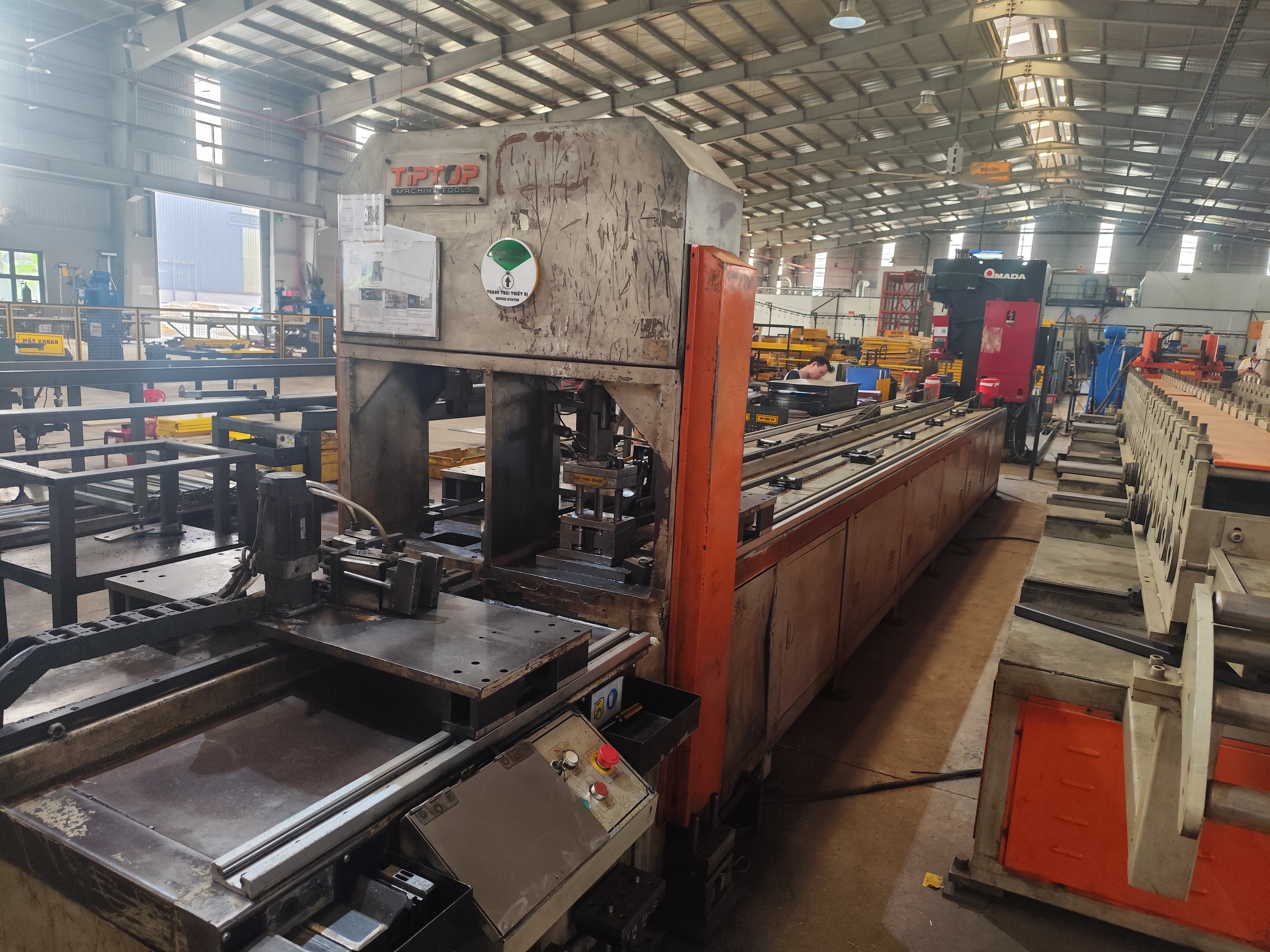

Last quarter, one of our US clients switched a bracket program from China to our Vietnam facility — and the per-unit price went up. Yet they saved 28% on the total landed cost. That disconnect between FOB price and actual cost is the single biggest blind spot we see purchasing managers fall into, and it quietly erodes margins on every shipment.
To calculate total landed cost for stamping parts from Vietnam, add the FOB product cost, ocean freight, marine cargo insurance, customs duties and tariffs, brokerage fees, port handling charges, and operating overhead such as quality control inspection, tooling amortization, and inventory carrying costs — FOB typically represents only 40–55% of the true cost.
Below, I will walk through each cost layer, share the exact formulas we use internally, and give you 2026 rate benchmarks so you can build your own landed-cost model in a spreadsheet.
What Costs Should I Include When Calculating Landed Cost for Vietnam Stamping Parts?
A buyer we work with once told me he had been comparing suppliers on unit price alone for years — until a single tariff reclassification wiped out his entire margin on a zinc-plated mounting clip. That conversation changed how we present quotations to every new client.
When calculating landed cost for Vietnam stamping parts, include seven cost categories: FOB product cost (material + labor + margin), international freight forwarding costs, marine cargo insurance, customs duties and tariffs based on HS code, brokerage and port handling charges, tooling and die costs amortization, and risk-adjusted operating overhead for quality and compliance.

The Master Formula
Here is the equation we share with every prospective buyer during the quotation stage:
TLC = FOB Product Cost + Freight + Insurance + Customs Duty + Brokerage Fees + Port Handling + Operating Costs
Each element breaks down further for stamping parts specifically.
FOB Product Cost
The FOB price from Ho Chi Minh City or Haiphong includes raw material 1, stamping labor, surface treatment, packaging, and the supplier's margin. On our production lines, we quote SPCC cold-rolled steel parts based on complexity tiers:
| Complexity Level | Quantity (Annual) | FOB Price Range (2026) | Key Features |
|---|---|---|---|
| Simple bracket | 50,000+ | $0.08 – $0.30 per part | 1–2 bends, 1–3 holes |
| Medium complexity | 50,000+ | $0.30 – $0.70 per part | Multiple bends, slots, tight tolerances |
| High complexity | 50,000+ | $0.40 – $1.50 per part | Progressive die, multi-step forming, plating |
Vietnam's labor cost runs 45–55% below coastal China, which directly compresses the conversion cost inside the FOB price. That matters most on complex parts where labor content is high.
Tooling and Die Costs
Tooling is often treated as a one-time payment, but it must be amortized into your per-part cost for a true comparison. In our Vietnam tool shops, progressive dies 2 for a medium-complexity bracket run 30–50% less than equivalent tooling in Dongguan or Suzhou. If a die costs $4,000 in Vietnam versus $7,000 in China, and you run 100,000 parts, that is $0.04 versus $0.07 per piece — a real difference that compounds across multiple SKUs.
Freight, Insurance, and Incoterms 2020
Under Incoterms 2020 3 FOB terms, the buyer assumes freight and insurance once goods cross the ship's rail. Ocean freight from Ho Chi Minh City to Long Beach typically runs $2,800–$4,500 per 20-foot container in 2026, depending on season. Marine cargo insurance adds roughly 0.3–0.5% of declared cargo value. Freight often accounts for about 88% of non-product fees, so it deserves careful negotiation. Understanding which trade term — FOB, CIF, or DDP — best fits your sourcing strategy is essential before locking in your cost model.
Brokerage, Port Handling, and Compliance
Customs brokerage fees in the US run approximately $150 per entry filing. Port handling charges add another $150–$250 per container. Then there is the Merchandise Processing Fee 4 (MPF) at 0.3464% of declared value (capped at $614.35) and the Harbor Maintenance Fee (HMF) at 0.125% of cargo value for ocean shipments. These are small individually but add up across dozens of annual shipments.
Operating Overhead — the Hidden 45–60%
This is the layer most buyers underestimate. It includes quality control inspection 5 trips or third-party audits, currency conversion fees 6, payment processing costs, inventory carrying cost for goods in transit (typically 30–45 days on the water), and compliance documentation such as the Certificate of Origin. When we run the numbers for clients, FOB represents only 40–55% of the total landed cost. The remaining 45–60% sits in the categories above.
How Do Tariffs and Duties Affect My Total Landed Cost from Vietnam Suppliers?
During a recent project review, our Singapore team ran a side-by-side landed-cost model for a US client importing a simple zinc-plated mounting bracket. The China quote was lower by $3 per unit at FOB. But after applying the Section 301 tariff, the Vietnam option came in cheaper on every shipment — and the client had been overpaying for two years without realizing it.
Tariffs and duties dramatically affect total landed cost: US Section 301 tariffs add 25% to China-origin stamping parts while Vietnam-origin parts face 0% Section 301 duty, making Vietnam's total landed cost 25–35% lower than China's even when Vietnam's FOB price is higher.

The Tariff Math That Changes Everything
Let me show you the arithmetic that convinces most of our clients:
| Cost Element | China Origin | Vietnam Origin |
|---|---|---|
| FOB unit price | $10.00 | $13.00 |
| MFN base duty (est. 2–4%) | $0.30 | $0.39 |
| Section 301 tariff (25%) | $2.50 | $0.00 |
| MPF (0.3464%) | $0.03 | $0.05 |
| HMF (0.125%) | $0.01 | $0.02 |
| Landed duty-inclusive unit | $12.84 | $13.46 |
At first glance, China still looks cheaper by $0.62. But once you add comparable freight (Vietnam routes are often similar in cost), tooling amortization (30–50% lower from Vietnam), and the quality risk premium, Vietnam pulls ahead. For complex parts with higher labor content, Vietnam's FOB gap shrinks even further — and the tariff savings widen the advantage.
HS Code Classification Matters
Incorrect Harmonized System code classification is one of the fastest ways to destroy your cost model. Metal stamping parts fall across several HS headings 7 — 7318, 7326, 8302, and others — depending on function and material. A mounting bracket classified under 7326.90 faces different base duty rates than one classified under 8302.50. We always recommend working with a licensed customs broker to verify your HS code before locking in cost projections. Some buyers now use AI-powered classification tools to pre-screen, but human review remains essential for stamped parts with ambiguous end-use.
Free Trade Agreements and Certificates of Origin
Vietnam benefits from multiple Free Trade Agreements 8, including the CPTPP and EVFTA, which can further reduce duties for shipments to participating countries. For US-bound goods, the critical document is the Certificate of Origin. Without it, US Customs may question the country of origin and potentially apply China tariff rates if they suspect transshipment. Our Vietnam office prepares Certificates of Origin for every shipment and maintains full traceability from steel coil purchase through final packing. This is not optional paperwork — it is the legal foundation of your tariff savings.
Import VAT and Taxes
While the US does not charge a VAT on imports 9, buyers shipping to the EU or other markets must factor in import VAT and taxes. For EU-bound stamping parts from Vietnam, the EVFTA can reduce or eliminate duties, but standard VAT (typically 19–25% depending on the member state) still applies at the point of entry. This is recoverable for VAT-registered businesses but ties up cash flow in the short term.
Can I Reduce Hidden Logistics and Quality Costs When Sourcing Stamping Parts from Vietnam?
One lesson our team learned early when we set up operations in Vietnam: the visible costs are manageable, but the invisible ones — a rejected lot because of burr height, a container sitting at port for five extra days — those are the costs that make or break a program's profitability.
Yes, you can reduce hidden logistics and quality costs by consolidating shipments to lower per-unit freight, investing in upfront PPAP and process control to avoid rework, requiring third-party quality control inspection before loading, and managing inventory carrying costs through precise production scheduling aligned with shipping windows.

Freight Optimization Strategies
Ocean freight is the largest non-product cost. Here are the levers we use to manage it:
Consolidation. If you import multiple SKUs, consolidate them into fewer, fuller containers. A half-empty 20-foot container costs the same base rate as a full one. We schedule production across part numbers to align completion dates with a single sailing window.
Port selection. Ho Chi Minh City (Cat Lai terminal) offers the most frequent sailings to the US West Coast. Haiphong serves the northern region but has fewer direct services. The choice of origin port affects both the ocean freight rate and inland drayage from factory to port. Our Vietnam facility is positioned within two hours of Cat Lai, which keeps factory-to-port drayage under $200 per container.
Avoid peak season. Rates spike from August through October. Shifting order placement by even two weeks can save $500–$1,500 per container. Working with a reliable freight forwarder experienced in Vietnam shipments can help you navigate seasonal rate fluctuations more effectively.
Quality Cost Avoidance
Quality failures are the most expensive hidden cost. A rejected lot does not just mean rework — it means air freight for replacement parts, production line downtime at the customer's factory, and eroded trust. Our approach is to prevent defects rather than detect them:
- PPAP (Production Part Approval Process): We run a full PPAP before mass production begins. This catches dimensional issues, material deviations, and surface finish problems before they multiply across 50,000 parts.
- In-process control: Statistical process control on critical dimensions during the stamping run, not just at the end.
- Final inspection: Pre-shipment inspection to AQL standards, with photographic documentation shared with the buyer before the container is sealed.
Third-party quality control inspection typically costs $250–$400 per visit in Vietnam. That is cheap insurance against a $5,000–$15,000 quality escape.
Working Capital and Inventory Carrying Costs
Sea freight from Vietnam to the US West Coast takes 18–25 days. Add customs clearance and inland transit, and goods are in the pipeline for 30–45 days. At a 6% annual cost of capital 10, $100,000 of goods in transit costs you roughly $500–$750 in carrying cost per shipment. This is invisible in most quotation comparisons but real on your balance sheet.
We offer 60–90 day open account payment terms to qualifying clients. This shifts the cash flow burden off the buyer and reduces the effective working capital cost of the supply chain. It is one of the practical ways we help clients reduce the hidden financial cost of sourcing from Asia.
Risk Contingency
Build a 3–5% contingency into your landed-cost model for unexpected costs: port congestion surcharges, secondary processing requirements like anti-rust coating or degreasing that were not specified upfront, or currency fluctuation on material purchases. This is not pessimism — it is realistic budgeting.
How Do I Compare Landed Costs Between Vietnam and China for Custom Stamping Parts?
When a long-term client asked us to benchmark their existing China supply chain against a Vietnam alternative, we built a 14-line landed-cost model and walked through it together. The result surprised even us — Vietnam was not just competitive on tariff-heavy parts; it was winning on complex brackets where labor content was high.
To compare landed costs between Vietnam and China, build a line-by-line total cost model covering FOB price, tooling amortization, freight forwarding costs, customs duties and tariffs (including Section 301), insurance, brokerage, port handling charges, quality risk premium, and working capital — then compare the per-unit totals, not just the FOB quotes.

Side-by-Side Landed Cost Model (2026)
Here is a realistic comparison for a medium-complexity stamped steel mounting bracket, 100,000 annual quantity, shipped to Los Angeles:
| Cost Line | China (Dongguan) | Vietnam (HCMC) | Notes |
|---|---|---|---|
| FOB unit price | $0.45 | $0.52 | Vietnam labor 45–55% lower offsets smaller scale |
| Tooling (amortized/unit) | $0.07 | $0.04 | Vietnam tooling 30–50% lower |
| Ocean freight (per unit) | $0.03 | $0.03 | Similar transit distances to US West Coast |
| Marine cargo insurance | $0.002 | $0.002 | ~0.4% of declared value |
| MFN base duty (3%) | $0.014 | $0.016 | Based on HS code for steel bracket |
| Section 301 tariff (25%) | $0.113 | $0.000 | Zero for Vietnam origin |
| MPF (0.3464%) | $0.002 | $0.002 | Capped per entry |
| HMF (0.125%) | $0.001 | $0.001 | Ocean shipments only |
| Customs brokerage (per unit) | $0.002 | $0.002 | ~$150 per entry ÷ volume |
| Port handling (per unit) | $0.002 | $0.002 | ~$200 per container ÷ volume |
| Quality risk premium (2%) | $0.009 | $0.010 | Slightly higher for newer supply base |
| Inventory carrying cost | $0.004 | $0.005 | Slightly longer transit from Vietnam |
| Compliance documentation | $0.001 | $0.002 | Certificate of Origin prep |
| Total Landed Cost/Unit | $0.690 | $0.554 | Vietnam is ~20% lower |
The Section 301 tariff alone adds $0.113 per unit to the China option. That single line item more than offsets Vietnam's higher FOB price. For this bracket, Vietnam delivers a roughly 20% landed-cost advantage.
When Does China Still Win?
I want to be honest about this. China retains advantages in certain scenarios:
- Very simple, high-volume parts where China's mature supply chain and massive scale drive the FOB price so low that even the 25% tariff does not close the gap.
- Non-US destinations where Section 301 does not apply. If you ship to markets without punitive China tariffs, the FOB advantage may hold.
- Parts requiring specialized materials or coatings where China's broader supplier ecosystem offers options not yet available in Vietnam.
When Vietnam Clearly Wins
Vietnam's advantage is strongest when:
- The parts are US-bound and subject to Section 301.
- Part complexity is medium to high, amplifying the labor cost savings.
- New tooling is required, leveraging the 30–50% lower die costs.
- The buyer values tooling ownership — our contracts allow buyers to own their tooling, reducing long-term dependency.
The Strategic Decision Matrix
Rather than a blanket recommendation, we help clients use a decision matrix:
- High volume + complex + US-bound → Vietnam (strongest case)
- High volume + simple + US-bound → Model both (tariff math is tight)
- Any volume + any complexity + non-US → Evaluate case-by-case (no Section 301 advantage)
- Prototype or low volume + any market → China may still lead on supply chain maturity for quick-turn projects
The key takeaway is that a purchasing manager cannot make this decision on unit price alone. The total landed cost model is the only honest comparison tool.
Conclusion
Calculating total landed cost for stamping parts from Vietnam requires looking far beyond the FOB price. Factor in every cost layer — freight, tariffs, tooling, quality, and working capital — and you will make sourcing decisions that protect your margins. Reach out to our team at sa***@*******ch.com to build your own landed-cost model.
Frequently Asked Questions
When Does China Still Win?
I want to be honest about this. China retains advantages in certain scenarios:
What Costs Should I Include When Calculating Landed Cost for Vietnam Stamping Parts?
A buyer we work with once told me he had been comparing suppliers on unit price alone for years — until a single tariff reclassification wiped out his entire margin on a zinc-plated mounting clip. That conversation changed how we present quotations to every new client.
How Do Tariffs and Duties Affect My Total Landed Cost from Vietnam Suppliers?
During a recent project review, our Singapore team ran a side-by-side landed-cost model for a US client importing a simple zinc-plated mounting bracket. The China quote was lower by $3 per unit at FOB. But after applying the Section 301 tariff, the Vietnam option came in cheaper on every shipment — and the client had been overpaying for two years without realizing it.
Footnotes
1. Wikipedia entry defining raw materials in manufacturing and supply chain contexts. ↩︎
2. Technical overview of progressive die stamping used in high-volume metal part production. ↩︎
3. Official International Chamber of Commerce page defining the Incoterms 2020 rules for global trade. ↩︎
4. Official U.S. Customs and Border Protection guide on Merchandise Processing Fees for importers. ↩︎
5. Wikipedia overview of quality control processes used to ensure product standards in manufacturing. ↩︎
6. Authoritative Wikipedia entry explaining foreign exchange and conversion fees for international transactions. ↩︎
7. Official World Customs Organization overview of the Harmonized System used for global product classification. ↩︎
8. Updated official Trade.gov Country Commercial Guide for Vietnam’s trade agreements. ↩︎
9. European Commission guide to Value Added Tax (VAT) rules for goods imported into the EU. ↩︎
10. Educational resource explaining the cost of capital and its role in business investment decisions. ↩︎