

Calculating total logistics costs for stamping parts from Vietnam to Europe trips up many buyers HS Code classification 1. I have watched quotes fall apart when hidden charges surfaced after our Vietnam team booked freight.
To calculate total logistics costs for stamping parts from Vietnam to Europe, add the FOB product price, ocean or air freight, origin and destination Terminal Handling Charges, customs brokerage fees, import VAT and duties, marine cargo insurance, and inland trucking, then divide by unit volume for landed cost.
That is the short answer. Now let me walk you through each component, step by step, using real numbers from our recent shipments.
What Cost Components Should I Include When Calculating Total Logistics Costs from Vietnam?
A purchasing manager once sent me a spreadsheet with only freight and unit price 2 on it. Our team in Vietnam found six missing cost lines before his brackets even left Ho Chi Minh City.
A complete landed cost analysis must include the FOB product price, export documentation fees, origin Terminal Handling Charges, main ocean freight, marine cargo insurance, destination port charges, customs brokerage fees, import VAT and duties, and inland trucking from the European port to your warehouse.

Let me break this down the way we do it for our clients. Landed cost means the total cost to move goods from the supplier's dock to your door. Ocean freight is only one slice. Many buyers underestimate their budget because they stop at the headline freight rate.
The Full Cost Stack
Here is the structure we use when quoting stamped brackets and mounting hardware from our Vietnam operation:
| Cost Component | Typical Range (Indicative) | Who Pays Under FOB |
|---|---|---|
| FOB product price | Per quotation | Buyer |
| Export docs and clearance (Vietnam) | $80–$150 per shipment | Seller |
| Origin Terminal Handling Charges | $120–$200 per container | Seller |
| Ocean freight, 20' FCL to Rotterdam | $1,900–$2,300 | Buyer |
| Ocean freight, 40' FCL to North Europe | $2,500–$4,000 | Buyer |
| Marine cargo insurance | ~0.3–0.5% of cargo value | Buyer |
| Destination THC and port fees | $200–$350 | Buyer |
| Customs brokerage fees (EU) | $100–$200 per entry | Buyer |
| Import VAT and duties | VAT ~19–20%; duty often 0% under EVFTA | Buyer |
| Inland trucking to warehouse | 5–15% of total logistics cost | Buyer |
Stamping-Specific Additions
Metal stamping parts bring extra lines. Tooling is a one-time cost. You should amortize it over your production volume to get a true per-part figure. Packaging also matters more than most buyers think. Stamped steel needs VCI wrap and cushioning to survive a 35–45 day sea voyage. That can add 5–10% to your total. Secondary operations like powder coating, which we apply to many bracket orders, add packaging and handling cost too.
The formula is simple. Sum every line above, then divide by total units. That is your landed cost per part.
How Do Shipping Method and Route Choices Affect My Total Logistics Costs to Europe?
When we launch a new stamping program, the trade-off I weigh first is speed versus cost. One urgent bracket reorder taught me that air freight can erase months of unit-price savings.
Sea freight via FCL is the cheapest mode for dense stamping parts, costing $1,900–$4,000 per container with 35–45 day transit. LCL adds per-CBM fees and 3–5 days. Air freight runs $3–$15 per kilogram but delivers in 3–7 days, suiting only urgent or low-volume orders.
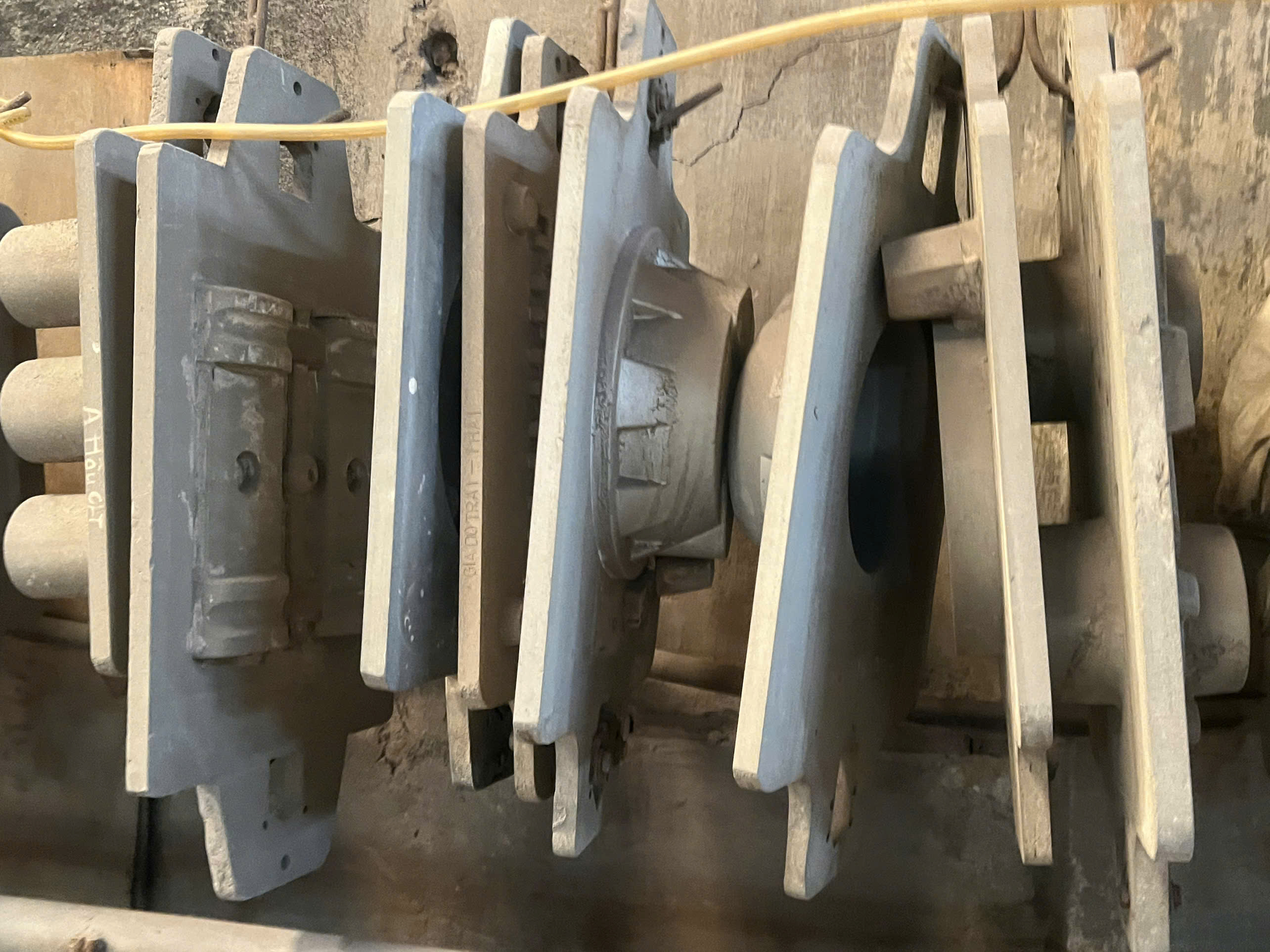
Stamping parts are heavy and dense. That single fact drives most routing decisions. Here is how the modes compare:
| Factor | FCL Sea | LCL Sea | Air Freight |
|---|---|---|---|
| Cost basis | Per container | Per CBM | Per kg |
| Indicative rate (2025–2026) | $1,900–$4,000 | €500–$1,000 typical shipment | $3–$15/kg |
| Transit time | 35–45 days | 38–50 days | 3–7 days |
| Best for | Bulk production runs | Small trial orders | Urgent reorders, prototypes |
| Hidden risks | Demurrage if clearance stalls | Consolidation and deconsolidation fees | Very high cost for dense metal |
The Weight Problem With Stamped Steel
Our black powder-coated brackets weigh out a container long before they fill it. A 20-foot box maxes out around 21–24 tons of payload. Dense steel parts hit that limit at perhaps half the volume. So when comparing FCL vs LCL shipping, calculate cost per kilogram, not per cubic meter. For heavy cargo, FCL almost always wins once you pass a few tons.
Route and Port Choices
Port selection matters too. Northern Vietnam routes through Hai Phong can differ from Ho Chi Minh City routes by 15–25% once trucking premiums are included. On the European side, Rotterdam and Hamburg 3 offer the deepest carrier options. Also note that shipping from Vietnam runs roughly 10% higher than from China, because Vietnamese ports are smaller and carrier competition is thinner. We factor that premium into every quote, and Vietnam's lower per-part production cost usually still wins overall.
Sea Freight Surcharges
Watch for sea freight surcharges 4 layered on the base rate. Fuel adjustment factors, peak season surcharges, and congestion fees can shift monthly. Always ask your forwarder for an all-in rate.
What Hidden Fees or Customs Charges Could Impact My Final Landed Cost for Stamping Parts?
A client of ours once faced a surprise storage bill in Hamburg because his commercial invoice listed his brackets simply as "parts". Customs held the container past the free-time window.
Hidden costs include demurrage and detention fees, port storage, incorrect HS Code classification penalties, non-preferential duties from missing EUR.1 certificates, EU import VAT of 19–20%, CBAM carbon reporting costs for steel parts, and pipeline inventory carrying costs during the long sea transit.

These soft costs rarely appear on a freight quote. Yet they can wreck a landed cost budget. Let me unpack the big ones.
Duties, EVFTA, and HS Codes
Many stamped metal parts qualify for 0% duty under EVFTA tariff preferences. But qualification is not automatic. You need a valid EUR.1 Certificate of Origin 5 proving Vietnamese manufacture, and your HS Code classification must be precise. Stamped steel brackets typically fall under Chapter 73 headings. A vague description on the invoice invites inspection, delay, and possibly a duty reassessment. In our export process, we verify the HS code with the broker before booking, every single time.
VAT Is Unavoidable
Even at 0% duty, import VAT and duties calculations still include VAT. Germany charges 19%, France 20%. On a €20,000 shipment to Germany, that is €3,800 payable at import. Registered businesses usually reclaim it, but it still ties up cash for weeks. Budget at least 20% of shipment value as a safe planning figure.
The Quiet Cost Killers
| Hidden Cost | Trigger | Typical Impact |
|---|---|---|
| Demurrage | Container sits at port past free time | $75–$200+ per day |
| Detention | Container returned late to carrier | $50–$150 per day |
| Port storage | Slow customs clearance | Varies by terminal |
| CBAM reporting | Steel or aluminum content | Admin cost now; carbon levies phasing in |
| Pipeline inventory | 35–45 days of capital tied up in transit | Adds ~1–2% for high-value parts |
| Re-inspection fees | Bad documentation or generic descriptions | Delay plus fees |
CBAM deserves special attention for stamping buyers. The EU Carbon Border Adjustment Mechanism applies to steel and aluminum goods. Right now it means reporting obligations and emissions data collection 6 from your supplier. Financial levies scale up over time. We already gather emissions data from our Vietnamese stamping partners so our European-bound clients stay compliant.
Finally, do not forget marine cargo insurance. It is cheap, usually under half a percent of value, and skipping it is false economy on a six-week voyage.
How Can I Reduce My Overall Logistics Costs Without Compromising Delivery Reliability?
Reliability is the constraint I refuse to trade away. One late container can idle an assembly line, and I have seen buyers burn every freight saving on emergency air shipments afterward.
Reduce logistics costs by consolidating orders into FCL shipments, securing EVFTA duty exemptions with proper origin documents, choosing FOB terms under Incoterms 2020, optimizing packaging density, pre-clearing customs electronically, and planning reorders 3–6 weeks ahead to avoid costly air freight rescues.

Cost cutting only works if delivery stays predictable. Here is the playbook we run for stamping programs.
Consolidate and Plan Ahead
First, batch your orders. Filling a 20-foot container drops your per-part freight cost sharply compared to repeated LCL shipments. Vietnam’s logistics cost structure shows transport and distribution making up over 80% of total logistics spend, so freight optimization delivers the biggest wins. Second, respect lead times. A new stamping program takes 10–16 weeks from tooling to delivery. Reorders take 3–6 weeks from PO to port. Build those windows into your MRP, and you will never need panic air freight.
Get the Paperwork Right the First Time
Clean documentation is free cost reduction. A precise HS code, a valid EUR.1 certificate, and a detailed commercial invoice keep you inside the EVFTA 0% duty lane and out of the demurrage trap. Choose your terms deliberately under Incoterms 2020. FOB gives you control of freight and insurance 7 buying. DAP shifts that work to the seller but can hide markups. We spell out the cost split line by line so nothing overlaps and nothing gets paid twice.
Optimize Packaging Without Risking Damage
Dense packing saves freight, but stamped and coated parts need protection. We use VCI paper against salt-air corrosion, layered cushioning for powder-coated surfaces, and box-in-box packing for smaller precision brackets. The goal is maximum parts per container with zero transit damage, because a rejected shipment costs far more than good packaging ever will.
Work With a Partner on the Ground
Our Vietnam office inspects parts before loading and pre-declares shipments electronically. Catching a non-conformance at the factory costs hours. Catching it in Rotterdam costs a full ocean cycle. That is the real math of reliability.
Conclusion
Guessing at logistics costs risks blown budgets and stalled lines. Sum every component, verify EVFTA eligibility, plan lead times early, and partner with a team on the ground in Vietnam.
Frequently Asked Questions
What Cost Components Should I Include When Calculating Total Logistics Costs from Vietnam?
A purchasing manager once sent me a spreadsheet with only freight and unit price 2 on it. Our team in Vietnam found six missing cost lines before his brackets even left Ho Chi Minh City.
How Do Shipping Method and Route Choices Affect My Total Logistics Costs to Europe?
When we launch a new stamping program, the trade-off I weigh first is speed versus cost. One urgent bracket reorder taught me that air freight can erase months of unit-price savings.
What Hidden Fees or Customs Charges Could Impact My Final Landed Cost for Stamping Parts?
A client of ours once faced a surprise storage bill in Hamburg because his commercial invoice listed his brackets simply as "parts". Customs held the container past the free-time window.
Footnotes
1. World Customs Organization explanation of the standardized numerical method of classifying traded products. ↩︎
2. Wikipedia entry explaining the Free on Board shipping term and cost responsibilities. ↩︎
3. Official site of Europe’s largest port, a primary destination for international maritime trade. ↩︎
4. Authoritative Wikipedia entry explaining freight rate components and factors influencing international shipping costs. ↩︎
5. Official European Commission page detailing trade documents required for preferential tariff treatment under EVFTA. ↩︎
6. Official EU resource explaining carbon reporting requirements for imported steel and aluminum products. ↩︎
7. Wikipedia entry detailing coverage for cargo loss or damage during maritime transit. ↩︎