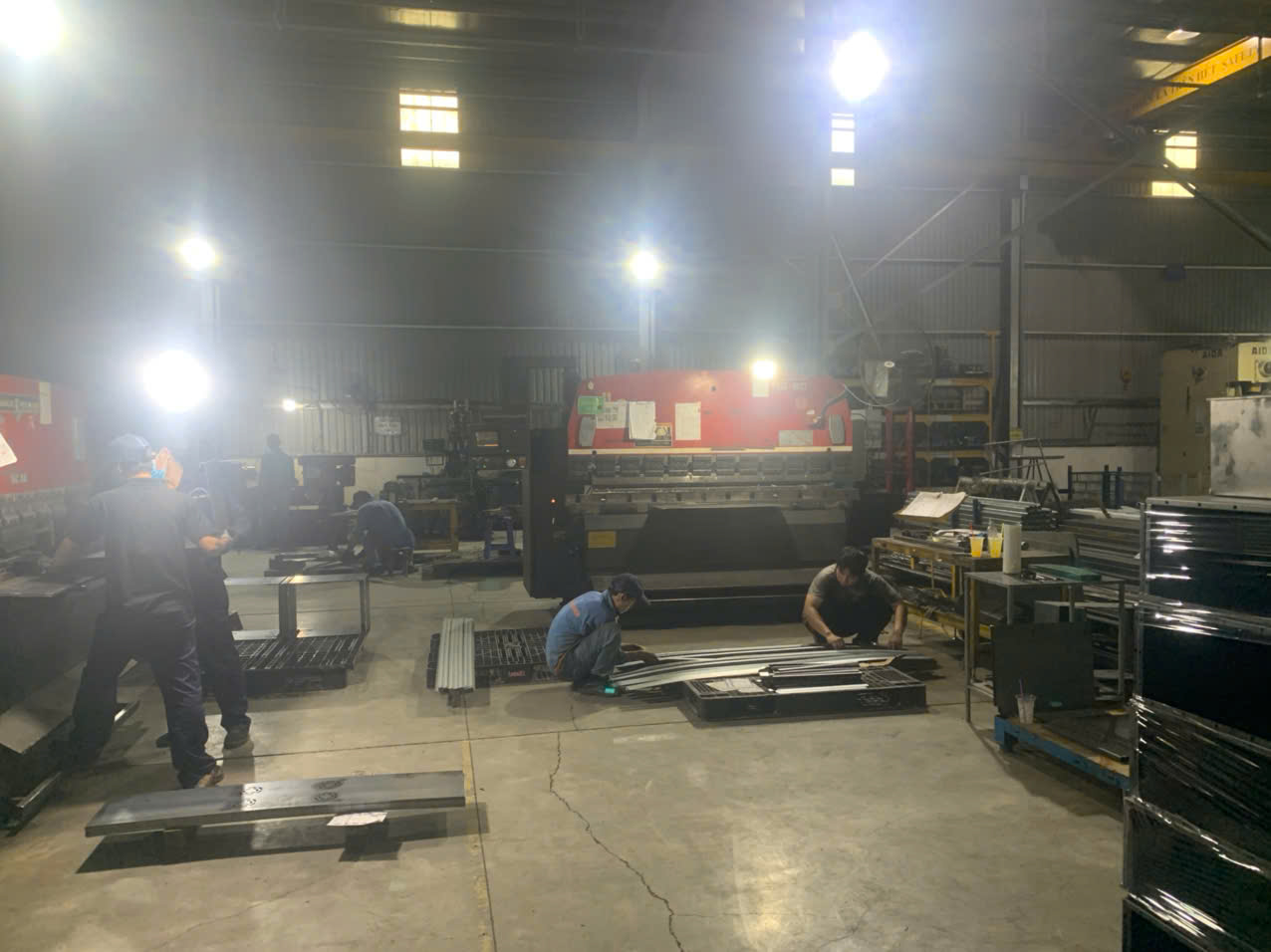

A broken die during a critical production run is every buyer’s nightmare — and I’ve seen it derail delivery schedules that took months to plan.
To check if a stamping parts supplier has backup dies for emergencies, you must audit their spare parts inventory, verify tooling ownership and storage protocols, request maintenance logs, confirm in-house tooling capability, and review their documented business continuity plan for die failure scenarios.
Most suppliers will not openly advertise backup dies. Full duplicate dies are a massive capital expense, and the reality is that many suppliers rely on spare inserts and rapid rebuild capabilities instead. Knowing the right questions to ask separates a resilient supply chain from a fragile one. Let me walk you through exactly how to vet this, step by step.
What Questions Should I Ask a Supplier to Confirm They Maintain Backup Dies?
During a recent supplier audit in Vietnam, our team discovered that three out of five stamping vendors we visited had no documented spare insert policy — even though all five claimed they could "handle emergencies."
Ask suppliers specifically about spare punch and insert inventories, tooling ownership, in-house rebuild capability, idle die storage protocols, and their documented response plan for die failure — these five questions reveal true emergency readiness far better than a generic "Do you have backups?"

The phrase "backup die" can mean two very different things. A full duplicate die — an identical second tool — is rare and extremely expensive. For most mid-volume stamping parts, the industry standard is a set of spare wear parts 1: punches, inserts, pilots, springs, and sensors. These allow immediate die restoration without waiting weeks for new tooling fabrication.
The Five Critical Questions
Here is a structured list of questions I recommend including in every RFQ or supplier qualification call:
| # | Question to Ask | What the Answer Reveals |
|---|---|---|
| 1 | "Who owns the die, and where is it stored?" | Ownership determines who has authority and incentive to maintain backups. If the buyer owns the die but the supplier stores it, the supplier may not invest in spare parts. |
| 2 | "Are spare punches, inserts, pilots, springs, and sensors available on-site?" | This confirms whether the supplier has a spare parts inventory or relies on ordering replacements after failure. |
| 3 | "Do you design and build tooling in-house or outsource it?" | In-house tooling is the strongest indicator of emergency response speed. Outsourced tooling can add weeks to a repair timeline. |
| 4 | "What is your protocol for dies that sit idle for extended periods?" | Climate-controlled storage and anti-corrosion treatment prevent degradation. A die that rusts during downtime is useless in an emergency. |
| 5 | "Can you share your last three maintenance logs for a comparable die?" | Tooling maintenance logs prove whether a supplier actually follows a preventive maintenance schedule or just reacts to breakdowns. |
Red Flags vs. Green Flags
When you receive answers, interpret them carefully. A vague promise like "We can handle it" is a red flag. A supplier who shows you a physical inventory of spare punches and shares digital maintenance records — that is a green flag.
One trade-off I always weigh: the cost of spare tooling versus the cost of production downtime. Spare inserts might add a few hundred dollars to the upfront quote. But a two-week delay because no spares exist? That can cost thousands in missed shipments and late penalties. When evaluating bids, never judge quotes solely on unit price. The lowest price often excludes contingency planning entirely.
Also, pay attention to whether the supplier tracks wear by stroke count or by calendar date. Stroke-count-based tracking is far more accurate. A die that runs 500,000 strokes in a month wears differently than one running 50,000. The best suppliers tie their preventive maintenance schedule directly to stroke counts.
How Can I Verify a Supplier's Tooling Storage and Maintenance Records During an Audit?
A lesson I learned early in my career: a supplier's tooling storage area tells you more about their quality culture than any sales presentation ever will.
During an on-site audit, physically inspect the die storage area for climate control, labeling systems, and anti-corrosion measures, then request digital or paper maintenance logs showing sharpening dates, repair records, and stroke counts to verify the supplier's actual tooling life cycle management practices.

Walking the shop floor is irreplaceable. When our audit teams visit stamping facilities across Asia, we follow a structured supplier audit checklist 2 that covers tooling storage, maintenance documentation, and emergency preparedness. Here is what to look for and how to interpret what you find.
Storage Facility Inspection
The die storage area should be climate-controlled or at minimum dry and clean. Rust is the silent killer of idle tooling. Look for:
- Dehumidification or climate control in the storage room
- Standardized labeling on every die (part number, last service date, next service date)
- Anti-corrosion coatings or VCI wrapping on dies not currently in use
- Organized racking — dies should not be stacked on the floor
If dies are covered in dust, unlabeled, or showing surface rust, that tells you the supplier lacks a serious tooling life cycle management program.
Maintenance Record Review
Request the actual records — not a summary. Here is what to look for in the documentation:
| Record Type | What to Check | Why It Matters |
|---|---|---|
| Sharpening log | Date, stroke count at sharpening, operator name | Confirms the supplier tracks wear by stroke count, not guesswork |
| Repair log | Description of failure, parts replaced, date returned to production | Shows whether failures are recurring (indicating a design issue) or one-off |
| Setup sheets | Press tonnage, shut height, feed length, pilot clearance | Ensures the die can be set up correctly on a different press if needed |
| Engineering revision history | ECN numbers, dates, description of changes | Confirms that spare parts match the current revision — not an outdated version |
The Digital vs. Paper Gap
Capable suppliers are moving toward digital tracking of maintenance events. Digital records are easier to audit, harder to fabricate, and can be shared remotely before you even visit the site. If a supplier still uses only handwritten logs, it is not necessarily a deal-breaker — but it does suggest they are behind the curve on process control.
One critical detail our teams always check: does the maintenance record show that engineering revisions were applied to spare parts? If the part design changed after the original die was built, but the spare inserts were never updated, you will get non-conforming parts 3 from those spares. This is a common oversight that creates major quality problems during emergencies.
Also verify the supplier's metal stamping press capacity 4. A supplier with only one press compatible with your die has zero flexibility if that press goes down. Ideally, the die's shut height and mounting pattern should be compatible with at least two presses in their facility.
What Documentation Should I Request to Prove Die Redundancy and Emergency Production Capability?
When a U.S. client once asked me to prove our partner factory's emergency readiness, I realized most buyers do not know exactly what documents to request — or what those documents should contain.
Request a spare parts inventory list, version-controlled CAD files with CNC toolpaths, die setup sheets, a tooling maintenance history report, a press compatibility matrix, and a written emergency response procedure — these six documents together prove true die redundancy and emergency production capability.

Documentation is where promises become verifiable facts. Let me break down each document and explain what it should contain and why it matters for production downtime prevention.
The Six Essential Documents
| Document | Key Contents | Purpose |
|---|---|---|
| Spare parts inventory list | Part numbers, quantities, storage location, last inspection date | Proves physical redundant tooling exists on-site |
| Version-controlled CAD files | 3D models, 2D drawings, revision history, CNC toolpaths | Enables rapid die reconstruction at any qualified tool shop |
| Die setup sheets | Press tonnage, shut height, feed length, stroke rate, material spec | Allows the die to be run on a different press or at a different facility |
| Tooling maintenance history | Sharpening dates, repairs, stroke counts, failure descriptions | Shows the current condition and remaining life of the die |
| Press compatibility matrix | List of presses the die fits, with tonnage and bed size details | Confirms backup press availability within the same facility |
| Emergency response procedure | Step-by-step protocol for die failure, contact tree, escalation timeline | Proves the supplier has thought through the scenario before it happens |
The Digital Redundancy Vault
One concept gaining traction is the "digital redundancy vault 5." This means the supplier stores version-controlled 3D CAD files and CNC toolpaths in a secure, off-site cloud environment. If the physical die is destroyed — fire, earthquake, catastrophic crash — the digital files allow a new die to be built from scratch at any qualified tooling facility.
Ask the supplier: "If your facility burned down tomorrow, could you provide me the complete digital package to rebuild this die elsewhere?" The answer reveals their true level of supply chain risk management maturity.
Additive Manufacturing as a Bridge
Some advanced suppliers now have the capability to use metal additive manufacturing 6 — 3D printing — to produce emergency bridge tooling or complex inserts within 48 hours. This is not a replacement for a proper die, but it can keep production running while a permanent repair is completed. If your supplier mentions this capability, ask for proof: a case study, a sample part, or at minimum the name and model of their additive equipment.
Press-Agnostic Compatibility
I always recommend performing what I call a "press-agnostic compatibility check." This means confirming that your die's shut height, mounting pattern, and feed requirements are compatible with presses at other pre-vetted facilities — not just the primary supplier. If your primary supplier goes down entirely, this compatibility data lets you move production to an alternate facility without re-engineering the tooling.
How Do I Assess a Supplier's Risk Management Plan if My Primary Die Fails Unexpectedly?
A buyer we support in the Midwest called us on a Friday afternoon last year. His supplier's progressive die had cracked — and the supplier had no plan. No spare inserts. No backup press. No documented procedure. It took six weeks to resume production.
Assess a supplier's risk management plan by reviewing their documented business continuity plan, verifying in-house tooling rebuild capability, checking their emergency prioritization protocol, confirming spare parts availability, and validating their historical response to past die failures through references or third-party audit reports.

A risk management plan for die failure is not a luxury — it is a basic requirement for any supplier handling critical stamping parts. Here is how to evaluate whether a supplier's plan is real or just words on paper.
In-House vs. Outsourced Tooling: The Time Gap
This is the single most important variable in emergency response speed. A supplier with in-house tooling design and fabrication can often repair or rebuild a damaged die in days. A supplier who outsources tooling to a third party may need weeks — sometimes a month or more.
| Scenario | In-House Tooling Supplier | Outsourced Tooling Supplier |
|---|---|---|
| Broken punch replacement | Same day to 2 days | 1–3 weeks |
| Cracked die insert repair | 2–5 days | 2–4 weeks |
| Full die rebuild | 2–4 weeks | 6–12 weeks |
| Emergency bridge tooling | 3–7 days (if additive capable) | Rarely available |
When you visit a supplier, look for their toolmaking department. Ask to see their CNC machines, wire EDM equipment, and grinding stations. Ask how many toolmakers they employ. If they cannot show you these resources, their tooling is likely outsourced — and your emergency response timeline just got much longer.
Business Continuity Plan Review
Request the supplier's written business continuity plan. A credible plan should include:
- Die failure response protocol with specific steps and timelines
- Contact tree showing who is responsible for each decision
- Escalation matrix defining when the buyer is notified
- Alternate press assignment procedures
- Spare parts deployment instructions
- Communication cadence during the emergency (daily updates, for example)
If the supplier cannot produce this document, they do not have a plan. Period.
Electronic Die Protection
One often-overlooked aspect of risk management is prevention. Modern stamping operations use electronic die protection sensors 7 to detect misfeeds, slugs, short feeds, and part ejection failures. These sensors stop the press before a catastrophic crash occurs — the kind of crash that destroys an entire die and creates the emergency in the first place.
Ask the supplier: "What die protection sensors do you use, and on which presses?" Suppliers using sensor-equipped presses demonstrate a proactive approach to production downtime prevention. Some advanced operations are even implementing AI-driven vibration analysis to identify micro-fractures in the die before they lead to total failure.
Validating Past Performance
References matter. Ask the supplier for the names of two or three long-term customers you can contact. Ask those references specifically: "Has this supplier ever experienced a die failure during your production? How did they handle it? How long was the recovery?"
Third-party audit reports — such as those from IATF 16949 8 or ISO 9001 certification bodies — can also provide insight into the supplier's corrective action history. Look for evidence of how they closed out tooling-related nonconformances.
The Lowest-Price Trap
I want to be direct about this: the lowest unit price in a stamping quote almost always excludes contingency planning. The supplier offering the cheapest per-piece cost has likely cut corners on spare parts inventory, tooling maintenance, and emergency preparedness. When you evaluate bids, include a line item for spare tooling costs. Require every bidder to address their contingency plan for stamping part supply disruptions in the quote. This levels the playing field and reveals which suppliers are genuinely prepared.
Conclusion
Checking whether a stamping parts supplier 9 has backup dies requires forensic-level vetting — not a simple yes-or-no question. Audit their spare parts, verify their tooling capability, review their documentation, and validate their risk management plan before you commit.
Frequently Asked Questions
What Questions Should I Ask a Supplier to Confirm They Maintain Backup Dies?
During a recent supplier audit in Vietnam, our team discovered that three out of five stamping vendors we visited had no documented spare insert policy — even though all five claimed they could "handle emergencies."
How Can I Verify a Supplier's Tooling Storage and Maintenance Records During an Audit?
A lesson I learned early in my career: a supplier's tooling storage area tells you more about their quality culture than any sales presentation ever will.
What Documentation Should I Request to Prove Die Redundancy and Emergency Production Capability?
When a U.S. client once asked me to prove our partner factory's emergency readiness, I realized most buyers do not know exactly what documents to request — or what those documents should contain.
Footnotes
1. Explains die tooling components like punches and inserts for background context. ↩︎
2. Comprehensive Wikipedia overview of quality auditing principles and checklist procedures. ↩︎
3. ISO 9001 governs quality management and nonconformance control relevant to spare parts. ↩︎
4. Background reference on stamping press operations and capacity considerations. ↩︎
5. ISO 22301 governs business continuity management, relevant to digital tooling backup strategies. ↩︎
6. Provides background on additive manufacturing used for emergency bridge tooling. ↩︎
7. NIST covers sensor technology relevant to preventing catastrophic die crashes. ↩︎
8. Stable, authoritative Wikipedia entry for the international automotive quality management standard. ↩︎
9. Alibaba is a major sourcing platform for verifying stamping parts suppliers globally. ↩︎