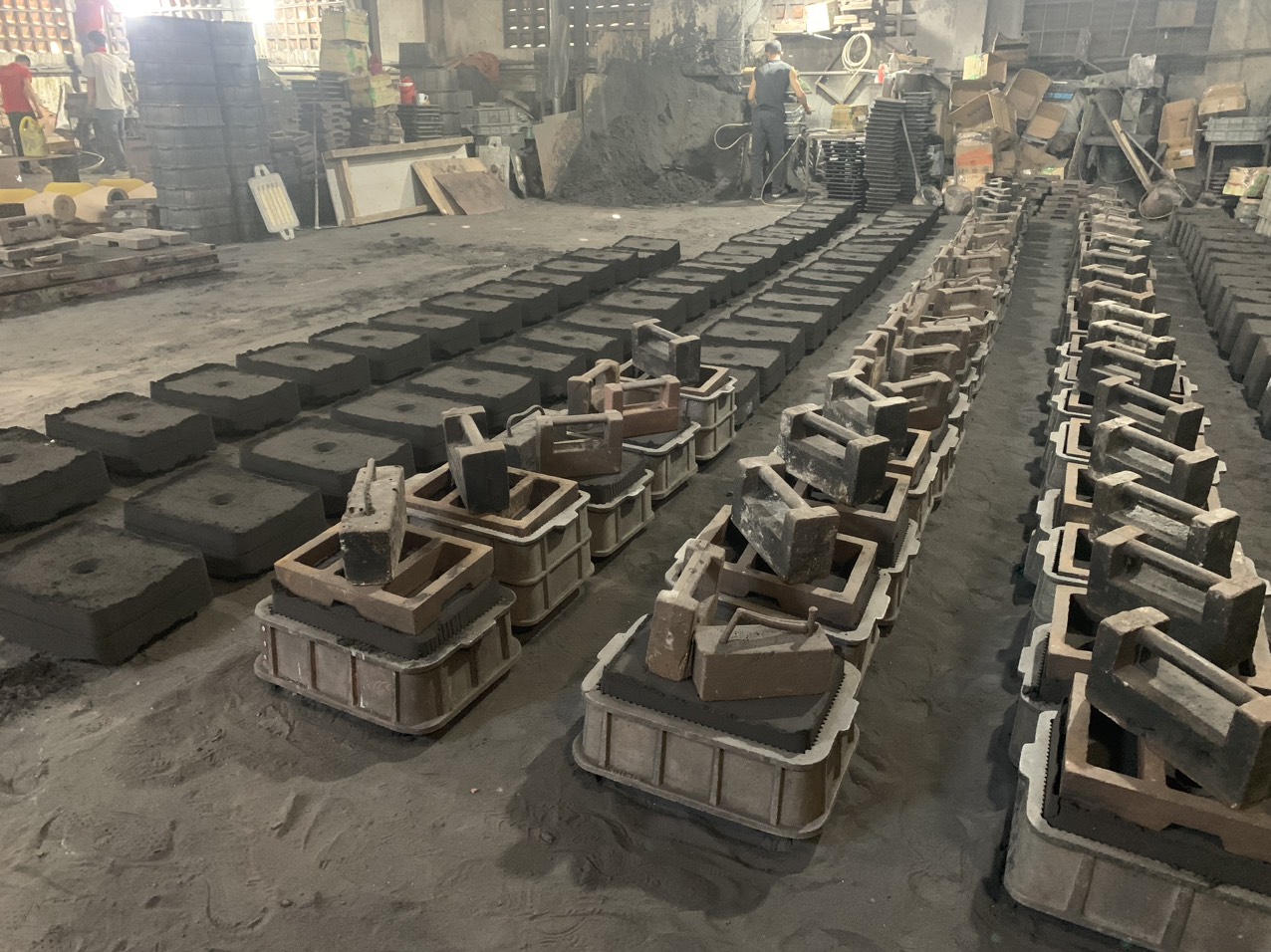
Choosing between sea and air freight 1 for welding parts from Vietnam can make or break your project timeline and budget.
When sourcing welding parts from Vietnam, choose sea freight for heavy, non-urgent shipments over 500 kg to save up to 90% on shipping costs, and choose air freight for urgent, lighter shipments under 100 kg where production downtime costs exceed the freight premium.
I have managed hundreds of welding part shipments from our Vietnam office to U.S. clients. Every order presents the same fork in the road: speed or savings LCL shipments 2. The answer depends on weight, urgency, order frequency, and how much a production delay would cost you. This guide walks through the key factors so you can make a confident decision every time.
How do I determine if the weight and volume of my welding parts make sea freight more cost-effective than air?
Last month, one of our U.S. clients needed 60 custom steel mounting brackets shipped from Ho Chi Minh City. The total shipment weighed 420 kg. We ran the numbers side by side, and the cost difference was staggering.
Sea freight becomes more cost-effective than air when your welding parts shipment exceeds roughly 100–150 kg. Below 30 kg, express courier may beat LCL sea due to minimum handling charges. Above 500 kg, sea freight almost always wins on cost per kilogram.
Understanding Volumetric Weight vs. Actual Weight
Welding parts like heavy-duty brackets, steel frames, and mounting plates are dense. This works in your favor for air freight pricing. Airlines charge based on whichever is greater: actual weight or volumetric weight 3. Volumetric weight is calculated by multiplying length × width × height (in cm) and dividing by 6,000 for air. Dense metal parts usually have actual weight that exceeds volumetric weight, so you pay on actual weight.
For sea freight 4, the calculation is different. LCL shipments are priced per cubic meter (CBM) or per ton, whichever yields the higher charge. Dense welding parts often hit the weight threshold before the volume threshold. This means you pay based on weight in both modes, but the per-kilogram rate differs dramatically.
Cost Comparison Table
| Shipment Weight | Sea Freight (LCL) Est. Cost | Air Freight Est. Cost | Better Option |
|---|---|---|---|
| Under 30 kg | $150–$250 (high min. charges) | $300–$450 | Express courier or air |
| 30–100 kg | $200–$350 | $400–$1,000 | Depends on urgency |
| 100–300 kg | $250–$500 | $1,000–$3,000 | Sea (unless urgent) |
| 300–500 kg | $400–$800 | $3,000–$5,000 | Sea freight |
| 500+ kg | $0.50–$2.00/kg all-in | $10+/kg | Sea freight (FCL if volume allows) |
When Does Air Still Make Sense for Heavy Parts?
I have seen clients ship 200 kg of welding assemblies by air when a production line was down. The air freight bill was $2,400. The cost of one day of line downtime was over $15,000. In that scenario, air freight paid for itself within hours.
Here is the rule we use internally: if the air freight premium is less than 15–20% of the goods value, it is worth considering air. If the parts are low-value, heavy commodity items, sea freight is almost always the right call.
Our team in Vietnam weighs and measures every shipment before quoting. We calculate both the actual weight and the volumetric weight, then compare LCL sea and air rates from our freight forwarder network. This step takes 24 hours and saves clients from guessing.
What are the critical lead time differences I need to account for when shipping custom components from Vietnam to the U.S.?
A client in Ohio once asked me why their welding frames took 47 days door-to-door by sea when I quoted 25 days of transit time. The gap between port-to-port transit and actual door-to-door delivery catches many buyers off guard.
Air freight from Vietnam to the U.S. takes 3–7 days port-to-port and 8–14 days door-to-door. Sea freight takes 20–25 days from Ho Chi Minh City to Los Angeles and 25–35 days to the East Coast, with total door-to-door times reaching 30–50 days after customs clearance and inland delivery.
Port-to-Port Transit Times
Vietnam has two main export ports for industrial goods: Ho Chi Minh City (Cat Lai terminal) and Haiphong in the north. Most welding parts manufacturers we work with are in southern Vietnam, so Ho Chi Minh City is the primary departure point.
| Route | Sea Transit (Port-to-Port) | Air Transit (Airport-to-Airport) |
|---|---|---|
| Ho Chi Minh City → Los Angeles/Long Beach | 20–25 days | 1–3 days (with connection) |
| Ho Chi Minh City → New York/New Jersey | 28–35 days | 2–4 days |
| Haiphong → Los Angeles/Long Beach | 22–28 days | 2–4 days |
| Haiphong → East Coast (Savannah, Norfolk) | 25–35 days | 2–5 days |
The Hidden Time Costs
Port-to-port numbers do not tell the full story. Here is what adds up on either side:
Before departure (Vietnam side):
- Factory to port/airport inland transport: 1–2 days
- Export customs clearance 5: 1–2 days
- LCL consolidation wait time: 3–7 days (this is the hidden delay that critics of LCL point to)
- FCL booking and vessel schedule alignment: 2–5 days
After arrival (U.S. side):
- Import customs clearance: 1–3 days (assuming no holds or inspections)
- LCL deconsolidation at CFS: 2–4 days
- Inland trucking to final destination: 1–5 days depending on distance from port
For air freight, customs clearance at destination is typically faster because shipments are smaller and handled through air cargo terminals with streamlined processing. But you still need to account for 3–5 days on the U.S. side for clearance and last-mile delivery.
Planning Your Production Schedule
When we run a new welding parts project through our PPAP process 6, we build the shipping lead time into the overall project plan from day one. I tell our clients to add a 7–10 day buffer on top of quoted sea transit times. For air, add a 3–5 day buffer.
If your manufacturing schedule has a fixed start date, count backward from that date. Include production time, final inspection, packing, and the full door-to-door shipping window. This backward planning is the single most effective way to avoid surprises.
Our Vietnam team coordinates closely with local logistics services providers who know the port schedules and consolidation windows. This local knowledge shaves days off the process compared to working with a distant freight forwarder who lacks on-the-ground presence. For a deeper look at Vietnam to US ocean freight transit times, we have published a detailed breakdown by route and port.
How can I balance my shipping budget against the urgency of my manufacturing schedule for high-quality welding parts?
During a recent project involving custom steel U-channel brackets for a Midwest distributor, we faced a classic dilemma. The client needed parts fast, but the order value was modest. Every dollar spent on air freight ate directly into the margin.
Balance your shipping budget against urgency by calculating the true cost of delay — including production downtime, lost sales, and penalty clauses — then comparing it to the air freight premium. If delay costs exceed the shipping difference, air freight is the rational choice. Otherwise, plan ahead and ship by sea.
The Real Cost of Delay
Most purchasing managers focus on the freight invoice. But the freight invoice is only one line item. The cost of not having parts on time can include:
- Production line downtime (often $5,000–$50,000+ per day depending on the operation)
- Missed delivery commitments to your end customer
- Contractual penalty fees
- Expediting charges for alternative sourcing
- Damaged supplier relationships
When I walk clients through this calculation, the air freight premium often looks small in comparison.
A Practical Cost-Benefit Framework
Here is the framework we use internally when advising clients on their supply chain management 7 decisions:
Step 1: Determine the air freight cost for the shipment.
Step 2: Determine the sea freight cost for the same shipment.
Step 3: Calculate the difference (the "air premium").
Step 4: Estimate the daily cost of not having the parts.
Step 5: Calculate how many days of delay sea freight adds versus air.
Step 6: Multiply daily delay cost × additional delay days.
Step 7: If the delay cost exceeds the air premium, choose air.
When to Use Each Mode: A Decision Guide
| Scenario | Recommended Mode | Reasoning |
|---|---|---|
| Line is down, parts needed ASAP | Air freight | Delay cost far exceeds air premium |
| Routine restock, 6+ weeks of inventory on hand | Sea freight (LCL or FCL) | No urgency; maximize cost savings |
| First production run, client approval pending | Air for samples, sea for bulk | Speed for validation, cost savings for volume |
| Seasonal demand spike approaching in 8 weeks | Sea freight now | Enough lead time; plan ahead |
| Small recurring orders (<50 kg monthly) | Air freight on fixed schedule | Consistent delivery; LCL minimums erode savings |
| Large quarterly order (2,000+ kg) | FCL sea freight 8 | Maximum cost efficiency at scale |
Order Frequency and Volume Strategy
I have noticed a pattern among our most cost-effective clients. They do not choose one mode and stick to it blindly. They use a blended approach:
- Quarterly bulk runs via FCL sea freight for their core, predictable demand. A Full Container Load eliminates consolidation delays and locks in the lowest per-unit shipping costs.
- Monthly or bi-weekly air shipments for smaller, urgent replenishments or custom components with shorter shelf life in the production pipeline.
- Express courier for samples, prototypes, and emergency replacement parts under 30 kg.
This blended strategy keeps inventory lean without risking stockouts. It also means the cargo insurance costs stay proportional to the shipment value, rather than over-insuring small air packages or under-protecting large sea containers.
The key is forecasting. We work with clients to build 90-day rolling forecasts. When we know what is coming, we can batch orders into Full Container Load shipments and avoid the premium of Less than Container Load or air freight. Forecasting does not need to be perfect. Even a rough plan saves thousands per quarter.
Should I utilize air freight for my initial PPAP samples before committing to sea freight for my bulk production runs?
One lesson we learned early in our Vietnam operations is that the PPAP phase is where projects succeed or fail. A client once waited 38 days for sea-shipped samples, only to find a dimensional issue that required a tooling adjustment. That single decision added almost three months to the project timeline.
Yes, you should use air freight for initial PPAP samples. The speed of air delivery — 8 to 14 days door-to-door — lets you validate dimensions, materials, and finishes weeks faster than sea freight. Once samples are approved, commit to sea freight for bulk production to reduce shipping costs by up to 90%.
Why Speed Matters During PPAP
The Production Part Approval Process is iterative. You send samples. The client measures, tests, and evaluates. They may request changes. You adjust tooling or process parameters. You send revised samples. This cycle may repeat two or three times before final approval.
Each cycle includes:
- Production of sample parts (3–7 days)
- Final inspection at the factory (1–2 days)
- Shipping to the client (variable)
- Client evaluation and feedback (5–10 days)
- Engineering changes if needed (3–10 days)
If shipping takes 35–45 days by sea each way, a three-round PPAP could take 8–10 months. With air freight, that same three-round process takes 3–4 months. The time savings are enormous.
Cost Impact of Air Freight During PPAP
PPAP samples are typically small quantities — 5 to 30 pieces. For welding parts like brackets, frames, and mounting plates, a sample shipment might weigh 10–50 kg. At this weight range, the cost difference between air and sea is modest in absolute terms.
| Sample Shipment | Sea (LCL) Cost | Air Cost | Difference | Time Saved |
|---|---|---|---|---|
| 10 kg (5 brackets) | $150–$200 | $150–$250 | $0–$100 | 20–30 days |
| 25 kg (12 brackets) | $175–$250 | $250–$400 | $75–$150 | 20–30 days |
| 50 kg (25 brackets) | $200–$350 | $500–$700 | $200–$400 | 20–30 days |
For a 25 kg sample shipment, spending an extra $75–$150 on air freight saves nearly a month. That month could mean the difference between launching production on schedule or missing a quarterly target.
The Transition to Sea Freight for Bulk
Once PPAP is approved and your client signs off on the production parts, the dynamics shift completely. Bulk production runs for welding assemblies often weigh 500–5,000 kg. At these volumes, sea freight's cost advantage is overwhelming.
We coordinate this transition carefully. While the client reviews final PPAP samples shipped by air, we begin pre-production planning at the factory. Once approval comes through, we can launch full production immediately. The bulk shipment then goes by sea — either LCL for mid-sized orders or FCL for large runs.
This sequencing also helps with customs clearance. The PPAP phase gives us time to prepare all documentation: commercial invoices, packing lists, certificates of origin, and the Importer Security Filing (ISF) 9 required for ocean shipments to the U.S. By the time the bulk order is ready to ship, every customs document is pre-validated.
Managing Import Duties and Documentation
Whether you ship by air or sea, the import duties on welding parts from Vietnam remain the same. The duty rate depends on the HTS code 10 for your specific components. However, Vietnam's participation in trade agreements can affect preferential duty rates for certain goods.
The documentation requirements differ slightly between modes. Air shipments use an airway bill instead of a bill of lading. Ocean shipments require an ISF filing at least 24 hours before the vessel departs the foreign port. Both modes need a commercial invoice, packing list, and certificate of origin.
Our team handles all of this. We prepare export documentation on the Vietnam side, coordinate with the client's customs broker in the U.S., and ensure every shipment clears without delays. This end-to-end logistics management is part of our door-to-door service, so clients do not need to chase paperwork across time zones. You can also learn more about how to choose sea vs air freight when sourcing sheet metal fabrication parts for additional guidance that applies broadly to metal component sourcing.
Conclusion
Choosing between sea and air freight for welding parts from Vietnam comes down to weight, urgency, cost tolerance, and order frequency — plan ahead, use air for samples and emergencies, and rely on sea freight for bulk production runs.
Frequently Asked Questions
Cost Comparison Table Shipment Weight Sea Freight (LCL) Est. Cost Air Freight Est. Cost Better Option Under 30 kg $150–$250 (high min. charges) $300–$450 Express courier or air 30–100 kg $200–$350 $400–$1,000 Depends on urgency 100–300 kg $250–$500 $1,000–$3,000 Sea (unless urgent) 300–500 kg $400–$800 $3,000–$5,000 Sea freight 500+ kg $0.50–$2.00/kg all-in $10+/kg Sea freight (FCL if volume allows) When Does Air Still Make Sense for Heavy Parts?
I have seen clients ship 200 kg of welding assemblies by air when a production line was down. The air freight bill was $2,400. The cost of one day of line downtime was over $15,000. In that scenario, air freight paid for itself within hours.
How do I determine if the weight and volume of my welding parts make sea freight more cost-effective than air?
Last month, one of our U.S. clients needed 60 custom steel mounting brackets shipped from Ho Chi Minh City. The total shipment weighed 420 kg. We ran the numbers side by side, and the cost difference was staggering.
What are the critical lead time differences I need to account for when shipping custom components from Vietnam to the U.S.?
A client in Ohio once asked me why their welding frames took 47 days door-to-door by sea when I quoted 25 days of transit time. The gap between port-to-port transit and actual door-to-door delivery catches many buyers off guard.
Footnotes
1. Maersk offers a comprehensive explanation of air freight, its benefits, and operational aspects. ↩︎
2. UPS provides a definition of Less-Than-Container Load (LCL) and its characteristics. ↩︎
3. ShipperHQ explains volumetric weight calculation and its importance in shipping costs. ↩︎
4. UPS provides a clear definition and overview of ocean freight services. ↩︎
5. UPS provides an overview of the customs clearance process and its importance in international shipping. ↩︎
6. Quality-One explains the Production Part Approval Process (PPAP) and its significance. ↩︎
7. ASCM offers a comprehensive definition and key components of supply chain management. ↩︎
8. Uber Freight defines Full Container Load (FCL) shipping and its operational aspects. ↩︎
9. U.S. Customs and Border Protection (CBP) details the Importer Security Filing (ISF) requirements. ↩︎
10. Replaced with a working and authoritative explanation of HTS codes, mentioning the USITC. ↩︎