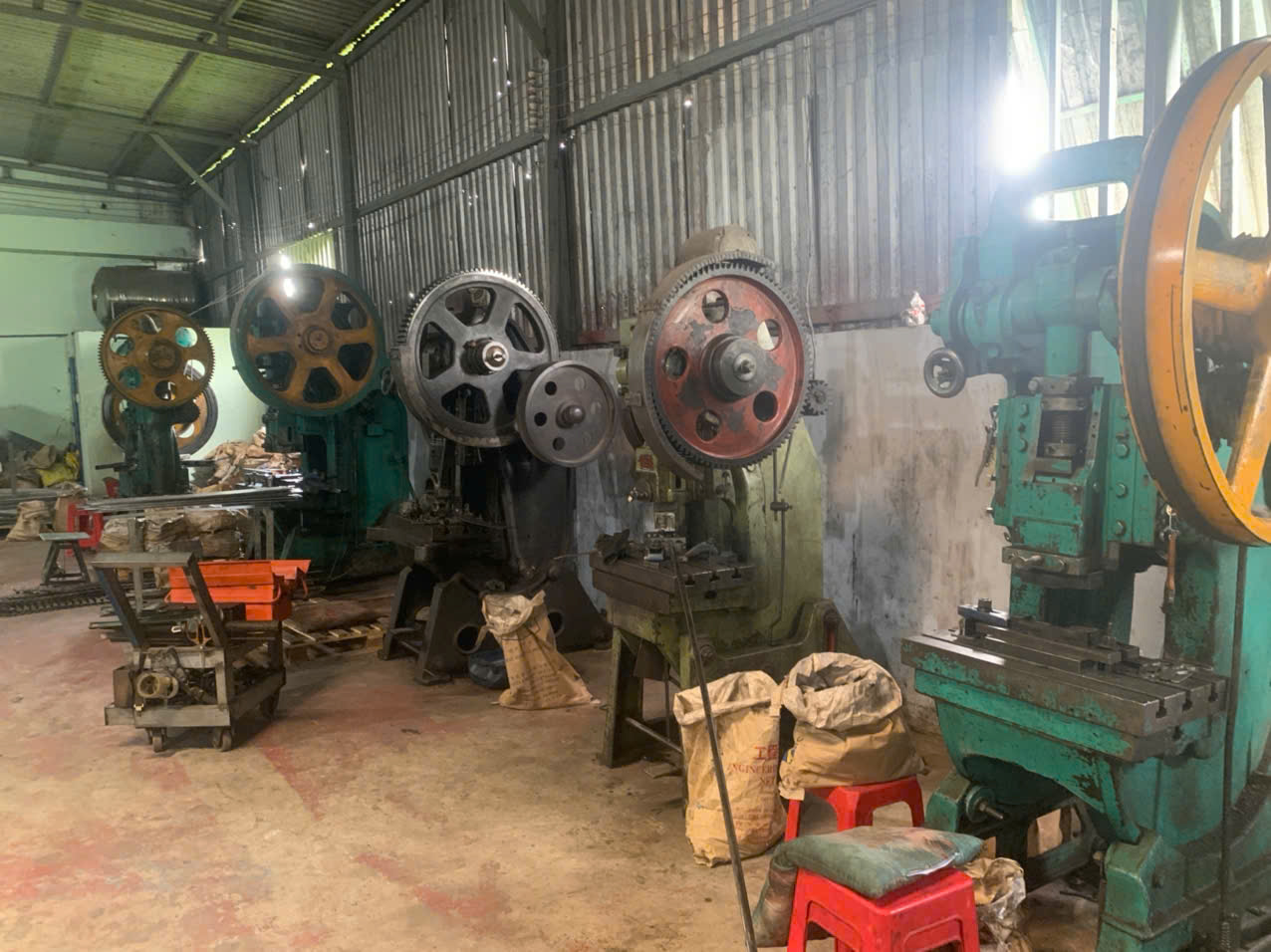

Last quarter, our Vietnam office spent three days reworking a loading plan after a US client’s trucker refused delivery — the container was overweight for California highways.
To choose the right container type and loading plan for stamping parts from Vietnam, start with cargo weight — not volume. Stamped metal parts are weight-dense, making 20ft containers the default. Then build a loading plan around US road-legal limits, proper weight distribution, VCI anti-rust packaging, and verified dunnage to prevent shifting and damage during transit.
This problem is more common than most buyers think. Stamping parts look small, but they weigh a lot. The wrong container choice or a sloppy loading plan leads to overweight fines, crushed parts, and costly delays. Below, I walk through every decision point our team uses when shipping stamped brackets, clips, and mounting hardware from our partner factories in Vietnam to the United States.
How do I determine the best container type for my stamping parts shipment from Vietnam?
A buyer in Ohio once asked us to quote a 40ft container for 22 tons of zinc-plated mounting brackets. When we ran the numbers against US highway 1 weight limits, the answer was clear: two 20ft containers would be cheaper and fully compliant.
The best container type for stamping parts is almost always the 20ft standard container. Stamped metal parts are weight-dense, not volume-dense, so they hit payload limits long before filling a 40ft. Choose based on total cargo weight, carton dimensions, and the US road-legal limit of roughly 17–19 tons per container.

The Density Paradox: Why 20ft Beats 40ft
Most people assume bigger is better. For stamped steel brackets, spring clamps, and mounting clips — the kind we help source and ship daily — that assumption costs money. Here is why.
A 20ft container has a max payload of about 21–28 tons depending on the shipping line. A 40ft container has a similar or slightly higher payload. But the real constraint is not the ocean. It is the US highway. Federal and state trucking regulations cap gross vehicle weight. For a standard chassis, this often limits your cargo to roughly 17–19 tons inside a 20ft container. In a 40ft container, the limit is similar — but you are paying for double the volume you cannot use.
Our team in Vietnam runs this calculation on every order: total gross weight of all packed cartons divided by the road-legal cargo limit. If the number exceeds one, we split into two 20ft containers.
The "Two 20s vs. One 40" Rule
When we quote ocean freight forwarding from Vietnam, we compare costs per kilogram across container types. For dense stamped parts, two 20ft containers frequently cost less in total landed cost than one 40ft, because:
- You stay road-legal without paying overweight penalties.
- Weight distribution is safer across two smaller loads.
- Unloading at the US warehouse is faster with two smaller containers.
Container Selection Decision Table
| Factor | 20ft Standard | 40ft Standard | 40ft High Cube |
|---|---|---|---|
| Best for | Heavy, dense cargo (stamping parts) | General commercial goods | Light or bulky cargo |
| Internal volume | ~33 CBM | ~67 CBM | ~76 CBM |
| Typical max payload | 21–28 tons | 26–28 tons | 26–28 tons |
| US road-legal cargo limit | ~17–19 tons | ~17–19 tons | ~17–19 tons |
| Cost efficiency for stampings | Highest | Lower | Lowest |
| Recommended use case | Brackets, clips, dies, hardware | Mixed SKU shipments | Plastic parts, foam products |
When to Consider Special Equipment
For oversized stamping dies or press tooling, a flat rack or open-top container may be necessary. But for standard stamped brackets, clips, and mounting hardware — like the precision sheet-metal brackets and Z-shaped spring clamps we regularly ship — a standard 20ft container is the right call. Special equipment is expensive. Use it only when the cargo physically cannot fit in a standard box.
FCL vs LCL: The Threshold
If your shipment is below 13–15 CBM, Less than Container Load may seem attractive. But for precision stamping parts, I strongly recommend Full Container Load 2. LCL means your parts share space with third-party cargo. Metal stampings can get contaminated by chemicals, scratched by rough handling, or damaged by shifting neighbor pallets. The small premium for FCL vs LCL shipping protects your investment.
What loading plan should I use to maximize container space and protect stamping parts during transit?
During a recent shipment of galvanized mounting clips, we learned a hard lesson: a factory loaded pallets without a plan, and six cartons collapsed in transit. The fix was simple but non-negotiable — draw the plan before you load.
A proper loading plan for stamping parts should sequence heavy pallets front-to-back, keep the center of gravity low, distribute weight evenly side-to-side, and include dunnage zones with airbags or bracing timbers. Always draw a placement diagram to scale before loading begins, and verify cargo securing at every stage.

Step 1: Collect Your Cargo Data First
Before touching a container, gather exact data for every SKU:
- Carton or crate dimensions (L × W × H)
- Gross weight per carton
- Packaging type (carton, wooden crate, pallet)
- Stacking limit (max layers)
- Fragility and orientation ("this side up" requirements)
Our Vietnam team creates a master packing list from factory data. We verify net weight, gross weight, and total container count before booking freight. This step prevents the most common loading errors.
Step 2: Calculate Theoretical Loading Quantity
Use these formulas to estimate how many cartons fit:
| Calculation | Formula |
|---|---|
| Count along length | floor(Container internal length ÷ Carton length) |
| Count along width | floor(Container internal width ÷ Carton width) |
| Layers | floor(Container internal height ÷ Carton height) |
| Total cartons (theoretical) | Length count × Width count × Layers |
| Volume check | Total carton volume ÷ Available container volume |
Remember: theoretical numbers are always higher than reality. Door height is lower than internal height. Corrugations on the container walls eat space. And you need room for dunnage and cargo securing materials.
Step 3: The Load Sequence — Physics Over Guesswork
The golden rules for loading stamped parts:
- Heavy on the bottom. Always place heavier cartons or pallets on the container floor.
- Front-to-back. Load the heaviest items first, near the bulkhead (front wall).
- Even distribution. Spread weight evenly left-to-right and front-to-back.
- Low center of gravity. Avoid tall stacks of heavy items. If a pallet is heavy, do not stack another heavy pallet on top.
- Dunnage zones. Plan void-filler locations. Use airbags, bracing timbers, or foam blocks to prevent shifting.
Step 4: The Sketch Plan
Our project managers draw a simple placement diagram — a rectangle to scale on paper or screen. They mark where each pallet goes, which SKU sits where, and where dunnage fills gaps. This sketch goes to the factory floor manager in writing, along with the customer's specific requirements (no side loading, photo documentation, etc.).
Pallet Optimization Tips
For stamping parts like precision brackets and spring clamps, pallet optimization matters. Design packaging so pallets are forklift-compatible. Use ISPM 15 3 wooden crates or certified heat-treated wood pallets to comply with international phytosanitary rules. In Vietnam, local Acacia wood pallets are an affordable, compliant option.
Collapsible steel stillages are gaining traction for high-frequency shipments. They eliminate timber costs, reduce waste, and align with ESG goals — a trend we see more US buyers requesting.
How can I avoid delays and extra costs when planning container loading from Vietnam suppliers?
One trade-off we constantly weigh is speed versus verification. Rushing a container to meet a vessel cutoff without final checks has cost clients thousands in customs hold 4s and damage claims. Every delay we have traced back to a skipped step.
To avoid delays and extra costs, verify seal numbers and packing lists before the container leaves the factory, conduct pre-loading container inspections for damage and light leaks, request photo and video evidence at every stage, and confirm Incoterms 2020 responsibilities so no party is caught off guard by unexpected charges.

Pre-Loading Container Inspection
Before loading a single carton, inspect the empty container. Check for:
- Light leaks. Close the doors, stand inside, and look for pinholes or cracks. Even small openings let salt air in during a 30-day voyage, causing corrosion 5 on bare metal stamping surfaces.
- Odor and residue. Previous cargo chemicals can contaminate metal parts.
- Floor condition. Wet or damaged wooden floorboards compromise weight-bearing capacity.
- Door seals. Damaged gaskets allow moisture intrusion.
Our team photographs every empty container before loading. These photos serve as baseline evidence for insurance claims if damage occurs.
VCI Anti-Rust Packaging: Non-Negotiable for Metal Parts
Vietnam's tropical humidity is a corrosion risk. During ocean transit, temperature swings cause "container sweat" — condensation drips onto cargo. For stamped steel or galvanized brackets, this means rust.
We require VCI anti-rust packaging on all bare metal surfaces. Volatile Corrosion Inhibitor 6 films or rust-inhibiting oils create a protective barrier. The cost is minimal compared to a rejected shipment. Some clients also deploy real-time IoT environmental sensors inside the container to monitor dew point fluctuations. This data supports insurance claims and gives procurement teams visibility into transit conditions. For a deeper dive into preventing moisture and impact damage to Vietnam stamping parts during ocean freight, we have a dedicated guide covering sensor placement, desiccant strategies, and damage claim documentation.
Documentation That Prevents Customs Delays
| Document | Purpose | Common Mistake |
|---|---|---|
| Commercial Invoice | Declares value for customs | Wrong HS code or unit price |
| Packing List | Itemizes contents by carton/pallet | Does not match actual loaded quantity |
| Bill of Lading 7 | Contract of carriage | Seal number mismatch with packing list |
| Certificate of Origin 8 | Proves Vietnam origin for tariff purposes | Missing or unsigned |
| Fumigation Certificate | ISPM 15 compliance for wooden packaging | Using non-certified wood |
The seal number on the bill of lading must match the physical seal on the container. A mismatch triggers a customs hold. We verify this at the factory gate before the truck departs.
Routing Through the Right Port
For heavy stamping parts, we often route through Hai Phong 9 in Northern Vietnam. Hai Phong's deep-water berths handle heavy cargo efficiently, and its specialized infrastructure reduces bottlenecks compared to congested southern ports. Port selection affects transit time, cost, and risk — so we discuss routing with clients early in the process.
Incoterms 2020: Know Your Responsibilities
Under FOB, the seller's responsibility ends when goods are loaded on the vessel. Under CIF or DDP, the seller carries more risk. We help clients choose the right Incoterms 2020 10 term based on their experience and risk tolerance. Misunderstanding Incoterms is one of the top causes of unexpected charges in Vietnam-to-US trade.
What factors should I consider when balancing cost, safety, and efficiency in my container loading plan?
A lesson we learned early in our Vietnam operations: the cheapest shipping option is never the cheapest if parts arrive damaged. A client once saved $400 on packaging downgrade. The return shipment and replacement cost over $12,000.
When balancing cost, safety, and efficiency, prioritize container payload capacity against US road limits, invest in proper packaging rated for stacking and transit shock, use drop-tested cartons validated with your freight forwarder, and run the "two 20s vs. one 40" cost comparison for every dense stamping shipment.

The Cost-Safety-Efficiency Triangle
Every loading decision involves trade-offs. Here is how we think about them:
Cost: Ocean freight is quoted per container or per kilogram. For weight-dense stamping parts, per-kilogram quoting across 20ft and 40ft dimensions reveals the true cost difference. Disassembling large stamped assemblies or nesting parts can reduce volume by up to 30%, fitting more into a standard container and cutting freight cost.
Safety: Heavy cartons rated for stacking are more expensive than standard cartons. But a collapsed stack means damaged parts, rejected shipments, and air freight for replacements. We specify minimum carton burst strength and conduct drop tests on packaging samples with the freight forwarder before production runs.
Efficiency: A well-planned load fills the container to its weight or volume limit — whichever comes first. Wasted space is wasted money. But over-packing causes damage. The sweet spot is a load plan that uses 85–95% of available space with proper dunnage and cargo securing in all void areas.
Packaging Specifications for Stamped Metal Parts
| Packaging Element | Requirement | Why It Matters |
|---|---|---|
| Carton material | Double-wall corrugated, heavy-duty rated | Prevents crushing under stacked weight |
| Inner protection | VCI film or rust-inhibiting oil | Stops corrosion during 30-day ocean transit |
| Pallets | ISPM 15 certified heat-treated wood or Acacia | Phytosanitary compliance; avoids port holds |
| Stacking labels | "Max stack: X layers" clearly printed | Prevents overloading during warehouse handling |
| Forklift access | 4-way entry pallets | Speeds loading/unloading; reduces handling damage |
| Void fill | Airbags, foam, or bracing timbers | Prevents lateral shifting during transit |
3D Load Planning vs. Manual Sketches
For straightforward shipments of uniform cartons, a hand-drawn sketch works fine. For mixed SKU loads or irregular stamping dies, 3D load-planning simulations calculate the precise center of gravity. This prevents "tip-over" risks during port crane operations and ensures cargo weight distribution meets vessel stowage requirements.
Our team uses both methods depending on complexity. The key is that every container has a documented, approved plan before the first pallet rolls in.
Factory Execution and Real-Time Verification
Execution at the factory floor is where plans succeed or fail. Our Vietnam office follows a strict protocol:
- Share the approved load plan with the factory manager in writing — not verbally.
- Confirm counts and SKU labels as each pallet goes in.
- Measure remaining space periodically to catch "false fit" issues early. Items that fit on paper sometimes snag on container corrugations or door frames.
- Photograph the empty container (clean, undamaged), the loading process (neat stacking, secured cargo), and the sealed container (seal number visible).
- Final check: total weight on the truck scale must match the packing list total within tolerance.
This process takes discipline, but it eliminates surprises at the US port. When we manage the loading, clients get a complete photo set and verified packing list before the vessel sails. That is what "right first time" looks like in logistics. If you are also evaluating logistics partners, our guide on choosing reliable freight forwarders for sourcing stamping parts from Vietnam covers vetting criteria and red flags specific to heavy metal cargo.
Conclusion
Choosing the right container type and loading plan for stamping parts from Vietnam comes down to weight awareness, compliance, and disciplined execution — not guesswork. Plan around US road limits, protect against corrosion, and verify everything at the factory.
Frequently Asked Questions
How do I determine the best container type for my stamping parts shipment from Vietnam?
A buyer in Ohio once asked us to quote a 40ft container for 22 tons of zinc-plated mounting brackets. When we ran the numbers against US highway 1 weight limits, the answer was clear: two 20ft containers would be cheaper and fully compliant.
What loading plan should I use to maximize container space and protect stamping parts during transit?
During a recent shipment of galvanized mounting clips, we learned a hard lesson: a factory loaded pallets without a plan, and six cartons collapsed in transit. The fix was simple but non-negotiable — draw the plan before you load.
How can I avoid delays and extra costs when planning container loading from Vietnam suppliers?
One trade-off we constantly weigh is speed versus verification. Rushing a container to meet a vessel cutoff without final checks has cost clients thousands in customs hold 4 s and damage claims. Every delay we have traced back to a skipped step.
Footnotes
1. Federal source explaining truck weight limits governing container road-legal cargo limits. ↩︎
2. Wikipedia background explaining FCL shipping concept discussed for stamping parts. ↩︎
3. Background on international phytosanitary standard for wood packaging mentioned in article. ↩︎
4. US Customs and Border Protection trade resource relevant to document mismatches causing holds. ↩︎
5. Authoritative technical source on corrosion mechanisms relevant to metal parts rusting during transit. ↩︎
6. Wikipedia background on corrosion inhibitor technology used in VCI anti-rust packaging. ↩︎
7. Official ITA guide covering common export documents including the Bill of Lading. ↩︎
8. Official US trade guidance on certificates of origin cited in documentation table. ↩︎
9. Background on the Vietnamese port city used for routing heavy stamping shipments. ↩︎
10. Official ICC source defining Incoterms 2020 trade responsibility terms referenced repeatedly. ↩︎