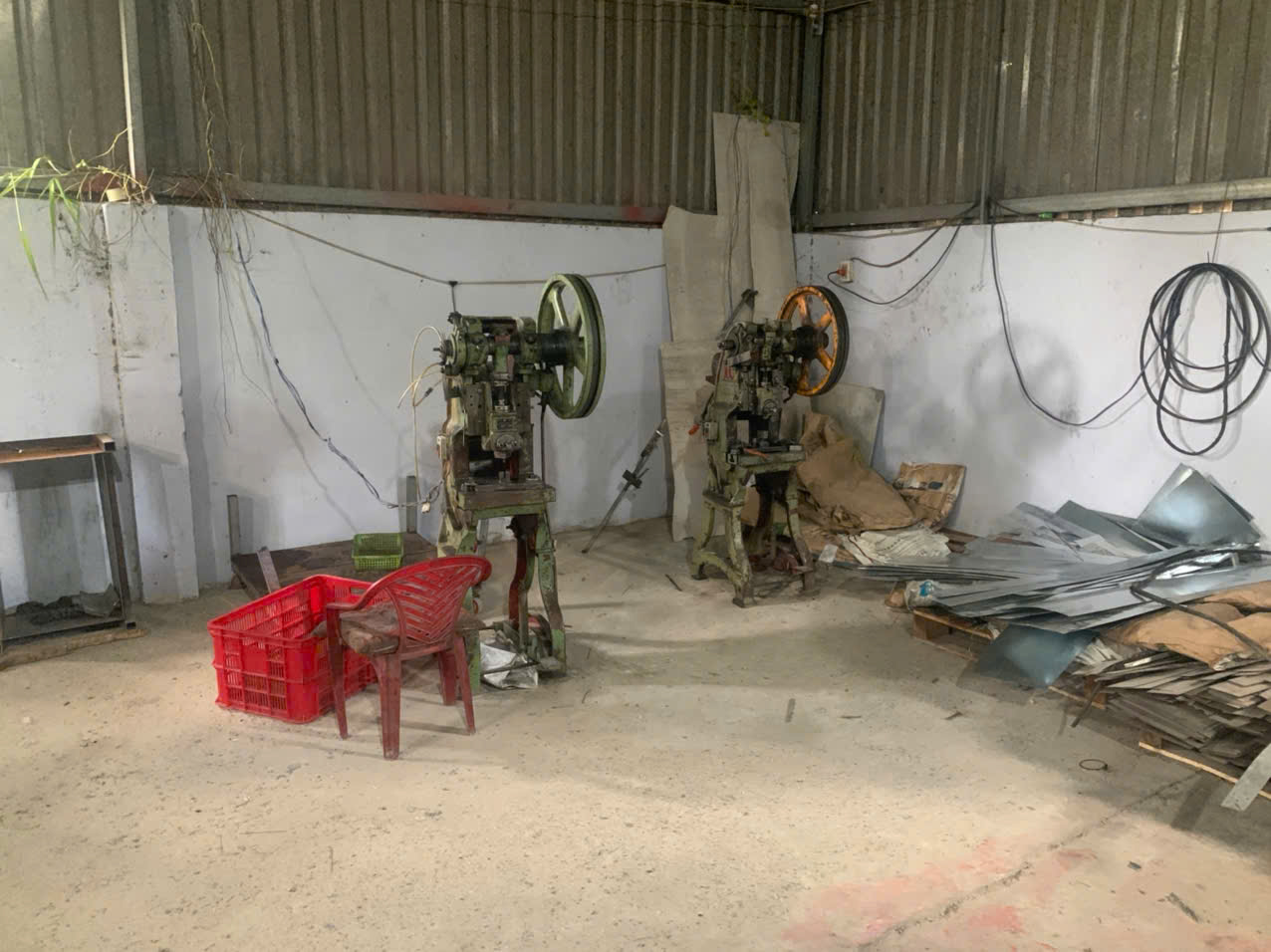

Shipping custom stamping parts from Vietnam to the US sounds simple — until a container of precision brackets arrives damaged, delayed, or stuck in customs clearance Vietnam procedures for weeks.
To choose reliable freight forwarders for sourcing stamping parts from Vietnam, verify their local expertise, assess their heavy-cargo handling capabilities, confirm proactive communication practices, and prioritize partners who integrate manufacturing oversight with door-to-door logistics solutions Vietnam buyers actually need.
Every section below breaks down one critical factor. I will share what our team in Ho Chi Minh City has learned coordinating hundreds of custom-part shipments so you can avoid the mistakes that cost time and money.
How can I verify the local expertise and reliability of a freight forwarder in Vietnam?
A few years ago, our Vietnam office lost two weeks on a shipment because the forwarder we had selected simply did not understand local port documentation — a painful lesson that reshaped how we vet logistics partners today.
Verify a freight forwarder's local expertise by checking their Vietnamese business license, requesting recent bills of lading, confirming memberships in IATA, WCA, or FIATA, evaluating responsiveness during initial consultation, and running a small test shipment before committing to large volumes.

Start With Legal and Industry Credentials
The first thing we do is ask for a copy of the forwarder's business license issued by the Vietnamese government. Vietnamese business license 1 This confirms they are legally registered and transparent. Next, look for memberships in recognized industry bodies. IATA 2 membership matters for air freight Vietnam routes. WCA 3 and FIATA memberships signal that the forwarder meets international standards and has a vetted global network.
Request Shipment Records
Ask the forwarder for recent shipment records or sample bills of lading 4. These documents reveal the types of cargo they handle, the routes they serve, and the carriers they work with. If a forwarder has moved metal stamping parts, heavy brackets, or similar industrial components before, that is a strong sign they understand your needs.
Evaluate Responsiveness Early
During our initial outreach, we pay close attention to how fast and how clearly the forwarder responds. Time-zone differences between Vietnam and the US make this critical. A forwarder who takes three days to answer a simple rate inquiry will not keep you informed when your container is sitting at Cat Lai port.
Run a Small Test Shipment
If any doubt remains, start with a small test shipment. Ship one pallet or a few cartons. Monitor the entire process: pickup from the factory, export customs clearance Vietnam procedures, transit updates, and final delivery. This low-risk trial reveals the forwarder's true capability.
| Verification Step | What to Check | Red Flag |
|---|---|---|
| Business license | Valid Vietnamese government-issued license | No license or reluctant to share |
| Industry memberships | IATA, WCA, FIATA 5, or similar bodies | No affiliations at all |
| Shipment records | Recent bills of lading for similar cargo | Cannot provide any references |
| Responsiveness | Reply within 24 hours with clear answers | Slow, vague, or generic replies |
| Test shipment | Smooth pickup, transit, and delivery | Missed pickup, no tracking updates |
Understand the Local vs. International Forwarder Debate
Some buyers wonder whether to pick a Vietnamese-based forwarder or an international logistics company with a Vietnam branch. Vietnamese forwarders often have deeper port relationships and lower local fees. International forwarders may offer broader network coverage and standardized digital platforms. In our experience, the best choice depends on your shipment complexity. For straightforward ocean freight Vietnam routes to the US West Coast, a strong local forwarder works well. For multimodal shipments that touch multiple countries, an international partner with local staff may be safer. What matters most is that whoever you choose has boots on the ground in Vietnam.
What specific logistics capabilities should I look for when shipping heavy custom stamping parts?
When our engineers finalize a set of precision sheet-metal brackets — parts with sharp edges, considerable weight, and tight tolerances — the conversation immediately turns to how those pieces will survive 25 days on the ocean without corrosion, dents, or deformation.
Look for forwarders experienced in heavy-cargo handling, sea-worthy custom packaging, Full Container Load options, proper weight distribution expertise, cargo insurance coverage, and warehousing services Vietnam facilities that can stage and inspect parts before export.
Packaging That Protects Precision Parts
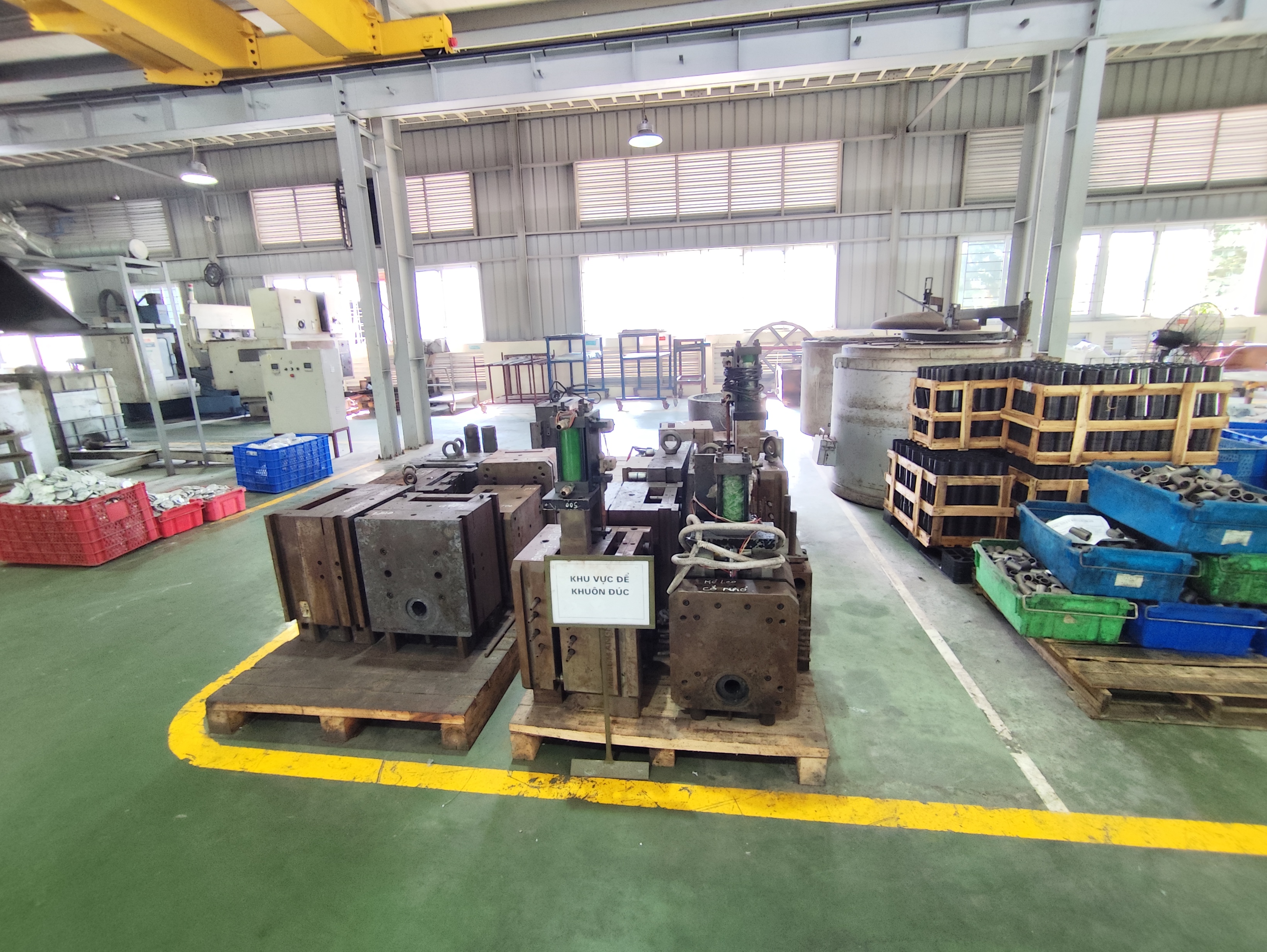
Stamping parts are not consumer electronics. They are metal components — stainless steel clips, angular brackets with multiple bends, precision-cut holes, and sharp edges. Without proper packaging, parts scratch each other, rust from moisture, or shift inside containers. We work with factories that use AQL-inspected, custom-designed protective packaging. Anti-rust VCI paper, foam separators, and reinforced cartons are standard. Sea-worthy wooden crates are used for heavier assemblies. The forwarder must understand these requirements and verify packaging before loading.
Weight Management and Container Selection
Custom stamping parts are dense. A pallet of steel brackets weighs far more than a pallet of plastic housings of the same volume. This affects container selection, load planning, and shipping costs Vietnam importers must budget for.
| Shipping Mode | Best For | Typical Transit (Vietnam → US West Coast) | Cost Level |
|---|---|---|---|
| Full Container Load 6 (FCL) | High-volume, heavy shipments | 20–25 days | Lower per unit |
| Less Than Container Load (LCL) | Smaller volumes, mixed cargo | 25–35 days | Higher per unit |
| Air freight Vietnam | Urgent or lightweight shipments | 2–6 days | Highest |
For most stamping-part orders, FCL ocean freight is the practical choice. The forwarder should calculate the gross weight per container and ensure it stays within road and port weight limits. Overweight containers get rejected at the terminal — a delay our team has seen happen to other shippers.
Cargo Insurance Is Non-Negotiable
Metal parts have real value. A single container of custom brackets can represent tens of thousands of dollars. Cargo insurance protects you against loss, damage, or theft during transit. cargo insurance coverage 7 Ask the forwarder what coverage they offer and whether it is all-risk or named-perils. We always recommend all-risk coverage for custom parts that cannot be quickly replaced.
Warehousing and Consolidation
Some forwarders offer warehousing services Vietnam locations where parts from multiple factories can be consolidated before shipping. This is useful when you source different stamping components from different metal stamping manufacturers Vietnam has to offer. The forwarder picks up from each supplier, inspects and consolidates at a central warehouse, and loads a single container. This reduces shipping costs Vietnam buyers would otherwise pay for multiple small shipments.
Understanding Incoterms 2020
The Incoterm you agree on with your supplier determines who pays for what — and where risk transfers. For US-bound shipments of stamping parts, the most common terms are FOB (Free On Board) and CIF (Cost, Insurance, and Freight). Under FOB, the buyer arranges and pays for ocean freight from the Vietnamese port. Under CIF, the seller covers freight and insurance to the destination port. Make sure your forwarder understands Incoterms 2020 8 and can advise which term aligns with your supply chain management Vietnam strategy. For a deeper dive into selecting the right trade terms, see our guide on how to choose the right Incoterms when sourcing stamping parts from Vietnam.
| Incoterm | Who Pays Freight? | Who Arranges Insurance? | Risk Transfer Point |
|---|---|---|---|
| EXW | Buyer | Buyer | At seller's premises |
| FOB | Buyer | Buyer | On board vessel at origin port |
| CIF | Seller | Seller | On board vessel at origin port |
| DDP | Seller | Seller | At buyer's door |
How do I ensure my forwarder provides the proactive communication and tracking I need for my US-bound shipments?
One of our US-based clients once told me: "I don't mind a two-day delay — what I can't stand is finding out about it after it already happened." That single comment captures why proactive communication is the number-one differentiator between a good forwarder and a great one.
Ensure proactive communication by requiring weekly status reports, real-time tracking portals, named account contacts in both Vietnam and the US, milestone-based alerts for key events like customs clearance and vessel departure, and clear escalation procedures for exceptions.

Why Communication Gaps Hurt More Than Delays
When you source custom stamping parts, your own customers are waiting. A purchasing manager at a US distribution company has committed to a delivery date. If the container misses its vessel and nobody tells the buyer for five days, the buyer cannot adjust their production schedule. The cost of silence is always higher than the cost of a delay itself.
What Good Tracking Looks Like
Modern forwarders use digital platforms that show shipment status in real time. Some use ERP systems like Odoo to track every step — from factory pickup through export customs clearance Vietnam processing, vessel loading, ocean transit, US customs, and final delivery. At minimum, you should receive automated alerts at these milestones:
- Cargo picked up from factory
- Export customs cleared
- Vessel departed origin port
- Vessel arrived at destination port
- US customs clearance initiated
- Importer Security Filing 9 (ISF) submitted
- Cargo released and out for delivery
The ISF Filing Requirement
For ocean freight to the US, the Importer Security Filing — also called "10+2" — must be filed at least 24 hours before the vessel departs the foreign port. Late or inaccurate ISF filings result in fines of $5,000 or more per violation. Your forwarder should handle this filing and confirm it proactively. We coordinate ISF details early in the shipping process to avoid last-minute scrambles.
Documentation Checklist for US-Bound Stamping Parts
Your forwarder should prepare or verify every document on this list before the shipment leaves Vietnam:
| Document | Purpose | Who Prepares It |
|---|---|---|
| Commercial Invoice | States value, terms of sale | Supplier / Exporter |
| Packing List | Details contents, weights, dimensions | Supplier / Exporter |
| Bill of Lading / Airway Bill | Contract of carriage | Freight forwarder / Carrier |
| Certificate of Origin | Qualifies for trade agreements Vietnam benefits | Supplier / Chamber of Commerce |
| Importer Security Filing (ISF) | US Customs requirement for ocean freight | Forwarder / Customs broker |
| Customs Entry (CBP Form 7501) | US import declaration | US Customs broker |
Missing a certificate of origin can mean losing preferential duty rates under trade agreements Vietnam has signed with partner countries. Missing an ISF can mean fines and cargo holds. A reliable forwarder checks every item on this list without being asked.
Time-Zone Management
Vietnam is 12 hours ahead of US Eastern Time. That means when your purchasing team arrives at the office in the morning, your Vietnamese forwarder's workday is ending. A professional forwarder assigns a contact who overlaps with US business hours or responds to emails within a guaranteed window. Our own Vietnam team staggers shifts so at least one person is available during US morning hours for urgent queries.
Can a professional supply chain partner help me manage both the manufacturing and door-to-door logistics from Vietnam?
A lesson we learned early in our Vietnam operations is that separating the sourcing function from the logistics function creates blind spots — quality issues at the factory surface only when damaged parts arrive at the US warehouse, weeks too late to fix anything.
Yes. A professional supply chain partner with both manufacturing oversight and logistics management capabilities can coordinate supplier audits, quality inspections, packaging validation, export documentation, and door-to-door delivery — reducing delays, quality failures, and communication gaps significantly.

The Case for Integration
Traditional sourcing separates three functions: finding the factory, managing quality, and shipping the goods. Each function uses a different vendor. The factory focuses on production. The QC agency inspects at the end. The forwarder picks up and ships. The problem is that nobody owns the entire process. When a packaging defect causes transit damage, the factory blames the forwarder, the forwarder blames the factory, and the buyer absorbs the cost.
An integrated supply chain partner eliminates these gaps. Our team in Vietnam, for example, works directly with metal stamping manufacturers Vietnam factories during OEM co-development. We review drawings, flag potential manufacturing issues, manage PPAP documentation, conduct in-process inspections, validate packaging for sea-worthiness, and then coordinate with vetted freight partners for door-to-door delivery. Every handoff is internal. Nothing falls between the cracks.
What Door-to-Door Really Means
"Door-to-door" is a term that gets overused. Here is what it should actually include when you ship stamping parts from Vietnam to the US:
- Factory pickup — Cargo collected from the manufacturer's loading dock.
- Pre-shipment inspection — Final AQL inspection and packaging verification.
- Inland transport — Trucking to the Vietnamese port (typically Ho Chi Minh City ports).
- Export customs clearance — Filing export declarations, obtaining the certificate of origin.
- Ocean or air freight — Booking vessel or aircraft, managing the bill of lading.
- US import customs clearance — ISF filing, customs entry, duty payment, and any regulatory clearances.
- Last-mile delivery — Trucking from the US port to your warehouse or distribution center.
When a single partner manages all seven steps, you get one point of contact, one tracking system, and one party accountable for the outcome. For more on managing sea freight and logistics when sourcing stamping parts from Vietnam, we have a dedicated guide covering these steps in detail.
How This Reduces Cost and Risk
Working with a partner who understands both the manufacturing side and the logistics side also helps with import export regulations Vietnam and US authorities enforce. For instance, knowing the exact HS code 10 for a specific stamping bracket — and confirming it during production, not at the port — avoids reclassification surprises at US Customs. Proper HS coding also ensures you benefit from any applicable trade agreements Vietnam has negotiated that lower duty rates.
Beyond tariffs, an integrated partner can optimize shipping costs Vietnam exporters and US importers both care about. By consolidating multiple part numbers into a single container, staging them at a central warehousing services Vietnam facility, and booking freight well in advance, you avoid premium last-minute rates and reduce per-unit logistics cost.
Payment Terms and Cash-Flow Support
Many US buyers need 60–90 day payment terms to manage cash flow. Most standalone freight forwarders demand payment before release. A professional supply chain partner can structure open-account terms across both the manufacturing and logistics spend, easing the financial burden on the buyer while maintaining accountability throughout the chain.
Conclusion
Choosing reliable freight forwarders for sourcing stamping parts from Vietnam requires verifying local expertise, confirming heavy-cargo capabilities, demanding proactive communication, and — ideally — partnering with a team that manages both manufacturing quality and door-to-door logistics seamlessly.
Frequently Asked Questions
How can I verify the local expertise and reliability of a freight forwarder in Vietnam?
A few years ago, our Vietnam office lost two weeks on a shipment because the forwarder we had selected simply did not understand local port documentation — a painful lesson that reshaped how we vet logistics partners today.
What specific logistics capabilities should I look for when shipping heavy custom stamping parts?
When our engineers finalize a set of precision sheet-metal brackets — parts with sharp edges, considerable weight, and tight tolerances — the conversation immediately turns to how those pieces will survive 25 days on the ocean without corrosion, dents, or deformation.
How do I ensure my forwarder provides the proactive communication and tracking I need for my US-bound shipments?
One of our US-based clients once told me: "I don't mind a two-day delay — what I can't stand is finding out about it after it already happened." That single comment captures why proactive communication is the number-one differentiator between a good forwarder and a great one.
Footnotes
1. Provides a comprehensive guide on obtaining business licenses in Vietnam, including Enterprise Registration Certificate (ERC) and Investment Registration Certificate (IRC). ↩︎
2. Official website of the International Air Transport Association. ↩︎
3. Official website of the WCA (World Cargo Alliance) network. ↩︎
4. Explains the purpose and types of bills of lading from a major shipping line. ↩︎
5. Official website of the International Federation of Freight Forwarders Associations. ↩︎
6. Definition and benefits of Full Container Load shipping from a global carrier. ↩︎
7. Information on the importance and types of cargo insurance from a global logistics provider. ↩︎
8. Official rules for the use of domestic and international trade terms. ↩︎
9. Official US Customs and Border Protection information on ISF requirements. ↩︎
10. Official explanation of the Harmonized System code for international trade from the WCO. ↩︎