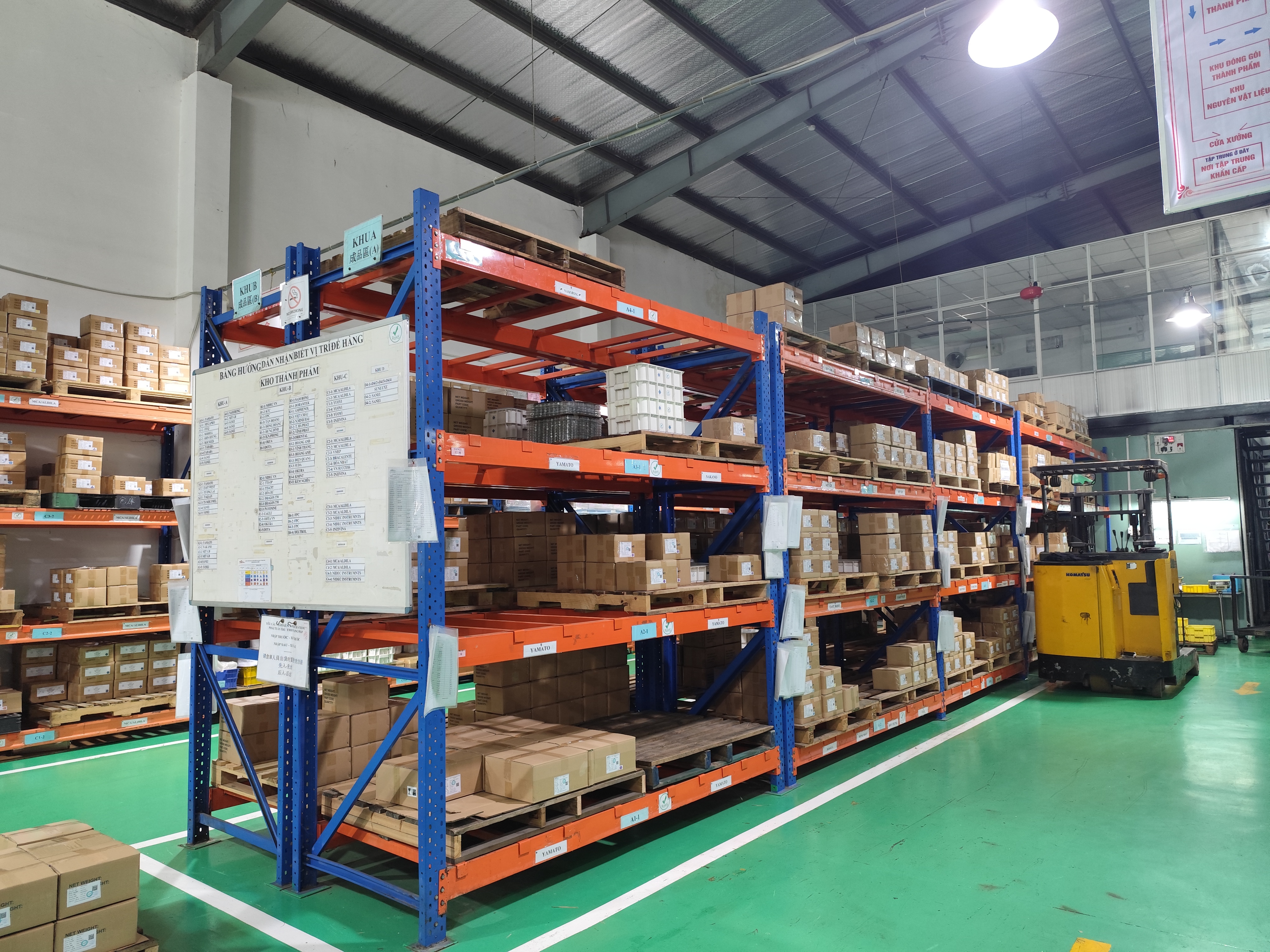

Last quarter, one of our U.S. clients received a 40ft container of stamping brackets from Vietnam — half-empty yet overweight for inland trucking IATF 16949 1. That single mistake cost them thousands in fines and re-routing fees.
To choose the right container type and loading plan for stamping parts from Vietnam, calculate freight cost per kilogram rather than per container. Dense stampings typically max out a 20ft container’s weight limit at one-third its volume, making two 20ft units more cost-effective than one 40ft. Always verify U.S. road-weight limits before booking.
The rest of this article breaks down exactly how to make these decisions. I will walk through container selection, loading plan design, cost and delay avoidance, and what to confirm with your Vietnam supplier before the first box leaves the factory floor.
How Do I Determine Which Container Type Fits My Stamping Parts Order?
A buyer we work with in the Midwest once assumed a 40ft High Cube would be the most economical option for a large order of powder-coated steel brackets. Our logistics team in Vietnam ran the numbers and showed him he was about to pay for 40 cubic meters of air.
The right container type for stamping parts depends on part density. For heavy, dense stampings like blanks and brackets, a 20ft standard container is the default because it hits the practical U.S. road-weight limit of 17–19 tonnes long before it runs out of space. Use a 40ft High Cube only for light, bulky formed parts.

Why Stamping Parts Are Weight-Limited Cargo
Stamped steel and aluminum parts are dense. A single pallet of steel brackets can weigh 800 kg or more. When you start stacking pallets inside a container, the weight adds up fast. A 20ft container has a rated maximum payload of roughly 21–28 tonnes, depending on the shipping line. But that number is misleading.
The real constraint is the U.S. road-weight limit. Most inland trucking lanes in the United States cap gross vehicle weight at around 80,000 lbs. After you subtract the weight of the chassis, tractor, and the container itself, the practical payload you can legally haul on a U.S. highway drops to approximately 17–19 tonnes. A 20ft container reaches that ceiling at about one-third of its internal volume. A 40ft container has nearly the same road-weight ceiling but double the volume — and double the ocean freight cost.
The Container Selection Matrix
| Container Type | Rated Max Payload | Practical U.S. Road Limit | Best Use for Stampings |
|---|---|---|---|
| 20 ft Standard | ~21–28 t | ~17–19 t | Default for dense, heavy parts (blanks, brackets, flat stampings) |
| 40 ft Standard | ~26–28 t | ~17–19 t | Rarely worth it — you pay for unused volume |
| 40 ft High Cube | ~28 t | ~17–19 t | Only for light, bulky formed parts (deep-drawn housings, large enclosures) |
| Flat Rack / Open Top | Varies | Varies | Oversized tooling, long steel pieces, or stamping dies requiring crane loading |
The Per-Kilogram Rule
Our team always quotes sea freight per kilogram for precision metal components, not per container. This is the single most important shift a buyer can make. When you compare the cost per kilogram between one 40ft container and two 20ft containers, the two 20ft units frequently win for dense stamping parts. The reason is simple: you are paying for cargo capacity you can actually use, not empty air.
Here is a simplified comparison:
| Scenario | Container Cost (Approx.) | Usable Payload | Effective Cost per Tonne |
|---|---|---|---|
| 1 × 40ft Standard | $4,500 | ~17 t (road-limited) | ~$265/t |
| 2 × 20ft Standard | $2,800 × 2 = $5,600 | ~34 t (17 t each) | ~$165/t |
The two 20ft containers cost more in total freight, but they carry double the payload. The per-tonne cost drops significantly. For a buyer importing 30 tonnes of stamping brackets, that difference adds up over a year of shipments.
When a 40ft High Cube Makes Sense
Not all stamping parts are flat and dense. If your order includes deep-drawn housings, large formed panels, or parts with complex geometry that consume volume faster than weight, then a 40ft High Cube may be the right call. The key question is: will you hit the weight limit or the volume limit first? If volume is your constraint, the extra cubic meters of a High Cube container justify the cost.
What Loading Plan Reduces Damage and Wasted Space for My Vietnam Shipments?
During a recent shipment of galvanized post-base mounts — similar to the raw steel bracket assemblies we regularly produce — our quality team in Vietnam discovered that the factory had stacked heavy cartons six layers high on standard cardboard. Two bottom layers collapsed before the container even reached Hai Phong port.
A damage-reducing loading plan starts with heavy-duty cartons rated for the actual stacking weight of dense metal parts, even cargo weight distribution across the container floor, and geometry-specific packaging with VCI film and desiccants. The buyer must review and approve the load plan before factory dispatch.

Packaging Must Match Part Geometry
Stamping parts come in many shapes. A flat bracket with mounting holes requires different packaging than a deep-drawn housing with a plated finish. Our approach is to treat packaging design as an extension of the engineering process.
Parts with tabs, springs, plating, or visible cosmetic faces must be separated. We use trays, foam dividers, or paper interleaving to prevent rubbing and surface damage. Bulk cartons are only acceptable for robust, non-cosmetic parts with no protruding features. For new projects, we always request a sample carton approval — the buyer inspects the actual packaging with first article samples inside before we approve mass production packing.
Palletization and Dunnage Requirements
Every pallet must comply with ISPM-15 2 (International Standards for Phytosanitary Measures) regulations. This means heat-treated or fumigated wood with the proper stamp. Non-compliant pallets can be rejected at the U.S. port, causing costly delays.
Dunnage — the bracing material inside the container — must be industrial-grade timber or steel. We position heavy pallets on the container floor first, centered along the container's length. Lighter, bulkier items go on top. The goal is to keep the center of gravity low and centered.
Cargo Weight Distribution Rules
| Loading Principle | What It Means | Why It Matters |
|---|---|---|
| Even floor loading | Spread weight across the full container floor | Prevents container tilt and chassis stress during trucking |
| Heavy items low | Place densest pallets on the bottom layer | Reduces top-heavy instability during ocean transit |
| No single-side loading | Distribute weight left-to-right evenly | Avoids lopsided loads that fail roadside inspections |
| Bracing at doors | Secure cargo near container doors with timber or straps | Prevents cargo from falling out when doors open |
| Stacking limits | Respect carton crush-test ratings | Prevents collapsed cartons and damaged parts |
Corrosion Protection for Vietnam-to-U.S. Transit
Vietnam's tropical humidity is a real threat to bare metal parts. Ocean transit from Vietnam to the U.S. West Coast takes roughly 14–18 days; to the East Coast, 28–35 days via the Panama Canal 3. That is a long time for steel parts to sit in a humid, sealed metal box.
We specify VCI (Vapor Corrosion Inhibitor) bags or film for all uncoated metal surfaces. VCI molecules create an invisible protective layer on the metal that prevents oxidation. We also place industrial-grade desiccant packs inside each sealed bag and inside the container itself. For precision metal components with tight tolerances, we sometimes add IoT impact sensors to monitor G-force exposure and humidity levels throughout transit. This data gives us — and the buyer — proof of transit conditions if a damage claim arises.
3D Load Optimization
For orders with mixed part geometries, we use container load optimization software to simulate the arrangement before physical loading begins. This digital approach to palletization and dunnage planning can reduce the required container count by 10–15 percent by minimizing wasted air space. The simulation also helps us identify potential stacking conflicts before they happen on the factory floor.
How Can I Avoid Delays and Extra Costs When Choosing a Container for Stamping Parts?
One lesson we learned early in our Vietnam operations was that a container perfectly legal on the ocean can be completely illegal on a U.S. highway. A client shipping to a facility in Ohio had their container detained at the port of Long Beach because the gross weight exceeded the state's bridge formula 4 limits for the specific inland route. The re-routing and storage fees wiped out their freight savings.
To avoid delays and extra costs, verify the U.S. road-weight limit for your specific delivery lane before booking, ensure all documents — commercial invoice, packing list, and Bill of Lading — match line by line, and classify parts at 8-digit HTS codes to budget accurately for duties. Request a Certificate of Origin Form B for every shipment.

The Road-Legal Trap
This is the most common and costly mistake buyers make. A 20ft container with a rated payload of 28 tonnes is legal to load at the port in Hai Phong. It is legal on the vessel. But the moment it lands in the U.S. and gets placed on a truck chassis, it must comply with state and federal highway weight limits. These limits vary by state and even by route. The practical safe zone for most U.S. lanes is 17–19 tonnes of cargo.
Before booking, we always confirm the destination address and check the road-weight limit for that specific lane. If the delivery is in a state with lower bridge formula allowances, we reduce the container payload accordingly. This adds one more container to the shipment, but it eliminates the risk of fines, detention, and forced transloading.
Document Consistency Prevents Customs Holds
U.S. Customs and Border Protection 5 cross-checks three key documents: the commercial invoice, the packing list, and the Bill of Lading 6. If the part descriptions, quantities, weights, or values do not match across all three, the shipment can be flagged for inspection. That inspection can take days or weeks.
Our operations team in Vietnam cross-checks every document set before the container leaves the factory. We verify part numbers, revision levels, lot numbers, quantities, net and gross weights, and declared values line by line. This is tedious work, but it prevents the kind of customs hold that can shut down a buyer's production line.
Duty Classification and Cost Budgeting
Stamping parts must be classified at 8-digit HTS (Harmonized Tariff Schedule 7) codes. The duty rate depends on the specific code. A stamped steel bracket may fall under a different HTS code than a deep-drawn aluminum housing, even if they ship in the same container.
We recommend buyers work with a licensed customs broker to confirm the correct HTS classification before the first shipment. Budget for the duty rate based on that classification. And always request a Certificate of Origin (CO) Form B from the Vietnam supplier. This document is required to claim any available duty preferences under the U.S.-Vietnam trade framework. Without it, you may pay a higher duty rate than necessary.
FCL vs. LCL: When Each Makes Sense
For most stamping part orders, FCL (Full Container Load) is the standard. You control the container, the loading plan, and the transit conditions. LCL (Less than Container Load) shipping is cheaper for small orders, but you share the container with other shippers' cargo. This means you lose control over cargo weight distribution, stacking, and humidity protection. For metal fabrication sourcing, we almost always recommend FCL unless the order is a small initial sample run.
Incoterms 2020 and Risk Transfer
The Incoterm you choose determines who bears the risk Incoterms 2020 8 — and cost — of each leg of the journey. For stamping parts from Vietnam, we commonly work under FOB (Free On Board) Hai Phong or CIF (Cost, Insurance, and Freight) to the U.S. port. Under FOB, the buyer assumes risk once the container is loaded onto the vessel. Under CIF, the supplier covers freight and insurance to the destination port.
We advise buyers to understand exactly where risk transfers under their chosen Incoterm. Misunderstanding this point is a common source of disputes when cargo arrives damaged.
What Should I Confirm With My Vietnam Supplier Before Finalizing the Loading Plan?
Before our team finalizes any loading plan, we hold a pre-shipment review meeting — sometimes in person at the factory, sometimes via video call with screen-shared load diagrams. The purpose is to align on every detail before a single box is sealed.
Before finalizing the loading plan, confirm with your Vietnam supplier: die ownership in writing, carton crush-test ratings, VCI and desiccant specifications, ISPM-15 pallet compliance, labeling format (part number, lot, quantity, PO), weight per pallet, total container weight, and pre-dispatch load plan approval. Also verify the supplier's ISO 9001 or IATF 16949 certification.

The Pre-Shipment Checklist
Here is the checklist we use internally at DEWIN. I share it because every buyer should have something similar before their first container ships.
| Item to Confirm | Why It Matters | Who Confirms |
|---|---|---|
| Die ownership clause in contract | Ensures you own the tooling and can move it to another supplier if needed | Buyer's legal / procurement |
| Carton crush-test rating | Must exceed actual stacking weight of dense metal parts | Supplier's packaging engineer |
| VCI film / bag specification | Prevents rust during 14–35 day ocean transit | Buyer's QC team + supplier |
| Desiccant quantity per carton and per container | Controls humidity inside sealed packaging | Supplier's logistics team |
| ISPM-15 pallet stamp verification | Required for phytosanitary compliance at U.S. ports | Supplier's logistics team |
| Label format and content | Must include part number, revision, lot, quantity, material, finish, inspection status, PO number | Buyer's QC team |
| Weight per pallet (net and gross) | Ensures total container weight stays within road-legal limits | Supplier's shipping department |
| Total container gross weight | Must be verified against the specific U.S. delivery lane limit | Buyer's freight forwarder |
| Load plan diagram | Must be reviewed and approved by buyer before dispatch | Joint — supplier prepares, buyer approves |
| CO Form B preparation | Required for every shipment to claim duty preferences | Supplier's export documentation team |
Die Ownership: A Non-Negotiable
This point deserves special emphasis. Stamping dies are expensive, custom-built tools with a lifespan measured in years. If your contract does not explicitly state that you own the die and can retrieve it at any time, you may find yourself locked into a supplier relationship you cannot exit. Our contracts always include a die ownership clause. We specify that the die is the buyer's property, stored at the factory for convenience, and available for transfer upon written request.
Supplier Verification Before the First Order
Supply chain risk management begins before you place the first purchase order. We recommend verifying the following before committing to a Vietnam stamping supplier:
- Certifications: ISO 9001 9 at minimum. For automotive stampings, IATF 16949 is expected. For aerospace, AS9100 10.
- Press list and capacity: Confirm the tonnage range, number of presses, and whether coil-feeding is automated.
- In-house toolroom: A supplier with an in-house toolroom can maintain and repair dies without outsourcing, which reduces lead time.
- Tooling lead time: Factor in 4–8 weeks for die build. This is separate from production lead time.
- Port proximity: Suppliers near Hai Phong serve northern Vietnam's industrial clusters (Bac Ninh, Vinh Phuc). Suppliers near Ho Chi Minh City use Cai Mep port. Choosing the right port of departure minimizes inland drayage costs.
- Vietnam export regulations compliance: Ensure the supplier understands CO Form B requirements and can prepare origin evidence files for every shipment.
Peak Season Planning
Vietnam's export peak season typically runs from August through October as global buyers rush to receive goods before the end-of-year holiday period. During this window, container availability tightens and freight rates spike. We advise booking containers 4–6 weeks earlier than usual during peak season. Failure to plan for this can result in shipment delays that cascade through your entire supply chain.
Payment Terms and Cash Flow
Our business model includes open account payment terms — typically 60–90 days — to alleviate cash flow pressure for U.S. buyers. This is relevant to the loading plan discussion because payment terms affect order timing. A buyer who can defer payment is more likely to order in optimal container-load quantities rather than rushing smaller, less efficient shipments to manage cash flow.
Conclusion
Choosing the right container type and loading plan for stamping parts from Vietnam comes down to understanding weight limits, protecting parts from damage, ensuring document consistency, and confirming every detail with your supplier before dispatch. Get these fundamentals right, and your supply chain runs smoothly. For a deeper dive into managing sea freight and logistics when sourcing stamping parts from Vietnam, or guidance on how to choose reliable freight forwarders for sourcing stamping parts from Vietnam, explore our related guides.
Frequently Asked Questions
How Do I Determine Which Container Type Fits My Stamping Parts Order?
A buyer we work with in the Midwest once assumed a 40ft High Cube would be the most economical option for a large order of powder-coated steel brackets. Our logistics team in Vietnam ran the numbers and showed him he was about to pay for 40 cubic meters of air.
What Loading Plan Reduces Damage and Wasted Space for My Vietnam Shipments?
During a recent shipment of galvanized post-base mounts — similar to the raw steel bracket assemblies we regularly produce — our quality team in Vietnam discovered that the factory had stacked heavy cartons six layers high on standard cardboard. Two bottom layers collapsed before the container even reached Hai Phong port.
How Can I Avoid Delays and Extra Costs When Choosing a Container for Stamping Parts?
One lesson we learned early in our Vietnam operations was that a container perfectly legal on the ocean can be completely illegal on a U.S. highway. A client shipping to a facility in Ohio had their container detained at the port of Long Beach because the gross weight exceeded the state's bridge formula 4 limits for the specific inland route. The re-routing and storage fees wiped out their freight savings.
Footnotes
1. Authoritative Wikipedia entry for the international automotive quality management standard. ↩︎
2. Official reference for international wood packaging phytosanitary standards mentioned in article. ↩︎
3. Background reference for the shipping route mentioned in East Coast transit times. ↩︎
4. Official Federal Highway Administration guide for the Federal Bridge Gross Weight Formula. ↩︎
5. Official government agency responsible for document verification and customs holds described. ↩︎
6. Background concept explaining this key shipping document mentioned for consistency checks. ↩︎
7. Official U.S. government source for HTS code classification discussed in duty section. ↩︎
8. Official ICC source defining Incoterms rules referenced for risk transfer explanation. ↩︎
9. Official ISO standard page for quality management certification mentioned for supplier verification. ↩︎
10. Official standards body page for aerospace quality certification mentioned alongside ISO 9001. ↩︎