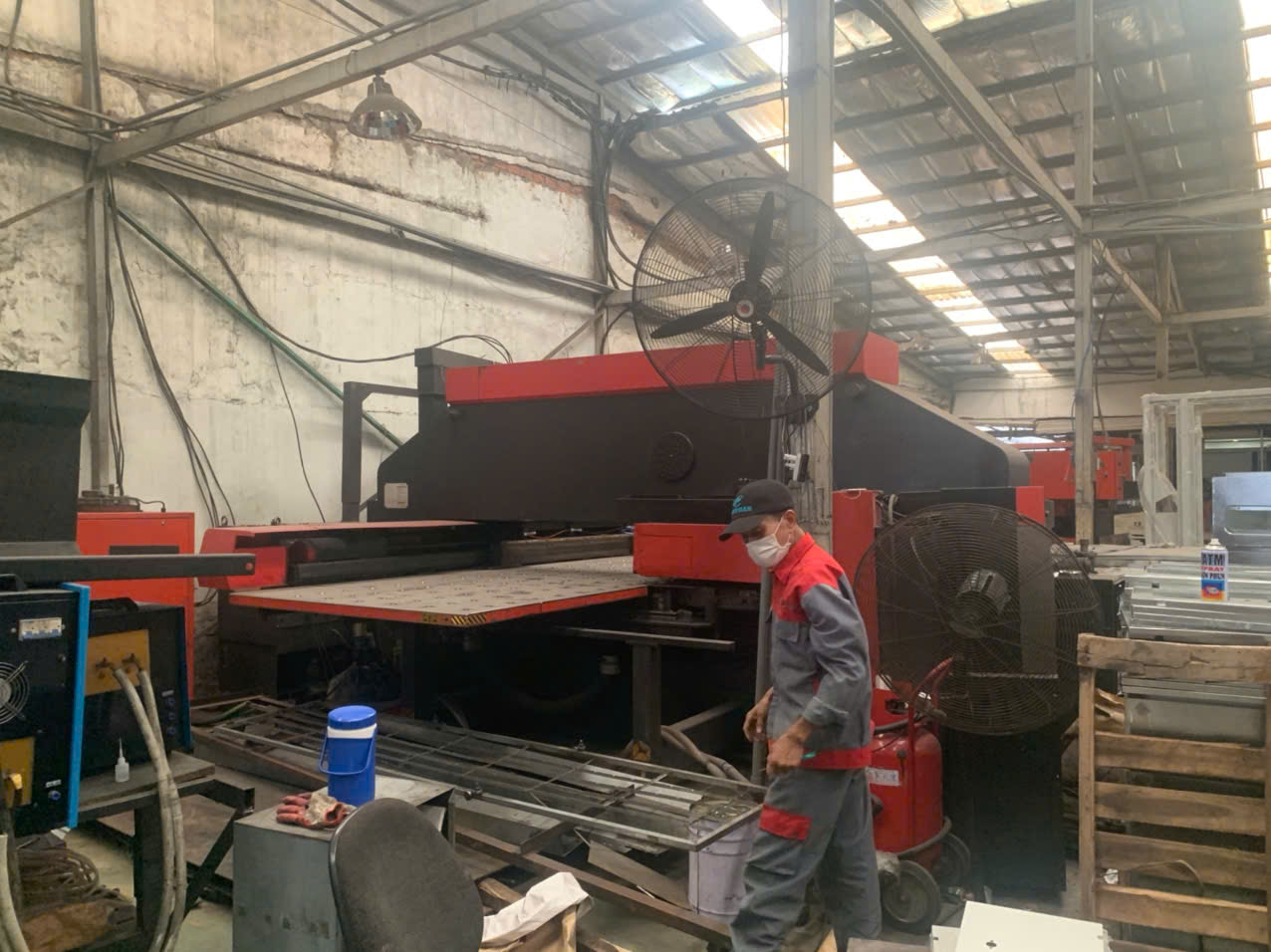

Choosing the right Incoterms when sourcing stamping parts from Vietnam is a decision our team in Ho Chi Minh City helps buyers navigate every week — and getting it wrong costs real money.
When sourcing stamping parts from Vietnam, FOB (Free On Board) is the most balanced Incoterm for sea freight, giving buyers control over international logistics and insurance. For multimodal shipments, FCA (Free Carrier) is often superior. Always specify Incoterms 2020 in your contract to prevent disputes.
The sections below break down each critical factor — from protecting your interests and controlling landed cost, to managing logistics and avoiding delivery delays. Let’s walk through every angle so you can make a confident, informed choice.
Which Incoterms will best protect my interests when sourcing custom stamping parts from Vietnam?
A lesson we learned early on: one of our U.S. clients lost $14,000 in damaged brackets because the contract said "FOB" but the parts traveled by truck to Hai Phong Port before loading onto a vessel — and nobody was clear on who owned the risk during that inland leg.
FOB Incoterms best protect buyers who ship via sea from Vietnamese ports, while FCA is superior for multimodal routes. Both terms let buyers arrange their own freight forwarding and insurance, ensuring full control over risk transfer from a clearly defined handover point under Incoterms 2020 rules.

Why Stamping Parts Demand Extra Attention
Metal stamping parts 1 — mounting clips, angular brackets, precision sheet metal components — are not bulk commodities. They are engineered to tight tolerances. A dented flange or a bent mounting tab can render an entire batch unusable. This means the Incoterm you select directly affects who carries the financial risk if parts arrive damaged.
Our Vietnam office coordinates shipments of custom brackets and clips weekly. We see firsthand how the wrong Incoterm creates gray zones. For example, under EXW (Ex Works) 2, the buyer assumes all risk the moment parts leave the supplier's factory floor. That includes export customs clearance 3 in Vietnam — a process that requires local expertise and proper export import regulations compliance. Most overseas buyers lack this capability.
Matching the Incoterm to Your Transport Mode
This is the single most important rule. FOB and CIF Incoterms are designed exclusively for sea and inland waterway transport 4. If your stamping parts travel by truck from a factory in Binh Duong province to Cat Lai port, and then by vessel to Long Beach, the inland trucking leg is not covered by FOB's risk transfer mechanism. The risk only passes when goods cross the ship's rail.
FCA solves this. Under FCA, risk transfers when the seller delivers goods to the first carrier — which could be the trucking company at the factory gate. This is cleaner and protects buyers from disputes about damage that occurs during the domestic trucking leg.
| Factor | FOB | FCA | EXW |
|---|---|---|---|
| Risk transfer point | Ship's rail at port | First carrier (e.g., truck at factory) | Seller's premises |
| Export customs clearance | Seller handles | Seller handles | Buyer handles |
| Best transport mode | Sea only | Any mode (multimodal, truck, rail) | Any mode |
| Buyer control over freight | High | High | Very high |
| Recommended for stamping parts? | Yes (sea freight) | Yes (multimodal) | Generally no |
Buyer Seller Responsibilities Under FOB vs. FCA
Under FOB, the Vietnamese supplier is responsible for loading the goods onto the vessel and clearing export customs. The buyer arranges and pays for ocean freight, marine insurance, and destination customs clearance.
Under FCA, the supplier delivers goods to the carrier nominated by the buyer at a named place. If that named place is the supplier's factory, the supplier loads the goods onto the buyer's truck. If it is a freight terminal, the supplier delivers unloaded. The buyer then handles everything from that point forward.
For our clients, we typically recommend FCA when we consolidate multiple suppliers' shipments into one container. We pick up parts from different factories across southern Vietnam, consolidate at our warehouse, and then ship. FCA gives us — and the buyer — a clean risk transfer at each pickup point.
How do different Incoterms affect the total landed cost of my metal stamping imports?
When we quote stamping parts to a purchasing manager in the Midwest, the unit price is never the full story. I have seen buyers choose a "cheaper" CIF quote over an FOB quote, only to discover their total landed cost was actually higher because the supplier padded the freight and insurance into the price.
Different Incoterms shift freight, insurance, duties, and handling costs between buyer and seller, directly changing the total landed cost. An FOB quote appears lower but excludes ocean freight; a CIF quote includes freight and insurance but often at marked-up rates. Buyers must calculate all costs door-to-door to compare accurately.

Breaking Down Landed Cost by Incoterm
Landed cost is the true total cost of getting your stamping parts from the Vietnamese factory to your warehouse door. It includes the product price, inland freight in Vietnam, export customs clearance, ocean freight, marine insurance, destination port charges, import duties 6, customs brokerage fees, and last-mile trucking.
Each Incoterm draws the line at a different point along this chain. Here is how the cost allocation works:
| Cost Element | EXW | FOB | CIF | DAP | DDP |
|---|---|---|---|---|---|
| Product price | Buyer pays | Buyer pays | Buyer pays | Buyer pays | Buyer pays |
| Vietnam inland freight | Buyer | Seller | Seller | Seller | Seller |
| Vietnam export customs | Buyer | Seller | Seller | Seller | Seller |
| Ocean freight | Buyer | Buyer | Seller | Seller | Seller |
| Marine insurance | Buyer | Buyer | Seller | Seller | Seller |
| Destination port charges | Buyer | Buyer | Buyer | Seller | Seller |
| Import duties & taxes | Buyer | Buyer | Buyer | Buyer | Seller |
| Last-mile delivery | Buyer | Buyer | Buyer | Seller (to named place) | Seller |
The Hidden Cost Trap in CIF Quotes
CIF Incoterms look convenient. The seller arranges freight and insurance. But here is the catch: the seller profits from those services. Vietnamese suppliers often mark up ocean freight by 15–30% compared to what a buyer's own freight forwarder would charge. They also buy the minimum insurance required under CIF — Institute Cargo Clause C — which covers only major casualties like sinking or fire. It does not cover theft, pilferage, or rough handling damage, which are the real risks for precision stamping parts.
Under CIP (Carriage and Insurance Paid To), the seller must provide "all-risk" insurance (Institute Cargo Clause A). This is a significant upgrade. But again, you are paying the seller's rate, not your own.
How We Help Buyers Calculate True Landed Cost
In our supply chain management process 7, we build a full cost model for every project. We take the supplier's unit price, add each logistics cost element, and present one transparent number. This lets buyers compare FOB quotes from Supplier A against CIF quotes from Supplier B on a level playing field.
Here is a simplified example for a shipment of 50,000 stainless steel mounting clips:
| Cost Element | FOB Scenario | CIF Scenario |
|---|---|---|
| Unit price (per piece) | $0.42 | $0.48 |
| Ocean freight (buyer-arranged vs. seller-included) | $1,200 | Included in unit price |
| Marine insurance | $180 | Included in unit price |
| Estimated seller markup on freight/insurance | $0 | ~$400 |
| Import duty (same either way) | $1,050 | $1,050 |
| Customs brokerage | $150 | $150 |
| Last-mile trucking | $300 | $300 |
| Total landed cost | $23,880 | $25,500 |
In this example, FOB saves the buyer over $1,600 on a single shipment. Over a year of monthly orders, that adds up to nearly $20,000. International trade law 8 does not dictate which Incoterm you must use — it is a commercial decision. Choose the one that gives you the best total cost.
Should I use FOB or DDP to maintain better control over my Vietnam supply chain logistics?
A client once told me, "I just want the parts on my dock. I don't want to think about shipping." So he asked his Vietnamese supplier for DDP Incoterms. Three months later, he called us. The supplier had no U.S. import broker license, used the cheapest carrier, and the shipment sat in customs for two weeks with incorrect HS code 9s.
FOB gives buyers superior control over supply chain logistics because they select their own carriers, insurance, and customs brokers. DDP shifts all logistics to the seller, which sounds convenient but often leads to slower transit times, poor carrier choices, and customs complications — especially when the Vietnamese seller lacks import expertise in the destination country.

The Control-Convenience Spectrum
Incoterms sit on a spectrum. On one end, EXW gives the buyer maximum control and maximum responsibility. On the other end, DDP gives the seller maximum responsibility — and the buyer has almost no visibility or control.
For precision stamping parts, control matters. Here is why:
- Carrier selection: Buyers who choose their own carriers can ensure proper handling for fragile metal components. Under DDP, the seller picks the cheapest option.
- Transit time: Buyers can route shipments through preferred ports and choose direct sailings. Under DDP, the seller optimizes for cost, not speed.
- Customs clearance: Under DDP, the seller must clear import customs in the buyer's country. Most Vietnamese stamping suppliers do not have a licensed customs broker in the U.S. or Europe. They subcontract this, adding cost and removing accountability.
When DDP Makes Sense — and When It Does Not
DDP Incoterms can work in limited scenarios. If the Vietnamese supplier has a logistics subsidiary or a dedicated partner in the destination country, DDP may be efficient. Some large contract manufacturers offer true door-to-door service.
But for most mid-sized stamping suppliers, DDP is a stretch. They quote a DDP price that includes a generous buffer for unknowns. They do not control the destination-side process. And if anything goes wrong — a customs hold, a port strike, a tariff change — they pass the cost back to the buyer through the next quote.
A Practical Decision Checklist
Ask yourself these questions before choosing between FOB and DDP:
- Do I have a trusted freight forwarder who handles Vietnam shipments? If yes, use FOB or FCA.
- Do I have a customs broker in my destination country? If yes, FOB or FCA.
- Does my Vietnamese supplier have a proven track record of DDP shipments to my country? If not, avoid DDP.
- Am I shipping high-value precision parts that require specific handling? If yes, FOB or FCA — you need to choose the carrier.
- Do I need visibility into every step of the supply chain? If yes, FOB or FCA.
In our experience coordinating shipments from Vietnam to the United States and Europe, FOB with a reliable freight forwarding partner delivers the best combination of cost, control, and transparency. We manage the Vietnam side — export packing, customs clearance Vietnam compliance, and port delivery — while the buyer's forwarder takes over at the vessel.
How can the right Incoterms help me avoid delivery delays and ensure on-time arrival of my parts?
Last quarter, we traced a two-week delay on a bracket shipment to a simple documentation error: the supplier listed the wrong HS code on the commercial invoice, and the buyer's Incoterm (CIF) left customs clearance responsibility ambiguous at the destination port. The shipment sat in bonded storage while both sides argued over who should fix it.
The right Incoterm prevents delivery delays by assigning clear responsibility for every logistics step — from export documentation and customs clearance to carrier booking and destination handling. When each party knows exactly what they must do and by when, handoff gaps disappear, and stamping parts arrive on schedule.

Where Delays Actually Happen
Delays in the stamping parts supply chain rarely come from the ocean voyage itself. They come from the handoff points — the moments where responsibility shifts from one party to another. The most common delay points are:
- Export customs clearance in Vietnam: If the supplier fails to prepare correct export documentation (commercial invoice, packing list, certificate of origin), the shipment misses its vessel booking.
- Port congestion and container availability: During peak seasons, Hai Phong and Cat Lai ports experience congestion. The party responsible for booking the vessel must plan ahead.
- Import customs clearance at destination: Incorrect HS codes 10, missing certificates, or incomplete declarations trigger inspections and holds.
- Last-mile delivery coordination: If nobody is clearly responsible for arranging destination trucking, the container sits at the port accruing demurrage charges.
How Each Incoterm Handles These Delay Points
| Delay Risk Point | Who Is Responsible Under FOB? | Who Is Responsible Under CIF? | Who Is Responsible Under DDP? |
|---|---|---|---|
| Export documentation | Seller | Seller | Seller |
| Export customs clearance | Seller | Seller | Seller |
| Vessel booking | Buyer | Seller | Seller |
| Ocean transit risk | Buyer | Seller (cost), Buyer (risk after loading) | Seller |
| Import customs clearance | Buyer | Buyer | Seller |
| Destination trucking | Buyer | Buyer | Seller |
Notice the CIF column. Risk transfers to the buyer once goods are loaded, but the seller books the vessel and pays freight. This creates a misalignment: the seller has no financial incentive to book the fastest route because they bear no risk after loading. The buyer bears the risk but does not control the carrier. This is a recipe for delays.
Our Approach to On-Time Delivery
With our Vietnam team of seven people, we manage the entire export side for our clients. We prepare all export documents, clear customs, and coordinate with the port. We share booking confirmations and vessel tracking in real time. Under FOB or FCA, the buyer's forwarder takes over at a defined point — and we confirm the handoff with photos and timestamps.
We also build contingency into the schedule. If a vessel is overbooked at Cat Lai, we have backup bookings at Hai Phong. If a buyer needs parts by a specific date, we work backward from the required arrival date and set internal deadlines for every milestone: production completion, final inspection, packing, trucking to port, and vessel cutoff.
This level of coordination is only possible when the Incoterm clearly defines who does what. Ambiguity causes delays. Clarity prevents them. Always specify the named place of delivery and always write "Incoterms 2020" in the contract. These two details alone eliminate most of the disputes we have seen in managing sea freight and logistics for international trade.
Conclusion
Choosing the right Incoterms when sourcing stamping parts from Vietnam comes down to control, cost transparency, and clear responsibility. Use FOB for sea freight, FCA for multimodal, and always specify Incoterms 2020.
Frequently Asked Questions
Which Incoterms will best protect my interests when sourcing custom stamping parts from Vietnam?
A lesson we learned early on: one of our U.S. clients lost $14,000 in damaged brackets because the contract said "FOB" but the parts traveled by truck to Hai Phong Port before loading onto a vessel — and nobody was clear on who owned the risk during that inland leg.
How do different Incoterms affect the total landed cost of my metal stamping imports?
When we quote stamping parts to a purchasing manager in the Midwest, the unit price is never the full story. I have seen buyers choose a "cheaper" CIF quote over an FOB quote, only to discover their total landed cost was actually higher because the supplier padded the freight and insurance into the price.
Should I use FOB or DDP to maintain better control over my Vietnam supply chain logistics?
A client once told me, "I just want the parts on my dock. I don't want to think about shipping." So he asked his Vietnamese supplier for DDP Incoterms. Three months later, he called us. The supplier had no U.S. import broker license, used the cheapest carrier, and the shipment sat in customs for two weeks with incorrect HS code 9 s.
Footnotes
1. Describes the manufacturing process and applications of metal stamping. ↩︎
2. US ITA provides an authoritative overview of standard Incoterms. ↩︎
3. Explains the process and requirements for export customs clearance. ↩︎
4. ICC is the official publisher and authority on Incoterms rules. ↩︎
5. Official source for Incoterms 2020 rules and their application. ↩︎
6. WTO provides authoritative definitions and rules on tariffs and duties. ↩︎
7. IBM provides a comprehensive and authoritative guide on supply chain management. ↩︎
8. UNCITRAL is the core legal body of the UN system in international trade law. ↩︎
9. WCO is the official organization that created and manages the Harmonized System. ↩︎
10. Explains the purpose and structure of Harmonized System (HS) codes in international trade. ↩︎