
Choosing the right Incoterms when sourcing stamping parts from Vietnam tripped up one of our U.S. clients last year—costing them thousands in unexpected port fees and delayed deliveries.
To choose the right Incoterms when sourcing stamping parts from Vietnam, evaluate your logistics capability, risk tolerance, and total landed cost goals. FOB suits buyers with established freight networks, FCA works best for containerized shipments, and DDP offers full landed cost visibility when the supplier has destination-country expertise.
The wrong Incoterm can quietly inflate your costs or leave you exposed to risks you never planned for customs broker 1. Below, I break down the most practical options, compare their real-world impact, and share what our team in Vietnam sees every day when shipping stamping brackets, clips, and custom metal parts to the United States and Europe.
What Incoterms Options Should I Consider When Importing Stamping Parts from Vietnam?
When our Vietnam office ships a 20-foot container of stamped mounting brackets to a client in Ohio, the very first question we work through together is not price—it is which Incoterm to put on the purchase order.
The most practical Incoterms 2020 rules for importing stamping parts from Vietnam are FOB (Free On Board), FCA (Free Carrier), and DDP (Delivered Duty Paid). EXW should be avoided for bulk metal parts because it forces the buyer to handle Vietnam customs clearance—a complex process for foreign entities.

Why Stamping Parts Have a Unique Logistics Profile
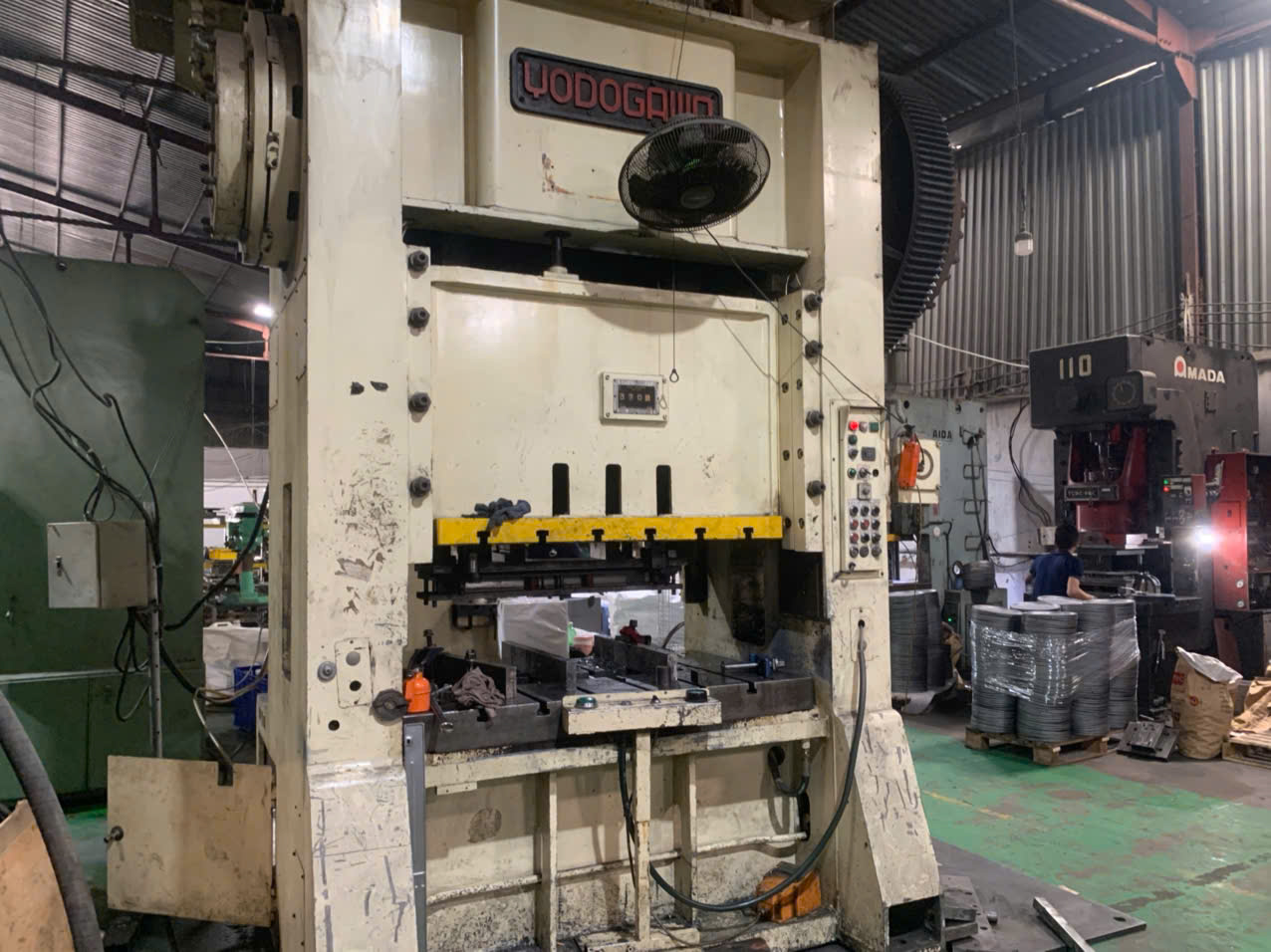
Stamping parts—brackets, clips, spring clamps 2—are non-perishable but surprisingly tricky to ship. They are heavy relative to their value, they nest awkwardly, and sharp edges can damage packaging during a 25-day ocean transit. Almost every order we handle moves by sea freight in full or shared containers. Air freight rarely makes sense because the value density is low. That means maritime-specific terms like FOB and CIF, or flexible container terms like FCA and CPT, are the primary candidates.
Because freight costs eat into margins fast, the Incoterm you pick directly shapes how much control you have over those costs—and who bears the risk if a container of zinc-plated brackets arrives with corrosion or dents.
The Top Incoterms at a Glance
| Incoterm | Who Handles Export Clearance? | Who Pays Ocean Freight? | Risk Transfers At | Best For |
|---|---|---|---|---|
| EXW | Buyer | Buyer | Supplier's factory gate | Small courier parcels only |
| FCA | Seller | Buyer | Named carrier/terminal in Vietnam | Containerized or multimodal shipments |
| FOB | Seller | Buyer | On board vessel at Vietnamese port | Buyers with a U.S. freight forwarder |
| CIF | Seller | Seller | On board vessel at Vietnamese port | Buyers wanting a "hands-off" origin quote |
| DDP | Seller | Seller | Buyer's dock | Buyers wanting true landed cost visibility |
Why We Almost Never Recommend EXW
EXW looks cheap on paper. The supplier quotes only the factory-gate price. But for bulk stamping parts, it is a trap. You, the buyer, must arrange trucking from a factory in Bac Ninh or Ho Chi Minh City, handle Vietnam export customs paperwork, and book the vessel. Without a local entity in Vietnam, you legally cannot act as the exporter of record. Our team has seen U.S. buyers lose weeks trying to sort this out. Stick with FOB or FCA as your starting point.
FCA: The Modern Upgrade from FOB
Many purchasing managers still default to FOB because it is familiar. But Incoterms 2020 rules 3 actually recommend FCA for containerized cargo. With FCA, the seller delivers goods to a named place—often an Inland Container Depot 4 (ICD)—and risk transfers at that point, not when goods cross the ship's rail. This matters when there is road congestion around the Port of Hai Phong or Cat Lai. Using FCA at an ICD lets you avoid port-side delays and gives you a clean Bill of Lading sooner.
FOB vs CIF: A Quick Comparison
The classic FOB vs CIF debate comes up in almost every sourcing conversation. With FOB, you pick the ocean carrier and negotiate freight rates directly. With CIF, the supplier books the vessel and includes marine insurance 5 in the price. CIF sounds simpler, but it often hides inflated terminal handling charges, and the insurance coverage is minimal—only Institute Cargo Clause C. If your stamped parts have tight tolerances and custom finishes, that basic coverage may not be enough.
How Do Incoterms Affect My Total Landed Cost and Risk When Sourcing from Vietnam?
A lesson we learned early on: the price on a supplier's quotation is never the price you actually pay. The Incoterm determines which costs are visible and which are buried in fine print.
Incoterms directly determine your total landed cost by defining who pays for freight, marine insurance, import duties and taxes, and inland delivery. They also set the exact point where risk transfers from seller to buyer—meaning they control who bears the financial loss if stamping parts are damaged, delayed, or lost in transit.

Breaking Down the Hidden Cost Layers
When we quote a set of precision-stamped steel brackets 6 under FOB Ho Chi Minh Port, our price includes raw material, stamping, finishing, packaging, inland trucking to the port, and Vietnam export clearance. Everything after the vessel loads is on the buyer. That sounds simple, but "everything after" includes ocean freight, marine insurance, U.S. customs bond, duty classification, container drayage, and final delivery. These hidden layers can add 15–30 percent to the FOB price depending on the HS code and freight market conditions.
Under DDP, those layers fold into a single number. The buyer sees one price on the PO, and that price is the true landed cost at their warehouse door. But the supplier must have a logistics partner or subsidiary that can handle customs clearance in the destination country. Our Singapore headquarters and U.S.-facing logistics network allow us to offer DDP to clients who want that simplicity—but not every Vietnamese supplier can do the same.
Cost Comparison: FOB vs DDP for a Hypothetical Order
| Cost Element | FOB (Buyer Pays) | DDP (Supplier Pays) |
|---|---|---|
| Unit price (stamping + finishing) | $0.45/pc | Included in DDP price |
| Vietnam inland trucking | Included | Included |
| Vietnam export clearance | Included | Included |
| Ocean freight (20ft container) | ~$2,800 | Included |
| Marine insurance | ~$120 | Included |
| U.S. customs bond & broker | ~$350 | Included |
| Import duties and taxes | Varies by HS code | Included |
| U.S. inland delivery | ~$600 | Included |
| Total visible to buyer | Unit price only | Single DDP price |
Transfer of Risk: Where It Matters Most
Risk is not just about money. It is about accountability. Under FOB, if a container of spring clamps sits at Cat Lai port for five extra days because the vessel is delayed, the buyer absorbs the storage fees. Under FCA at an ICD, the buyer takes risk even earlier—at the depot. Under DDP, the supplier owns the risk all the way to the buyer's dock.
For stamping parts with custom finishes—brushed, zinc-galvanized, or passivated—transit damage is a real concern. Sharp edges can puncture inner packaging, and humidity can cause surface oxidation on uncoated steel. When we manage the full DDP process, our quality team ensures packaging meets ocean-transit standards because we bear the risk until delivery. Under FOB, that incentive shifts.
HS Code Classification and Duty Impact
Correct HS code classification for metal stampings is critical no matter which Incoterm you choose. A misclassified bracket can trigger higher import duties and taxes or disqualify you from tariff exemptions under free trade agreements 7 like the EVFTA. Under FOB, the buyer's customs broker handles classification. Under DDP, the supplier does. Either way, get it right—because a 5 percent duty swing on a $50,000 order is $2,500 you did not budget for.
Which Incoterm Best Protects My Company from Delivery Delays and Quality Disputes?
One of our clients in the Midwest once received a full container of stamped mounting clips three weeks late. The vessel operator changed the routing mid-ocean, and no one told the buyer until the container missed its connection in Singapore. The question that followed: "Who is responsible?"
FOB and FCA protect the buyer’s ability to choose carriers and control schedules, reducing delivery delay risk. For quality disputes, pairing any Incoterm with a clear inspection protocol and Die Ownership Clause is more effective than relying on the Incoterm alone—because Incoterms define cost and risk transfer, not product liability.

Incoterms Do Not Solve Quality Problems
This is a point many buyers miss. Incoterms govern logistics risk—who pays for freight, who bears the loss if cargo is damaged in transit. They say nothing about what happens if the stamping tolerances 8 are off by 0.2 mm or the zinc plating fails a salt spray test. Quality disputes require separate contractual terms: inspection clauses, PPAP requirements, rework policies, and warranty language.
That said, the Incoterm you choose can indirectly affect quality outcomes. When we ship DDP, our team manages the entire chain from press to dock. We control packaging, we select the freight forwarder, and we monitor transit conditions. If something goes wrong, there is one point of accountability. Under EXW or FCA, the buyer takes custody early, and finger-pointing becomes easier for the supplier.
Delivery Delay Scenarios by Incoterm
| Delay Scenario | FOB Impact | FCA Impact | DDP Impact |
|---|---|---|---|
| Factory production delay | Supplier responsible | Supplier responsible | Supplier responsible |
| Trucking delay to port/ICD | Supplier responsible | Supplier responsible | Supplier responsible |
| Port congestion at Hai Phong | Buyer's risk (after loading) | Buyer's risk (after carrier pickup) | Supplier's risk |
| Vessel routing change mid-ocean | Buyer's risk | Buyer's risk | Supplier's risk |
| U.S. customs hold | Buyer's risk | Buyer's risk | Supplier's risk |
| Last-mile delivery delay | Buyer's risk | Buyer's risk | Supplier's risk |
Under DDP, the supplier absorbs the most delay risk. But this only works if the supplier has the infrastructure to manage it. A small factory in Dong Nai without a logistics team cannot realistically offer DDP and deliver on time. That is why we maintain a seven-person office in Vietnam—to coordinate production schedules, freight bookings, and customs documentation so that DDP commitments are realistic, not just aspirational.
The Die Ownership Clause: A Separate but Critical Issue
Incoterm selection for stamping must be paired with a Die Ownership Clause. Stamping dies 9 are expensive—often $5,000 to $30,000 for a complex progressive die. If the supplier's factory floods, or you decide to move production to another vendor, who owns the tooling? This is separate from Incoterms but must appear in the same contract. We always recommend specifying die ownership, storage obligations, and transfer procedures in the supply agreement, regardless of whether you ship FOB or DDP.
Suppliers with Priority Enterprise (AEO) Status
When evaluating suppliers, ask about their customs status. Vietnamese manufacturers with "Priority Enterprise" (AEO 10) status benefit from expedited "Green Channel" electronic customs processing. This means FCA and FOB shipments clear export customs faster, reducing the risk of port storage fees and schedule slippage. We work with factories that hold this status because it directly translates into fewer delays for our clients.
How Can I Negotiate Incoterms with My Vietnam Supplier to Align with My Payment Terms?
During a recent negotiation with a new client, we spent more time discussing payment terms than product specifications. The reason was simple: the Incoterm and payment term must work together, or the deal falls apart.
Negotiate Incoterms alongside payment terms by aligning risk transfer with payment milestones. Under FOB or FCA, tie final payment to the Bill of Lading date. Under DDP, link payment to proof of delivery. Offering open account terms (Net 60–90) can give you leverage to request more favorable Incoterms from the supplier.

Why Incoterms and Payment Terms Are Linked
Think of it this way: the Incoterm tells you when risk transfers. The payment term tells the supplier when they get paid. If risk transfers at the Vietnamese port (FOB), but payment is due only after the goods arrive at the buyer's U.S. warehouse 30 days later, the supplier has shipped goods they no longer control—and they have not been paid. That gap creates tension.
From our experience, the smoothest transactions match the risk transfer point with a clear payment trigger. Here is how we typically structure it:
- FOB + T/T against Bill of Lading: The buyer pays when the goods are loaded and the B/L is issued. Risk and payment align at the port.
- FCA + T/T against carrier receipt: Similar logic, but the trigger is the carrier's receipt at the ICD or terminal.
- DDP + Net 60 from delivery: The buyer pays 60 days after goods arrive at their dock. The supplier carries risk and cash flow burden throughout transit, but the buyer's commitment to open account terms makes it worthwhile.
VAT Refund Leverage Under FOB and FCA
Here is a negotiation angle many buyers overlook. Under FOB or FCA, the Vietnamese supplier acts as the exporter of record. This allows them to claim Vietnamese VAT refunds on raw materials—steel coils, zinc plating chemicals, packaging—used to produce your stamping parts. That refund can be 8–10 percent of material costs. You can use this as leverage: "We will use FOB so you can claim your VAT refund, and in return, we expect a lower unit price." It is a legitimate negotiation tool that benefits both sides.
Structuring the Contract Correctly
Every contract must explicitly state the Incoterm in the correct format: (Incoterm Rule), (Designated Location), (Incoterms Version). For example:
- "FOB, Ho Chi Minh Port, Incoterms 2020"
- "FCA, ICD Bac Ninh, Incoterms 2020"
- "DDP, Buyer's Warehouse, Cincinnati OH, Incoterms 2020"
Ambiguity here causes real disputes. We had a case where a contract simply said "FOB Vietnam." When the buyer challenged a port storage charge, both parties disagreed on which port was intended—Cat Lai or Hai Phong. Specifying the exact named place eliminates that argument.
Matching Incoterms to Buyer Profiles
Not every buyer is the same. Here is how we think about the match:
| Buyer Profile | Recommended Incoterm | Recommended Payment Term | Why |
|---|---|---|---|
| Large importer with U.S. freight forwarder | FOB or FCA | T/T against B/L or Net 30 | Buyer controls freight costs, has logistics infrastructure |
| Mid-size buyer, no logistics team | DDP | Net 60 from delivery | Buyer needs simplicity, wants one landed cost number |
| Engineering firm, first-time importer | DDP with DEWIN managing logistics | Net 60–90 open account | Buyer lacks import experience, values guided process |
| Cost-driven buyer wanting lowest unit price | FCA at ICD | T/T 30% deposit + balance against B/L | FCA avoids port congestion; deposit reduces supplier risk |
We offer open account payment terms—Net 60 or Net 90—to qualified clients. This is unusual for Asian suppliers, but it reflects our B2B model. When we pair open account terms with DDP, the buyer gets maximum convenience: one price, no logistics management, and no cash outflow until weeks after delivery. That combination is hard to match.
Conclusion
Choosing the right Incoterms when sourcing stamping parts from Vietnam comes down to matching your logistics capability, risk appetite, and payment structure with the right rule—FOB, FCA, or DDP—and always specifying Incoterms 2020 with the exact named location in your contract.
For a deeper dive into how each trade term affects your bottom line, see our guide on how to calculate total landed cost for stamping parts from Vietnam. And if you are still weighing the trade-offs between FOB, CIF, and DDP when sourcing stamping parts, that comparison can help you narrow down the best fit for your situation.
Frequently Asked Questions
What Incoterms Options Should I Consider When Importing Stamping Parts from Vietnam?
When our Vietnam office ships a 20-foot container of stamped mounting brackets to a client in Ohio, the very first question we work through together is not price—it is which Incoterm to put on the purchase order.
How Do Incoterms Affect My Total Landed Cost and Risk When Sourcing from Vietnam?
A lesson we learned early on: the price on a supplier's quotation is never the price you actually pay. The Incoterm determines which costs are visible and which are buried in fine print.
Which Incoterm Best Protects My Company from Delivery Delays and Quality Disputes?
One of our clients in the Midwest once received a full container of stamped mounting clips three weeks late. The vessel operator changed the routing mid-ocean, and no one told the buyer until the container missed its connection in Singapore. The question that followed: "Who is responsible?"
Footnotes
1. Reliable Wikipedia overview of the role and function of customs brokers. ↩︎
2. Authoritative Wikipedia page covering various clamp types including spring clamps. ↩︎
3. Official resource from the International Chamber of Commerce (ICC) regarding the current Incoterms 2020 standards. ↩︎
4. Authoritative Wikipedia entry for inland container terminals and depots. ↩︎
5. Comprehensive overview of marine insurance, covering loss or damage of ships and cargo during transit. ↩︎
6. Technical guide on metal stamping processes from an industry-leading manufacturing platform. ↩︎
7. Official European Commission portal for international trade agreements. ↩︎
8. Academic and technical resource explaining stamping processes and engineering tolerances for metal parts. ↩︎
9. Authoritative Wikipedia entry for industrial stamping and forming dies. ↩︎
10. Official World Customs Organization (WCO) page detailing the Authorized Economic Operator (AEO) program. ↩︎