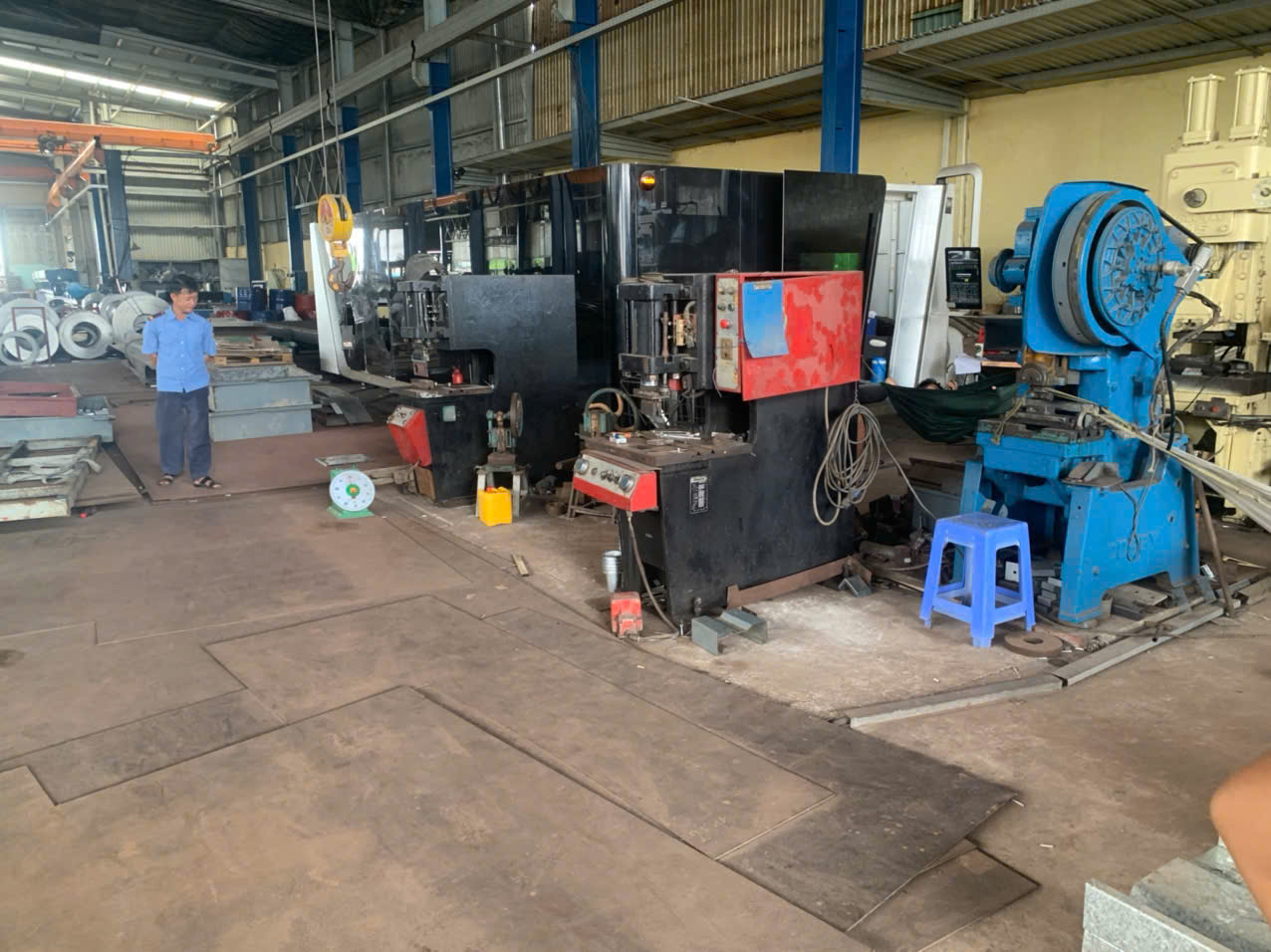

Choosing the right supplier partnership model for stamping parts distribution is a decision I’ve watched clients struggle with for years—and the wrong choice costs far more than anyone expects.
The right supplier partnership model for stamping parts distribution depends on matching your volume, complexity, and quality requirements to a supplier’s capabilities, certifications, and communication practices. Evaluate transactional, strategic, and collaborative models against total cost of ownership, not just unit price, to find the best long-term fit.
This guide breaks down the key partnership models, evaluation criteria, and risk factors you need to consider before signing any agreement automotive and aerospace 1. Let me walk you through the framework our team uses when helping U.S. distributors source custom stamping parts 2 from Asia.
How do I know which stamping parts partnership model fits my business needs?
A few months ago, a distributor in the Midwest reached out to us after his third supplier in two years failed to deliver on time. His problem was not finding a supplier—it was choosing the wrong type of relationship from the start.
The best partnership model depends on your order volume, part complexity, and tolerance for risk. High-volume, simple parts suit transactional models. Complex, tight-tolerance stamping parts with ongoing revisions demand strategic or collaborative partnerships that include co-development, dedicated tooling, and continuous improvement commitments.

Most buyers jump straight to price quotes. They compare unit costs across five or six suppliers and pick the cheapest. I understand why—it feels efficient. But in our experience exporting custom stamping parts to the U.S. and Europe, this approach ignores the deeper question: what kind of relationship do you actually need?
The Partnership Spectrum
There are three main models worth understanding. Each has a clear use case.
| Partnership Model | Best For | Key Features | Risk Level |
|---|---|---|---|
| Transactional | High-volume, commodity stamping parts | Price-driven, minimal collaboration, short-term POs | Low commitment, high switching cost over time |
| Strategic | Mid-to-high complexity parts with ongoing demand | Long-term contracts, joint quality goals, dedicated tooling and die maintenance | Moderate commitment, shared accountability |
| Collaborative / Co-Development | New product development, tight tolerances, design iteration | Early design involvement, shared R&D costs, co-innovation agreements | High commitment, high mutual benefit |
A transactional model works when you are buying standard brackets or clips in bulk. You send a drawing, get a quote, and place an order. There is little back-and-forth. The supplier stamps, ships, and invoices.
But if your stamping parts require sheet metal fabrication 3 with multi-planar bends, precision-punched holes, and custom finishes—like the mounting brackets and spring clamps we produce regularly—a transactional approach will break down fast. Why? Because these parts demand engineering dialogue. Tolerances must be discussed. Tooling must be designed and maintained. Surface finish expectations need to be aligned before production, not after.
Mapping Your Needs to the Right Model
Here is a simple decision framework I share with our clients:
| Your Situation | Recommended Model | Why |
|---|---|---|
| You buy the same simple part repeatedly in large volumes | Transactional | Price matters most; switching suppliers is easy |
| You need custom parts with evolving designs | Strategic | You need a Tier 1 supplier who invests in your program |
| You are launching a new product or entering a new market | Collaborative | Co-development reduces time-to-market and design risk |
| You need prototyping, finishing, and assembly from one source | One-Stop-Shop (Strategic) | Lead time optimization through integrated secondary services |
When we help U.S. distributors set up their strategic sourcing strategy, the first step is always understanding where their parts fall on this spectrum. A client distributing galvanized mounting clips 4 for shelving systems has very different needs than one distributing precision brackets for automotive electronics.
The "one-stop shop" model deserves special mention. Suppliers who offer prototyping, stamping, plating, heat treating, and assembly under one roof reduce your supply chain touchpoints. This matters because every handoff between vendors introduces delay and quality risk. In our Vietnam facility, we have seen how consolidating secondary service integration 5 cuts lead times by weeks.
What questions should I ask before committing to a long-term supplier partnership?
During a recent project kickoff call, a purchasing manager in Texas told me he had signed a three-year contract manufacturing agreement 7 without asking about tooling ownership. Six months in, when he wanted to move a die to a backup supplier, he discovered the tooling belonged to his vendor. That single oversight cost him months of renegotiation.
Before committing to a long-term partnership, ask about tooling ownership, production capacity assessment, quality certifications, lead time guarantees, communication protocols, and dispute resolution processes. These questions expose hidden risks and misalignments that only surface after contracts are signed.

I have compiled the questions our team uses during supplier qualification into a practical checklist. These are not generic—they come from real issues we have encountered while managing supply chains across Vietnam, China, and other Asian markets for U.S. buyers.
The Essential Question Checklist
On Tooling and Dies:
- Who owns the tooling? Is it buyer-owned or supplier-owned?
- What is the tooling and die maintenance schedule?
- Can I transfer tooling to another supplier if needed?
- Are tooling costs amortized into piece price, or invoiced separately?
Tooling ownership is one of the most contentious issues in stamping partnerships. Our recommendation is clear: if you are paying for the tooling, you should own it. This gives you flexibility. If production needs to shift—whether for capacity, quality, or geopolitical reasons 8—you can move the die without starting from scratch.
On Quality and Certifications:
- Do you hold ISO 9001:2015, IATF 16949, or AS9100 certification?
- What is your external PPM (Parts Per Million) defect rate?
- Can you provide PPAP documentation for new part approval?
- Do you perform in-process inspection or only final inspection?
Quality management systems are non-negotiable. When we onboard a new manufacturing partner in our network, we require documented inspection procedures at receiving, in-process, and final stages. A supplier who only checks parts at the end of the run is a supplier who ships defects.
On Capacity and Scalability:
- What is your current production capacity utilization?
- Can you scale up 30–50% within a defined timeframe?
- Do you run just-in-time delivery programs or hold safety stock?
- What happens if demand drops—do you charge minimum order penalties?
Production capacity assessment matters because stamping parts distribution is rarely steady. Demand spikes around product launches and seasonal cycles. Your partner must handle elasticity without sacrificing lead times or quality.
Questions Most Buyers Forget
| Often Overlooked Question | Why It Matters |
|---|---|
| What is your scrap rate, and do you offer scrap credits? | High-grade metal scrap from stamping has resale value; a scrap credit partnership can offset costs |
| Can your ERP integrate with our inventory system? | Live inventory API connections enable vendor managed inventory and automated demand-pull replenishment |
| Do you have a backup press if your primary line goes down? | Single-point-of-failure risk is real in stamping; redundancy matters |
| How do you handle engineering change orders (ECOs) mid-production? | Flexibility in design iteration separates strategic partners from rigid transactional vendors |
These questions are not meant to interrogate. They are meant to surface alignment—or the lack of it—before money changes hands.
How can I evaluate a supplier's quality control and communication practices before partnering?
One lesson that cost our team significant time early on: a supplier's sample parts looked perfect, but their production run quality was inconsistent. The gap between sample quality and volume production quality is where most partnerships fail.
Evaluate a supplier's quality control by requesting PPAP documentation, auditing their facility, reviewing their inspection equipment and procedures, and running a paid test order before committing. Assess communication by tracking response times, technical depth of answers, and willingness to share production data proactively.

Quality is not a brochure claim. It is a system. When I visit a stamping facility—whether in Vietnam or elsewhere in Asia—I look for specific, tangible evidence of quality management systems in action.
What to Look For During a Supplier Audit
Inspection Equipment: Does the supplier have CMM (Coordinate Measuring Machines), optical comparators, and calibrated gauges? Or are they relying on manual measurement with uncalibrated tools?
Documentation: Can they show you control plans, process flow diagrams, and FMEA (Failure Mode and Effects Analysis) records? These documents prove the supplier thinks about quality systemically, not reactively.
Traceability: Can they trace a finished part back to the raw material 9 lot? In industries like automotive and aerospace, traceability is mandatory. Even for industrial hardware distribution, it is a strong signal of process maturity.
The Test Order Strategy
Never commit to full production volume without a test run. Here is the approach we use:
- Send a small paid order — typically 500 to 1,000 pieces — with full dimensional and cosmetic requirements.
- Inspect incoming parts against the drawing using your own QC team or a third-party lab.
- Document every deviation — even minor ones — and send a detailed report to the supplier.
- Evaluate their response — do they acknowledge the issues? Do they provide root cause analysis? Do they implement corrective actions?
The supplier's response to your feedback tells you more than any certification on their wall. A partner who treats your feedback as an opportunity for continuous improvement is worth more than one who deflects blame.
Communication: The Invisible Quality Factor
Communication failures cause more defective shipments than machine failures. Here is what I track:
- Response time: Do they reply within 24 hours on working days?
- Technical competence: Do their engineers understand GD&T callouts on your drawings?
- Proactive updates: Do they notify you of material delays, tooling issues, or schedule changes before you have to ask?
- Language clarity: Is there a dedicated project manager who speaks fluent English and understands your industry terminology?
In our China office, we have 21 team members. A significant part of their role is bridging the communication gap between our manufacturing partners and our U.S. clients. We translate not just language, but engineering intent. When a drawing says "break sharp edges," we make sure the factory understands what that means in practice—and we verify it during final inspection.
Digital integration is also becoming essential. Real-time production tracking, shared quality dashboards, and even digital die fingerprinting using IoT sensors on presses are tools that give distributors visibility into tool health and part precision without being on-site.
What payment terms and risk factors should I consider when choosing a stamping parts partner?
Last year, a long-time client asked us to take over a program from another supplier who had suddenly shut down. The client had paid 50% upfront for tooling and raw materials. That money was gone. This experience reinforced something I tell every new buyer: payment terms and risk management are not afterthoughts—they are the foundation of any contract manufacturing agreement.
Consider payment terms that balance cash flow protection with supplier commitment—such as net 60–90 day open account terms for qualified partners. Key risk factors include tooling ownership disputes, single-source dependency, tariff exposure, currency fluctuation, and the supplier's financial stability. Always diversify and establish clear contractual frameworks.

Payment terms in international stamping parts distribution 10 are more complex than domestic transactions. They involve currency risk, customs duties, freight variability, and credit exposure. Let me break down the factors that matter most.
Payment Term Options and Their Trade-Offs
| Payment Term | Buyer Risk | Supplier Risk | Best For |
|---|---|---|---|
| 100% prepayment | Very high — no leverage if quality fails | Very low | Avoid unless supplier is highly trusted and order is small |
| 50% deposit + 50% before shipment | High — limited recourse after payment | Low | First orders with new suppliers; tooling payments |
| Letter of Credit (L/C) | Low — bank guarantees compliance | Moderate — documentation burden | Large orders with new overseas suppliers |
| Net 30–60 days (open account) | Low — pay after receiving and inspecting goods | High — supplier carries credit risk | Established partnerships with proven track record |
| Net 60–90 days (open account with credit terms) | Very low — extended cash flow relief | Very high — supplier must be financially stable | Long-term strategic partnerships |
One of our key differentiators at DEWIN is offering open account payment terms—typically net 60 to 90 days—to qualified U.S. clients. We do this because we understand that distributors often carry significant inventory. Tying up cash in prepayments to overseas suppliers creates unnecessary pressure. But we can only offer these terms because we have invested in building trust and financial stability across our operations in Singapore, Vietnam, and China.
Supply Chain Risk Factors
Beyond payment, here are the risk areas I urge every distributor to evaluate:
Single-Source Dependency: Relying on one supplier for a critical stamping part is dangerous. If that supplier has a machine failure, a labor disruption, or a natural disaster, your entire distribution pipeline stops. Consider qualifying a secondary source—even if you do not use them regularly. Supply chain risk management demands redundancy. Learn more about choosing between single and multi-source procurement to mitigate this risk.
Tariff and Trade Policy Exposure: U.S. tariffs on Chinese goods have reshaped sourcing decisions. Many of our clients have moved programs from China to Vietnam specifically to avoid Section 301 tariffs. But tariff landscapes change. Build flexibility into your partnership so you can shift production if trade policies shift again. This is where nearshoring and reshoring strategies become relevant.
Tooling Disputes: As I mentioned earlier, tooling ownership must be explicit in your contract. Include clauses covering: who pays for tool repair, how often preventive maintenance occurs, and what happens to the tooling if the partnership ends.
Total Cost of Ownership (TCO): The piece price is just the starting point. Add freight costs, import duties, inspection costs, inventory carrying costs, and the cost of quality failures (rework, returns, lost customers). When we prepare quotes for clients, we encourage them to balance price, quality, and delivery time when evaluating stamping parts suppliers rather than selecting on unit price alone.
Contractual Safeguards
Every strategic partnership should include:
- Service-Level Agreements (SLAs) defining on-time delivery targets, quality PPM limits, and response-time commitments.
- Dispute resolution steps — escalation paths before legal action.
- Inspection criteria — who inspects, where, and against what standard.
- Exit clauses — what happens if performance targets are consistently missed.
These are not adversarial. They are the guardrails that let both parties operate with confidence. In our experience, the best partnerships are the ones where the contract is signed and then rarely referenced—because the relationship works. But when it does not, clear terms protect everyone.
Conclusion
Choosing the right supplier partnership model for stamping parts distribution is not about finding the lowest price. It is about aligning your volume, complexity, quality standards, and risk tolerance with a partner who communicates well, invests in continuous improvement, and protects your supply chain. Ask the hard questions early, run test orders, and build contractual safeguards—your business depends on it.
Frequently Asked Questions
How do I know which stamping parts partnership model fits my business needs?
A few months ago, a distributor in the Midwest reached out to us after his third supplier in two years failed to deliver on time. His problem was not finding a supplier—it was choosing the wrong type of relationship from the start.
What questions should I ask before committing to a long-term supplier partnership?
During a recent project kickoff call, a purchasing manager in Texas told me he had signed a three-year contract manufacturing agreement 7 without asking about tooling ownership. Six months in, when he wanted to move a die to a backup supplier, he discovered the tooling belonged to his vendor. That single oversight cost him months of renegotiation.
How can I evaluate a supplier's quality control and communication practices before partnering?
One lesson that cost our team significant time early on: a supplier's sample parts looked perfect, but their production run quality was inconsistent. The gap between sample quality and volume production quality is where most partnerships fail.
Footnotes
1. Standards organization for the automotive and aerospace industries, relevant to part traceability. ↩︎
2. Wikipedia entry explaining the metalworking process of stamping used for custom parts. ↩︎
3. Authoritative definition and overview of sheet metal fabrication processes and applications. ↩︎
4. Authoritative Wikipedia entry explaining the hot-dip galvanization process. ↩︎
5. Wikipedia page defining value-added services in manufacturing and logistics. ↩︎
6. Comprehensive Wikipedia definition of the total cost of ownership metric. ↩︎
7. Wikipedia article describing the contract manufacturing model and relationships. ↩︎
8. Authoritative backgrounder on how geopolitical factors influence global supply chain decisions. ↩︎
9. Wikipedia entry defining raw materials and their importance in manufacturing and traceability. ↩︎
10. Official Trade.gov resource on global supply chain and distribution services. ↩︎