
Choosing between sea and air freight for sheet metal fabrication parts can make or break your project budget and timeline — a decision our logistics team navigates with clients every single week.
To choose between sea and air freight for sheet metal fabrication parts, evaluate transit time urgency, cargo volume and weight, total landed cost, corrosion risk, and supply chain flexibility. Sea freight suits bulk, cost-sensitive orders; air freight fits urgent, high-value, or corrosion-prone components.
The sections below break down each critical factor VCI (Vapor Corrosion Inhibitor) bags 1. I will walk you through real trade-offs we manage daily when shipping custom sheet metal brackets, housings, and precision components from Asia to the United States and Europe.
How do I decide if the speed of air freight justifies the higher cost for my custom sheet metal parts?
A client once called on a Friday needing replacement mounting brackets in Detroit by Wednesday — that single phone call taught our team more about the air-versus-sea calculus than any textbook ever could.
Air freight is justified when the cost of production downtime or a missed deadline exceeds the freight premium. If your sheet metal parts are prototypes, urgent replacements, or tied to a contractual delivery date, the 2–4 day air transit easily outweighs the 15–16× higher shipping costs.
Understanding the Real Cost Gap
Air freight can cost up to 16 times more than sea freight for the same shipment. But "cost" is not just the freight invoice. You need to calculate the total landed cost 2 — the sum of freight charges, customs clearance fees, warehousing, inventory holding, and the price of any production downtime 3 caused by late parts.
Here is a simple comparison we often share with purchasing managers:
| Factor | Air Freight | Sea Freight |
|---|---|---|
| Transit Time | 2–4 days | 3–6 weeks |
| Cost per kg (typical) | $4–$8 | $0.25–$0.50 |
| Sample Shipment (85 kg) | ~$600 | ~$400 (LCL) |
| Sample Shipment (200 kg) | ~$1,000+ | ~$195 |
| Customs Clearance Speed | Faster, fewer delays | Slower, port congestion risk |
| Handling & Damage Risk | Lower | Higher |
When Speed Pays for Itself
Think of it this way. If your factory floor sits idle because a batch of custom sheet metal housings is stuck on a vessel, the daily cost of downtime almost always dwarfs the freight premium. I have seen U.S. clients lose $5,000–$10,000 per day of halted assembly. In that scenario, paying an extra $800 for air shipping is a bargain.
On the other hand, if the parts are standard stock replenishment and your inventory management system shows three weeks of buffer, there is no reason to pay the air premium.
A Quick Decision Checklist
Ask yourself these questions before booking:
- Will a delay cost more than the air freight premium?
- Are these prototype or first-article parts 4 needed for approval?
- Is the shipment under 150 kg?
- Does your contract have a penalty clause for late delivery?
If you answer "yes" to two or more, air freight is likely the smarter move. If all answers are "no," sea freight will save you real money.
The Prototype Exception
During our co-development projects, we almost always ship first-article samples by air. The parts might weigh only 5–10 kg, so the freight difference is minimal — maybe $50–$100 — but the time saved can compress an approval cycle by three weeks. For urgent shipments like these, air freight is a no-brainer.
At what weight or volume should I switch my sheet metal fabrication order from air to sea freight?
One trade-off I weigh on nearly every quote is whether the cargo volume and part weight have crossed the line where sea freight becomes the obvious winner — and the answer is more nuanced than a single number.
Generally, once your sheet metal shipment exceeds 150–200 kg or 1–2 cubic meters, sea freight becomes significantly more cost-effective. Below that threshold, air freight's speed advantage often outweighs the modest cost savings of ocean shipping, especially for manufacturing components with tight deadlines.
The Weight-to-Value Ratio
Raw weight alone does not tell the full story. You also need to consider the value density of the parts. A 50 kg box of precision-machined stainless steel brackets worth $8,000 has a very different freight calculus than a 50 kg box of mild steel shelf supports worth $200.
Here is a guideline table our team uses internally:
| Shipment Profile | Weight | Value | Recommended Mode |
|---|---|---|---|
| Prototypes / samples | < 30 kg | High | Air freight |
| Small urgent batch | 30–150 kg | Medium–High | Air freight |
| Medium production run | 150–500 kg | Medium | Sea freight (LCL) |
| Large production run | 500 kg–2,000 kg | Medium–Low | Sea freight (LCL or FCL) |
| Bulk / recurring orders | > 2,000 kg | Low–Medium | Sea freight (FCL) |
LCL vs. FCL: Picking the Right Ocean Option
When you choose sea freight, you still face a sub-decision: Less than Container Load (LCL) 5 or Full Container Load (FCL).
LCL works well when your order fills part of a container. You share space and costs with other shippers. The downside is that LCL shipments undergo more handling at consolidation points, which increases the risk of damage to your sheet metal parts.
FCL makes sense when your order fills at least half a 20-foot container. Full Container Load (FCL) 6 You get a sealed container from origin to destination. Less handling means less risk. And the per-unit freight cost drops dramatically at scale.
For reference, a standard 20-foot container holds roughly 25,000–28,000 kg of steel parts, depending on stacking and packaging requirements. Most of our mid-volume clients ship LCL and transition to FCL once their quarterly order volume stabilizes above 8–10 cubic meters.
Dimensional Weight Matters
Air freight carriers charge by the greater of actual weight or dimensional (volumetric) weight. Sheet metal parts — especially large brackets, enclosures, and housing bases — can be bulky relative to their mass. A set of powder-coated mounting brackets might weigh only 80 kg but occupy 1.5 cubic meters of space. The airline will charge you for 250 kg of dimensional weight 7.
This is another reason sea freight becomes attractive sooner for sheet metal than for dense, compact goods. If your parts have irregular shapes, sharp bends, or protruding tabs that resist tight nesting, the volumetric penalty on air freight is severe.
A Practical Rule of Thumb
If the freight cost exceeds 15–20% of the goods' value, reconsider the shipping mode. On our supply chain projects, we flag any quote where the shipping costs approach that threshold. Below 15%, the speed of air freight may still make sense. Above 20%, sea freight almost always wins on total economics — assuming the transit time is acceptable.
How can I protect my precision sheet metal components from damage or corrosion during long-duration sea transit?
During a recent shipment of sandblasted steel brackets to a client in the Midwest, our quality team discovered that the packaging supplier had omitted desiccant packs 8 from two cartons — a small oversight that could have resulted in visible surface oxidation after four weeks at sea.
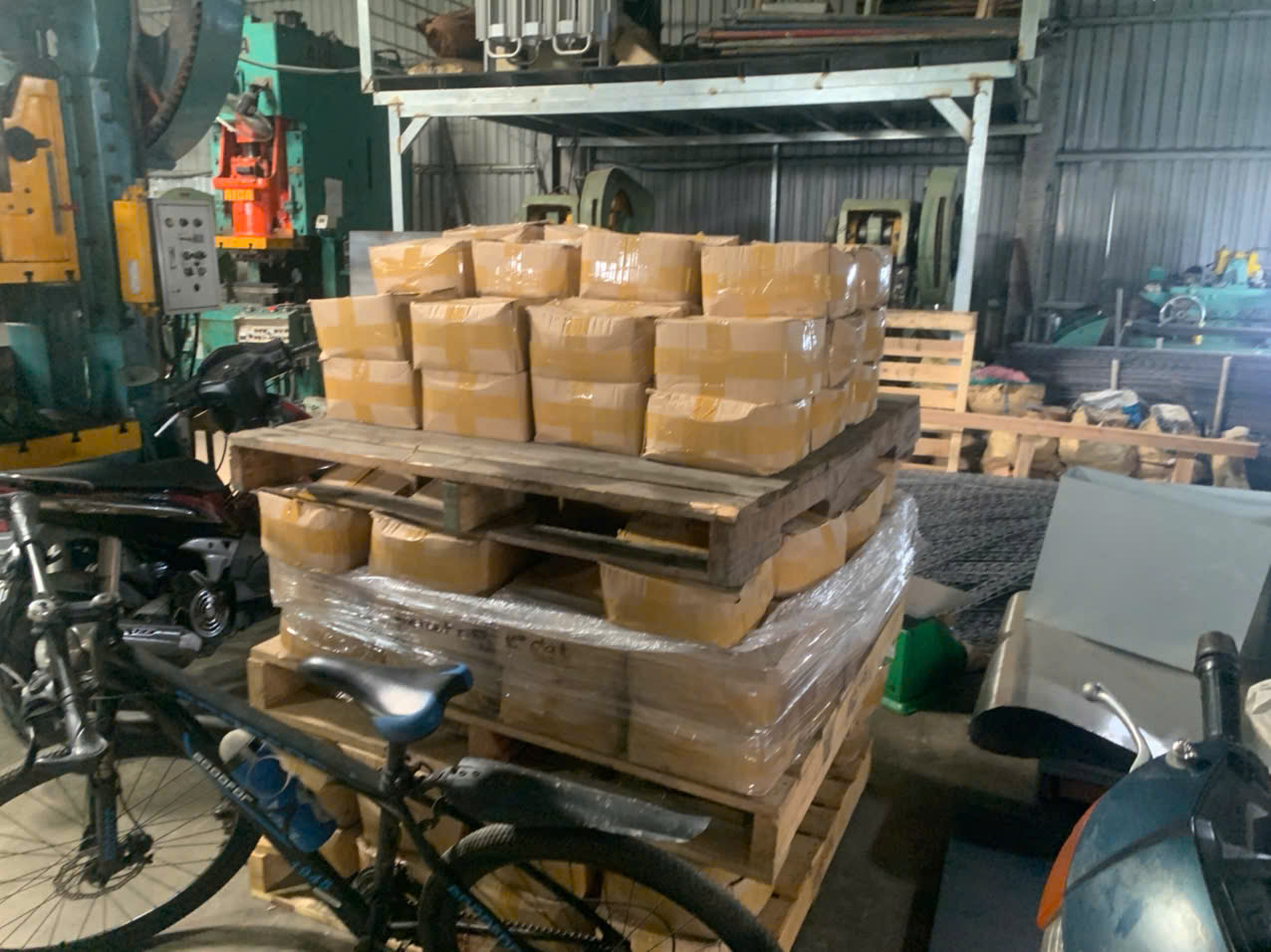
To protect precision sheet metal parts during sea transit, use VCI (Vapor Corrosion Inhibitor) bags or paper, include desiccant packs to control moisture, apply protective oil or coating where appropriate, and secure parts in custom foam inserts or wooden crates to prevent mechanical damage from vibration and shifting.
Why Sea Transit Is Harsh on Metal
Ocean containers travel through extreme temperature swings. A container can be 60°C (140°F) during the day and drop to near-ambient at night. This cycling causes condensation — sometimes called "container rain" — where moisture collects on the container ceiling and drips onto cargo. Salt air compounds the problem. Even inside a sealed container, humidity levels can spike to 90%+.
For sheet metal parts with tight tolerances, matte finishes, or bare steel surfaces, this environment is hostile. Corrosion, water staining, and surface discoloration are real risks that must be managed proactively.
Layer-by-Layer Protection Strategy
Here is the approach we recommend based on our experience shipping custom parts across the Pacific:
| Protection Layer | Purpose | Best For |
|---|---|---|
| Anti-rust oil / wax coating | Blocks moisture contact on bare metal | Carbon steel, uncoated alloys |
| VCI bags or VCI paper wraps | Releases vapor that inhibits corrosion | All ferrous metals, some non-ferrous |
| Desiccant packs (silica gel) | Absorbs moisture inside packaging | All metals, especially precision surfaces |
| Polyethylene shrink wrap | Seals against external humidity | Palletized loads, crated assemblies |
| Custom foam inserts | Prevents part-to-part contact and vibration damage | Precision brackets, complex geometries |
| Wooden crate / plywood case | Structural protection against crushing and stacking | Heavy or fragile assemblies |
Matching Protection to Material
Not all sheet metal is equally vulnerable. Stainless steel resists corrosion well and may need only basic wrapping. Aluminum is lightweight and corrosion-resistant but can suffer from galvanic corrosion 9 if it contacts dissimilar metals during transit. Carbon steel and coated steel (powder coat, zinc plating) need the most attention.
Our inspection team checks packaging at the factory before the container is sealed. We verify that every carton has the correct number of desiccant packs, that VCI paper fully covers exposed surfaces, and that no parts are touching each other without a barrier. This final inspection step is cheap insurance against costly rejections at the destination. You should also consider what shipping insurance is needed to further protect against in-transit losses.
Mechanical Damage Prevention
Corrosion is not the only threat. Vibration over a 20–30 day ocean voyage can cause parts to shift, rub, and scratch. Pre-drilled mounting holes can catch on adjacent parts. Sharp bends and protruding tabs — like those on the mirrored angular brackets we recently produced — are especially prone to denting if not properly cushioned.
We use custom-cut PE foam dividers between parts and strap pallets with steel banding to prevent movement. For high-value assemblies, we specify shock indicators on the outside of the crate so the receiving team can immediately flag any mishandling.
When Air Freight Is the Safer Bet
If the parts have an ultra-fine surface finish, critical dimensional tolerances under ±0.05 mm, or a specialty coating that cannot tolerate any humidity exposure, air freight removes most of these risks. The transit time is short, the cargo environment is climate-controlled, and handling is gentler. For corrosion-prone alloys or parts that would require $200+ in protective packaging per crate, the math sometimes favors paying the air premium and skipping the elaborate packaging altogether.
How should I adjust my production timeline when transitioning from air to sea freight for my large-scale sourcing projects?
A lesson we learned early in our Vietnam operations is that switching from air to sea freight is not just a logistics change — it is a fundamental shift in how you plan production, manage inventory, and communicate with your freight forwarder.
When transitioning from air to sea freight, extend your production planning horizon by 4–6 weeks minimum. Factor in additional time for container booking, port customs clearance, and ocean transit. Build buffer stock to cover the longer lead time and schedule orders earlier to maintain uninterrupted supply.
Mapping the Extended Timeline
With air freight, the cycle from production completion to delivery at a U.S. warehouse might look like this: 1 day for pickup, 2–3 days in transit, 1–2 days for customs clearance — roughly one week total.
Sea freight stretches that to 4–7 weeks depending on origin, destination, and whether you use LCL or FCL. Here is a realistic timeline breakdown for a shipment from Southeast Asia to a U.S. East Coast port:
| Stage | Air Freight | Sea Freight (LCL) | Sea Freight (FCL) |
|---|---|---|---|
| Factory to port/airport | 1 day | 1–2 days | 1–2 days |
| Consolidation / booking | 0–1 day | 3–5 days | 1–3 days |
| Transit | 2–4 days | 25–35 days | 22–30 days |
| Port unloading & customs | 1–2 days | 3–7 days | 2–5 days |
| Last-mile delivery | 1–2 days | 2–4 days | 2–4 days |
| Total | 5–10 days | 34–53 days | 28–44 days |
Adjusting Your Order Cadence
The biggest mistake I see purchasing managers make is switching to sea freight without changing their order timing. If you previously ordered parts 2 weeks before you needed them (relying on air), you now need to order 8–10 weeks ahead. This requires tighter coordination between your engineering, procurement, and production scheduling teams.
We help clients build a rolling forecast — typically a 12-week outlook — so our factories can begin production earlier and stage shipments to align with container sailing schedules. Missing a sailing date by even one day can mean waiting another 7–10 days for the next vessel.
Building Buffer Inventory
International shipping by sea is inherently less predictable than air. Port congestion, weather delays, and customs holds can add days or weeks. The 2024 Baltimore bridge collapse and Red Sea shipping disruptions demonstrated how fragile ocean routing can be.
To protect against these disruptions, we recommend maintaining 2–4 weeks of safety stock for critical sheet metal components. Yes, this ties up working capital. But it costs far less than an emergency air shipment to cover a stockout.
The Hybrid Strategy
Many of our most successful sourcing clients use both modes. They ship 80–90% of their volume by sea for cost efficiency and reserve air freight for urgent top-ups, engineering changes, or first-article approvals. This hybrid approach delivers the best balance of shipping costs, transit time, and supply chain resilience.
For example, one client orders powder-coated steel enclosures on a monthly sea freight schedule. But when their end customer requests a design revision, we air-ship the updated prototypes for approval while the bulk order continues on the ocean timeline. The result: no production gaps, no budget blowouts.
Sustainability Consideration
Sea freight produces far less CO₂ per ton-kilometer than air freight — the carbon footprint difference is dramatic. Companies with ESG commitments increasingly favor ocean shipping for non-urgent manufacturing components. Transitioning bulk sheet metal orders to sea freight is one of the simplest ways to reduce a supply chain's environmental impact without sacrificing quality.
Conclusion
Choosing between sea and air freight for sheet metal fabrication parts comes down to balancing cost, speed, volume, corrosion risk, and supply chain flexibility — and a hybrid strategy often delivers the best results for sourcing professionals.
Frequently Asked Questions
How do I decide if the speed of air freight justifies the higher cost for my custom sheet metal parts?
A client once called on a Friday needing replacement mounting brackets in Detroit by Wednesday — that single phone call taught our team more about the air-versus-sea calculus than any textbook ever could.
At what weight or volume should I switch my sheet metal fabrication order from air to sea freight?
One trade-off I weigh on nearly every quote is whether the cargo volume and part weight have crossed the line where sea freight becomes the obvious winner — and the answer is more nuanced than a single number.
How can I protect my precision sheet metal components from damage or corrosion during long-duration sea transit?
During a recent shipment of sandblasted steel brackets to a client in the Midwest, our quality team discovered that the packaging supplier had omitted desiccant packs 8 from two cartons — a small oversight that could have resulted in visible surface oxidation after four weeks at sea.
Footnotes
1. A comprehensive explanation of VCI bags, their uses, and benefits from a specialized company. ↩︎
2. Explains the comprehensive cost of importing goods, including hidden costs beyond freight. ↩︎
3. Details the significant financial impact of manufacturing interruptions and how to calculate them. ↩︎
4. Provides a definition and context for first article inspection in manufacturing. ↩︎
5. Defines LCL shipping, its benefits, and when it is a suitable option for cargo. ↩︎
6. Explains FCL shipping, its advantages, and when it is the preferred method for larger shipments. ↩︎
7. Clarifies how air freight costs are calculated based on package volume, not just actual weight. ↩︎
8. Explains the function of desiccants like silica gel in controlling moisture and preventing damage during shipping. ↩︎
9. Describes this specific type of corrosion and methods to prevent it when dissimilar metals are in contact. ↩︎
10. Defines buffer stock as a critical inventory strategy to mitigate supply chain uncertainties and avoid stockouts. ↩︎