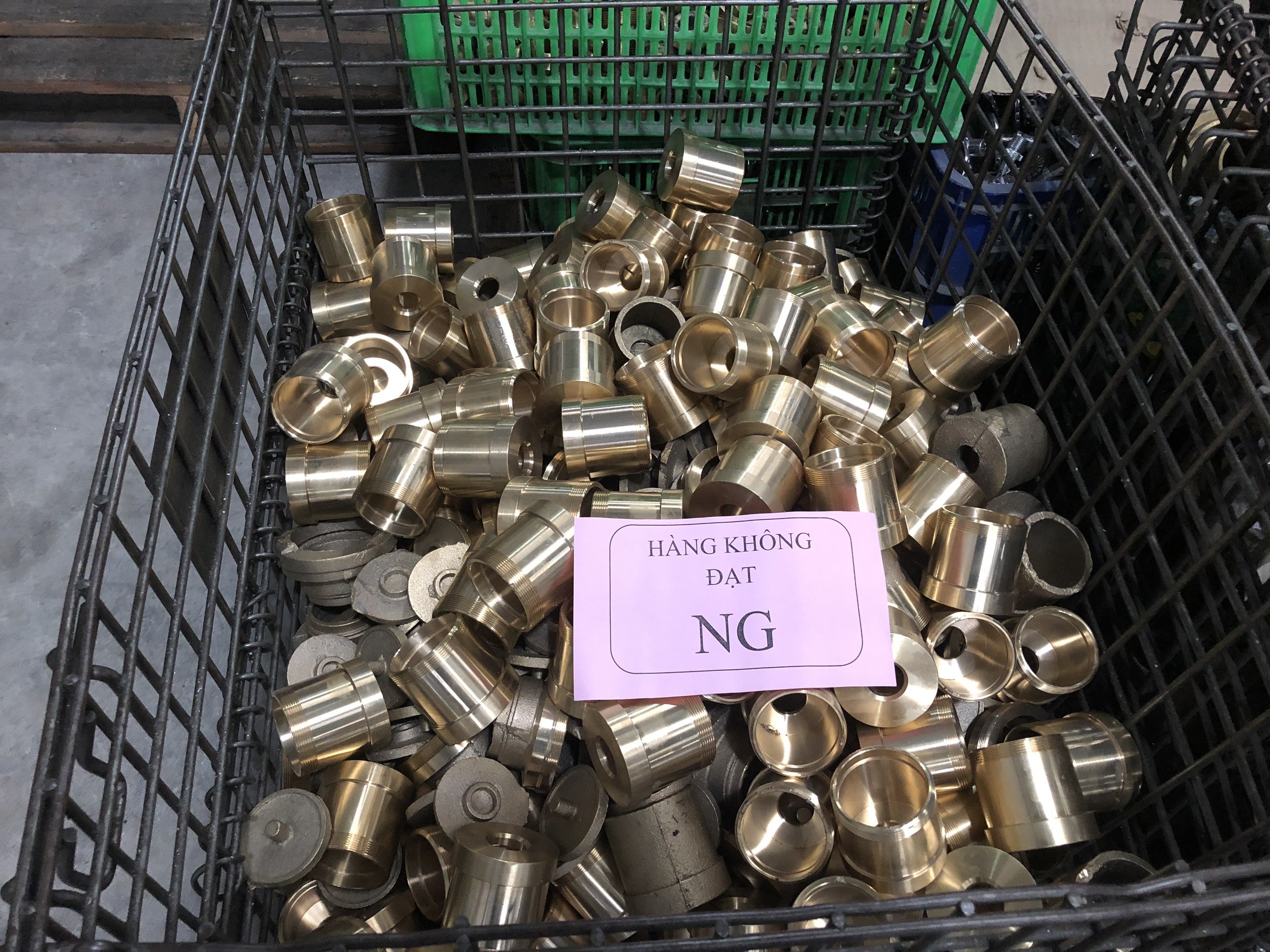

When our Vietnam team ships precision sheet metal brackets to US clients, the port choice often determines whether the total landed cost 1 stays competitive or spirals out of control. sheet metal fabrication guide 2
To cut inland transit costs on Vietnam sheet metal fabrication imports, prioritize West Coast ports like Los Angeles/Long Beach for most US destinations, as they offer 24–29 day ocean transit and direct rail corridors to major hubs, reducing drayage costs compared to longer East Coast routes averaging 40–50 days.
Port selection is not just about ocean freight. It is about what happens after the container touches US soil drayage costs 3. Below, I break down exactly how to match your warehouse location to the right port, compare total landed costs, and coordinate with your Vietnam partner for a smoother supply chain.
Which US port should I choose to minimize the inland drayage costs for my Vietnam sheet metal orders?
A client in Ohio once asked us why his competitor's per-unit cost was noticeably lower on nearly identical sheet metal brackets. After digging into the logistics, I found the answer had nothing to do with part pricing — it was the port of entry and the 600 fewer miles of inland trucking his competitor was paying for.
Choose Los Angeles/Long Beach if your warehouse is west of the Mississippi, and consider Savannah or New York/Newark if you are in the US Southeast or Northeast. The key is to minimize the truck leg from port to your door, as drayage costs often exceed $2,000 for distances over 250 miles.
Why the Last Mile Matters More Than the Ocean Mile
Most buyers focus on ocean freight quotes. That makes sense — it is the biggest single line item. But ocean freight from Vietnam to the US is now roughly comparable across carriers, sitting between $3,500 and $5,000 per container depending on season and route. The real cost variable is what happens on land.
Inland drayage — the trucking from port to your warehouse — can range from $500 for a short local haul to $5,000 or more for a cross-country truck move. Rail intermodal connections 4 can reduce that, but only certain ports have efficient rail ramps for your corridor.
Matching Port to Warehouse: A Quick Reference
| Your Warehouse Region | Recommended US Port | Avg. Drayage Cost (Est.) | Rail Option Available? |
|---|---|---|---|
| Southern California | Los Angeles / Long Beach | $400–$800 | Yes (local) |
| Pacific Northwest | Seattle / Tacoma | $400–$900 | Yes (BNSF, UP) |
| Northern California | Oakland | $400–$800 | Yes (UP) |
| Midwest (Chicago, OH, MI) | Los Angeles / Long Beach | $1,200–$2,500 (rail) | Yes (direct intermodal) |
| Southeast (GA, SC, NC) | Savannah | $500–$1,200 | Yes (Norfolk Southern, CSX) |
| Northeast (NJ, NY, PA) | New York / Newark | $500–$1,500 | Yes (rail + truck) |
| Texas / South Central | Houston or Dallas (via LA rail) | $800–$2,000 | Yes |
When we coordinate shipments for our US clients, I always map the final delivery ZIP code first. Then I work backward to identify which port puts the container closest to the door with the fewest transfers. Every extra transfer — from ship to rail, rail to truck — adds terminal handling charges 5 and time.
The Hidden Cost of Extra Transfers
Each time a container is lifted off a chassis, placed on a rail car, and then moved back to a truck, you pay handling fees. These fees add up. A single intermodal transfer typically costs $300–$600. If your container goes through two transfers instead of one, you are looking at an extra $600–$1,200 before the truck even starts rolling.
For heavy sheet metal parts — like the powder-coated mounting brackets our Vietnam facility produces — weight is also a factor. Overweight containers face surcharges and may need to be split, doubling the drayage cost. Choosing a port closer to your warehouse eliminates one or more of these transfers entirely.
How do I decide between West Coast and East Coast ports based on my specific US warehouse location?
One trade-off I weigh on almost every new project is speed versus proximity. A buyer in Atlanta once insisted on routing through Los Angeles because "West Coast is always faster from Vietnam." He was right about the ocean leg. But he was paying $3,800 in rail and truck costs to get containers from LA to his Georgia warehouse — nearly as much as the ocean freight itself.
If your warehouse is east of the Mississippi River, East Coast ports like Savannah or New York/Newark often deliver lower total landed costs despite 40–50 day ocean transit, because they eliminate expensive cross-country rail and reduce final-mile trucking to under 300 miles.
Transit Time vs. Total Cost: A Side-by-Side Comparison
Let me lay out a realistic comparison. Assume a 40-foot container of custom sheet metal brackets shipping from Ho Chi Minh City to a warehouse in Charlotte, North Carolina.
| Cost Component | Route A: HCMC → LA → Charlotte | Route B: HCMC → Savannah → Charlotte |
|---|---|---|
| Ocean Freight (FCL) | $4,200 | $4,800 |
| Ocean Transit Time | 25 days | 32 days |
| Terminal Handling (US Port) | $350 | $300 |
| Rail (Port to Inland Hub) | $2,800 (LA to Atlanta rail) | N/A |
| Truck (Hub to Warehouse) | $900 (Atlanta to Charlotte) | $650 (Savannah to Charlotte) |
| Total Inland Cost | $4,050 | $950 |
| Total Landed Cost | $8,250 | $5,750 |
| Total Transit (Door-to-Door) | 32 days | 35 days |
The numbers speak clearly. Route B saves $2,500 per container. The trade-off is 3 extra days of ocean transit. For most sheet metal orders that are not emergency replenishments, those 3 days are irrelevant.
When West Coast Still Wins
West Coast ports remain the better choice in several scenarios:
- Your warehouse is in California, Oregon, Washington, Nevada, or Arizona.
- You need the fastest possible transit and your supply chain optimization depends on speed.
- You are shipping to the Midwest (Chicago, Indianapolis, Columbus) where LA/Long Beach has direct, high-frequency rail service that is cost-competitive.
- You use a Foreign Trade Zone 6 near a West Coast port to defer or reduce import duties.
Our logistics team in Singapore tracks these routes quarterly. We have seen that for Midwest-bound containers, LA to Chicago intermodal rail runs about $1,800–$2,200. That is competitive with routing through the Panama Canal to an East Coast port and then trucking west again.
When East Coast Makes More Sense
East Coast ports win when your final destination is in the Southeast, Mid-Atlantic, or New England. Savannah has become a major hub for Vietnam imports. Its port infrastructure is modern, customs clearance is fast, and it connects directly to I-95 and I-16 for efficient trucking.
New York/Newark serves the dense Northeast corridor well. Norfolk is another strong option for Virginia, Maryland, and the Carolinas. These ports avoid the congestion that sometimes plagues LA/Long Beach, reducing demurrage and detention risk 7.
The bottom line: do not default to West Coast out of habit. Map your warehouse, calculate the full inland cost, and let the numbers decide.
Can I reduce my total landed cost by switching to a different US port for my custom metal fabrication imports?
A lesson I learned early in this business: the port you started with is not always the port you should keep using. One of our long-term clients was routing all shipments through Long Beach for three years. His warehouse had moved from Phoenix to Nashville. He never updated his logistics routing. When we ran the numbers, switching to Savannah saved him over $2,000 per container — roughly $24,000 per year on his volume.
Yes, switching US ports can reduce your total landed cost by $1,500–$3,000 per container. The savings come primarily from shorter inland trucking distances, lower drayage costs, fewer intermodal transfers, and reduced risk of congestion-related fees at over-burdened ports.
Step-by-Step: How to Evaluate a Port Switch
Here is the process I recommend to any buyer considering a change:
- Identify your top 2–3 delivery points. Where do containers actually go after clearing customs?
- Get inland freight quotes for each candidate port. Ask your freight forwarding partner for trucking and rail rates from at least two West Coast and two East Coast ports to your delivery points.
- Add ocean freight quotes. Request FCL rates from your carrier or logistics providers for each port pairing.
- Calculate terminal handling charges. These vary by port. LA/Long Beach charges tend to be higher than Savannah or Norfolk.
- Factor in congestion risk. If a port has a history of delays, add an estimated demurrage cost (typically $150–$300 per day after free time expires).
- Compare total landed costs. The lowest total wins.
Real Savings Breakdown
| Scenario | Current Route (LA/LB) | Alternative Route (Savannah) | Savings |
|---|---|---|---|
| Ocean Freight | $4,200 | $4,700 | -$500 |
| Inland Rail | $2,400 | $0 | +$2,400 |
| Inland Truck | $1,100 | $700 | +$400 |
| Terminal Handling | $400 | $300 | +$100 |
| Congestion Risk (Avg.) | $300 | $50 | +$250 |
| Total Landed | $8,400 | $5,750 | +$2,650 |
This is not a hypothetical. These are the kinds of numbers we see when working with clients whose warehouses sit in the eastern half of the US.
Beyond Cost: Service Quality at Different Ports
Port switching is not only about dollars. Some ports have faster customs clearance because they are less congested. Some have better chassis availability, which matters when your trucker arrives to pick up the container. If your sheet metal parts require inspection or fumigation, some ports handle that more efficiently than others.
I always tell our clients: talk to your freight forwarder about their experience at each port. A good logistics provider will know which terminals process Vietnam-origin cargo smoothly and which ones create bottlenecks. This knowledge is hard to quantify, but it directly affects how quickly your parts reach your production floor.
Also consider whether the port offers access to a Foreign Trade Zone. If you are importing sheet metal components that will be re-exported or assembled into products for export, an FTZ can defer or eliminate import duties, adding another layer of savings.
How should I coordinate with my Vietnam partner to select a port that avoids common inland transit delays?
During a recent project review with our Ho Chi Minh City office, we discovered that a client's container had been sitting at Cat Lai port for six extra days because of a documentation mismatch. That delay cascaded — the vessel departed without the container, the next available sailing was a week later, and the US-side delivery window was missed. The root cause was a simple HS code error that could have been caught with one extra review cycle.
Coordinate with your Vietnam partner by aligning on four things: the correct origin port based on factory location, accurate export documentation and HS codes, off-peak shipping windows to avoid Vietnam port congestion, and advance booking of both ocean and US inland legs to lock in capacity and rates.
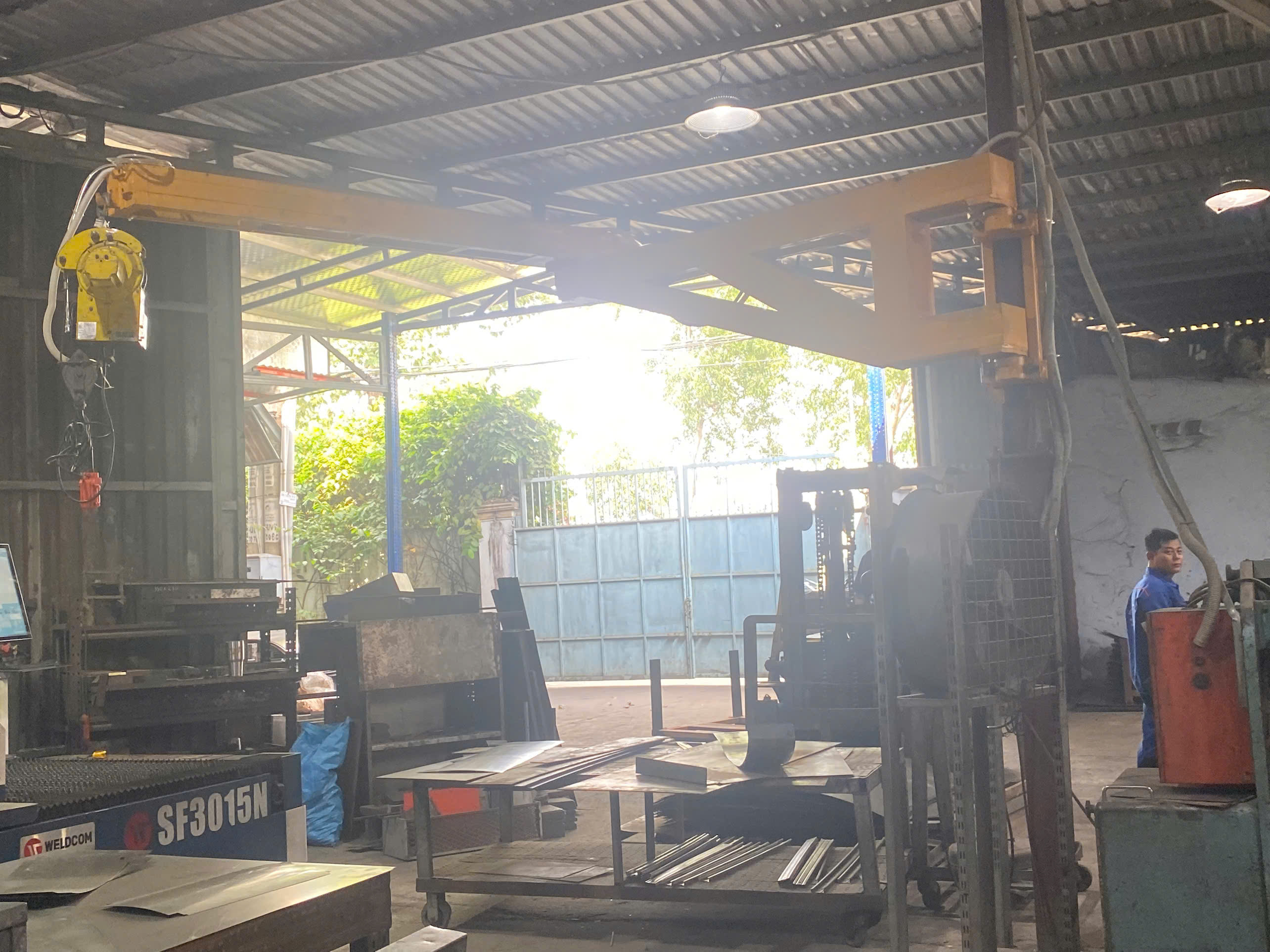
Choosing the Right Vietnam Origin Port
The origin port in Vietnam affects both the ocean transit time and the reliability of your shipment. Vietnam has three main export regions, each with its own Vietnam manufacturing hubs and port infrastructure.
- Cat Lai and Cai Mep-Thi Vai (Southern Vietnam): These handle the highest volume of exports to the US. Cat Lai is inside Ho Chi Minh City and handles most FCL traffic. Cai Mep can accommodate larger vessels and often has direct sailings to the US West Coast without transshipment. If your sheet metal fabricator is in the southern industrial zones — which most are — these ports are the natural choice.
- Hai Phong (Northern Vietnam): Best for factories in the north, especially those sourcing raw materials from China. Transit times to the US West Coast are slightly longer. However, Hai Phong may be the better option if your supplier is near Hanoi or uses Chinese steel inputs.
- Da Nang (Central Vietnam): Less common for sheet metal exports but serves central Vietnam factories. Limited direct sailings mean transshipment in Singapore or Hong Kong is often required, adding 3–7 days.
How Origin Port Choice Affects US Delivery
The Vietnam origin port determines which ocean routes are available, which in turn determines which US ports your container can reach most efficiently. Here is a simplified view:
| Vietnam Origin Port | Best US Port Pairing | Typical Transit (Days) | Key Advantage |
|---|---|---|---|
| Cai Mep-Thi Vai | Los Angeles / Long Beach | 24–27 | Direct sailings, no transshipment |
| Cat Lai (HCMC) | Los Angeles / Long Beach | 25–29 | Highest frequency of sailings |
| Cat Lai (HCMC) | New York / Newark | 30–35 | Good for East Coast destinations |
| Hai Phong | Seattle / Tacoma | 26–30 | Shorter Pacific crossing from north |
| Da Nang | Oakland (via transshipment) | 30–38 | Limited direct options |
Avoiding Documentation and Customs Delays
The most common inland transit delays do not start at the US port. They start with paperwork errors in Vietnam. Here is what I ask our team to verify before every shipment:
- HS Code accuracy. An incorrect HS code triggers customs holds, inspections, and potential penalties. HS Code accuracy 8 For sheet metal brackets, the correct classification under Chapter 73 or 76 of the Harmonized System depends on the base metal (steel vs. aluminum) and the function of the part.
- Commercial invoice completeness. Missing item descriptions, incorrect values, or mismatched quantities cause red flags at US customs.
- Packing list consistency. The packing list must match the commercial invoice and the bill of lading 9 exactly. Discrepancies cause holds.
- Advance booking confirmation. We book ocean freight at least 2–3 weeks before the cargo ready date. This ensures we get on the planned vessel and avoids rolled cargo — containers that miss their scheduled sailing and get pushed to the next one.
Timing Shipments to Avoid Congestion
Vietnam's peak export season 10 runs from August through November. During this period, Cat Lai port can experience significant congestion and shipping delays. Container pickup delays of 2–5 days are common. Booking slots fill up faster, and freight rates spike.
Our approach is to plan production schedules so that containers are ready for pickup during off-peak windows — January through April and June through July. This requires close coordination between our Vietnam production team and the client's demand forecast. It is not always possible, but when it works, it shaves days off the total transit time and avoids inflated costs.
I also recommend that buyers maintain open communication with their logistics providers about real-time port conditions. A good freight forwarder will alert you to congestion events and suggest alternative sailings or even alternative origin ports if delays are building.
Conclusion
Choosing the right US port for your Vietnam sheet metal fabrication imports is a total-cost decision, not just an ocean freight decision. Map your warehouse, calculate inland costs, align with your Vietnam partner on origin ports and documentation, and let the numbers guide your choice. For a deeper dive into balancing logistics cost and time when sourcing from Vietnam, review how ocean freight, inland transit, and production scheduling interact to shape your total landed cost.
Frequently Asked Questions
Which US port should I choose to minimize the inland drayage costs for my Vietnam sheet metal orders?
A client in Ohio once asked us why his competitor's per-unit cost was noticeably lower on nearly identical sheet metal brackets. After digging into the logistics, I found the answer had nothing to do with part pricing — it was the port of entry and the 600 fewer miles of inland trucking his competitor was paying for.
How do I decide between West Coast and East Coast ports based on my specific US warehouse location?
One trade-off I weigh on almost every new project is speed versus proximity. A buyer in Atlanta once insisted on routing through Los Angeles because "West Coast is always faster from Vietnam." He was right about the ocean leg. But he was paying $3,800 in rail and truck costs to get containers from LA to his Georgia warehouse — nearly as much as the ocean freight itself.
Can I reduce my total landed cost by switching to a different US port for my custom metal fabrication imports?
A lesson I learned early in this business: the port you started with is not always the port you should keep using. One of our long-term clients was routing all shipments through Long Beach for three years. His warehouse had moved from Phoenix to Nashville. He never updated his logistics routing. When we ran the numbers, switching to Savannah saved him over $2,000 per container — roughly $24,000 per year on his volume.
Footnotes
1. Defines a critical financial metric in international trade, including all associated costs. ↩︎
2. Provides a comprehensive guide to sheet metal fabrication basics. ↩︎
3. Clarifies a significant component of inland transportation expenses, often linked to port movements. ↩︎
4. Describes a key logistics method combining rail and truck for cost-effective long-haul transport. ↩︎
5. Explains fees associated with moving containers within port terminals, covering various services. ↩︎
6. Provides information on designated customs areas offering duty deferral and reduction benefits. ↩︎
7. Defines common surcharges in container shipping for exceeding free time at or outside terminals. ↩︎
8. Emphasizes the importance of correct product classification for customs compliance and avoiding delays. ↩︎
9. Explains a crucial legal document in freight shipping, serving as a contract, receipt, and title. ↩︎
10. Describes periods of high shipping volume, increased rates, and potential delays in global trade. ↩︎