When our Vietnam office started coordinating sheet metal shipments to American buyers, the biggest headache was not finding a forwarder — it was finding the right one VCI (vapor corrosion inhibitor) wrapping 1. Damaged brackets, customs delays, and surprise surcharges kept burning through margins and trust. That pain taught us exactly what to look for.
To choose a Vietnam freight forwarder for sheet metal sea freight to the US, verify their metal cargo experience, inspect their damage-prevention capabilities, compare FCL and LCL pricing, confirm customs clearance expertise on both ends, and demand transparent quotes with real-time tracking before committing.
This guide walks you through every factor we evaluate when selecting a logistics partner for our custom metal parts. Each section tackles a specific concern — from verifying experience to cutting costs — so you can make a confident, informed decision.
How do I verify if a Vietnam freight forwarder is experienced enough to handle my heavy sheet metal sea shipments?
A lesson we learned early on: one of our first forwarders quoted a great rate, then loaded precision-cut brackets into a shared container with no bracing. The entire pallet shifted mid-ocean. Verifying real experience before signing anything would have saved us weeks.
Verify a forwarder's experience by asking for case studies of past metal shipments, checking their licensing with Vietnam Customs and US CBP, requesting references from metal fabrication clients, and confirming they understand weight distribution, lashing, and coating protection for sheet metal cargo.
Why Sheet Metal Is Not Just Another Commodity
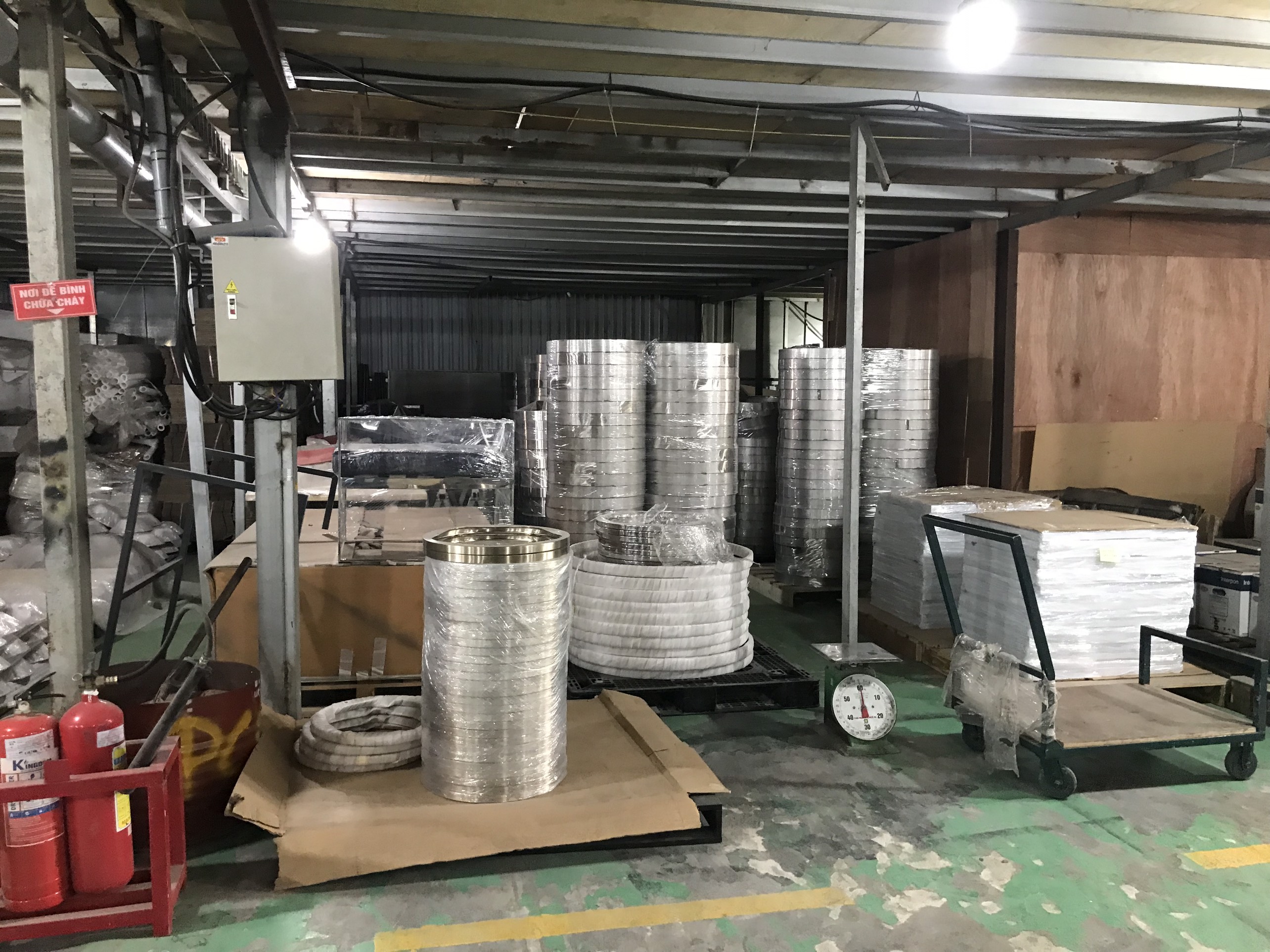
Sheet metal parts are heavy, dense, and unforgiving during transit. A single stack of powder-coated mounting brackets — like the ones we produce with mirrored angular folds and pre-drilled mounting holes — can weigh several hundred kilograms per pallet. Standard freight forwarders who mainly move garments or electronics often underestimate the load-securing requirements.
Vietnam's coastline stretches over 3,200 km, and most sheet metal exporters ship from Ho Chi Minh City port or nearby terminals. A forwarder with boots on the ground near these ports understands local trucking constraints, container availability, and port congestion patterns. That local knowledge matters more than a glossy website.
What to Ask Before You Sign
Here is a checklist we use internally before approving a new forwarder:
| Verification Step | What to Look For | Red Flag |
|---|---|---|
| Licensing | Valid NVOCC or freight broker license 2; registration with US CBP 3 | No license number provided on request |
| Metal cargo history | Photos or documentation of past sheet metal shipments | Only references from soft-goods clients |
| Container inspection | Willingness to inspect container condition before loading | "We use whatever container is available" |
| Insurance options | Offers cargo insurance tailored to metal (rust, bending, shifting) | Only basic coverage with high deductibles |
| Local presence | Office or agent near Ho Chi Minh City port | Relies entirely on remote third parties |
| US-side partner | Named customs broker at destination port | Vague answers about "we'll figure it out" |
Mid-Size Forwarders vs. Giant Carriers
One trend we have noticed is that mid-size freight forwarders — companies like JAS, EMO, AIT, or MAO — often deliver better service for custom metal parts shipments than the global giants. They offer personalized care for smaller accounts while still having enough volume to negotiate competitive ocean freight rates 4. When you ship 5–15 containers a year rather than 500, you want a forwarder who treats your account as important.
Digital platforms like Freightos also help you compare rates quickly. But a rate comparison is only the starting point. The real test is whether the forwarder can handle the physical complexity of your cargo.
What specific logistics capabilities should I look for to prevent damage to my custom metal parts during transit to the US?
During a recent shipment of heavy-duty mounting brackets — the kind with complex angular folds, weld joints, and powder-coated finishes — our team discovered that even minor humidity exposure inside the container caused surface oxidation. That single incident reshaped how we vet forwarder capabilities.
Look for forwarders who provide container-grade desiccants, custom crating or steel-rack palletizing, VCI (vapor corrosion inhibitor) wrapping for coated metals, proper lashing and blocking, and marine cargo insurance that specifically covers bending, rust, and shifting damage during ocean freight transit.
The Three Biggest Damage Risks for Sheet Metal at Sea
Ocean freight transit time from Vietnam to the US West Coast runs roughly 21 to 33 days. To the East Coast, it can stretch to around 50 days. That is a long window for moisture, vibration, and load shifting to damage your parts.
Risk 1: Corrosion and Rust. Containers breathe. Temperature swings between tropical Vietnam and the open Pacific create condensation inside the container — sometimes called "container rain." For sandblasted or powder-coated steel brackets, this moisture attacks exposed edges, weld marks, and any spot where the coating is thin.
Risk 2: Bending and Deformation. Sheet metal components with precise folds and angular cutouts are structurally rigid in one axis but vulnerable in others. If pallets are stacked incorrectly or not braced, the weight of upper layers can bend lower parts.
Risk 3: Surface Scratching. Parts sliding against each other during rough seas leave scratches that ruin a powder-coated or anodized finish. Interleaving with protective foam or VCI paper prevents this.
Packaging Standards We Require
| Packaging Element | Purpose | Applies To |
|---|---|---|
| VCI poly bags or paper | Prevents corrosion from humidity | All coated or bare metal parts |
| Container desiccant packs | Absorbs moisture inside the container | Every shipment |
| Custom wooden crates or steel racks | Prevents bending and stacking damage | Heavy brackets, large panels |
| Foam interleaving sheets | Prevents surface-to-surface scratching | Finished or coated parts |
| Steel banding and corner protectors | Secures pallets against shifting | All palletized metal cargo |
| Lashing and blocking inside container | Prevents load movement during transit | FCL shipments |
FCL vs. LCL: The Damage Trade-Off
Choosing between Full Container Load 5 and Less than Container Load affects damage risk directly. With FCL, you control how the container is packed. Your forwarder (or your factory team) loads the container, positions the cargo, and secures everything. No one else touches it until it reaches the US.
With LCL, your cargo is consolidated with other shippers' goods. Less than Container Load 6 Warehouse workers at the consolidation point handle your pallets, and your heavy metal parts may be placed next to fragile goods — or under lighter cargo that provides no support. Every additional touch point increases the risk of bending, scratching, or mishandling.
For bulk sheet metal with mid-to-high quality requirements, we almost always recommend FCL. The per-unit shipping cost may be slightly higher for a partial container, but the damage savings and reduced claims make it worthwhile. If your order volume is small, work with your forwarder to find an LCL consolidator who specializes in heavy industrial cargo — not mixed consumer goods.
How can I optimize my sea freight costs and lead times when importing sheet metal components from Vietnam?
One of the most frequent conversations I have with US purchasing managers revolves around a frustrating trade-off: they want their parts fast, but sheet metal is heavy, and air freight for heavy cargo is brutally expensive. The solution is not choosing one mode — it is building a smarter plan.
Optimize sea freight costs by booking containers 2–4 weeks in advance, comparing at least three forwarder quotes, using FCL for bulk orders and LCL for smaller runs, timing shipments outside peak season, and implementing a "split plan" strategy — sending samples by express, urgent items by air, and production volumes by sea.
The Split Plan Strategy
This is the approach we recommend to every client ordering custom metal parts from our Vietnam facility. Instead of treating all cargo identically, you segment it by urgency and value:
- Samples and prototypes: Ship via express courier (DHL, FedEx). Transit time is 3–5 days. The cost per kilogram is high, but sample quantities are small. Getting samples fast accelerates your approval cycle.
- Urgent replenishment: Use air freight. Transit time is 5–7 days to the West Coast, 6–8 days to the East Coast. Reserve this for high-value parts or emergency stock-outs where the cost of downtime exceeds the shipping premium.
- Main production runs: Ship by sea. Transit time is 21–33 days to the West Coast, around 50 days to the East Coast. This is where you move the bulk of your sheet metal at the lowest per-unit cost.
Cost and Transit Time Comparison
| Shipping Method | Transit to US West Coast | Transit to US East Coast | Relative Cost per kg | Best For |
|---|---|---|---|---|
| Express courier | 3–5 days | 4–6 days | Very high | Samples, documents |
| Air freight | 5–7 days | 6–8 days | High | Urgent, high-value parts |
| Sea freight (FCL) | 21–33 days | ~50 days | Low | Bulk production orders |
| Sea freight (LCL) | 25–35 days | ~55 days | Low–moderate | Smaller production runs |
The shipping costs from Vietnam to the US by sea are significantly lower than air — often by a factor of five to ten for heavy goods like sheet metal. That gap makes sea freight the default for any order that is not time-critical.
Practical Cost-Saving Tactics
Book early. Spot rates spike when you book last minute. Give your forwarder at least two to four weeks of lead time, and you will access better rates and preferred vessel slots.
Compare quotes. We always request quotes from at least three forwarders for any new lane. Rates vary widely — sometimes by 20–30% for the same route and service level. Digital platforms help, but direct negotiation with mid-size forwarders often yields better results for ongoing contracts.
Be flexible on timing. If your production schedule allows a two-week window for shipping, your forwarder can place your cargo on a vessel with lower demand, saving you money. Rigid deadlines cost more.
Understand Incoterms 2020. The Incoterm you agree on with your supplier determines who pays for what. Incoterms 2020 7 FOB (Free on Board) means the supplier covers costs to the Vietnam port; you pay ocean freight and US-side costs. CIF (Cost, Insurance, Freight) means the supplier covers freight and insurance to the US port. Choosing the right Incoterm for your situation directly impacts your landed cost. When we manage supply chain optimization for clients, we typically recommend FOB so the buyer controls forwarder selection and can consolidate shipments.
Consolidate orders. If you source multiple custom parts from Vietnam — brackets, enclosures, panels — combine them into a single FCL shipment rather than sending separate LCL loads. The per-unit freight cost drops, and you reduce handling touchpoints.
Can a Vietnam-based logistics partner manage the full door-to-door delivery and US customs process for my orders?
A buyer we work with in the Midwest once asked us this question directly: "Can your Vietnam team really get my parts from the factory floor in Ho Chi Minh City to my warehouse in Ohio without me having to manage a separate US broker?" The short answer was yes — but the longer answer involves understanding exactly how the handoffs work.
Yes, a capable Vietnam-based logistics partner can manage full door-to-door delivery including US customs clearance, provided they have a licensed US customs broker partner, experience with required shipping documents like bills of lading and commercial invoices, and a clear process for handling US import duties and compliance checks.
The US-Based vs. Vietnam-Based Forwarder Debate
This is one of the most common questions in Vietnam freight forwarding, and there is no single right answer. Here is how the trade-offs break down:
| Factor | US-Based Forwarder | Vietnam-Based Forwarder |
|---|---|---|
| Communication ease | Same time zone, native English | May require overnight email cycles |
| US customs expertise | Strong — handles customs clearance US daily | Relies on US-side broker partner |
| Vietnam port access | Uses sub-agents at Ho Chi Minh City port | Direct relationships with port operators |
| Origin customs handling | Relies on Vietnam-side agent | Handles directly |
| Local factory coordination | Limited visibility | Can visit factories, inspect cargo |
| Pricing transparency | May mark up Vietnam-side costs | Lower origin charges, may mark up US-side |
| Best for | Buyers who want one US point of contact | Buyers who want origin-side control |
Our approach bridges both sides. With our Singapore headquarters and a seven-person team in Vietnam, we coordinate directly with factories, inspect parts before loading, and manage origin logistics. On the US side, we work with a licensed customs broker who handles customs clearance, duty calculations, and last-mile trucking.
Essential Documentation for US Customs
Getting sheet metal through US customs requires precise paperwork. Missing or incorrect documents cause delays, inspections, and sometimes penalties. Here is what every shipment needs:
- Commercial Invoice: Describes the goods, quantity, unit price, total value, and Harmonized Tariff Schedule (HTS) code 8. For sheet metal parts, the HTS classification matters because it determines US import duties.
- Packing List: Details the contents of each box, pallet, or crate — weights, dimensions, and piece counts.
- Bill of Lading (B/L): The carrier's contract and receipt. This is the single most important shipping document. It proves ownership and authorizes release of cargo at the destination port. Bill of Lading (B/L) 9
- Certificate of Origin: Confirms the goods were manufactured in Vietnam. This is critical because Vietnam-origin goods may qualify for different tariff treatment than goods from other countries — one reason Vietnam has become a top alternative to China for sourcing.
- Material Safety Data Sheet (MSDS): Required if the sheet metal has chemical coatings, plating, or treatments that classify as hazardous materials.
- Cargo Insurance Certificate: Proof of marine cargo insurance 10 coverage. We strongly recommend all-risk coverage for custom metal parts.
Why Vietnam-Origin Matters for US Importers
Vietnam is emerging as a top supply chain alternative to China. Lower labor costs, a growing skilled workforce, and the absence of certain tariffs that apply to Chinese goods make Vietnam attractive for metal fabrication services. For US purchasing managers who previously sourced exclusively from China, Vietnam offers a way to diversify supply chains and potentially reduce total landed costs.
Our Vietnam office handles supplier audits, process control, and final inspection before any parts reach the port. This origin-side quality control is something a US-based forwarder simply cannot provide — and it is often the difference between a smooth customs clearance and a rejected shipment.
Managing the Last Mile
Door-to-door service means your forwarder handles everything from factory pickup in Vietnam to warehouse delivery in the US. This includes inland trucking from the US port to your facility. Not all forwarders include this — some quote port-to-port only, which leaves you arranging drayage and inland transport yourself.
When comparing quotes, always confirm whether the price covers port-to-port or door-to-door. The difference in convenience and cost visibility is significant. A true door-to-door partner also manages any transloading required at the US port — transferring cargo from ocean containers to domestic trucks — which is another point where damage can occur if not handled properly.
Conclusion
Choosing the right Vietnam freight forwarder for sheet metal sea freight comes down to verified experience, damage-prevention capabilities, cost optimization through split plans, and confirmed door-to-door customs expertise on both ends.
Frequently Asked Questions
How do I verify if a Vietnam freight forwarder is experienced enough to handle my heavy sheet metal sea shipments?
A lesson we learned early on: one of our first forwarders quoted a great rate, then loaded precision-cut brackets into a shared container with no bracing. The entire pallet shifted mid-ocean. Verifying real experience before signing anything would have saved us weeks.
What specific logistics capabilities should I look for to prevent damage to my custom metal parts during transit to the US?
During a recent shipment of heavy-duty mounting brackets — the kind with complex angular folds, weld joints, and powder-coated finishes — our team discovered that even minor humidity exposure inside the container caused surface oxidation. That single incident reshaped how we vet forwarder capabilities.
How can I optimize my sea freight costs and lead times when importing sheet metal components from Vietnam?
One of the most frequent conversations I have with US purchasing managers revolves around a frustrating trade-off: they want their parts fast, but sheet metal is heavy, and air freight for heavy cargo is brutally expensive. The solution is not choosing one mode — it is building a smarter plan.
Footnotes
1. Explains the function and application of VCI technology in preventing metal corrosion. ↩︎
2. Official Federal Maritime Commission page for OTI licensing applications and registration. ↩︎
3. Official website for U.S. Customs and Border Protection. ↩︎
4. Provides general information about how ocean freight rates are determined and their components. ↩︎
5. Defines FCL shipping as a method where one shipper uses an entire container. ↩︎
6. Defines LCL shipping as a method where multiple shippers share container space. ↩︎
7. Provides an overview of Incoterms 2020 rules for defining buyer and seller responsibilities. ↩︎
8. Explains the purpose of HTS codes in identifying goods and determining import duties. ↩︎
9. Defines Bill of Lading as a legal document for cargo receipt, contract, and title. ↩︎
10. Defines marine cargo insurance and outlines its purpose and coverage for goods in transit. ↩︎