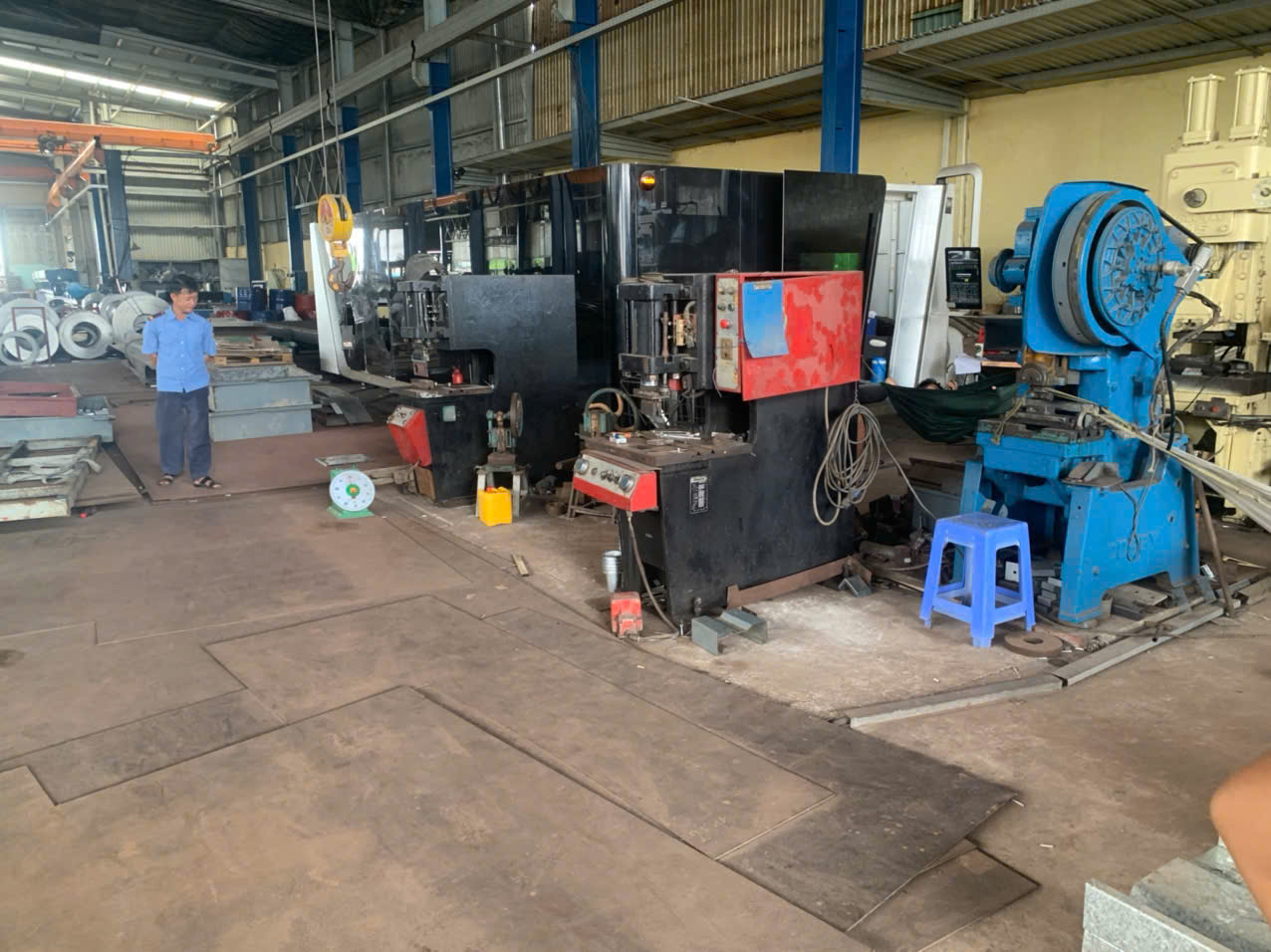

Every quarter, buyers ask our Vietnam team how to co-invest in mold development metal stamping 1 with a Vietnamese stamping parts supplier without losing control of the tooling. It is a fair worry.
To co-invest in mold development with a Vietnamese stamping parts supplier, sign a tooling ownership agreement securing your legal title, split payments by technical milestones like T1 approval, engrave your asset ID on the mold base, and lock in per-unit pricing through a tooling amortization schedule.
The idea sounds simple. The execution is not. Below, I walk through the agreement structure, ownership protection, real costs, and post-investment quality control, based on projects our team has managed on the ground in Vietnam.
What Does a Co-Investment Mold Agreement Typically Include When Working with a Vietnamese Supplier?
A few years back, our Vietnam office reviewed a client's stamping die contract that was only two pages long. It named a price and a date. Nothing else. We rewrote it before signing.
A co-investment mold agreement with a Vietnamese supplier typically includes tooling ownership terms, capital expenditure sharing ratios, milestone-based payment schedules, exclusivity and non-use clauses, mold specifications referencing DME or MISUMI standards, a tooling amortization schedule, maintenance responsibilities, and exit or buy-back provisions.

Vietnam's mold and precision engineering sector is now worth over $1 billion per year. That growth means suppliers in hubs like Binh Duong 2 and Bac Ninh are familiar with export contracts. But the depth of those contracts still varies a lot. So you must define everything yourself.
The Three Common Co-Investment Models
Before you draft anything, pick your model. Each one changes the contract structure.
| Model | How It Works | Best For |
|---|---|---|
| Full tooling buy | You pay 100% of the mold cost upfront and own it outright | Buyers who want clean ownership and simple exits |
| Shared capital co-investment | Both parties fund the mold; ownership and unit pricing reflect the split | Long-term programs with stable annual volumes |
| Amortized tooling | Supplier funds the mold; you repay it through a per-unit surcharge | Buyers with cash flow limits and high volumes |
In our experience managing stamping projects for U.S. clients, the shared capital model needs the most careful drafting. Ownership ambiguity is the number one dispute trigger. Vietnamese suppliers often prefer a clean tooling buy because joint ownership creates accounting headaches on their side too.
Core Clauses You Cannot Skip
Your contract manufacturing 3 agreement should attach the mold agreement as a schedule, not replace it. Include these items:
- Legal title to the mold, stated in plain terms, with your company named as owner.
- Technical specifications: steel grade (S50C, P20, or S136), mold base standard (DME, HASCO, MISUMI), and guaranteed shot life.
- Payment milestones tied to design approval, T1 trial shots, and Golden Sample sign-off.
- Non-use and non-disclosure clauses that prohibit third-party production runs.
- A tooling amortization schedule showing how the investment converts into unit pricing.
- Exit terms: what happens to the mold if the relationship ends.
We also add a clause requiring the supplier to release the mold within a fixed number of days upon written request. Without that, a supplier can hold your tool hostage during a price dispute. We have seen it happen to buyers who came to us after the fact.
How Do I Protect My Ownership Rights Over Molds I Co-Invest in Vietnam?
One lesson our sourcing team learned early: a signed contract sitting in Singapore does not stop a mold from quietly running third-party parts on a night shift in an industrial park.
Protect your mold ownership in Vietnam by securing sole legal title in a written tooling agreement, engraving your company name and asset ID on the mold base, registering intellectual property rights over the design, adding non-use clauses, and auditing production volumes with tamper-proof cycle counters.

Ownership protection has two layers. The first is legal. The second is physical and operational. You need both, because a contract alone does not help you if you cannot prove which mold is yours or how many shots it has run.
Legal Protections
Vietnam's legal framework 4 for foreign investment in manufacturing is fairly robust. But specific tooling assets sit in a gray zone unless your contracts are explicit. Here is what we put in place for clients:
- A standalone tooling ownership agreement naming your company as sole owner, even when capital expenditure sharing applies. In shared-capital deals, we usually structure the supplier's contribution as a credit against unit pricing rather than as partial title. Split title sounds fair but is very hard to enforce.
- Registered intellectual property rights over the progressive die design, strip layout, and any proprietary forming sequences. File before you share full drawings.
- Non-disclosure and non-use clauses with defined penalties, not vague language.
- A mold release clause with a hard deadline and a named handover process.
Physical and Operational Protections
Paper is not enough. These practical steps make your ownership visible and auditable:
| Protection Measure | What It Does |
|---|---|
| Engraved company name and asset ID on the mold base | Proves ownership for customs clearance and legal disputes |
| Tamper-proof IoT cycle counter | Lets you remotely audit shot counts and detect unauthorized ghost runs |
| Photographic asset register with serial numbers | Documents mold condition and identity at handover |
| Quarterly on-site tooling audits | Verifies location, condition, and usage against reported volumes |
Our Vietnam office runs these audits for clients as part of process control. On one bracket program, the cycle counter data flagged a volume gap between reported shipments and actual shots. It turned out to be scrap the supplier had not reported, not theft. But that is exactly the point. You want data, not assumptions. Supply chain risk management starts with knowing what your asset is doing every week.
If you ever need to move the mold out of Vietnam, the engraved asset ID and ownership documents make export far smoother asset tracking 5. Molds imported under temporary import for re-export status can also avoid import duties and VAT, which matters if you transfer existing tooling into Vietnam.
What Costs Should I Expect When Co-Investing in Mold Development with a Vietnamese Stamping Partner?
When a U.S. purchasing manager sends us a bracket drawing, the first budget conversation is never just the die price. It is the total program cost, and buyers are often surprised by the line items around the tool itself.
Expect four cost categories: the stamping die itself (design, steel, CNC and EDM machining), prototype development costs including T1 trial shots and samples, ongoing maintenance reserves of roughly 5–10% of tool value per year, and logistics or audit costs. Vietnam typically prices below China, Korea, and Japan.

Vietnam's cost advantage is real, but you should budget the full lifecycle, not just the invoice for the die. The Vietnam manufacturing industry 6 offers competitive tooling pricing while holding international quality assurance standards, yet the market is fragmented, with hundreds of mold shops ranging from top-tier exporters to small local workshops. Pricing spread between them can be wide, and the cheapest quote often hides missing steel certifications or skipped heat treatment.
The Full Cost Picture
Here is how we break down a typical stamping die program for the kind of brackets and clips we manage, with multiple bends, punched holes, and tight flatness requirements:
| Cost Category | Typical Share of Program Budget | Notes |
|---|---|---|
| Die design and engineering | 10–15% | 3D CAD, strip layout, progressive die design simulation |
| Tool steel and mold base | 15–25% | Certified S50C, P20, or S136; DME or MISUMI standard bases |
| Machining and assembly | 35–45% | CNC milling, wire EDM, grinding, fitting |
| Prototype development costs | 5–10% | T1/T2 trial shots, first article samples, dimensional reports |
| Maintenance reserve | 5–10% per year | Sharpening, spring replacement, insert repair |
| Logistics, audits, PPAP | Variable | On-site inspections, documentation, shipping |
How the Investment Pays Back
The point of co-investing is unit economics. A tooling amortization schedule spreads your capital across projected volumes. For example, if you invest in the die and the supplier drops the per-unit price in return, you can model the break-even point precisely. On multi-cavity or modular tooling, consider co-investing in modular mold bases with interchangeable inserts. One base can then serve several part variants across ASEAN markets, which cuts the cost of future product localization dramatically.
One more cost buyers forget: a maintenance escrow. We recommend a small per-unit contribution into a reserve fund so the tool gets professionally refurbished at around half of its rated shot life. Without it, refurbishment becomes a new negotiation right when you need the tool running.
How Can I Ensure Quality and Timely Delivery After Co-Investing in a Mold with My Vietnamese Supplier?
The riskiest moment in any tooling project is not the negotiation. It is the six months after T1 approval, when everyone relaxes. Our project managers in Vietnam treat that window as the real test.
Ensure quality and on-time delivery by locking a Golden Sample as the acceptance baseline, running PPAP before mass production, defining SPC-based process control with regular dimensional reports, setting maintenance intervals by shot count, and monitoring production lead times through weekly milestone tracking and third-party inspections.

Owning the mold gives you leverage. But leverage only works if you actively manage the production phase. Two of the most common pain points we hear from U.S. buyers are delivery delays and parts that miss critical drawing requirements. Both are preventable with structure.
Build Quality Gates Into the Program
We run stamping programs through a fixed sequence of gates. Each gate has a document, an owner, and a deadline.
- Design review. Confirm the progressive die design against your drawing, including bend radii, hole tolerances, and grain direction on stainless parts.
- T1 trial shots. Measure first samples against every dimension on the drawing, not just the critical ones. This is where suppliers who overlook drawing notes get caught.
- Golden Sample sign-off. Both parties sign a physical master sample. Every future shipment is judged against it.
- PPAP submission. For automotive-grade brackets, we require full PPAP documentation before releasing mass production.
- Ongoing process control. Statistical checks on bend angles, hole positions, and plating thickness, with dimensional reports sent on an agreed schedule.
Protect Your Delivery Schedule
Production lead times slip for predictable reasons: material shortages, unplanned mold repairs, and overloaded press schedules. Your co-investment agreement should require the supplier to reserve press capacity 7 for your tool and to notify you of any mold damage within 24 hours. We add weekly progress reports and monthly on-site checks by our local team. Because we hold the mold title, we also keep the option to move the tool to a backup stamping house if delivery discipline collapses. That option alone changes supplier behavior. It is the quiet power of ownership, and it is why "right first time" performance improves when the buyer stays visibly engaged after the investment closes.
Conclusion
Co-investing in mold development with a Vietnamese stamping parts supplier works when you secure sole title, pay by milestones, audit the tool, and manage quality gates. I am happy to help you structure it.
Frequently Asked Questions
What Does a Co-Investment Mold Agreement Typically Include When Working with a Vietnamese Supplier?
A few years back, our Vietnam office reviewed a client's stamping die contract that was only two pages long. It named a price and a date. Nothing else. We rewrote it before signing.
How Do I Protect My Ownership Rights Over Molds I Co-Invest in Vietnam?
One lesson our sourcing team learned early: a signed contract sitting in Singapore does not stop a mold from quietly running third-party parts on a night shift in an industrial park.
What Costs Should I Expect When Co-Investing in Mold Development with a Vietnamese Stamping Partner?
When a U.S. purchasing manager sends us a bracket drawing, the first budget conversation is never just the die price. It is the total program cost , and buyers are often surprised by the line items around the tool itself.
Footnotes
1. Authoritative Wikipedia entry for metal stamping processes, replacing the 403 Britannica link. ↩︎
2. Authoritative Wikipedia entry for the province, replacing the inaccessible government site. ↩︎
3. Authoritative Wikipedia entry defining contract manufacturing, replacing the 403 Investopedia link. ↩︎
4. UNCTAD overview of the investment and legal environment in Vietnam. ↩︎
5. Authoritative Wikipedia entry for asset tracking and identification, replacing the 404 asset tagging link. ↩︎
6. World Bank data on the economic development of Vietnam’s manufacturing sector. ↩︎
7. Economic concept of manufacturing output limits and resource allocation in production. ↩︎
8. Authoritative Wikipedia entry for manufacturing dies and tooling, replacing the 403 ScienceDirect link. ↩︎