
A rejected shipment of stamping brackets once cost one of our clients three weeks and thousands of dollars — all because the supplier used the wrong label format and skipped VCI corrosion protection 1 inside the cartons.
To communicate packaging and labeling requirements for stamping parts meeting U.S. standards, embed every specification — Country of Origin marking, container labeling, corrosion protection, and palletization rules — into your Technical Data Package and Quality Assurance Agreement before production begins, then verify compliance through pre-shipment audits.
This article walks through each step our team uses to prevent these costly mistakes. Whether you source mounting brackets, spring clips, or custom sheet-metal stampings from Asia, the principles are the same. Let me break it down.
How can I clearly specify packaging requirements to avoid damage during shipping from Asia?
One lesson I learned early in our Vietnam office was that a perfectly stamped bracket can arrive in the U.S. looking like scrap if the packaging spec was vague. A client once told us: "The parts were fine — but half of them were corroded and scratched by the time they reached our warehouse."
Specify packaging requirements by defining material type, VCI corrosion protection, interior dunnage, nesting orientation, maximum box weight, and palletization standards in a written packaging specification sheet that becomes part of your purchase order and PPAP submission.
Why Stamping Parts Are Especially Vulnerable
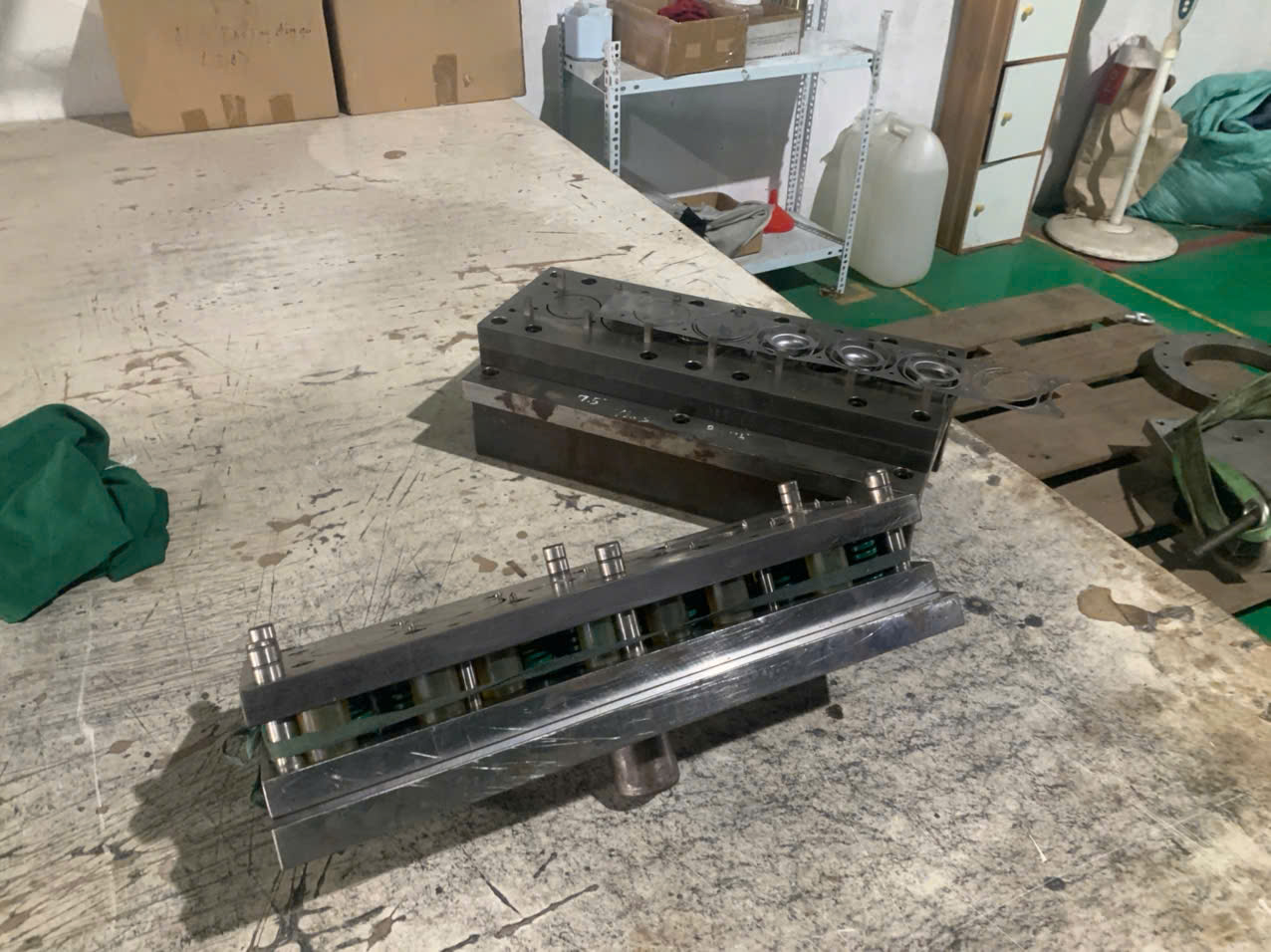
Stamped metal parts have sharp edges, bent flanges, and precision-punched holes. When loose parts shift inside a box during a 30-day ocean voyage, edges dig into adjacent surfaces. The result is scratches, dents, and deformed tabs. Add moisture from a humid container, and bare steel or zinc-galvanized finishes develop rust spots fast.
Our approach is to treat the packaging specification as seriously as the part drawing itself. We include it in the Technical Data Package from day one.
The Core Packaging Specification Checklist
Here is a breakdown of what we include in every packaging spec for stamped parts shipped from Asia to the U.S.:
| Packaging Element | What to Specify | Why It Matters |
|---|---|---|
| Interior wrapping | VCI poly bags or VCI paper per ASTM packaging standards | Prevents oxidation on ferrous parts without requiring degreasing at receiving |
| Dunnage / dividers | Corrugated cardboard, foam inserts, or custom plastic trays | Stops part-to-part contact and nesting damage |
| Part orientation | Flat-stack, edge-up, or nested (with diagram) | Reduces pressure on bent flanges and tabs |
| Box material | Double-wall corrugated, minimum 275 lb burst test | Survives stacking and forklift handling |
| Maximum gross weight | 35 lbs per carton (or specify) with OSHA "Heavy Load" label if exceeded | Meets workplace safety requirements and prevents handling injuries |
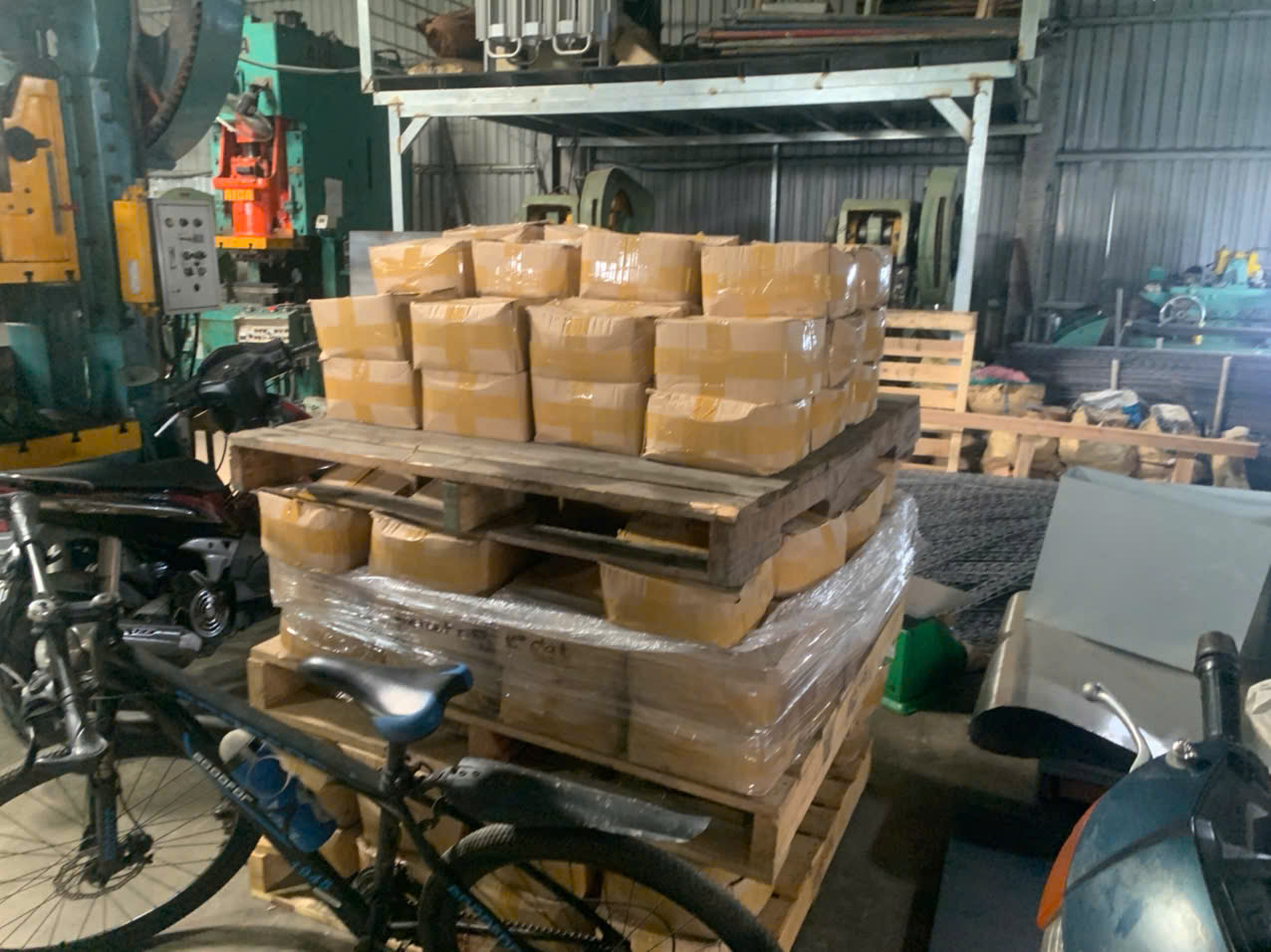
| Palletization | 4-way heat-treated pallet, ISPM 15 2 compliant, stretch-wrapped | Required by U.S. Customs and Border Protection for wood packaging from Asia |
| Stacking limits | Max 3 layers high on pallet, arrows-up markings | Prevents crush damage to bottom cartons |
Integrate Packaging into PPAP
Many buyers overlook this step. We always require the supplier to submit a packaging sample during the Production Part Approval Process. The supplier packs a trial quantity exactly as they would for mass production. We then inspect for part condition after simulated transit handling. If the parts arrive scratched or corroded, the packaging fails — just like a dimensional check would.
Use Digital Tools for Complex Geometries
For brackets with multi-planar bends and irregular shapes, we sometimes use Digital Twin 3 simulations. These let us virtually test how parts nest inside a container. We can predict contact points and adjust dunnage before cutting a single piece of foam. This saves time and avoids the back-and-forth of physical prototyping.
When specifying palletization and crating requirements, be explicit. State the pallet dimensions, the number of cartons per layer, and the total pallet height. If your warehouse uses automated handling, add those constraints too. Never assume the supplier knows your receiving setup.
What labeling standards should I communicate to ensure my stamping parts meet U.S. import regulations?
During a recent shipment review, we caught a supplier labeling parts with "PRC" instead of "Made in China." That abbreviation would have triggered a U.S. Customs hold. Small details like this can halt your entire supply chain.
Communicate that every stamping part must carry a permanent Country of Origin marking (etched, embossed, or stamped — not adhesive), use the full English country name per 19 CFR 134, and that outer containers must display shipping marks, GS1 barcodes, and net weight declarations per the Fair Packaging and Labeling Act.

Country of Origin: The Non-Negotiable
U.S. Customs and Border Protection requires that every imported article be marked with its country of origin. The marking must be "legible, obvious, and sufficiently permanent." For stamping parts, this means the mark should be part of the manufacturing process — embossed, etched, or die-stamped directly into the metal. Adhesive labels peel off during handling and transit, and CBP can reject or detain shipments with missing or illegible origin marks.
The phrasing matters too. Use "MADE IN VIETNAM" or "PRODUCT OF TAIWAN" — the full English country name. Abbreviations like "VN" or "TW" are not acceptable. If the part is too small to mark directly, you must mark the smallest container that the part is packed in.
Container and Outer Carton Labels
Beyond part-level marking, every shipping container needs its own labels. Here is what we require on every carton:
| Label Element | Standard / Regulation | Details |
|---|---|---|
| Country of Origin | 19 CFR 134 4 | Full English country name on two opposite sides of container |
| Product Identity | Fair Packaging and Labeling Act 5 (FPLA) | Part number, description, material |
| Net Quantity | Title 16, Part 500 | Piece count and/or net weight |
| Manufacturer / Packer | FPLA | Name and address of responsible party |
| GS1 Barcode 6 | GS1 barcode specifications | Scannable barcode with part number and lot/batch info |
| Lot / Batch Number | Vendor compliance guidelines | Enables batch and lot traceability for recalls |
| Shipping Marks | Shipping mark standards | PO number, destination, handling symbols |
| Heavy Load Warning | OSHA HCS | Required if carton exceeds 35 lbs |
Automotive-Specific Requirements
If your stamping parts serve the automotive industry, you may also need to comply with standards like GM 1724. This requires a specific label format affixed to two opposite sides of every shipping container. The label must include the part number, supplier code, quantity, and country of origin. Our team always cross-references the buyer's vendor compliance guidelines with federal requirements to ensure nothing is missed.
For automotive customers, we also follow AIAG B-3 and B-10 standards. These define barcode symbology, data identifiers, and label placements for North American supply chains. If your supplier is unfamiliar with these, provide a sample label layout and specify the exact barcode format.
Hazardous Material Coatings
Some stamped parts carry zinc coatings or other chemical treatments. If any hazardous substances are present, OSHA's Hazard Communication Standard 7 requires additional label elements: product identifiers, hazard pictograms, signal words like "Danger" or "Warning," and precautionary statements. Material Test Reports should accompany each shipment to document the coating composition and confirm compliance.
Do not forget state-level rules either. California's Proposition 65 8, for example, may require additional warnings if the part or its coating contains listed chemicals. Address this in your specification upfront.
How do I create a packaging and labeling checklist my suppliers can follow without misunderstandings?
When our China office onboards a new stamping supplier, the first document we share is not the part drawing — it is the packaging and labeling specification. We learned that starting with this document sets the right expectations from the very beginning.
Create a bilingual, visual checklist that combines written requirements with annotated photos, sample labels, and pass/fail criteria — then embed this checklist into your purchase order, Quality Assurance Agreement, and PPAP submission so it carries contractual weight and leaves no room for interpretation.
Why Checklists Fail — and How to Fix Them
Most checklists fail because they are text-heavy and written in English only. A factory floor worker in Vietnam or India may not read English fluently. Even if the factory manager understands the words, the person physically packing the parts might not. That is why we build visual checklists.
Every line item on our checklist includes three things:
- A written requirement in English and the local language.
- A photo showing the correct result (and sometimes a photo of an incorrect result).
- A pass/fail checkbox.
Structure of an Effective Checklist
Here is a simplified version of the checklist template we use:
| Checklist Item | Requirement | Visual Reference | Pass / Fail |
|---|---|---|---|
| Part-level Country of Origin | "MADE IN [COUNTRY]" stamped or etched on part surface, min 3mm font height | Photo of correct stamp location | ☐ |
| VCI wrapping | Each layer of parts wrapped in VCI poly bag, sealed | Photo of wrapped layer | ☐ |
| Dunnage between layers | Corrugated divider between every layer, no part-to-part metal contact | Photo of divider placement | ☐ |
| Carton label — Side A | GS1 barcode, part number, lot number, quantity, country of origin, net weight | Sample label PDF | ☐ |
| Carton label — Side B | Duplicate of Side A on opposite side of carton | Photo of label placement | ☐ |
| Carton sealing | H-tape method, top and bottom | Photo of sealed carton | ☐ |
| Pallet markings | ISPM 15 heat-treatment stamp visible on pallet | Photo of stamp | ☐ |
| Pallet wrapping | Stretch wrap, min 3 rotations, corner boards on all 4 edges | Photo of wrapped pallet | ☐ |
| Heavy Load label | Applied if gross carton weight exceeds 35 lbs | Photo of label | ☐ |
| Shipping marks | PO number, destination address, "This Side Up" arrow | Photo of marks | ☐ |
Embed It in Contractual Documents
A checklist that lives only in an email has no teeth. We embed the checklist into three places:
- The Purchase Order: Reference the checklist document number and revision in the PO terms.
- The Quality Assurance Agreement (QAA): Define specific acceptance criteria. State that shipments failing any checklist item will be rejected at the supplier's cost.
- The PPAP Package: Require the supplier to submit completed checklist photos during the Production Part Approval Process, along with dimensional reports and Material Test Reports.
This approach ensures the supplier cannot claim ignorance. It also gives your receiving team a clear standard to inspect against.
Handle Revisions Carefully
Packaging and labeling requirements change. New regulations, updated GS1 barcode specifications, or customer-specific vendor compliance guidelines can all trigger revisions. When we update a checklist, we issue a new revision number, require the supplier to acknowledge receipt in writing, and set a clear effective date. We keep a log of all revisions for ISO 9001 certification audit purposes.
What steps can I take to verify my supplier actually followed my packaging and labeling instructions before shipment?
A purchase order once looked perfect on paper — until we opened the container in the U.S. and found that the supplier had substituted newspaper for VCI paper and omitted the lot number from every carton label. Trust, in international sourcing, is built through verification.
Verify supplier compliance by conducting a structured pre-shipment inspection that checks every packaging and labeling checklist item, photographing evidence of conformance, and requiring a signed inspection report with lot-level traceability before authorizing container loading.
The Pre-Shipment Inspection Protocol
We never rely on the supplier to self-certify packaging compliance. Our team — either from our Vietnam or China office, or a contracted third-party inspector — visits the factory before the shipment is loaded. The inspection follows the exact checklist described in the previous section.
Here is the step-by-step process:
- Schedule the inspection after the supplier confirms all parts are packed and ready, but before the container arrives for loading.
- Random sampling: Select cartons at random from the pallet. Open them. Check the VCI wrapping, dunnage, part orientation, and part-level Country of Origin marking.
- Label verification: Compare every label element against the approved sample label. Check the GS1 barcode with a scanner. Confirm the lot number matches the production records.
- Photo documentation: Photograph every checklist item — both compliant and non-compliant findings.
- Pallet check: Verify the ISPM 15 heat-treatment stamp on the wooden pallet. Check stretch wrapping and stacking configuration.
- Sign-off: The inspector completes the checklist, signs it, and submits it to both the buyer and the supplier. Only after sign-off do we authorize container loading.
What to Do When You Find Non-Conformances
Not every issue requires a full shipment rejection. We classify findings into three levels:
- Critical: Missing Country of Origin on parts, no VCI protection, wrong part in the box. Result: shipment hold until corrected.
- Major: Label missing one data field, dunnage not matching spec. Result: supplier must correct before loading, with photos of rework submitted.
- Minor: Label slightly misaligned, one carton with loose tape. Result: noted in the report, supplier issues corrective action for next shipment.
This tiered approach keeps the supply chain moving while still enforcing standards.
Ongoing Audits and Digital Traceability
Beyond pre-shipment inspections, we schedule periodic packaging audits — typically quarterly for high-volume programs. These audits review trends. Are the same checklist items failing repeatedly? Is the supplier cutting corners on VCI corrosion protection to save cost?
For clients with advanced requirements, we also explore on-metal RFID tags or IoT sensors. These provide real-time environmental monitoring during transit — tracking humidity, temperature, and shock events. If a container experienced excessive moisture or impact, we know before the doors open. This level of batch and lot traceability is becoming standard for high-value stamping programs.
Some of our automotive clients are also transitioning to closed-loop returnable packaging systems for high-volume programs. Instead of expendable cardboard, the supplier uses durable plastic totes that cycle between the factory and the buyer's warehouse. This eliminates waste and standardizes handling, but it requires upfront investment and a solid reverse-logistics plan. We help clients evaluate whether the volume justifies the switch.
For digital trade documentation, platforms like GM's TMSII application now accept Country of Origin affidavits electronically. We encourage all our suppliers to submit annual affidavits digitally and to notify us immediately if the origin of any raw material or sub-component changes. This keeps the supply chain transparent and audit-ready at all times.
Conclusion
Clear communication of packaging and labeling requirements is not optional — it is the foundation of compliant, damage-free stamping part imports. Embed every spec in your Technical Data Package, enforce it through your Quality Assurance Agreement, and verify it with pre-shipment inspections. For a deeper dive into U.S. packaging and labeling requirements for stamping parts, review the regulatory framework before drafting your supplier specifications. If your stamped parts go into electronics or other regulated products, you should also understand what safety certifications are required for stamping parts in electronics, as these often impose additional labeling obligations. At DEWIN, this process is how we help our clients get it right the first time.
Frequently Asked Questions
How can I clearly specify packaging requirements to avoid damage during shipping from Asia?
One lesson I learned early in our Vietnam office was that a perfectly stamped bracket can arrive in the U.S. looking like scrap if the packaging spec was vague. A client once told us: "The parts were fine — but half of them were corroded and scratched by the time they reached our warehouse."
What labeling standards should I communicate to ensure my stamping parts meet U.S. import regulations?
During a recent shipment review, we caught a supplier labeling parts with "PRC" instead of "Made in China." That abbreviation would have triggered a U.S. Customs hold. Small details like this can halt your entire supply chain.
How do I create a packaging and labeling checklist my suppliers can follow without misunderstandings?
When our China office onboards a new stamping supplier, the first document we share is not the part drawing — it is the packaging and labeling specification. We learned that starting with this document sets the right expectations from the very beginning.
Footnotes
1. Wikipedia background on corrosion explains why VCI protection matters for metal parts. ↩︎
2. International Plant Protection Convention standard for wood packaging treatment referenced in the article. ↩︎
3. Wikipedia background on digital twin technology referenced for packaging simulation. ↩︎
4. Direct regulatory text for the federal code governing country of origin marking. ↩︎
5. FTC administers this act governing packaging and labeling disclosures for consumer products. ↩︎
6. GS1 is the official standards body for barcode specifications mentioned repeatedly in the article. ↩︎
7. OSHA’s official page detailing hazard communication labeling requirements mentioned in the article. ↩︎
8. Official California government resource for the Proposition 65 warning requirements referenced. ↩︎
9. CBP is the authoritative source for U.S. country of origin marking regulations. ↩︎
10. ISO provides standards context for Production Part Approval Process referenced throughout the article. ↩︎