Every week, our team in Vietnam and China fields calls from US buyers wrestling with the same dilemma — stick with Chinese sheet metal fabrication 1 suppliers or shift orders to Vietnam.
To compare Chinese vs Vietnamese sheet metal fabrication suppliers, evaluate five pillars: total landed cost including trade tariffs, precision capabilities and tolerances, lead times and logistics, quality control maturity, and payment flexibility. China leads on precision and speed; Vietnam wins on cost for US-bound shipments due to zero Section 301 tariffs.
The answer is never one-size-fits-all. Your product complexity, order volume, tolerance requirements, and target market all shift the equation Section 301 tariffs 2. Below, I break down each factor so you can make a data-driven decision.
How can I evaluate if Vietnamese sheet metal fabrication quality matches the precision standards I currently get from China?
A recent project taught us a hard lesson: we moved a bracket assembly to a Vietnamese supplier, and the first sample came back at ±0.08 mm — workable for structural parts, but not for the tight-tolerance enclosure our client needed IATF 16949 3.
Vietnamese sheet metal fabrication quality is strong for general mechanical components at ±0.05–0.1 mm tolerance, but China still leads for high-precision work at ±0.01 mm. Evaluate Vietnam by requesting first-article inspection reports, reviewing equipment lists, and benchmarking against your current China-sourced part specifications.
Understanding the Precision Gap
The precision difference between China and Vietnam comes down to equipment density and operator experience. China has thousands of 6 kW+ fiber laser cutting machines 4 deployed across its manufacturing clusters. Vietnam has roughly 200–300 units. That gap matters when you need consistent ±0.01 mm cuts across a 10,000-piece run.
For parts like the heavy-duty mounting brackets we regularly source — with multiple precise bends, pre-drilled mounting holes, and tight weld joints — China's fabricators deliver repeatable results. Vietnamese shops can handle the same geometry, but you need to vet them more carefully.
A Practical Comparison Table
| Metric | China | Vietnam |
|---|---|---|
| Laser cutting precision | ±0.01 mm | ±0.05–0.1 mm |
| High-power laser units (6 kW+) | 1,000+ | 200–300 |
| Steel quality consistency | Excellent (domestic production) | Good (import-dependent) |
| Certification availability | ISO 9001 5, IATF 16949, ISO 13485, AS9100 | ISO 9001, IATF 16949 (growing) |
| Best fit | Medical, automotive, complex enclosures | Structural brackets, general mechanical parts |
How I Recommend You Benchmark Quality
Start by sending the same drawing to both a Chinese and a Vietnamese supplier. first-article inspection 6 Ask each for a first-article sample. Measure them with the same CMM program 7. Look at three things:
- Dimensional accuracy — Does each part fall within your drawing tolerances?
- Surface finish consistency — Check for uniformity in powder coat thickness, sandblast texture, or plating.
- Weld quality — Inspect weld penetration and bead appearance. Our China team often catches inconsistent weld marks that indicate operator skill gaps.
For simpler parts — mounting brackets, structural supports, standard enclosures — Vietnamese manufacturing capabilities have matured significantly. Our Vietnam office has audited dozens of suppliers there, and many now match the quality China offered five years ago. But for medical-grade components or automotive parts with tolerances below ±0.05 mm, China remains the safer bet. For a deeper dive into how the two countries stack up, see our analysis of the competitive advantages of Vietnam sheet metal fabrication vs China.
Raw material sourcing also plays a role. China produces its own steel domestically, which gives fabricators more control over material grades and consistency. Vietnam imports most of its sheet metal, so traceability can require extra documentation. We always request mill certificates and verify material composition before approving a Vietnamese supplier for a new project.
What are the key differences in lead times and logistics costs I should expect when sourcing custom parts from Vietnam versus China?
One trade-off I weigh on nearly every new project is this: can my client absorb a few extra days of transit in exchange for eliminating 25–145% in tariff costs?
China offers faster lead times — 7–15 days for prototypes and 25–40 days for production — versus Vietnam's 12–20 and 30–50 days respectively. Ocean freight from Vietnam to the US West Coast takes roughly 14–18 days compared to China's 10–14 days. However, Vietnam's zero Section 301 tariffs often outweigh the 4-day logistics delta for US buyers.
The Lead Time Breakdown
Speed is where China's supply chain depth shows. Shenzhen fabricators can quote, source material, and ship a prototype within 7 days. That kind of turnaround relies on having raw materials in stock, available machine time, and a mature logistics network. In Vietnam, our local team typically sees 12–20 days for the same prototype — not because of skill gaps, but because material procurement takes longer and machine scheduling is tighter.
For production runs, the gap narrows proportionally. A 5,000-piece bracket order might take 30 days in China and 40 days in Vietnam. The difference comes from China's deeper ecosystem: surface finishing, hardware insertion, and packaging can all happen within one industrial park.
Total Landed Cost: The Real Comparison
Lead time only tells half the story. Here is what a $10 unit actually costs when it arrives at a US port — and you can explore a more detailed breakdown in our guide on how to compare sourcing costs for sheet metal fabrication from China vs. Vietnam:
| Cost Element | China (25% tariff) | China (145% tariff) | Vietnam (0% tariff) |
|---|---|---|---|
| Unit price | $10.00 | $10.00 | $8.50–$9.00 |
| Section 301 tariff | $2.50 | $14.50 | $0.00 |
| Ocean freight (per unit estimate) | $0.30 | $0.30 | $0.40 |
| Total landed cost | $12.80 | $24.80 | $8.90–$9.40 |
This table makes the math clear. Even with slightly higher freight costs and slower logistics, Vietnam delivers a lower total landed cost for US-bound products. The trade tariffs on Chinese goods — currently ranging from 25% to over 145% depending on the HS code — create a cost wall that Vietnam avoids entirely.
When China's Speed Still Wins
There are cases where lead times matter more than landed cost. If you are in a product launch crunch and need 500 prototypes in two weeks, China is your answer. If a production delay means shutting down your assembly line, China's faster turnaround and more predictable logistics and shipping timelines reduce that risk.
Our approach is to use both countries strategically. We route time-sensitive, complex orders through our China office (21 employees who manage supplier relationships daily) and shift cost-sensitive, standard parts to Vietnam. This supply chain diversification model gives clients the best of both worlds.
For minimum order quantity considerations, Vietnam tends to be more flexible on smaller runs. Chinese fabricators often prefer larger batches to justify setup costs, especially in North China's Hebei cluster where unit costs drop 10–15% at scale. South China (Shenzhen) handles smaller batches but at a premium.
How do I verify that a Vietnamese supplier has the right QC processes to prevent the non-conformance issues I've faced in the past?
A buyer I work with — a purchasing manager at a US distribution company — once told me he had rejected three consecutive shipments from a previous Vietnamese supplier. The root cause was always the same: no in-process inspection, no dimensional checks before packing. That experience made him swear off Vietnam entirely. It took us six months to rebuild his confidence.
Verify a Vietnamese supplier's QC processes by conducting an on-site audit, reviewing their quality management system documentation, requesting PPAP submissions for first articles, and mandating in-process inspection checkpoints with photographic evidence. A supplier that cannot produce control plans and inspection records should be disqualified immediately.
The QC Verification Process We Use
Quality control failures in Asian supply chains rarely stem from bad intent. They come from missing systems. Here is the step-by-step process our team follows when qualifying a new Vietnamese fabricator:
- Pre-audit questionnaire — We send a 40-point survey covering equipment lists, operator certifications, material traceability, and existing customer references.
- On-site audit — Our 7-person Vietnam office conducts a physical audit. We walk the shop floor, check calibration records on measuring equipment, and review how they handle non-conforming material.
- PPAP submission — We require a Production Part Approval Process package for every new part. PPAP submission 9 This includes dimensional reports, material certifications, process flow diagrams, and control plans.
- First-article inspection — We measure the first production samples against the drawing using calibrated instruments. If any dimension falls outside tolerance, we halt production.
- In-process checkpoints — We define critical-to-quality dimensions and require the supplier to check them at specific intervals during the run.
- Final inspection — Before shipping, our team conducts a final inspection using AQL sampling or 100% inspection for critical features.
What to Look for During an Audit
Not all certifications are equal. An ISO 9001 certificate on the wall means little if the shop floor tells a different story. Here is what I look for:
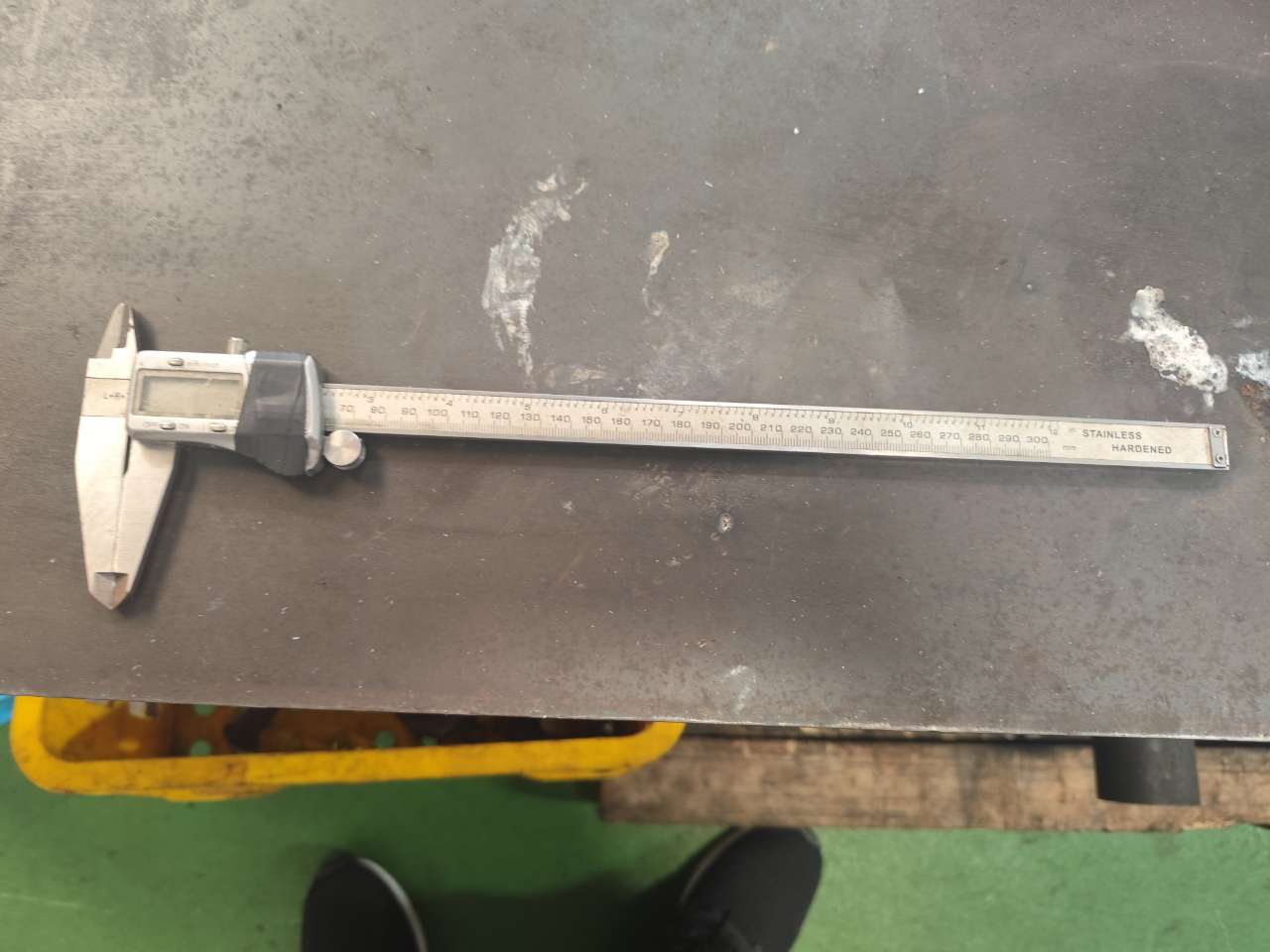
- Calibrated instruments — Are calipers, micrometers, and CMMs within calibration dates?
- Traceability — Can the supplier trace a finished part back to the raw material heat number?
- Non-conformance handling — Is there a documented process for quarantining and dispositioning rejected parts?
- Operator training records — Do welders have current certifications? Are press brake operators trained on the specific bend sequences your part requires?
Comparing QC Maturity
| QC Factor | Typical Chinese Supplier | Typical Vietnamese Supplier |
|---|---|---|
| ISO 9001 certification | Very common | Common, growing |
| PPAP capability | Standard practice at top-tier | Available but less common |
| In-process inspection frequency | High (often automated) | Moderate (often manual) |
| CMM availability | Widespread | Limited to larger shops |
| Non-conformance tracking | Digital systems common | Paper-based systems common |
| Intellectual property protection | ★★★ | ★★★☆ |
The intellectual property protection comparison surprises many buyers. Vietnam actually scores slightly better than China in practical IP enforcement for manufacturing projects. Fewer competitors in the same industrial park means less risk of design leakage.
Our approach bridges the QC gap. Because we have teams in both countries, we apply the same inspection protocols regardless of where the part is made. The client gets one quality standard, not two. This is especially critical for buyers who have been burned by non-conformance issues and need a "right first time" guarantee.
For trade agreements and origin documentation, Vietnamese suppliers must provide a VCCI Form B to certify genuine Vietnamese origin. We verify this documentation as part of our logistics management to ensure our clients receive the tariff benefits they expect.
Can I negotiate the same flexible payment terms and credit options with Vietnamese fabricators that I receive from my Chinese partners?
The conversation about payment terms comes up in almost every initial call with a new US client. They are used to 60–90 day open account terms from established Chinese suppliers, and they want the same from Vietnam.
Most Vietnamese fabricators require 30% deposit with balance before shipment or against a copy of the bill of lading. Negotiating 60–90 day open account terms directly with Vietnamese factories is difficult due to their smaller cash reserves. However, working through an established supply chain partner with credit capabilities can bridge this gap and match the flexibility you get from Chinese suppliers.
Why Payment Terms Differ
Chinese fabricators — especially large ones in Shenzhen or Hebei — have deep cash reserves and banking relationships. They can absorb 60-day or even 90-day payment cycles because their volumes sustain cash flow. They have also spent decades building trust with international buyers, and extending credit is part of their competitive strategy.
Vietnamese fabricators are typically smaller. Many are family-owned or mid-sized operations that have entered export manufacturing more recently. Their banks offer less favorable trade finance products. Asking a Vietnamese factory to wait 90 days for payment often means asking them to finance your order from their own pocket — and most cannot.
How We Solve This
This is one of the core reasons buyers choose to work with a supply chain partner like us rather than going direct. We offer open account payment terms — typically 60 to 90 days — to qualified US clients. We pay the Vietnamese supplier on their terms (often 30% T/T advance, 70% before shipment), and our client pays us on net-60 or net-90 terms.
This arrangement does three things:
- Eliminates cash flow pressure on the buyer. You receive parts, sell them or assemble them, and pay later.
- Keeps the supplier motivated. Vietnamese factories perform better when they are paid promptly. Late payments lead to deprioritized orders and delivery delays.
- Reduces risk. If there is a quality issue, we handle the resolution with the supplier before your payment is due.
Payment Terms Comparison
| Payment Structure | Direct with Chinese Supplier | Direct with Vietnamese Supplier | Through DEWIN (Vietnam or China) |
|---|---|---|---|
| Typical terms | Net 30–90 days OA | 30% deposit + balance before shipment | Net 60–90 days OA |
| Credit check required | Yes (for OA) | Rarely offered | Yes |
| Cash flow impact on buyer | Low | High | Low |
| Supplier payment speed | Delayed | Prompt | Prompt |
| Dispute resolution leverage | Moderate | Low (pre-paid) | High (we manage) |
The Hidden Cost of Direct Payment
When you pay a Vietnamese supplier 100% before receiving goods, you lose negotiating leverage. If parts arrive out of spec, your options are limited. You have already paid. The supplier may offer to rework on the next order, but that does not solve your immediate problem.
By using a structured supply chain partner, you retain leverage throughout the process. Our team conducts final inspection before we authorize shipment. If parts fail, we hold shipment and work with the factory to resolve the issue — all before you owe a dollar.
English communication can also affect payment negotiations. Chinese suppliers typically have dedicated English-speaking sales teams, while Vietnamese factories may rely on translators or limited English speakers. Our bilingual teams in both countries ensure nothing gets lost in translation during commercial negotiations or technical reviews.
Conclusion
Choosing between Chinese and Vietnamese sheet metal fabrication suppliers is not binary — it depends on your tolerance requirements, cost sensitivity, and supply chain diversification goals. Use a decision matrix: pick Vietnam for tariff savings and standard parts; pick China for complex precision work. A partner with teams in both countries gives you the best of both.
Frequently Asked Questions
How can I evaluate if Vietnamese sheet metal fabrication quality matches the precision standards I currently get from China?
A recent project taught us a hard lesson: we moved a bracket assembly to a Vietnamese supplier, and the first sample came back at ±0.08 mm — workable for structural parts, but not for the tight-tolerance enclosure our client needed IATF 16949 3 .
What are the key differences in lead times and logistics costs I should expect when sourcing custom parts from Vietnam versus China?
One trade-off I weigh on nearly every new project is this: can my client absorb a few extra days of transit in exchange for eliminating 25–145% in tariff costs?
How do I verify that a Vietnamese supplier has the right QC processes to prevent the non-conformance issues I've faced in the past?
A buyer I work with — a purchasing manager at a US distribution company — once told me he had rejected three consecutive shipments from a previous Vietnamese supplier. The root cause was always the same: no in-process inspection, no dimensional checks before packing. That experience made him swear off Vietnam entirely. It took us six months to rebuild his confidence.
Footnotes
1. Wikipedia explanation of metal fabrication, including sheet metal. ↩︎
2. Provides context on the specific trade tariffs mentioned in the article. ↩︎
3. Explanation of IATF 16949 from a certification body. ↩︎
4. Details a key technology used in modern sheet metal fabrication. ↩︎
5. Defines a widely recognized international quality management system standard. ↩︎
6. Wikipedia explanation of first article inspection. ↩︎
7. Wikipedia explanation of coordinate-measuring machines. ↩︎
8. Explains specific documentation for certifying product origin from Vietnam. ↩︎
9. Wikipedia explanation of production part approval process. ↩︎