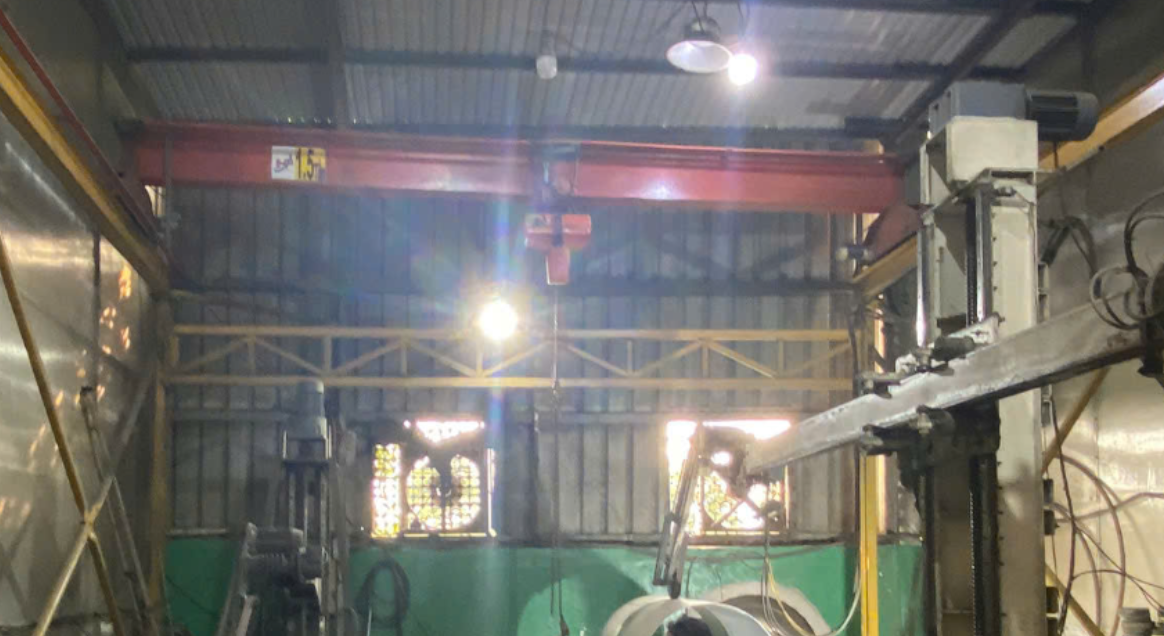

Last quarter, a U.S. client asked our team to re-quote an entire bracket program—half from our China facility, half from our Vietnam office—and the numbers told a story far more nuanced than “cheaper labor wins.”
To compare sourcing costs for sheet metal fabrication from China vs. Vietnam, you must calculate total landed cost—including labor, material costs, tariff implications, tooling costs, logistics, lead times, and quality risk—rather than relying on unit price alone, because the lowest quote rarely equals the lowest total spend.
This article walks through each cost layer, drawing on real project data and lessons from managing suppliers in both countries PPAP requirements 1. Let’s break it down section by section.
How do I calculate the total landed cost difference including Section 301 tariffs when moving my sheet metal production to Vietnam?
A buyer we work with in the Midwest recently shipped me two invoices side by side—one from Dongguan, one from Hanoi—and asked, "Why is the Vietnam part cheaper on paper but more expensive when it hits our dock?" The answer lived in the tariff math he had skipped ISTA-3A drop testing 2.
To calculate the total landed cost difference, add the ex-works unit price, freight, insurance, import duties (China faces ~35% combined tariffs vs. Vietnam's 10% baseline for US-bound goods), customs brokerage, and inland delivery; the tariff delta alone can shift landed cost 15–30% in Vietnam's favor for sheet metal parts.
Start with the ex-works price
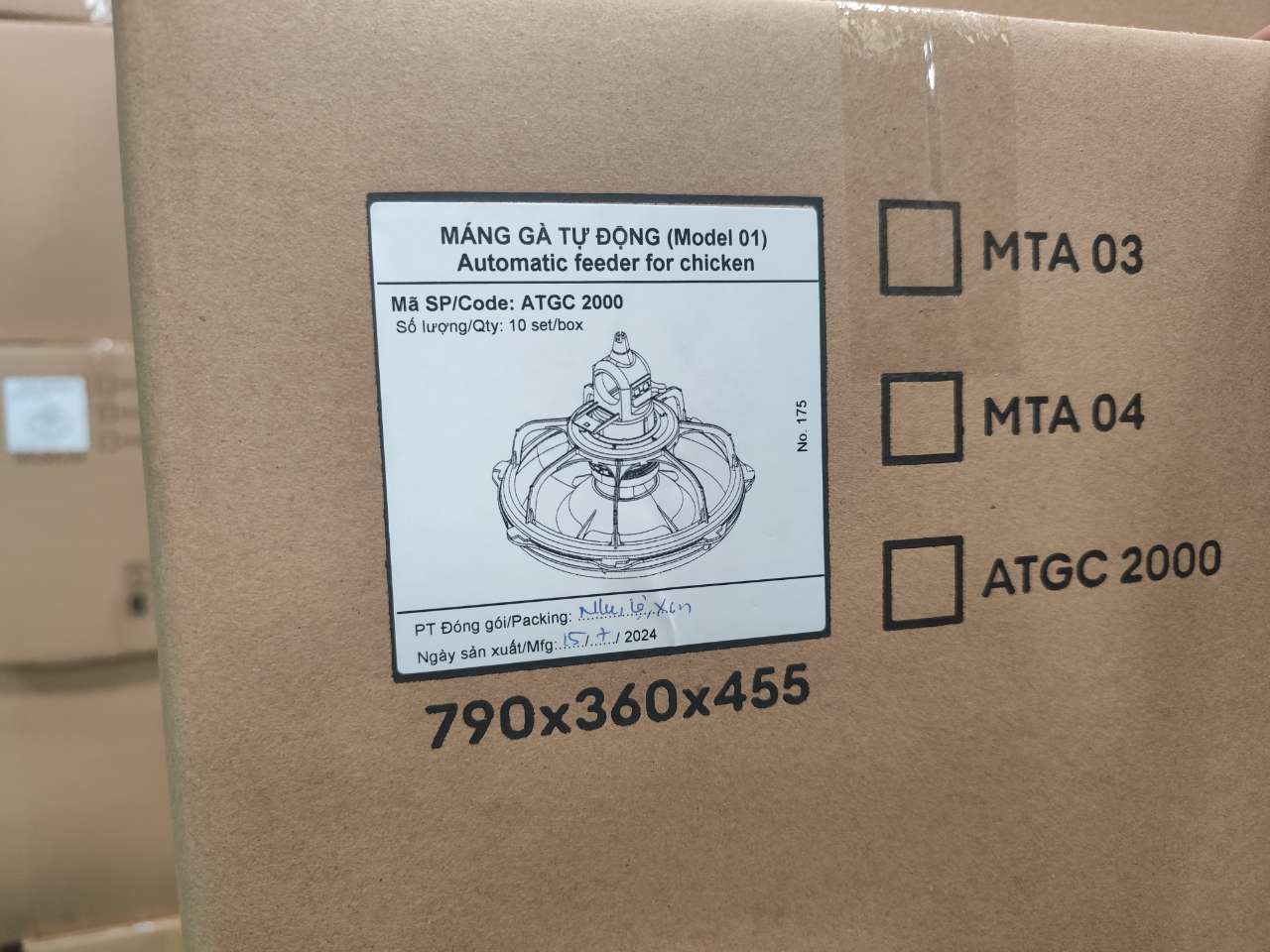
The ex-works price includes labor, material costs, energy, overhead, and margin. Vietnam's labor costs run 40–60% below China's coastal hubs. Hourly wages in Vietnam sit at roughly $2–3, while Chinese factories pay $6–8. That gap matters most for labor-intensive processes—manual welding, deburring, and bending. But for parts where machine time dominates (laser cutting thick plate, multi-axis CNC work), labor is a smaller slice and the savings shrink.
Material costs tilt the other way. China sources steel, aluminum, and alloys domestically. Vietnam often imports those same metals—frequently from China—adding freight, handling, and a few extra days of lead time to the bill of materials. For a simple mild-steel mounting bracket, the material premium in Vietnam may be only 3–5%. For an assembly requiring stainless 316L plus brass inserts, it can climb to 10–15%.
Map the tariff layers
This is where the math gets decisive for US-bound shipments. Here is a simplified breakdown as of mid-2026:
| Cost Element | China Origin | Vietnam Origin |
|---|---|---|
| Ex-works unit price (example) | $10.00 | $10.50 |
| Ocean freight per unit | $0.60 | $0.75 |
| Section 301 tariff 3 (25%) | $2.50 | $0.00 |
| Section 122 tariff (10%) | $1.00 | $1.05 |
| Section 232 steel/aluminum duty | Applies (varies) | Generally not applicable |
| Customs brokerage & fees | $0.15 | $0.15 |
| Estimated landed cost | $14.25+ | $12.45 |
Even though Vietnam's ex-works price is slightly higher in this example, the tariff delta erases that gap and then some. For a $10 sheet metal bracket, China's Section 301 duty alone adds $2.50 per piece. Vietnam eliminates that line entirely, provided the parts carry genuine Vietnamese origin with a VCCI Form B certificate.
Don't forget the soft costs
Customs compliance documentation, origin verification, and potential anti-circumvention audits add administrative time. Our Singapore-based team handles this for clients, but companies doing it in-house should budget 2–4 hours of staff time per shipment for proper tariff classification and record-keeping. These soft costs are easy to overlook, yet they affect the true total landed cost 4.
When does China still win on landed cost?
If the part requires exotic alloys sourced domestically in China, tight tolerances under ±0.02 mm, or multi-material assemblies with PCBA integration, China's supply chain resilience and local material ecosystem can keep the total cost lower despite the tariff penalty. The decision is never just about the duty rate—it's about the full cost stack.
Can I maintain my strict quality and PPAP requirements if I shift my custom fabrication from China to a Vietnamese supplier?
One lesson our Vietnam office learned early: a supplier can hold ISO 9001 5 and still ship parts 0.15 mm out of tolerance on the first production run. Certification proves a system exists. It does not prove the system works for your specific part.
Yes, you can maintain strict quality and PPAP requirements in Vietnam, but it demands hands-on supplier qualification—including ISTA-3A testing, side-by-side sample comparison, and resident quality oversight—because Vietnamese manufacturing capabilities have matured significantly, yet process discipline still varies widely between shops.
Vietnam's certification landscape today
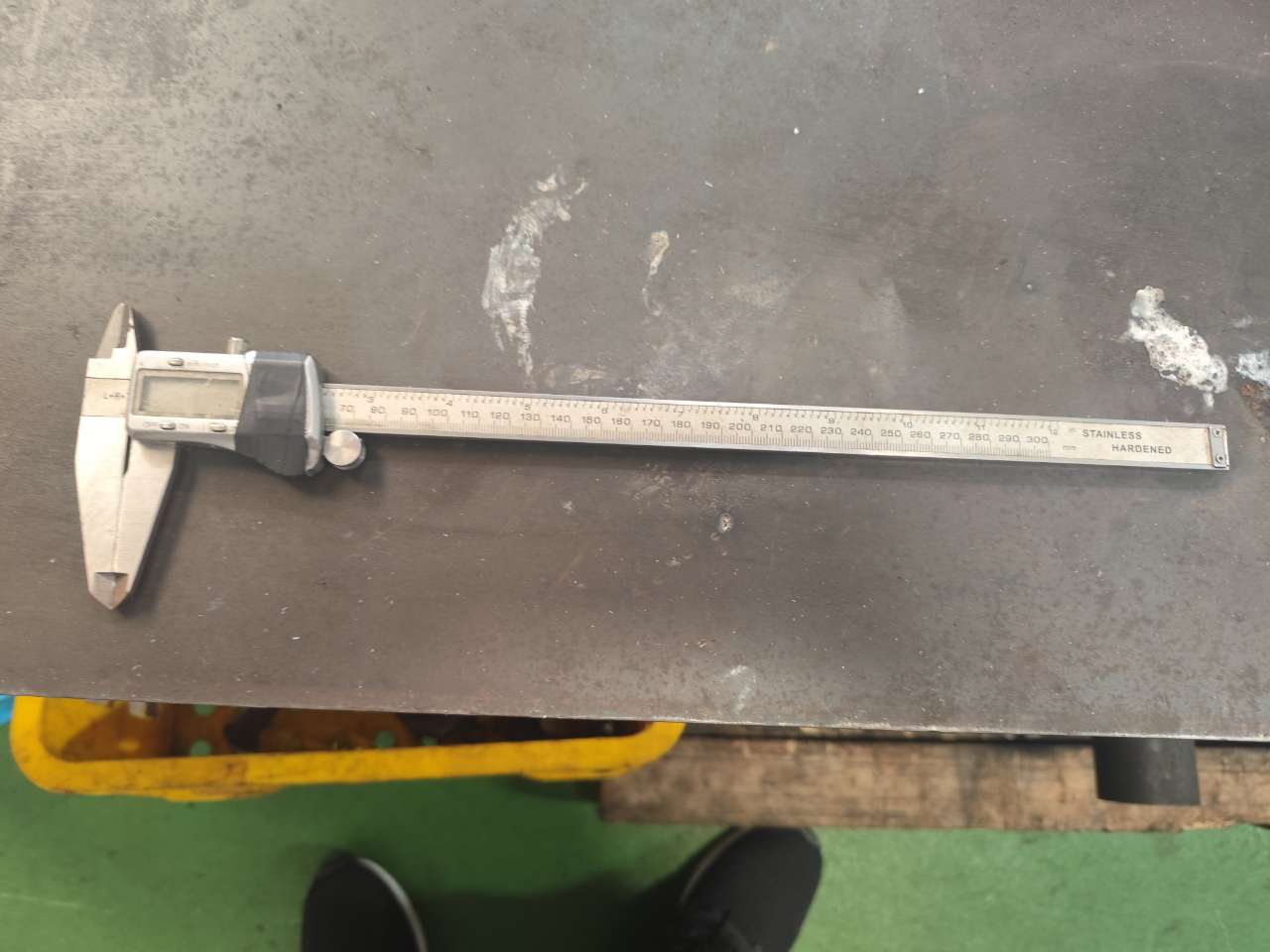
Vietnamese sheet metal suppliers now commonly hold ISO 9001, IATF 16949 6, ISO 13485, and even AS9100 certifications. For mechanical components—stamping, bending, welding, powder coating—the capabilities match or exceed what China offered five years ago. Our team in Ho Chi Minh City audits shops regularly, and we see fiber lasers, CNC press brakes with angle correction, and CMM inspection rooms that would look at home in any Tier 1 Chinese supplier.
Where quality risk actually hides
The risk is not in the equipment. It is in process control consistency. Here is what we watch for:
| Quality Risk Factor | China (Mature Supplier) | Vietnam (Developing Supplier) |
|---|---|---|
| First-article pass rate | 90–95% | 75–85% |
| In-process SPC adoption | Common | Emerging |
| Operator skill consistency | High (experienced workforce) | Moderate (younger workforce) |
| Drawing interpretation | Strong | Requires closer review |
| GD&T comprehension | Standard | Improving, but gaps remain |
A 15% landed cost saving on paper can vanish if parts arrive out of tolerance and require rework, sorting, or a full replacement shipment. We have seen this happen. A bracket program looked perfect on the quote sheet. The first container arrived with countersink depths 0.3 mm shallow across 40% of parts. The root cause was a misread drawing note—something a more experienced Chinese shop would have flagged at DFM review.
How to protect your PPAP process
Here is a practical sequence we follow with our Vietnam suppliers:
- DFM review call — Walk through every critical dimension and GD&T callout with the supplier's engineering team before tooling begins. Do not assume they will ask questions.
- First-article inspection (FAI) — Require a full PPAP Level 3 submission. Our team inspects on-site before any parts ship.
- Side-by-side sample qualification — If you are transitioning from a Chinese supplier, send golden samples to Vietnam. Measure both sets on the same CMM program.
- ISTA-3A drop testing — For brackets and housings, verify that packaging and part robustness survive transit. Vietnam's logistics chain involves more handling steps, and we have learned that packaging design matters more here than it does for China shipments.
- Ongoing process audits — Monthly or quarterly visits by a local quality engineer. Our seven-person Vietnam office exists largely for this purpose.
For parts requiring ±0.02 mm or tighter tolerances, multi-axis machining, or exotic alloys, China's intellectual property protection frameworks and mature quality control infrastructure still hold an edge. But for standard sheet metal—stamped brackets, laser-cut panels, welded frames with standard tolerances—Vietnam's shops deliver reliably when managed closely.
What hidden logistics and management overhead should I expect when comparing Vietnam's infrastructure to China's established supply chain?
When our China team ships a container from Shenzhen, the part leaves the factory gate and reaches the port in under two hours. When our Vietnam team ships from a factory outside Hanoi, that same step can take six hours—and sometimes longer during monsoon season. The logistics infrastructure 7 gap is real, and it costs money that never appears on a quote.
Expect hidden costs in longer inland transit, port congestion delays, fewer direct shipping routes, higher management overhead from thinner local supply chains, and 3–5 extra days of average lead time; Vietnam's logistics infrastructure is improving rapidly but still trails China's density and reliability, which adds 5–10% to effective project management costs.
Lead time comparison: more than just production days
Lead times for sheet metal parts involve three phases: procurement of raw materials, production, and shipping. China's advantage spans all three.
| Lead Time Phase | China | Vietnam |
|---|---|---|
| Raw material procurement | 2–5 days (domestic stock) | 5–10 days (often imported) |
| Production (standard sheet metal) | 5–10 days | 7–14 days |
| Inland transit to port | 1–2 days | 2–4 days |
| Ocean freight to US West Coast | 14–18 days | 18–22 days |
| Total estimated lead time | 22–35 days | 32–50 days |
For urgent orders, China's speed advantage can be the deciding factor. Vietnam's production lead times are 10–20 days for CNC and sheet metal work, versus 7–15 days in China. That difference compounds when you factor in material import delays.
Logistics infrastructure details
China has dozens of deep-water ports, a dense highway network, and a freight forwarding ecosystem that runs like clockwork. Vietnam is catching up—Hai Phong and Ho Chi Minh City ports handle significant container volume—but inland road quality in northern industrial zones remains uneven. Power grid reliability also matters: electricity rates in Vietnam ($0.078/kWh) are lower than China's ($0.108/kWh), but northern Vietnam experiences occasional brownouts during peak summer demand. A factory losing half a shift to a power cut pushes your delivery date back.
Management overhead you should budget for
Here is what most buyers underestimate:
- Communication layers: Fewer Vietnamese engineers speak fluent technical English compared to their Chinese counterparts. Translation and clarification cycles add 1–2 days to any engineering change order.
- Supplier density: If your primary Vietnam supplier fails, the backup options are thinner. China's manufacturing ecosystem lets you pivot to an alternative shop within the same industrial park. In Vietnam, a pivot might mean a different city.
- Minimum order quantity flexibility: Vietnam suppliers often require higher minimum order quantities to justify setup costs, especially for stamping dies. China's competition drives MOQs lower.
- Dual sourcing overhead: The emerging best practice—manufacturing parts in China and assembling in Vietnam—mitigates tariffs and diversifies risk, but it adds coordination effort. Our Singapore headquarters manages this cross-border flow daily, and even with experienced staff, it requires dedicated project management bandwidth.
Trade agreements like RCEP 8 and CPTPP are gradually easing customs friction in the region, but the practical reality today is that Vietnam's logistics still demand more planning margin than China's. Budget accordingly.
How will switching to a Vietnam-based source affect my cash flow and the availability of open account payment terms?
A conversation I have at least once a month with new clients goes like this: "We pay our Chinese supplier on 60-day open account terms. Can we get the same from Vietnam?" The honest answer is—it depends on who sits between you and the factory.
Switching to Vietnam often tightens cash flow initially because most Vietnamese factories require 30% deposits and balance before shipment; open account terms (Net 60–90) are rarely offered directly by Vietnamese suppliers, but a supply chain partner with financial stability—like our Singapore entity—can bridge this gap and extend credit terms to qualified US buyers.
Why Vietnamese factories demand upfront payment
Most Vietnamese sheet metal shops are smaller than their Chinese peers. They operate on thinner working capital margins. Extending 60–90 day credit to a foreign buyer they have never met is a financial risk they cannot absorb. Chinese suppliers, especially larger ones, have been exporting for decades and have built the financial reserves and trade credit insurance relationships to offer open account terms. Vietnamese factories have not reached that maturity in most cases.
The intermediary solution
This is one of the core reasons companies like ours exist. Our Singapore headquarters carries the financial exposure. We pay the Vietnamese factory on their terms (typically 30% deposit, 70% on shipment) and extend Net 60 or Net 90 open account terms to our US clients. The client's cash flow stays healthy. The factory gets paid promptly. Everyone's risk is managed.
Cash flow impact modeling
Consider a hypothetical $50,000 monthly sheet metal spend:
| Payment Scenario | Cash Outflow Timing | Working Capital Impact |
|---|---|---|
| China supplier, Net 60 open account | Pay 60 days after shipment | Positive: goods arrive and may be sold before payment is due |
| Vietnam factory direct, 30/70 terms | 30% at PO ($15K), 70% at shipment ($35K) | Negative: $15K tied up before production even starts |
| Vietnam via DEWIN, Net 60 open account | Pay 60 days after shipment | Positive: same cash flow profile as the China supplier |
For purchasing managers tracking days payable outstanding (DPO), the difference between prepaying a Vietnamese factory and using open account terms through an intermediary can free up tens of thousands of dollars in working capital each quarter. That freed capital can cover tooling costs for new programs, fund safety stock, or simply reduce reliance on credit lines.
What to verify before committing
If a trading company or agent offers open account terms for Vietnam-sourced parts, verify their financial stability. Ask for trade references. Confirm that they carry adequate insurance. The last thing you want is a middleman who disappears after collecting your deposit. Our approach is transparent: clients can visit our offices in Singapore, Vietnam, or China, meet the team, and review our processes before any money changes hands.
The broader point is this: payment terms are a supply chain resilience factor, not just a finance department concern. When evaluating sourcing costs for sheet metal fabrication, the cost of capital tied up in deposits or prepayments belongs in your total cost model alongside freight, tariffs, and unit price.
Conclusion
Comparing sourcing costs for sheet metal fabrication from China vs. Vietnam requires a total landed cost lens—tariffs, materials, quality risk, logistics, and cash flow all matter more than unit price alone. For a deeper dive into building your cost model, learn how to estimate total landed cost for sheet metal fabrication from Vietnam to the US. And if you're just beginning to evaluate sheet metal fabrication sourcing requirements, start by mapping every cost layer before comparing quotes.
Frequently Asked Questions
When does China still win on landed cost?
If the part requires exotic alloys sourced domestically in China, tight tolerances under ±0.02 mm, or multi-material assemblies with PCBA integration, China's supply chain resilience and local material ecosystem can keep the total cost lower despite the tariff penalty. The decision is never just about the duty rate—it's about the full cost stack.
How do I calculate the total landed cost difference including Section 301 tariffs when moving my sheet metal production to Vietnam?
A buyer we work with in the Midwest recently shipped me two invoices side by side—one from Dongguan, one from Hanoi—and asked, "Why is the Vietnam part cheaper on paper but more expensive when it hits our dock?" The answer lived in the tariff math he had skipped ISTA-3A drop testing 2 .
Can I maintain my strict quality and PPAP requirements if I shift my custom fabrication from China to a Vietnamese supplier?
One lesson our Vietnam office learned early: a supplier can hold ISO 9001 5 and still ship parts 0.15 mm out of tolerance on the first production run. Certification proves a system exists. It does not prove the system works for your specific part.
Footnotes
1. Replacement URL for ‘PPAP requirements’ from Wikipedia, offering a comprehensive overview of the Production Part Approval Process in the automotive supply chain. ↩︎
2. Describes a standard procedure for packaged-product performance testing. ↩︎
3. Provides information on Section 301 tariffs imposed by the U.S. ↩︎
4. Explains the components of total landed cost in international trade. ↩︎
5. Details the international standard for quality management systems. ↩︎
6. Explains the quality management system standard for the automotive industry. ↩︎
7. Explains the systems and facilities for transporting goods. ↩︎
8. Provides information on the Regional Comprehensive Economic Partnership trade agreement. ↩︎
9. Defines a common method of payment in international trade. ↩︎