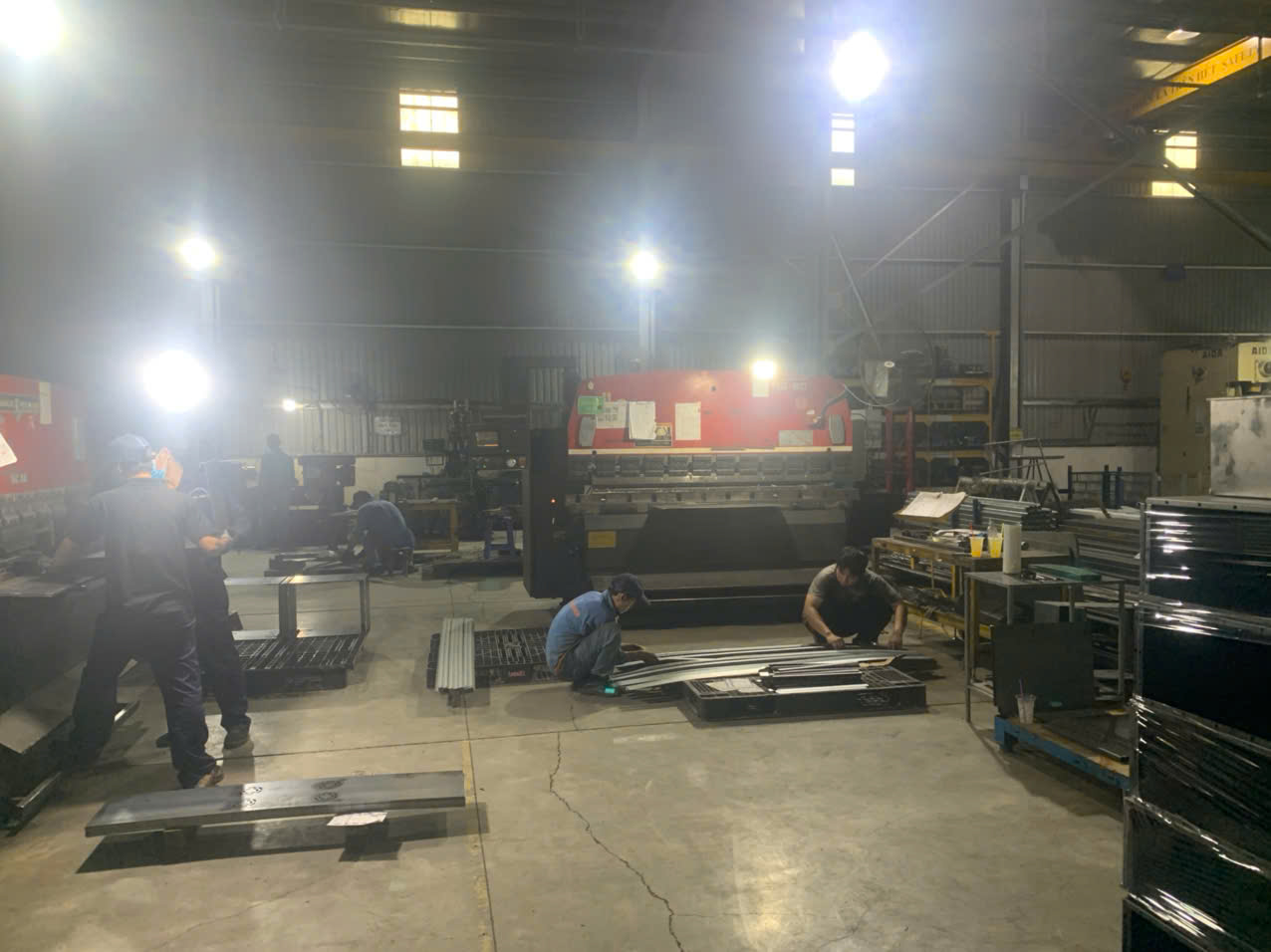

Comparing stamping parts suppliers across Vietnam’s industrial clusters nearly broke one of our first bracket projects first-article inspection 1. Every quote looked similar. Every factory promised the same tolerances. The reality was very different.
To compare stamping parts suppliers across Vietnam’s industrial clusters, evaluate cluster-specific strengths, tooling and die maintenance discipline, IATF 16949 or ISO 9001 certification, in-house finishing integration, delivery track records, and payment flexibility. Validate finalists with production-intent samples and a pilot batch before scaling.
That is the short answer. The long answer is what our Vietnam team has learned auditing factories from Hanoi to Binh Duong. Let me walk you through it, cluster by cluster.
How do I evaluate stamping suppliers' quality control processes across Vietnam's industrial clusters?
A powder-coated mounting bracket once arrived at our Singapore office with misaligned holes on thirty percent of the lot. The supplier had skipped in-process gauging entirely. That lesson shaped our audit checklist.
Evaluate quality control by checking CMM and gauging equipment, in-process inspection frequency, CTQ checkpoints on drawings, toolroom maintenance records, and certification level. Southern precision shops in Binh Duong often hold tighter tolerances, while Northern automotive-focused plants lead in documented IATF 16949 systems.

Quality control standards vary widely between clusters, and even between factories inside the same industrial park. Our team in Vietnam audits stamping suppliers on-site before any purchase order goes out. We have found that the paperwork rarely tells the full story. You have to walk the floor.
What we check on every audit
First, we look at measurement capability. A serious stamping supplier owns a CMM, calibrated gauges coordinate measuring machine 2, and documented first-article inspection reports. If they only own calipers, walk away for precision work. Second, we check the toolroom. The best suppliers build, debug, and maintain their own dies. Tooling and die maintenance logs show whether a factory prevents defects or just reacts to them. Third, we confirm CTQ checkpoints. Critical dimensions from your drawing must appear on the operator's inspection sheet at the press. If they do not, drawing requirements get overlooked, and non-conforming parts follow.
Cluster differences in QC maturity
| QC Factor | Northern Cluster (Hanoi, Hai Phong, Bac Giang) | Southern Cluster (Binh Duong, Dong Nai) |
|---|---|---|
| Typical certification | IATF 16949 3 growing fast (automotive FDI) | ISO 9001 baseline, IATF at Japanese-invested plants |
| Precision strength | Wire EDM 4, automotive stamping tools | CNC precision, tolerances near ±0.005mm at top shops |
| Inspection equipment | Strong at Korean/Japanese Tier 1 plants | Strong CMM culture from Japanese investment |
| Weak point | Local SMEs may lack documented SOPs | Outsourced plating can break traceability |
Finishing is the hidden risk. Many suppliers outsource plating, coating, or heat treatment. On our bracket programs, we qualify the finishing partner separately and add a final inspection before shipment. That single step has saved several U.S. clients from rework and returns.
What criteria should I use to compare delivery reliability among Vietnam's stamping parts manufacturers?
Delivery delays are the number one complaint we hear from U.S. purchasing managers. One client came to us after three straight late shipments from a previous vendor wrecked his production schedule.
Compare delivery reliability by reviewing on-time delivery history, press capacity utilization, raw material sourcing stability, port proximity, and buffer stock policies. Northern suppliers benefit from Hai Phong port and China tooling links; Southern suppliers gain from Cai Mep-Thi Vai deep-water shipping to the US.

Manufacturing lead times in Vietnam depend on three things: material supply, press capacity, and logistics. We weigh all three before shortlisting any factory, because a cheap quote means nothing if the parts arrive six weeks late.
Material supply stability
Vietnam's steel ecosystem has matured. Hoa Phat, POSCO Vietnam, and Formosa Ha Tinh now supply hot-rolled and cold-rolled coils locally. But specialty steel still comes from Northeast Asia. Ask every supplier where their material comes from and how long replenishment takes. A factory relying on imported specialty coil adds two to four weeks of risk to every order.
Capacity and tooling readiness
Production capacity assessment is not just counting presses. We check tonnage range, current utilization, and shift patterns. A shop running at ninety-five percent capacity will bump your order the moment a bigger customer calls. We also check die spares. Northern factories near the China border can replenish specialized die components fast and cheap, which shortens recovery time when a tool cracks mid-run.
Logistics and export routes
Supply chain logistics infrastructure differs sharply between the Northern vs Southern industrial zones:
| Delivery Factor | North (Hai Phong corridor) | South (HCMC / Binh Duong / Dong Nai) |
|---|---|---|
| Main export port | Hai Phong | Cat Lai + Cai Mep-Thi Vai deep-water |
| Best shipping lanes | Intra-Asia, China-linked chains | Direct long-haul to US and EU |
| Tooling resupply | Fast via China border | Slower, more import lead time |
| Labor stability | More localized, stable workforce | Higher turnover, migrant-dependent |
| Disruption history | Park shutdowns possible (e.g., Bac Giang 2021) | Congestion peaks in shipping season |
On our own programs, we manage door-to-door logistics and hold suppliers to a weekly production status report. When a schedule slips, we know within days, not at the vessel cutoff.
How can I assess communication and engineering expertise when choosing a stamping supplier in Vietnam?
Early in one bracket co-development project, we sent a drawing with a critical flatness callout. The first factory ignored it. The second asked three sharp questions about it before quoting. Guess which one we picked.
Assess communication and engineering expertise by testing DFM feedback quality, response speed, English drawing comprehension, tooling design ownership, and PPAP documentation ability. Strong suppliers challenge your drawing, flag critical tolerances, and assign a dedicated project engineer before production begins.

Communication gaps cause more scrap than bad machines do. In our experience exporting to the US, most non-conforming shipments trace back to a requirement that was never understood, not a press that failed. So we test engineering depth before we test anything else.
The RFQ response test
Send a real drawing with two or three demanding features: a tight hole-position tolerance, a specified weld seam, a powder-coat thickness range. Then watch what comes back. Weak suppliers return a price and nothing else. Strong suppliers return questions. They may propose a slotted hole instead of a round one to ease assembly. They may flag a bend radius that risks cracking. That is DFM thinking, and it is the clearest signal of precision metal fabrication competence you can get without visiting.
Signals to score during evaluation
- Response time under 24 hours on technical questions.
- A named project engineer, not just a sales contact.
- Tooling design done in-house, with die drawings they can show you.
- Willingness to run PPAP: first-article reports, material certs, process flow, control plan.
- Clear escalation path when problems appear, instead of silence.
Language matters too. Northern automotive plants with Korean or Japanese ownership usually have strong technical English. Local Tier 2 and Tier 3 SMEs may not. Our Vietnam office bridges that gap daily. We sit in the factory, review CTQ points in Vietnamese, and report back to clients in plain English. Purchasing managers like Greg, one of our long-term U.S. contacts, tell us this single layer of on-the-ground communication is why parts come out right the first time.
Which Vietnamese industrial clusters offer the best combination of pricing, capability, and payment terms for stamping parts?
Trade-offs drive every sourcing decision we make. Cheapest is rarely best. The right question is which cluster balances cost, capability, and cash-flow terms for your specific part and destination market.
The Southern cluster (Binh Duong, Dong Nai) offers the best overall mix for export-focused stamping: precision capability, deep-water port access, and mature finishing ecosystems. The Northern cluster wins for automotive-certified programs and China-linked tooling. Vietnam overall delivers roughly 42% lower total cost than China.

A sound Vietnam sourcing strategy starts with matching your part to the right ecosystem, then negotiating terms that protect your cash flow. Here is how we frame it for clients.
Cluster comparison at a glance
| Criteria | Southern (HCMC, Binh Duong, Dong Nai, Long An) | Northern (Hanoi, Hai Phong, Hung Yen, Bac Giang) | Central & Emerging |
|---|---|---|---|
| Core strength | High-volume export stamping, precision CNC, die casting | Automotive stamping tools, wire EDM, electronics | Growing, infrastructure-led |
| Heavy work | Dong Nai: forging, large dies | Moderate | Limited |
| Certifications | ISO 9001 common, IATF at FDI plants | IATF 16949 strong at Korean/Japanese Tier 1 | Mostly ISO baseline |
| Pricing level | Competitive, mature supply base | Competitive, lower labor turnover | Lowest, but higher risk |
| Best for | US/EU consumer, industrial, furniture hardware | Automotive, electronics programs | Simple, cost-driven parts |
Cost and trade advantages
Vietnam's total cost of ownership runs about 42% below China and 17% below Thailand. The EVFTA removes 99% of tariffs on EU exports, and CPTPP 7 plus RCEP open Asia-Pacific lanes. Suppliers inside export processing zones add duty and VAT advantages that flow into your landed cost. ESG-conscious buyers should also look at suppliers inside UNIDO-supported eco-industrial parks, which offer sustainability reporting many end customers now demand.
Payment terms reality
Most Vietnamese factories still ask for 30% deposit with balance before shipment. Open account terms of 60–90 days are rare when buying direct, especially from Tier 2 SMEs. This is where a supply chain partner adds leverage. On our programs, we extend open account payment terms to qualified clients ourselves, absorbing the factory's deposit requirement so our clients' cash flow stays intact. Then we validate with production-intent samples and a pilot batch with agreed CTQ checkpoints before any volume commitment. Shortlist three to five suppliers, audit, sample, pilot, scale. That sequence works in every cluster.
Conclusion
Choosing the wrong stamping supplier costs you delays, rework, and cash. Compare clusters on QC, delivery, engineering, and terms — then validate with audits, samples, and a pilot batch before scaling.
Frequently Asked Questions
How do I evaluate stamping suppliers' quality control processes across Vietnam's industrial clusters?
A powder-coated mounting bracket once arrived at our Singapore office with misaligned holes on thirty percent of the lot. The supplier had skipped in-process gauging entirely. That lesson shaped our audit checklist.
What criteria should I use to compare delivery reliability among Vietnam's stamping parts manufacturers?
Delivery delays are the number one complaint we hear from U.S. purchasing managers. One client came to us after three straight late shipments from a previous vendor wrecked his production schedule.
How can I assess communication and engineering expertise when choosing a stamping supplier in Vietnam?
Early in one bracket co-development project, we sent a drawing with a critical flatness callout. The first factory ignored it. The second asked three sharp questions about it before quoting. Guess which one we picked.
Footnotes
1. Background on the first-article inspection reports used to verify measurement capability. ↩︎
2. Background on CMM equipment used for measurement capability during supplier audits. ↩︎
3. Explains the automotive quality management standard referenced repeatedly across supplier evaluation criteria. ↩︎
4. Clarifies the wire electrical discharge machining process cited as a Northern cluster strength. ↩︎
5. Official ISO page defining the baseline quality certification standard discussed in the article. ↩︎
6. Defines the Production Part Approval Process documentation standard mentioned for supplier qualification. ↩︎
7. WTO reference on regional trade agreements relevant to Vietnam’s tariff advantages discussed. ↩︎