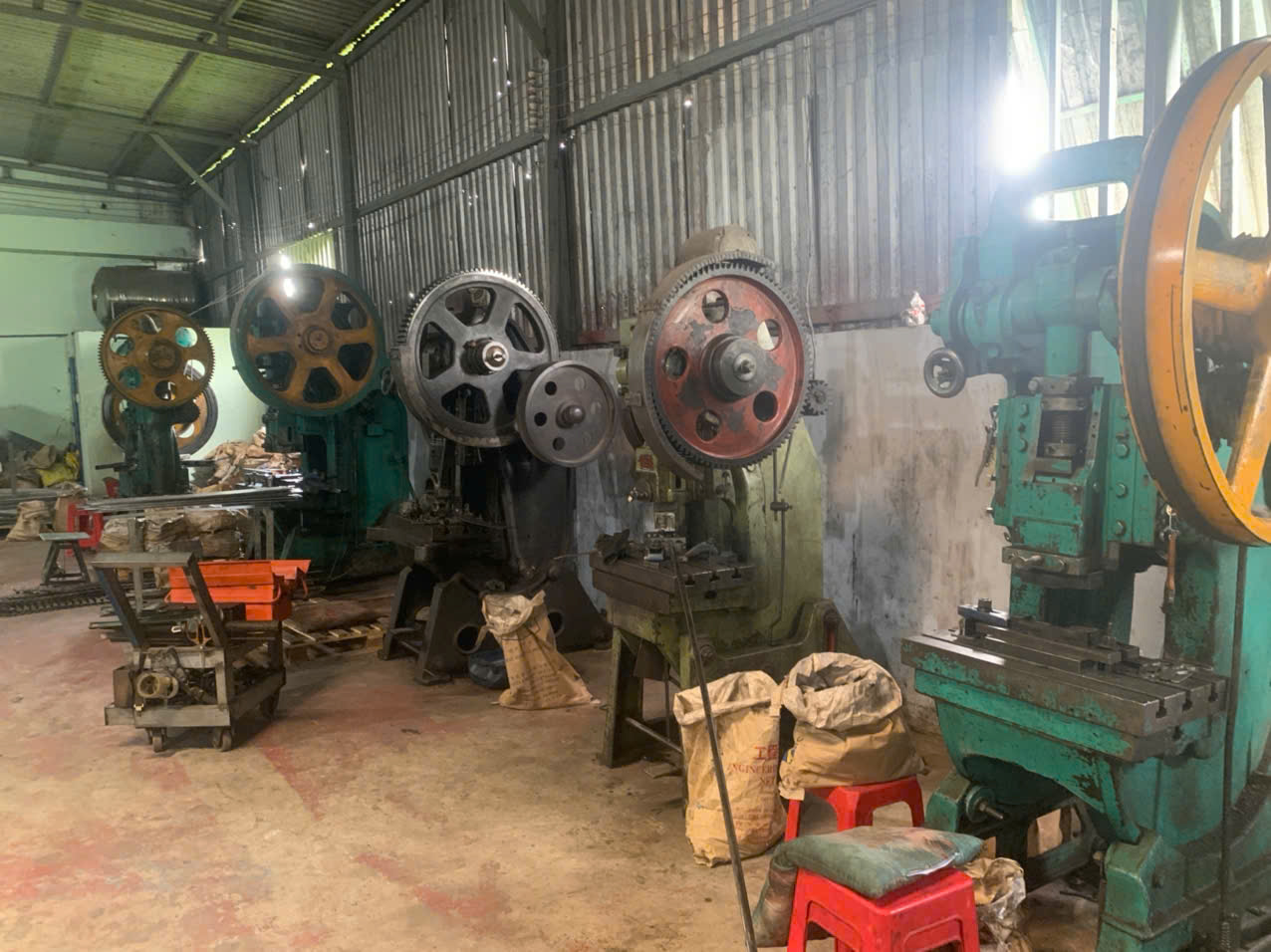

When our Vietnam team started vetting stamping suppliers across three different regions, I realized the biggest mistake buyers make is treating Vietnam as one monolithic market — it’s not.
To compare Vietnam stamping parts suppliers by region, evaluate HCMC for precision metal stamping and automotive-grade certifications, Hai Phong for export-oriented manufacturing with deep-water port access, and Hanoi for electronics and emerging high-tech capabilities. Your choice should align with your logistics strategy, part complexity, and target shipping destination.
This guide breaks down what we’ve learned from auditing and managing suppliers across all three hubs. Whether you source brackets, post base mounts, or complex structural hardware, picking the right region matters as much as picking the right factory. Let me walk you through each factor.
How do labor costs and skilled workforce availability differ across HCMC, Hanoi, and Hai Phong?
A buyer we work with in the Midwest once asked why his quoted piece price from a Hai Phong supplier was 12% lower than an HCMC quote for the same L-bracket — identical material, identical tolerance. The answer came down to labor costs and local workforce dynamics.
HCMC has the highest skilled-labor costs, typically 10–15% above Northern hubs, but offers the deepest pool of experienced tooling engineers and press operators. Hai Phong and Hanoi provide meaningful cost savings for large-volume stamping, though finding seasoned precision metal stamping talent requires more screening.

Regional Wage Overview
All three regions fall under Vietnam's highest minimum wage tier (Region I), but actual market rates diverge significantly once you factor in skill premiums for sheet metal fabrication, die maintenance, and quality inspection roles.
| Factor | HCMC (South) | Hanoi (North) | Hai Phong (North) |
|---|---|---|---|
| Average skilled metalworker wage | Highest (baseline) | 10–12% lower | 10–15% lower |
| Availability of IATF16949-trained QC staff | High | Moderate | Low–Moderate |
| Tooling and mold design engineers | Abundant | Growing | Limited |
| Industrial land rental cost | Highest | Moderate | Lowest |
| Workforce turnover rate | Moderate–High | Moderate | Low |
Why Cost Isn't the Whole Story
Lower wages in the North look attractive on a spreadsheet. But in our experience coordinating production for US clients, the hidden cost shows up when a supplier lacks the right people to read a GD&T drawing 1 correctly. We've seen northern factories quote aggressively on complex stamped brackets — the kind with stepped, notched profiles and multiple drilled mounting holes — only to stumble during first-article inspection because the press operator didn't understand the tolerance callout on a keyhole slot.
HCMC's advantage is its mature ecosystem. Decades of foreign investment in the Saigon Hi-Tech Park and Binh Duong province have built a workforce that understands precision metal stamping at a granular level. Workers have cycled through Japanese, Korean, and European-owned factories. That experience compounds. When our team audits a southern supplier, we typically find operators who can discuss die clearance in meaningful terms, not just follow a setup sheet.
The Northern Catch-Up
That said, the northern Vietnam electronics cluster around Bac Ninh and Thai Nguyen is changing the equation fast. Samsung, Foxconn, and Canon have trained tens of thousands of workers in the region. Some of those workers are migrating into local stamping shops. The skill gap is narrowing, especially for progressive die stamping of small electronic components.
For heavy-duty structural brackets, post base mounts, and trailer-hitch-style components — parts that need welding, deep drawing capabilities, and large press tonnage more than micron-level precision — Hai Phong's workforce is well-suited and cost-effective. For a deeper look at Vietnam’s labor costs and manufacturing talent for stamping parts, we've published a dedicated analysis.
Business Culture Differences
One thing I always brief clients on: southern suppliers tend to be more entrepreneurial. They're willing to run small-batch prototyping, iterate on design, and accommodate engineering changes mid-order. Northern operations, shaped by the electronics giants they serve, lean toward rigid, high-volume production efficiency. Neither is better; it depends on your project phase. If you're still in co-development, the South's flexibility saves time. If you have a locked design and need 500,000 pieces, the North's discipline delivers.
Which region offers the best logistics and shipping access for my custom stamping parts?
The trade-off I weigh most often when advising a US client on region selection has nothing to do with the supplier's factory — it's about what happens after the parts leave the loading dock.
Hai Phong offers the best export logistics through the Lach Huyen deep-water port, ideal for heavy stamping parts bound for the US East Coast. HCMC provides strong access via Cat Lai and Vung Tau ports for West Coast shipments. Hanoi relies on Hai Phong's port infrastructure but benefits from proximity to Chinese raw material corridors.

Port and Shipping Comparison
| Logistics Factor | HCMC (South) | Hanoi (North) | Hai Phong (North) |
|---|---|---|---|
| Primary port | Cat Lai / Vung Tau | Uses Hai Phong port | Lach Huyen deep-water port 2 |
| Deep-water vessel capability | Yes (Vung Tau) | N/A | Yes (direct loading) |
| Best route to US East Coast | Longer transit | Via Hai Phong | Shortest transit |
| Best route to US West Coast | Shortest transit | Via Hai Phong | Longer transit |
| Proximity to Chinese raw material suppliers | Low | Moderate | High |
| Key industrial parks | Tan Thuan EPZ, Saigon Hi-Tech Park | Bac Ninh, Thai Nguyen zones | Trang Due IP, VSIP Hai Phong |
Why Hai Phong Is the Export Powerhouse
Hai Phong's Lach Huyen deep-water port changed the game for export-oriented manufacturing. Before it opened, northern suppliers often had to load containers onto smaller feeder vessels that transshipped at larger ports — adding cost and 3–5 days of transit. Now, ocean-going vessels load directly. For heavy stamped components like structural brackets, post base mounts, and thick-gauge fabricated hardware, this matters. Freight costs on heavy parts are sensitive to handling steps.
Our logistics team has routed multiple shipments through Lach Huyen for US-bound orders. The port's container throughput keeps growing, and customs processing has become more predictable. For buyers who import raw steel coils from China, Hai Phong's rail and road links to southern China create an efficient inbound material corridor. This is central to any supply chain diversification strategy — you can still source competitively priced steel from Chinese mills while manufacturing in Vietnam, avoiding Section 301 tariff exposure on finished goods.
HCMC's Mature Southern Network
HCMC's logistics infrastructure is the most developed in Vietnam. Cat Lai Port 3 handles the country's highest container volume. The network of freight forwarders, customs brokers, and bonded warehouses around HCMC is dense and experienced with international buyers. If your parts ship to Europe or the US West Coast, southern routing is typically faster.
One practical advantage I've seen: when a production issue delays a shipment by a few days, HCMC's frequent sailing schedules mean you can usually catch the next vessel within 2–3 days. In Hai Phong, sailing frequency is improving but still less dense.
Hanoi's Logistics Reality
Hanoi itself is not a port city. Suppliers located in Hanoi's surrounding industrial parks and zones ship through Hai Phong, which is about 120 km away. The highway connection is good, but it adds a trucking step. For lightweight precision electronics stamping parts, this trucking cost is negligible. For heavy structural components, it adds up. We always factor this into landed-cost calculations when comparing quotes.
What quality control standards can I expect from stamping suppliers in each Vietnamese region?
During a recent supplier audit at a factory outside Binh Duong, I watched their QC team run a full PPAP package — control plans, capability studies, measurement system analysis — without prompting. That level of process maturity is common in the South. It's rarer, though not absent, in the North.
HCMC suppliers most frequently hold ISO 9001, ISO 14001, and IATF16949 certifications, making them the strongest choice for automotive and medical-grade stamping. Hai Phong and Hanoi suppliers typically carry ISO 9001 certification and are progressively adopting industry-specific standards as their customer base demands higher quality control rigor.

Certification Landscape by Region
| Certification / Capability | HCMC (South) | Hanoi (North) | Hai Phong (North) |
|---|---|---|---|
| ISO 9001 certified suppliers 4 | Very common | Common | Common |
| ISO 14001 (environmental) | Common | Moderate | Moderate |
| IATF16949 (automotive) | Available (e.g., Rhythm Vietnam) | Rare | Rare |
| PPAP process capability | Strong | Developing | Developing |
| In-house CMM / 3D measurement | Common | Limited | Limited |
| Green manufacturing adoption | Leading | Emerging | Emerging |
What Drives the Quality Gap
The quality difference between regions isn't really about willingness — it's about exposure. HCMC suppliers have worked with Japanese, European, and American OEMs for 20+ years. That exposure forces process discipline. When your customer is a Japanese automotive Tier 1, you learn to control die wear, monitor press tonnage in real-time, and document every deviation. These habits become embedded in the factory culture.
In our work managing production for US clients, we've found that ISO 9001 certified suppliers in all three regions understand the basics: incoming material inspection, in-process checks, final inspection. The difference shows up in how they handle exceptions. A mature HCMC supplier will quarantine a suspect lot, issue an 8D report 5, and trace the root cause to a specific die station. A less experienced northern supplier might simply sort the bad parts out and ship the rest — functional, but not the process rigor that a purchasing manager like Greg needs to satisfy his end customers.
The Northern Learning Curve
This isn't a permanent condition. The northern Vietnam electronics cluster is pulling quality standards upward. Samsung's supply chain requirements have forced dozens of northern metal fabrication shops to implement SPC, mistake-proofing 6, and traceability systems. Some Hanoi-area suppliers now rival southern competitors on process control for small precision parts.
For heavy stamped components — the kind of structural brackets, thick base plates, and welded mounting hardware shown in industrial catalogs — quality control in Hai Phong is often adequate because dimensional tolerances are wider. A ±0.5 mm tolerance on a post base mount is far more forgiving than ±0.05 mm on an automotive connector terminal.
Power Stability and Its Effect on Quality
One risk factor many buyers overlook: northern Vietnam's power grid relies heavily on hydropower 7. During dry seasons, power instability can cause voltage fluctuations that affect press consistency and heat treatment outcomes. We always ask northern suppliers about backup power systems and voltage stabilizers during audits. A factory running a 600-ton press on unstable power will produce inconsistent parts. In the South, the power mix includes more thermal and solar sources, and supply chain diversification in energy has made outages less frequent.
Verification Before Commitment
Before committing to any region, I recommend using directories that track active, verified stamping facilities across Vietnam. Cross-reference ISO certifications directly with the certifying body. Ask for recent PPAP submissions 8 or first-article inspection reports. And if possible, visit the factory — or have your sourcing partner do it. Our Vietnam office runs these audits routinely, and the difference between a supplier's website claims and their shop-floor reality can be significant. We've outlined a structured approach for how to evaluate Vietnam sheet metal fabrication suppliers in Hanoi, HCMC, and Haiphong that covers the audit process in detail.
Should I choose a supplier near HCMC, Hanoi, or Hai Phong based on my industry and part complexity?
A lesson I learned early in this business: the "best" supplier is never the best in absolute terms — it's the best fit for your specific part, your specific industry, and your specific supply chain.
Choose HCMC for automotive, medical, or complex precision stamping requiring IATF16949 and integrated secondary processes. Choose Hai Phong for heavy-gauge structural parts, deep drawing, and China+1 tariff strategies. Choose Hanoi for electronics stamping and government-backed high-tech projects benefiting from the northern industrial parks and zones.

Industry-to-Region Decision Matrix
The following framework reflects what we've observed across hundreds of sourcing projects. It's not absolute — exceptions exist — but it gives you a strong starting point.
| Your Industry / Part Type | Recommended Region | Why |
|---|---|---|
| Automotive stamping (IATF16949 required) | HCMC | Highest density of certified suppliers; integrated OEM/ODM services |
| Precision electronics connectors / terminals | Hanoi (Bac Ninh area) | Proximity to Samsung, Foxconn supply chains; progressive die stamping growing |
| Heavy structural brackets / post base mounts | Hai Phong | Large press capacity (up to 1000 tons); lower costs for heavy fabrication |
| Trailer hitch mounts / thick-gauge deep drawing | Hai Phong | Deep drawing capabilities; proximity to Chinese steel coil suppliers |
| Medical device stamping | HCMC | Cleanroom-adjacent facilities; ISO 13485 awareness |
| Consumer hardware / furniture brackets | HCMC or Hai Phong | Depends on volume and finish requirements |
| Aerospace components (emerging) | Hanoi | Government incentives; emerging high-tech capabilities |
How Part Complexity Drives the Decision
Consider the parts in our product line: powder-coated L-brackets with notched profiles, raw steel post base mounts with keyhole slots, heavy cast-style trailer hitch mounts, and cross-shaped flanges with raised center hubs. Each demands different supplier strengths.
The powder-coated black brackets with multiple drilled mounting holes and visible weld seams need a supplier who can stamp, weld, and finish in-house — or at least within a tight geographic cluster of secondary process providers. HCMC excels here. Within a 30 km radius of most southern industrial zones, you can find anodizing, powder coating, heat treatment, and plating facilities. That density of supporting industries means shorter lead times for tooling and mold design iterations and faster turnaround on finished assemblies.
The raw steel post base mounts with open box-channel designs and oval cutout holes are less demanding on surface finish but require accurate bending and welding. Hai Phong's heavy fabrication shops handle these efficiently at scale. The material — typically galvanized or raw steel — can be sourced cheaply via northern rail corridors from Chinese mills, keeping input costs low.
The China+1 Calculus
For US buyers navigating Section 301 tariffs 9, the regional choice carries financial weight. Stamping parts manufactured in Vietnam are not subject to the tariffs that hit Chinese-origin goods. Vietnam stamping offers 30–50% lower piece prices than US domestic suppliers, and competitive pricing against China — with zero tariff penalty.
Hai Phong is the natural home for a China+1 strategy 10. Its geographic proximity to southern China means your raw material supply chain barely changes. Steel coils, copper strip, aluminum sheet — all flow across the border efficiently. Your finished parts ship out through Lach Huyen to the US without the tariff burden. We've helped several clients execute exactly this transition, and the logistics infrastructure in Hai Phong has proven reliable. For a detailed look at how Vietnamese stamping parts suppliers compare to Chinese suppliers, we've covered that topic separately.
When Hanoi Makes Sense
Hanoi shouldn't be dismissed. The capital region is attracting serious government investment in high-tech manufacturing. For buyers in electronics or emerging aerospace, the incentive packages — tax holidays, subsidized land in new industrial parks and zones — can make Hanoi-area suppliers surprisingly competitive. The challenge today is supplier density. There are fewer stamping shops to choose from compared to HCMC, which means less competitive bidding and fewer fallback options if your primary supplier hits capacity constraints.
A Practical Recommendation
If you're unsure where to start, request quotes from suppliers in two regions. Compare not just piece price but also tooling cost, lead time, shipping cost to your destination port, and the supplier's willingness to run a PPAP or first-article process. The region that delivers the best total landed cost — with acceptable quality risk — is your answer.
Conclusion
Choosing between HCMC, Hanoi, and Hai Phong for your Vietnam stamping parts supplier is a strategic decision — not just a sourcing one. Match your region to your industry, logistics needs, and quality requirements for the best outcome.
Frequently Asked Questions
How do labor costs and skilled workforce availability differ across HCMC, Hanoi, and Hai Phong?
A buyer we work with in the Midwest once asked why his quoted piece price from a Hai Phong supplier was 12% lower than an HCMC quote for the same L-bracket — identical material, identical tolerance. The answer came down to labor costs and local workforce dynamics.
Which region offers the best logistics and shipping access for my custom stamping parts?
The trade-off I weigh most often when advising a US client on region selection has nothing to do with the supplier's factory — it's about what happens after the parts leave the loading dock.
What quality control standards can I expect from stamping suppliers in each Vietnamese region?
During a recent supplier audit at a factory outside Binh Duong, I watched their QC team run a full PPAP package — control plans, capability studies, measurement system analysis — without prompting. That level of process maturity is common in the South. It's rarer, though not absent, in the North.
Footnotes
1. Official ASME landing page for the Y14.5 dimensioning and tolerancing standard. ↩︎
2. Explains the deep-water port infrastructure enabling direct vessel loading at Lach Huyen. ↩︎
3. Wikipedia entry for the Cát Lái ward, which hosts Vietnam’s largest container port. ↩︎
4. Official ISO page defining the quality management standard referenced throughout supplier evaluations. ↩︎
5. Authoritative Wikipedia entry for the Eight Disciplines (8D) problem-solving methodology. ↩︎
6. Background on poka-yoke, the quality technique referenced as part of northern process upgrades. ↩︎
7. IEA background on hydropower explains the grid reliance affecting northern Vietnam’s manufacturing. ↩︎
8. AIAG’s authoritative source on the Production Part Approval Process cited for supplier verification. ↩︎
9. Explains the US tariff mechanism buyers avoid by sourcing stamped parts from Vietnam. ↩︎
10. World Bank trade resource contextualizes supply chain diversification strategies like China+1. ↩︎