
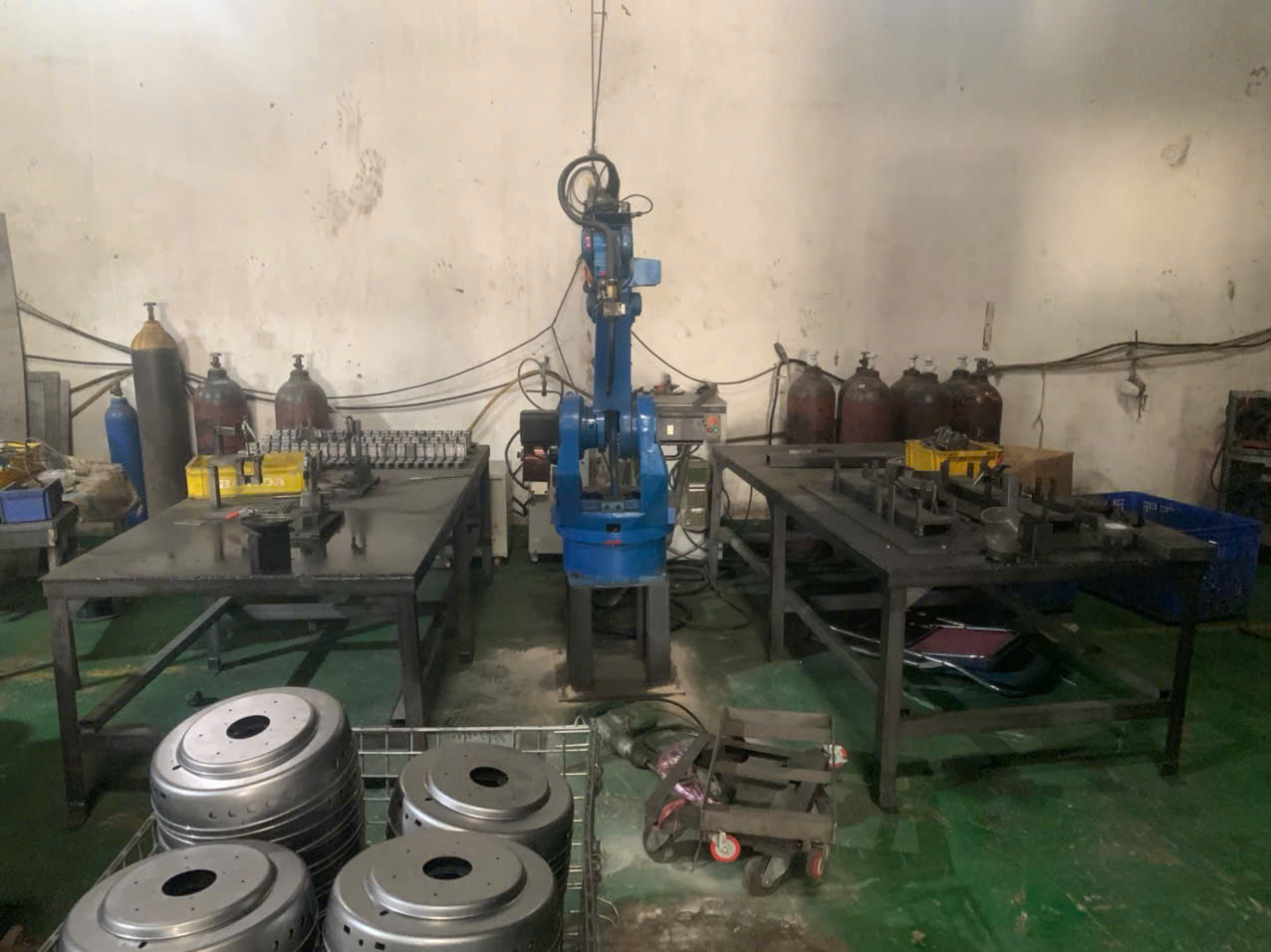
Finding the right Vietnamese supplier for welding parts can feel overwhelming — especially when drawings get misread, rework eats your margin, and deliveries slip without warning.
To compare Vietnamese supplier capabilities when sourcing welding parts, verify welding certifications (ISO, AWS, DNV), assess equipment and production capacity, review quality control processes, check references from similar projects, and evaluate communication responsiveness — then request sample runs before committing to volume orders.
Vietnam has quietly become one of the most cost-effective destinations for custom metal fabrication and welded structures Dye penetrant testing 1. But low cost means nothing if the parts arrive out of spec. In this guide, I will walk you through the exact steps our team uses when evaluating Vietnamese welding suppliers — from certification checks to payment term negotiations Ultrasonic testing 2. Whether you are sourcing heavy-duty mounting brackets, multi-level structural frames, or precision-drilled hardware components, these steps will help you find a reliable partner and avoid costly mistakes.
How do I verify if a Vietnamese factory's welding certifications and equipment meet my technical standards?
One lesson we learned early on was that a factory tour can look impressive — rows of shiny machines, busy workers — yet mean very little if the certifications behind those machines are outdated or irrelevant to your project.
Verify a Vietnamese factory's welding standards by requesting current ISO 9001, AWS, ASME, or DNV certificates, confirming their scope covers your specific processes (MIG, TIG, robotic), and cross-checking equipment calibration records against your technical specifications before approving any production.
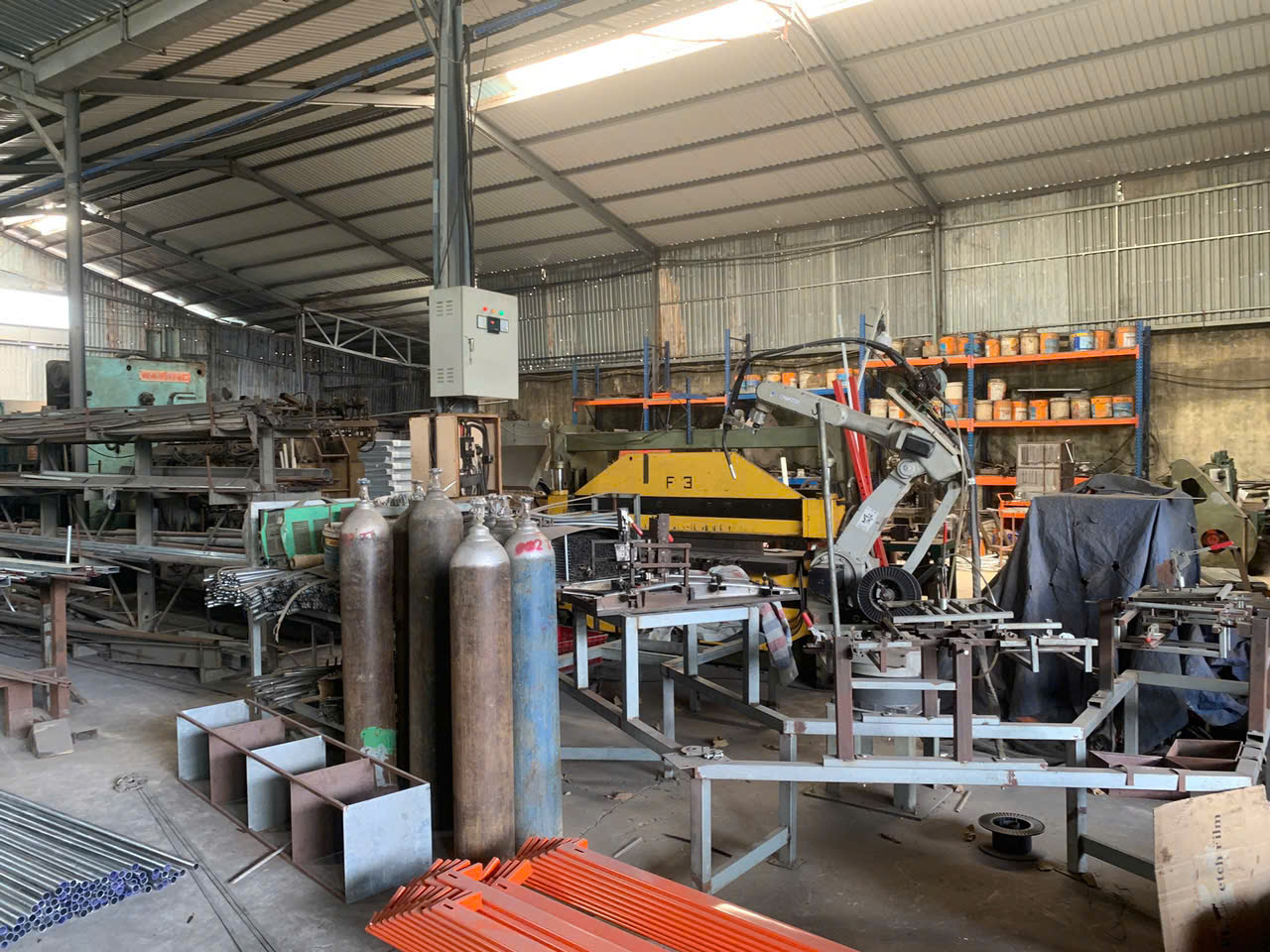
Why Certifications Matter More Than Equipment Lists
A supplier may own a robotic welding 3 cell, but if their quality management system 4 is not certified, you have no guarantee that welder certification, process parameters, or inspection records are maintained. When our Vietnam office audits a potential partner, the first document we request is not a machine list — it is their certification portfolio.
Here is why: ISO 9001 tells you the factory has documented procedures for process control. AWS D1.1 5 or D1.2 certification tells you their welders are qualified to weld structural steel or aluminum to American standards. DNV or Lloyd certification signals they have passed rigorous third-party scrutiny, often for shipbuilding or energy-sector work. Without these, you are relying on the supplier's word alone.
Key Certifications to Request
| Certification | What It Covers | Why You Need It |
|---|---|---|
| ISO 9001:2015 6 | Quality management system | Ensures documented processes and continuous improvement |
| AWS D1.1 / D1.2 | Structural welding (steel / aluminum) | Confirms welders are qualified to American welding standards |
| ASME Section IX | Boiler and pressure vessel welding | Required for pressure-bearing components |
| DNV / Lloyd | Marine and energy sector welding | Proves capability for high-standard international projects |
| IATF 16949 | Automotive quality management | Needed if parts feed into automotive supply chains |
Equipment Verification Steps
Do not stop at certifications. Ask for the equipment maintenance log and calibration records. A CNC plasma cutter that has not been calibrated in two years will drift on tolerances. Our team typically checks:
- Welding machines: Brand, model, year, and whether they support your required process (MIG, TIG, spot welding, or robotic welding).
- Inspection tools: Does the factory have a CMM machine, hardness tester, or non-destructive testing 7 capability such as ultrasonic or X-ray inspection?
- Heat treatment: If your welded parts require stress relief or post-weld heat treatment, confirm the furnace size and temperature range.
Vietnamese factories increasingly use robotic welding for high accuracy and reduced production time. But robotic does not automatically mean better. The robot must be programmed correctly for your material — whether that is carbon steel, stainless steel, or aluminum alloy. Ask for sample welds on your specific material and gauge thickness before committing.
A factory audit in Vietnam — whether conducted by your own team or a third-party agency — should always include a live welding demonstration. Watch how the operators set up, how they handle material fit-up, and how they inspect the completed weld. This tells you more than any certificate on a wall. For a deeper dive into this topic, see our guide on how to verify production capacity and equipment of Vietnamese welding part suppliers.
What steps can I take to ensure my custom welding drawings are interpreted correctly by the local team?
A buyer we work with once sent a detailed drawing package to a Vietnamese supplier — tolerances, weld symbols, surface finish callouts — and received parts with the wrong joint prep on every single weld. The supplier had simply never worked with AWS weld symbols before.
Ensure correct drawing interpretation by providing bilingual or visually annotated drawings, specifying weld symbols per AWS A2.4 or ISO 2553, holding a pre-production review meeting with the engineering team, and requiring a first-article inspection report before full production begins.

The Root Cause of Drawing Misinterpretation
Most Vietnamese factories work comfortably with ISO-standard drawings. But many U.S. buyers send drawings using ASME Y14.5 dimensioning and AWS A2.4 weld symbols 8. These two systems overlap in many areas but differ in critical details — especially for weld joint types, groove angles, and root opening specifications. If the factory's engineers are trained on ISO 2553 weld symbols 9, a drawing using AWS notation will confuse them. This is not a skill problem. It is a communication gap.
A Practical Workflow to Prevent Errors
Here is the step-by-step process our project managers follow when handing off drawings to a Vietnamese production team:
- Translate key notes: Add Vietnamese-language annotations next to English callouts. This alone reduces misunderstandings by a large margin.
- Use 3D models: If you have a STEP or IGES file, send it. A 3D model eliminates ambiguity about complex geometries — especially for multi-level structural frames with angular forms and V-shaped brackets.
- Hold a drawing review call: Before any metal is cut, schedule a video call where the factory engineer walks through the drawing page by page. Ask them to explain back to you what they will do at each weld joint.
- Create a weld map: For parts with multiple weld joints — like the industrial mounting brackets and L-shaped mounts we often source — produce a simple diagram that numbers each weld and lists the process, filler material, and acceptance criteria.
- Require a first-article inspection (FAI): The first piece off the production line must be measured and documented against every dimension on the drawing. No exceptions.
Drawing Standard Comparison
| Feature | AWS A2.4 (U.S.) | ISO 2553 (International) |
|---|---|---|
| Weld symbol placement | Arrow side = below line | Arrow side = below line (same) |
| Other side indication | Above reference line | Dashed line indicates other side |
| Tail usage | Used for process, spec references | Less commonly used |
| Root opening notation | Inside weld symbol | Shown differently in some cases |
| Typical user region | United States | Europe, Asia, Vietnam |
If your drawings use AWS standards and the factory uses ISO, provide a conversion reference sheet. Better yet, send a marked-up sample showing both notations side by side.
Visual Aids That Work
Beyond drawings, share photographs of acceptable and unacceptable welds. Our team creates simple comparison sheets: a photo of a good weld bead next to a photo of common defects — undercut, porosity, lack of fusion. This visual language crosses all barriers. When we source fabricated hardware components with precision-drilled mounting holes and visible weld beads at structural joints, this kind of reference prevents costly rework.
How do I evaluate a supplier's quality control process to avoid rework and delivery delays?
The most expensive welding part is the one you receive, reject, and have to wait eight more weeks to get remade. I have seen this happen when buyers skip the QC evaluation step and focus only on unit price during supplier selection.
Evaluate a supplier's quality control by reviewing their inspection plans, checking for in-process checkpoints (not just final inspection), verifying they own or access non-destructive testing equipment, and confirming they produce documented inspection reports with traceable measurements for every production lot.

What a Strong QC Process Looks Like
A reliable Vietnamese welding supplier does not wait until parts are boxed to check them. Quality control starts at incoming material inspection and continues through every stage: cutting, fit-up, welding, post-weld treatment, and final dimensional check. When we conduct a factory audit in Vietnam, we look at the entire chain — not just the final inspection station.
Here is what each stage should include:
QC Checkpoints by Production Stage
| Stage | What to Inspect | Method / Tool |
|---|---|---|
| Incoming material | Material certificate, thickness, grade | Spectroscopy, calipers, mill cert review |
| Cutting & preparation | Dimensions, edge quality, groove angles | Tape measure, protractor, visual |
| Fit-up (pre-weld) | Gap, alignment, tack weld placement | Weld gauge, squares, fixtures |
| Welding (in-process) | Amperage, voltage, travel speed, interpass temp | Welding log, pyrometer |
| Post-weld | Weld profile, spatter, distortion | Visual, weld gauge, NDT if specified |
| Final inspection | All dimensions, surface finish, hole positions | CMM, calipers, go/no-go gauges |
| Packing & shipping | Quantity, labeling, packaging integrity | Checklist, photo documentation |
Non-Destructive Testing: When and Why
For structural welding — like the heavy-duty metal frames and brackets our clients order — non-destructive testing is not optional. The most common NDT methods used in Vietnamese factories are:
- Visual inspection (VT): The baseline. Every weld should be visually checked by a certified inspector.
- Dye penetrant testing (PT): Reveals surface cracks. Good for stainless steel and aluminum welds.
- Ultrasonic testing (UT): Detects internal flaws. Required for thick-section butt welds.
- Radiographic testing (RT): X-ray inspection for critical pressure or structural welds.
If the factory does not have in-house NDT, ask if they subcontract it. Subcontracting is common and acceptable — as long as the NDT lab is accredited and reports are traceable.
Red Flags to Watch For
When our team evaluates a supplier's quality management system, certain warning signs stand out immediately:
- No written inspection plan or quality control procedure document.
- Inspection tools that are past their calibration due date.
- No record of welder qualification tests — welding quality standards require periodic requalification.
- The factory resists third-party inspection before shipment.
- Dimensional reports are handwritten with no traceability to specific work orders.
A supplier that resists scrutiny is a supplier that will cost you money. The best Vietnamese partners welcome audits, third-party inspections, and PPAP documentation because it protects both sides. You can learn more about how to verify ISO 9001 and quality certifications for Vietnamese welding parts suppliers in our dedicated guide.
Connecting QC to Delivery Performance
Quality failures and delivery delays are two sides of the same coin. When parts fail inspection, they go back for rework. Rework pushes back every order behind it. Our approach is to invest time upfront in process control — reviewing welding procedures, approving first articles, and setting clear acceptance criteria — so that production runs smoothly and ships on time. This "right first time" mindset is what separates a supplier who delivers consistently from one who constantly firefights.
Can I find a Vietnamese partner who offers the flexible payment terms and project management I need?
During a recent sourcing project, a U.S. client told us his biggest frustration was not quality or price. It was cash flow. His previous supplier demanded 50% upfront and 50% before shipment. With a 12-week lead time, he had capital locked up for three months with no product in hand.
Yes, you can find Vietnamese partners offering flexible payment terms such as 30-, 60-, or 90-day open account terms, especially when working through established sourcing partners with local teams who also provide dedicated project management, milestone tracking, and proactive communication throughout production.

Why Payment Terms Matter in Welding Part Sourcing
Welding parts — especially custom structural frames, brackets, and fabricated hardware — often involve long production cycles. Raw material costs for steel and aluminum can be significant. If a supplier requires full prepayment, the buyer carries all the financial risk. This is especially painful when orders are large or when you are scaling production capacity to meet growing demand.
Most Vietnamese factories default to T/T (telegraphic transfer) terms: 30% deposit, 70% before shipment. Some larger, more experienced exporters offer LC (letter of credit) terms. But very few offer open account terms — 60 or 90 days after shipment — because they lack the credit infrastructure or trust with new buyers.
This is where working with a sourcing partner that has a local presence changes the equation. Our Singapore-based operation, with a seven-person team in Vietnam, bridges this gap. We can extend open account payment terms to qualified U.S. clients because we manage the supplier relationship, process control, and supply chain logistics end to end. The factory gets paid on their terms. The buyer gets breathing room on theirs.
What Good Project Management Looks Like
Cost-effective sourcing is not just about the per-unit price. It is about the total cost of ownership — and poor project management inflates that cost fast. When you evaluate supplier quotes when sourcing welding parts from Vietnam, consider the full service model alongside the unit price. Here is what to look for in a Vietnamese partner's project management approach:
- Dedicated project manager: One person who owns your order from drawing review to delivery. Not a salesperson who disappears after the PO is signed.
- Milestone tracking: A simple Gantt chart or timeline that shows material procurement, cutting, welding, inspection, and shipping dates. Updated weekly.
- Proactive communication: The best partners flag problems before you discover them. If a material delivery is late, you should hear about it the same day — not when you ask why your shipment has not arrived.
- Digital integration: Some suppliers now offer real-time order tracking and can share inspection data digitally. This level of transparency is still emerging in Vietnam, but forward-thinking partners already adopt it.
Comparing Supplier Service Models
| Feature | Direct Factory (Small) | Direct Factory (Large/Certified) | Sourcing Partner with Local Team |
|---|---|---|---|
| Payment terms | T/T prepayment | T/T or LC | Open account (60–90 days) possible |
| Project management | Minimal | Basic PM assigned | Dedicated PM with milestone tracking |
| Communication language | Vietnamese, limited English | English-capable staff | Fluent English, cross-cultural experience |
| Quality oversight | Self-inspection only | In-house QC, may accept third-party | Full PPAP, process control, final inspection |
| Supply chain logistics | Buyer arranges shipping | FOB or CIF available | Door-to-door logistics management |
| Scalability | Limited | Strong production capacity | Flexible — can shift between factories |
Building Trust for Long-Term Partnerships
Vietnamese business culture values relationships. Suppliers prefer to work with people they know and trust. This means the first order is often a test — for both sides. Invest time in building rapport through factory visits, shared meals, and genuine interest in the team. In return, you will find Vietnamese partners who go the extra mile: accommodating rush orders, absorbing small cost overruns, or holding raw material inventory to shorten your lead times.
Our experience managing manufacturing capabilities across Vietnam has shown us that the strongest partnerships form when both sides commit to transparency. Share your forecasts. Explain your end-use. When the factory understands why a tolerance matters or why a surface finish is critical, they make better decisions on the production floor.
Conclusion
Comparing Vietnamese supplier capabilities for welding parts comes down to certifications, drawing communication, quality control rigor, and partnership flexibility — get these right, and Vietnam becomes a reliable, cost-effective sourcing base.
Frequently Asked Questions
How do I verify if a Vietnamese factory's welding certifications and equipment meet my technical standards?
One lesson we learned early on was that a factory tour can look impressive — rows of shiny machines, busy workers — yet mean very little if the certifications behind those machines are outdated or irrelevant to your project.
What steps can I take to ensure my custom welding drawings are interpreted correctly by the local team?
A buyer we work with once sent a detailed drawing package to a Vietnamese supplier — tolerances, weld symbols, surface finish callouts — and received parts with the wrong joint prep on every single weld. The supplier had simply never worked with AWS weld symbols before.
How do I evaluate a supplier's quality control process to avoid rework and delivery delays?
The most expensive welding part is the one you receive, reject, and have to wait eight more weeks to get remade. I have seen this happen when buyers skip the QC evaluation step and focus only on unit price during supplier selection.
Footnotes
1. Describes a common non-destructive testing method for surface flaws. ↩︎
2. Explains a non-destructive method for detecting internal defects in materials. ↩︎
3. Provides a comprehensive overview of robotic welding technology and its applications. ↩︎
4. Explains the fundamental principles of a quality management system. ↩︎
5. Provides details on the American Welding Society’s structural welding code. ↩︎
6. Official information about the ISO 9001:2015 quality management system standard. ↩︎
7. Explains various techniques used to inspect materials without causing damage. ↩︎
8. Official standard for specifying welding symbols on engineering drawings. ↩︎
9. Provides information on the international standard for welding symbols. ↩︎
10. Explains the process of verifying the first production part against specifications. ↩︎