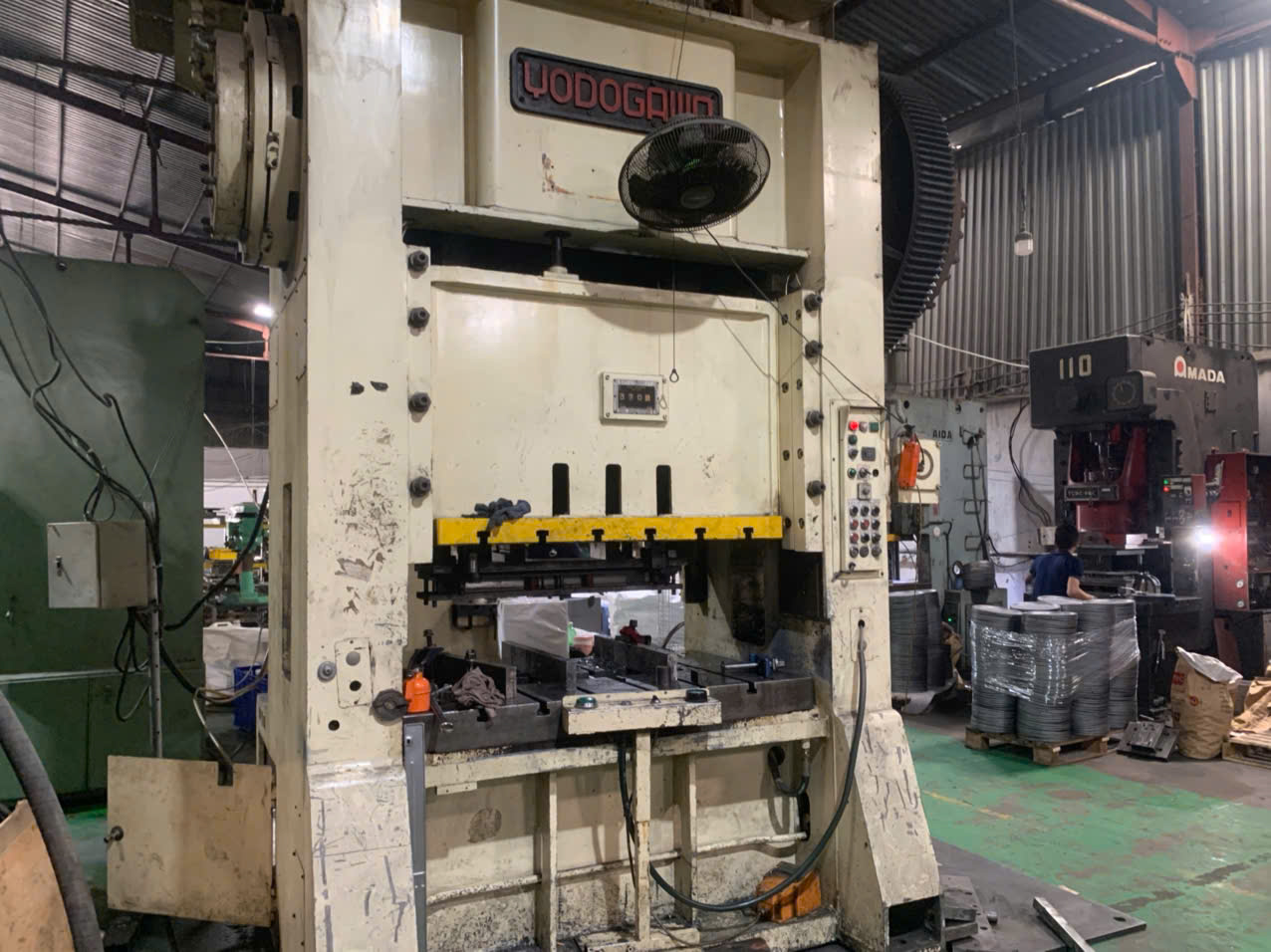
A single non-compliant stamped bracket nearly cost one of our European clients an entire product recall — and we learned that confirming stamping parts materials comply with EU RoHS demands far more than a quick certificate check.
To confirm suppliers’ stamping parts materials comply with EU RoHS, you must verify compliance at every homogeneous material layer — base metal, plating, passivation, and cleaning agents — using a tiered approach of supplier declarations, full material disclosure, and third-party lab test reports from ISO 17025 accredited laboratories.
This guide walks through the exact verification process we use when managing supply chains across Vietnam and China for our U.S. and European clients. Each section covers a specific step, from the initial RFQ stage all the way to handling non-compliant shipments. Let’s get into it.
How can I verify a stamping parts supplier's RoHS compliance documentation before placing an order?
One lesson we learned early in our sourcing work was that a supplier's verbal assurance of compliance means nothing when customs holds your container at Rotterdam. The verification must start before you even place the order — at the RFQ stage.
Before placing an order, verify RoHS compliance by requiring suppliers to submit a signed Supplier Declaration of Conformity, mill test reports for the base metal, full material disclosure for plating and passivation chemistry, and lot-traceable documentation tied to the specific part number and revision level.

Start With the RFQ — Not After
The biggest mistake buyers make is treating RoHS compliance as a post-production checkbox. In our experience managing custom stamping projects for U.S. importers, we embed compliance requirements directly into the Request for Quotation. This forces the supplier to commit upfront rather than scramble for paperwork after production.
Your RFQ should explicitly state the regulation scope. Write "EU RoHS 2011/65/EU as amended by 2015/863 (RoHS 3)" in the document. Do not just write "RoHS compliant." Generic language invites generic responses.
The Three Documents You Must Require
There are three tiers of documentation. Each one adds a layer of confidence.
| Tier | Document | What It Proves | When to Require |
|---|---|---|---|
| 1 | RoHS Certificate of Compliance (CoC) | Supplier declares the part meets RoHS | Every order — minimum baseline |
| 2 | Full Material Disclosure (FMD) | Chemical composition breakdown of each material layer | New parts, new suppliers, material changes |
| 3 | Third-party lab test report (ISO 17025) | Independent verification of restricted substance levels | High-risk finishes, first article, periodic re-verification |
A Tier 1 declaration alone is common but often insufficient. We always request at least Tier 2 for any stamped part with plating or passivation. For hexavalent chromium 1 risk — which is high in passivated zinc finishes — we push for Tier 3.
What the Declaration Must Include
A valid RoHS declaration is not a one-line statement. It must include the specific part number and revision, the material grade, the finish specification, the date of declaration, the name and signature of a responsible person, and the company stamp. When we audit suppliers in Vietnam, we reject any declaration that says "all our products are RoHS compliant" without referencing the exact part. That is a red flag, not a compliance document.
You should also define the retention period. EU law requires technical documentation to be kept for 10 years after the last product is placed on the market. State this requirement in your purchase order terms so the supplier cannot destroy records prematurely.
Verify the Mill Test Report
The mill test report (MTR) from the steel or alloy producer is your foundation. It should include the heat number, the chemical composition, and the mechanical properties. Cross-check that the MTR lot number matches the material lot on the supplier's Certificate of Compliance. If those numbers don't match, the compliance chain is broken.
What testing reports or certificates should I request to confirm my custom parts meet EU RoHS requirements?
During a recent project involving zinc-plated stamped brackets for an electronics enclosure, our quality team discovered that the supplier's base metal was clean — but the passivation layer contained hexavalent chromium above the 1,000 ppm limit. The mill certificate told only half the story.
To confirm custom stamping parts meet EU RoHS, request an ISO 17025 accredited third-party lab report using ICP-OES or XRF screening analysis on each homogeneous material — base metal, plating layer, and passivation coating — plus a Supplier Declaration of Conformity and the original mill test report.
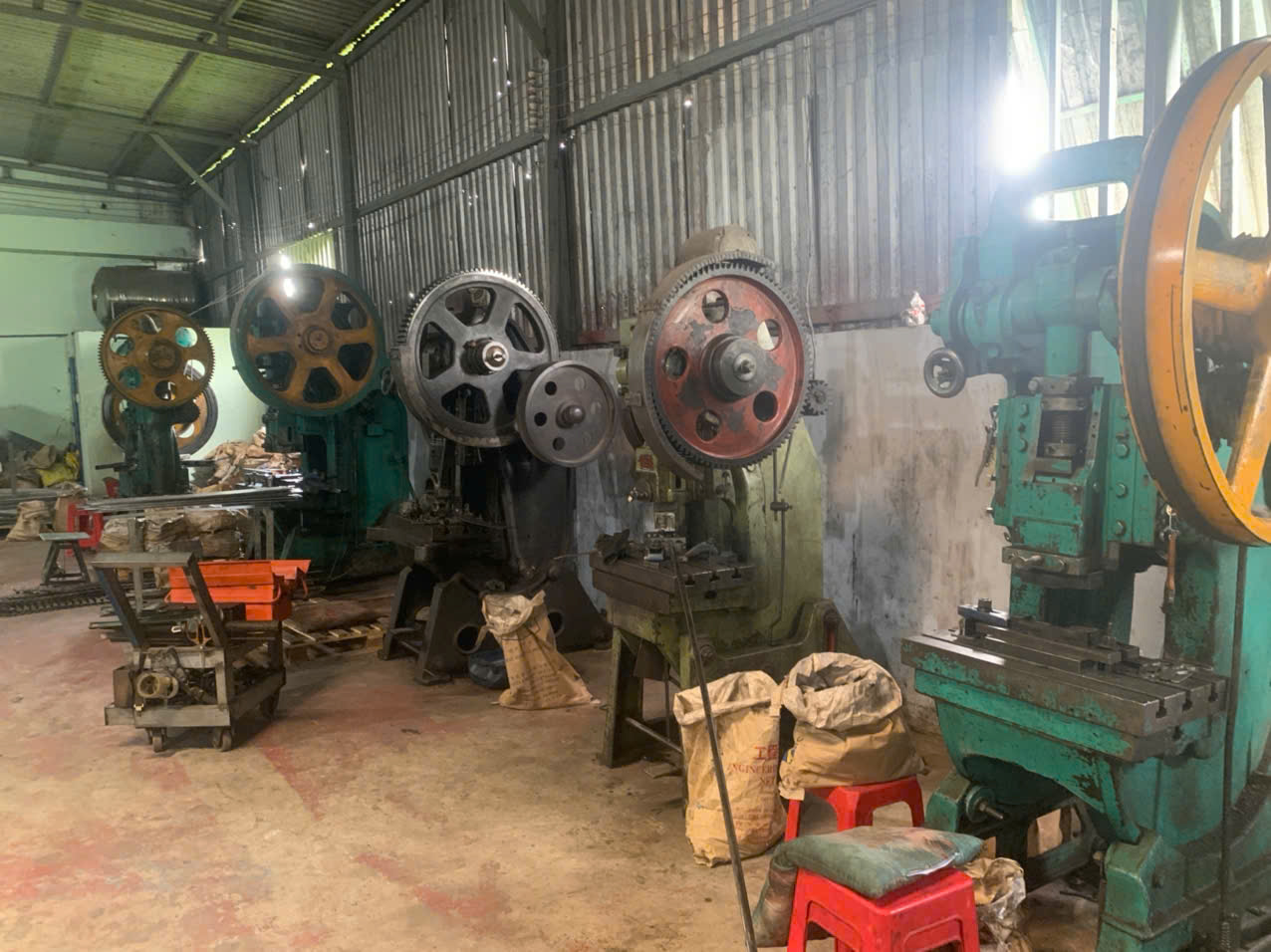
Understanding "Homogeneous Materials" in Stamped Parts
RoHS testing is not done on the whole part. It must be done on each "homogeneous material 2" — a material that cannot be mechanically separated into different materials. For a stamped bracket, this means the steel substrate is one homogeneous material. The zinc plating is another. The chromate passivation on top of the zinc is a third. Each must be tested or declared separately.
This is where most suppliers and buyers get it wrong. A mill certificate for the base steel says nothing about the plating bath chemistry. And a plating certificate says nothing about the passivation process.
The Restricted Substances You Must Test For
EU RoHS restricts 10 substances. Here is the full restricted substances list with the maximum concentration values relevant to stamped metal parts:
| Substance | Max Concentration (ppm) | Common Source in Stamped Parts |
|---|---|---|
| Lead (Pb) | 1,000 | Solder, brass alloys, plating baths |
| Mercury (Hg) | 1,000 | Rarely an issue in stamping |
| Cadmium (Cd) | 100 | Cadmium plating (legacy), pigments |
| Hexavalent Chromium (Cr6+) | 1,000 | Chromate passivation, conversion coatings |
| PBB | 1,000 | Not typical in metal stamping |
| PBDE | 1,000 | Not typical in metal stamping |
| DEHP | 1,000 | Cleaning agents, lubricants |
| BBP | 1,000 | Cleaning agents, lubricants |
| DBP | 1,000 | Cleaning agents, lubricants |
| DIBP | 1,000 | Cleaning agents, lubricants |
For stamped metal parts, your highest risk substances are lead, cadmium, and hexavalent chromium in the plating and passivation layers, plus the four phthalates that may lurk in stamping oils and degreasing agents.
Testing Methods: XRF vs. ICP-OES
XRF screening analysis 3 is fast and non-destructive. It is great for incoming inspection — you can use a handheld XRF gun to screen parts at your receiving dock. However, XRF has limitations. It measures total chromium, not hexavalent chromium specifically. And it struggles with very thin coatings.
ICP-OES testing is the gold standard for quantitative analysis. It requires dissolving the sample, so it is destructive. But it gives precise concentration values for each element. For first-article qualification and periodic verification, we always recommend ICP-OES from an ISO 17025 accredited lab 4.
Don't Forget the Phthalates
The four phthalates (DEHP, BBP, DBP, DIBP) were added under RoHS 3 in 2019. Many metal stamping suppliers still overlook them. These chemicals appear in plasticizers, lubricants, and cleaning solvents used during the stamping and degreasing process. A GC-MS (Gas Chromatography–Mass Spectrometry) test is needed to detect phthalates — XRF cannot find them.
The RoHS Exemptions for Metal Alloys
Not all lead in metal 5 is prohibited. RoHS Annex III provides specific exemptions for lead in alloys:
| Exemption | Material | Max Lead Allowed |
|---|---|---|
| 6(a) | Steel alloy | Up to 0.35% by weight |
| 6(b) | Aluminum alloy | Up to 0.4% by weight |
| 6(c) | Copper alloy | Up to 4% by weight |
If your stamped part is brass (a copper alloy), it can legally contain up to 4% lead. But you must document which exemption applies and include it in the technical file. We always note the specific Annex III exemption number on our internal compliance records.
How do I audit a supplier in Vietnam or China to ensure their stamping materials are truly RoHS compliant?
When our Vietnam office conducted its first supplier audit at a stamping factory outside Ho Chi Minh City, we found the base metal storage area mixed RoHS-grade coils with standard commercial-grade coils — no labels, no segregation, no traceability. The supplier had a RoHS certificate on the wall. It meant nothing.
To audit a stamping supplier in Vietnam or China for RoHS compliance, physically inspect material segregation practices, verify lot traceability from incoming raw material to finished parts, review plating and passivation chemical records, and collect samples for independent XRF screening or ICP-OES testing at an accredited lab.

The Audit Is About Process, Not Paper
Certificates can be purchased or fabricated. What matters is whether the factory's actual process maintains material integrity from the incoming coil to the finished stamped part. Our team with 21 staff in China and 7 in Vietnam conducts audits focused on four areas: incoming material control, production segregation, finish process control, and documentation traceability.
Incoming Material Control
Check how raw materials arrive. Does the supplier verify the mill test report against the actual coil markings? Do they perform incoming XRF screening analysis on each batch? Or do they just accept whatever the steel distributor delivers?
We look for a documented incoming inspection procedure 6 that includes material grade verification, heat number recording, and a physical or chemical spot-check. If the supplier uses recycled content, ask for "green scrap" certification to ensure legacy contaminants from secondary metals do not exceed allowable limits.
Production Floor Segregation
Walk the factory floor. RoHS-compliant materials and non-RoHS materials must be physically separated. Look for color-coded bins, labeled racks, or dedicated storage zones. Cross-contamination on the production floor is one of the most common failure modes. If the same stamping press runs RoHS and non-RoHS jobs without a documented changeover procedure, you have a problem.
Plating and Passivation Audit Points
This is the most critical part of the audit for stamped parts. Visit the plating line (or the subcontracted plating shop). Ask to see the chemical bath formulations. Confirm whether the passivation uses trivalent chromium (RoHS compliant) or hexavalent chromium (restricted). Ask for Safety Data Sheets (SDS) for every chemical in the plating and passivation process.
Also audit the post-stamping degreasing and cleaning agents. Residual surfactants or industrial solvents can contain restricted phthalates 7. Request SDS for all cleaning chemicals and verify they are free of DEHP, BBP, DBP, and DIBP.
Traceability Walkthrough
Pick a finished part from the shipping area. Ask the supplier to trace it back to the raw material lot, the plating batch, and the passivation batch. If they cannot do this in real time, their traceability system is inadequate. We consider traceability a non-negotiable. Without it, no test report or declaration can be reliably linked to the parts you actually receive.
Some forward-thinking suppliers are adopting Digital Product Passports 8 to create an immutable, end-to-end digital audit trail of material chemistry from the smelting mill to the final stamped part. While this is still emerging, it is worth asking your supplier about their digital traceability capabilities.
Integrated Hardware Check
If the stamped part includes purchased screws, nuts, rivets, or inserts, verify that the supplier has RoHS documentation for those components too. We have seen cases where the stamped bracket was fully compliant, but the stainless steel rivets inserted during assembly contained excess lead. The assembled part failed RoHS because one sub-component was missed.
What steps can I take if I discover non-compliant materials after receiving my stamping parts shipment?
Three years ago, a client's receiving inspection flagged elevated lead levels on a batch of zinc-plated stamped clips. The XRF reading was borderline. We had 48 hours to decide: quarantine and test, or ship to the production line and hope for the best. The answer was obvious — but the process that followed taught us how critical it is to have a response plan ready before trouble arrives.
If you discover non-compliant stamping parts after receipt, immediately quarantine the shipment, conduct confirmatory ICP-OES testing at an ISO 17025 lab, issue a formal non-conformance report to the supplier, negotiate replacement or corrective action, and update your technical file to document the incident and resolution.

Step 1: Quarantine Immediately
Do not mix suspected parts with compliant inventory. Physically isolate the shipment. Label it clearly. Record the lot number, purchase order number, supplier name, and the date of quarantine. This creates a defensible record if regulators or your end customer asks questions later.
Step 2: Confirm With Independent Testing
Your incoming XRF screening is a first indicator, but enforcement authorities and REACH regulation 9 enforcement bodies require quantitative confirmation. Send samples to an ISO 17025 accredited lab for ICP-OES testing. Request testing on each homogeneous material layer — not just the whole part.
For hexavalent chromium concerns, request a specific Cr6+ test (e.g., EPA Method 7196A). For phthalate concerns, request GC-MS analysis.
Step 3: Issue a Formal Non-Conformance Report
Document everything. A formal NCR should include the part number, the specific substance found, the concentration measured, the RoHS limit, the test method used, the lab name and accreditation number, and the date of testing. Send this to the supplier with a demand for root cause analysis and corrective action.
Step 4: Evaluate Your Options
Your response depends on the severity and the contractual terms you established at the RFQ stage.
| Scenario | Recommended Action |
|---|---|
| Marginally over limit, single lot | Reject lot, request replacement, require re-testing of supplier's material stock |
| Significantly over limit | Reject lot, halt future orders until corrective action is verified, consider supplier disqualification |
| Systemic issue (multiple lots affected) | Full supply chain review, potential product recall if parts already shipped to end customer, legal consultation |
| Supplier disputes the finding | Commission a second independent lab test; if confirmed, escalate contractually |
Step 5: Update Your Technical File
Under EU law, your technical file must reflect the non-conformance and its resolution. This is not optional — failure to maintain detailed files is a criminal offense in the EU. Document the test results, the NCR, the supplier's corrective action, and the verification test confirming the replacement parts comply.
If the parts have already been integrated into finished products bearing CE marking requirements 10, you may need to notify your customer and potentially the relevant EU market surveillance authority. The 10-year document retention rule means you must keep these records for a decade after the last product containing these parts was placed on the market.
Step 6: Prevent Recurrence
Tighten your incoming inspection process. Consider deploying AI-powered compliance software to automatically cross-reference supplier-provided SDS against the most current RoHS 3 substance thresholds. Increase the frequency of third-party lab reports for that supplier. And if the supplier cannot demonstrate a credible corrective action, find an alternative. This is exactly the kind of supply chain risk management our team handles for clients sourcing from Asia — catching these issues before they become recalls.
Beyond RoHS, you should also understand how to request RoHS and REACH compliance from sheet metal fabrication suppliers as part of a comprehensive approach. Additionally, if you are sourcing specifically from Vietnam, it is worth reviewing EU certification requirements that apply when sourcing stamping parts from Vietnam to ensure you cover all regulatory bases.
Conclusion
Confirming your stamping parts suppliers meet EU RoHS requires a layered approach — from embedding requirements in your RFQ, to verifying every homogeneous material layer, to auditing factory floor practices and maintaining a defensible technical file for a full decade.
Frequently Asked Questions
How can I verify a stamping parts supplier's RoHS compliance documentation before placing an order?
One lesson we learned early in our sourcing work was that a supplier's verbal assurance of compliance means nothing when customs holds your container at Rotterdam. The verification must start before you even place the order — at the RFQ stage.
What testing reports or certificates should I request to confirm my custom parts meet EU RoHS requirements?
During a recent project involving zinc-plated stamped brackets for an electronics enclosure, our quality team discovered that the supplier's base metal was clean — but the passivation layer contained hexavalent chromium above the 1,000 ppm limit. The mill certificate told only half the story.
How do I audit a supplier in Vietnam or China to ensure their stamping materials are truly RoHS compliant?
When our Vietnam office conducted its first supplier audit at a stamping factory outside Ho Chi Minh City, we found the base metal storage area mixed RoHS-grade coils with standard commercial-grade coils — no labels, no segregation, no traceability. The supplier had a RoHS certificate on the wall. It meant nothing.
Footnotes
1. Hexavalent chromium is a restricted substance often found in traditional metal passivation and conversion coatings. ↩︎
2. RoHS compliance is defined at the homogeneous material level, requiring separate verification for each layer. ↩︎
3. XRF is a standard non-destructive method for screening restricted substances in metal parts and coatings. ↩︎
4. ISO 17025 is the international standard for testing and calibration laboratories, ensuring technical competence and valid results. ↩︎
5. Lead is a restricted substance with specific exemptions for various metal alloys used in stamping. ↩︎
6. Incoming inspection procedures are critical components of a quality management system to ensure material compliance. ↩︎
7. Phthalates are restricted substances under RoHS 3 that can be found in stamping lubricants and cleaning agents. ↩︎
8. Digital Product Passports are an EU initiative to improve traceability and sustainability data across the supply chain. ↩︎
9. Official European Commission landing page for the REACH chemical regulation framework. ↩︎
10. CE marking indicates that a product meets EU safety, health, and environmental protection requirements. ↩︎