
A single missed weld specification on a structural frame nearly cost one of our U.S. clients an entire production run — and that painful lesson reshaped how we approach every welding parts supplier relationship today.
Contract manufacturers build strategic partnerships with welding parts suppliers by shifting from transactional purchasing to collaborative alliances rooted in shared quality standards, proactive communication, co-development practices, cost innovation, and mutual dependability — transforming the supply chain into a durable competitive advantage.
The difference between a vendor and a true partner shows up when something goes wrong PPAP documentation 1. A vendor points fingers. A partner picks up the phone before you even know there is a problem. Below, I break down the specific actions that turn a welding supplier into a strategic ally — from quality control protocols all the way to payment flexibility.
How do I ensure my welding parts supplier consistently meets my strict quality and technical specifications?
Last year, our Vietnam office rejected three consecutive shipments of heavy-duty mounting brackets because the weld bead profiles did not match the drawing tolerances — a problem we traced back to a missing pre-production alignment step at the supplier's facility.
Ensuring your welding parts supplier consistently meets strict specifications requires implementing a structured quality management system — including PPAP documentation, first-article inspections, AWS-certified welder verification, and clear inspection criteria agreed upon before production begins.
Quality control in welding is not optional. It is the backbone of every partnership we manage. When a purchasing manager in the U.S. sends us a drawing for a complex geometric frame assembly — with hollow tubing, V-shaped brackets, and pre-drilled mounting holes — every weld joint must meet the exact specification. One undersized fillet weld on a structural intersection can compromise the entire assembly.
Start With a Detailed Supplier Audit
Before placing a single order, we visit the supplier's shop floor. We check their welding equipment, measure their fixture accuracy, and review their welder certifications. An AWS-certified welder 2 is not a luxury — it is a baseline requirement. We also verify their quality management system 3. ISO 9001:2015 certification 4 is a strong indicator that the supplier has documented processes for traceability and corrective action.
Define Inspection Criteria Before Production
Ambiguity kills quality. We use a joint inspection plan that spells out every critical dimension, weld type, surface finish, and acceptable tolerance. For custom welded parts — like L-shaped mounts, U-channels, and flat base plates — we define what "good" looks like before any arc is struck.
| Quality Control Step | Purpose | When It Happens |
|---|---|---|
| First Article Inspection (FAI) 5 | Verify the first piece matches all drawing specs | Before mass production |
| In-Process Inspection | Monitor weld parameters (amperage, travel speed) | During production |
| Final Inspection | Full dimensional and visual check | Before shipment |
| PPAP Submission | Document process capability and part approval | Before first delivery |
| Periodic Re-Audit | Confirm ongoing compliance | Quarterly or semi-annually |
Use Data to Drive Improvement
We track defect rates by category — weld porosity, undercut, dimensional deviation, surface contamination. This data goes into a monthly scorecard shared with the supplier. Over time, the scorecard becomes a roadmap for continuous improvement. The supplier sees which areas need attention, and we see whether the trend is moving in the right direction. For a deeper look at this approach, see how to build a supplier scorecard to compare sheet metal fabrication vendors.
Risk mitigation also means not relying on a single source. We maintain relationships with backup suppliers who have been pre-qualified. This protects our clients from disruptions without sacrificing the depth of our primary partnership.
What can I do to minimize delivery delays and improve communication with my offshore welding partner?
One trade-off we weigh constantly is speed versus thoroughness. Rushing a welding supplier leads to missed details on reinforced gussets and precision-drilled holes. But slow, unclear communication leads to delays that ripple through the entire supply chain.
Minimizing delivery delays and improving communication with an offshore welding partner requires establishing structured communication protocols, sharing detailed production schedules, conducting weekly progress reviews, and building buffer time into lead time calculations for material sourcing and logistics.
Delivery delays are the number-one complaint I hear from U.S. purchasing managers. The root cause is rarely laziness — it is almost always a communication gap. A supplier in Vietnam or another Asian country may interpret a drawing note differently than an engineer in Ohio. Without a structured feedback loop, small misunderstandings compound into weeks of lost time.
Build a Communication Cadence
We use a simple but rigid communication schedule with every welding partner. Weekly video calls during active production. Daily email updates during critical phases like tooling setup or first-article runs. The goal is supply chain transparency 6 — everyone sees the same timeline, the same risks, and the same priorities.
| Communication Type | Frequency | Participants | Purpose |
|---|---|---|---|
| Kick-off Meeting | Once per project | Engineering + QC + Purchasing | Align on specs, timeline, and risks |
| Weekly Progress Call | Every week during production | Project manager + Supplier PM | Track milestones and flag issues |
| Daily Status Email | During critical phases | Supplier QC + Our QC team | Confirm daily output and inspection results |
| Exception Alert | As needed (within 4 hours) | Supplier + Our project lead | Report deviations, material shortages, or delays |
| Post-Delivery Review | After each shipment | All stakeholders | Document lessons learned |
Address Root Causes of Delay
Delays often trace back to three sources: late material arrival, unclear drawing revisions, and underestimated production time. We tackle each one directly.
For material sourcing, we require the supplier to confirm raw material availability before we finalize the production order. If a specific grade of galvanized steel or aluminum tubing is on a long lead time, we know before the clock starts ticking.
For drawing clarity, our engineering team in China reviews every drawing package before it reaches the supplier. They flag ambiguous dimensions, missing weld symbols, and conflicting notes. This step alone has cut our revision cycles by roughly half.
For production time, we build buffer into the schedule. If the supplier estimates 25 working days, we plan for 30. This is not pessimism — it is professional project management. Lead time reduction comes from removing waste in the process, not from compressing the schedule until it breaks.
Leverage Digital Tools for Transparency
We share project dashboards that show real-time status: materials received, pieces welded, pieces inspected, pieces packed. The supplier updates the dashboard daily. Our U.S. clients can log in anytime and see exactly where their order stands. This level of supply chain management builds trust faster than any sales pitch.
How can I secure open account payment terms with my supplier to better manage my business cash flow?
A buyer interaction I often recall is a purchasing manager who told me bluntly: "I can find a cheaper welder, but nobody else offers me 60-day terms. That is why I stay." Cash flow flexibility is not a perk — for many contract manufacturers, it is a strategic necessity.
Securing open account payment terms with a welding parts supplier requires building a track record of reliable orders, demonstrating financial stability, starting with shorter payment cycles, and partnering with a supply chain intermediary that already has established credit relationships with manufacturers.
Most welding parts suppliers in Asia default to a simple payment structure: 30% deposit before production, 70% balance before shipment. This is safe for the supplier, but it ties up the buyer's cash for weeks — sometimes months — before the parts even arrive at the warehouse. For a purchasing manager juggling multiple projects, that capital lock-up can stall growth.
Why Payment Terms Matter for Strategic Partnerships
Open account terms — where the buyer pays 60 or 90 days after shipment — shift the financial risk to the supplier or the intermediary. This is a significant trust signal. A supplier willing to extend credit is betting on the relationship, not just the transaction. And the buyer gets to sell the finished product before the raw material bill comes due.
At DEWIN, we offer open account payment terms 7 to qualified U.S. and European clients. We absorb the financing gap because we have long-standing relationships with our manufacturing partners. This is one of the clearest ways we turn a vendor relationship into a strategic partnership.
Steps to Qualify for Open Account Terms
Not every buyer qualifies immediately. Here is the typical progression:
- Start with standard terms. Pay the 30/70 split for the first two or three orders. This builds a payment history.
- Request net-30 after establishing trust. Once both sides have a working rhythm, ask for net-30 terms on smaller orders.
- Graduate to net-60 or net-90. After six months of consistent orders and on-time payments, longer terms become negotiable.
- Use an intermediary. A supply chain partner like ours can bridge the gap. We pay the supplier on standard terms and extend credit to the buyer.
Comparing Payment Structures
| Payment Model | Buyer Cash Flow Impact | Supplier Risk | Best For |
|---|---|---|---|
| 100% Prepayment | High negative impact | Zero risk | First-time, unproven buyers |
| 30% Deposit / 70% Before Shipment | Moderate negative impact | Low risk | Established but new relationships |
| Net-30 Open Account | Low negative impact | Moderate risk | Repeat buyers with good history |
| Net-60 or Net-90 Open Account | Minimal negative impact | Higher risk | Long-term strategic partners |
| Letter of Credit (L/C) | Moderate (bank fees) | Low (bank-backed) | Large orders with new partners |
Cost reduction in procurement is not only about unit price. It is also about when you pay. A buyer who gets net-90 terms effectively gets an interest-free loan for three months. Over a year of regular orders, that working capital advantage compounds. Understanding how to balance price and quality when selecting OEM welding parts suppliers is equally critical to maximizing this advantage.
The key takeaway: payment flexibility is earned, not demanded. But once earned, it cements the partnership in a way that price negotiations alone never can.
What are the best ways for me to collaborate with a manufacturer on the co-development of custom welded parts?
A lesson we learned early in our co-development work: handing a supplier a finished drawing and saying "build this" leaves enormous value on the table. The best results come when we bring the welding partner into the conversation before the design is locked.
The best ways to collaborate on co-development of custom welded parts include engaging the supplier during the design phase for Design for Manufacturability feedback, sharing functional requirements alongside drawings, running joint prototyping cycles, and integrating the supplier's technical expertise into material and process selection.
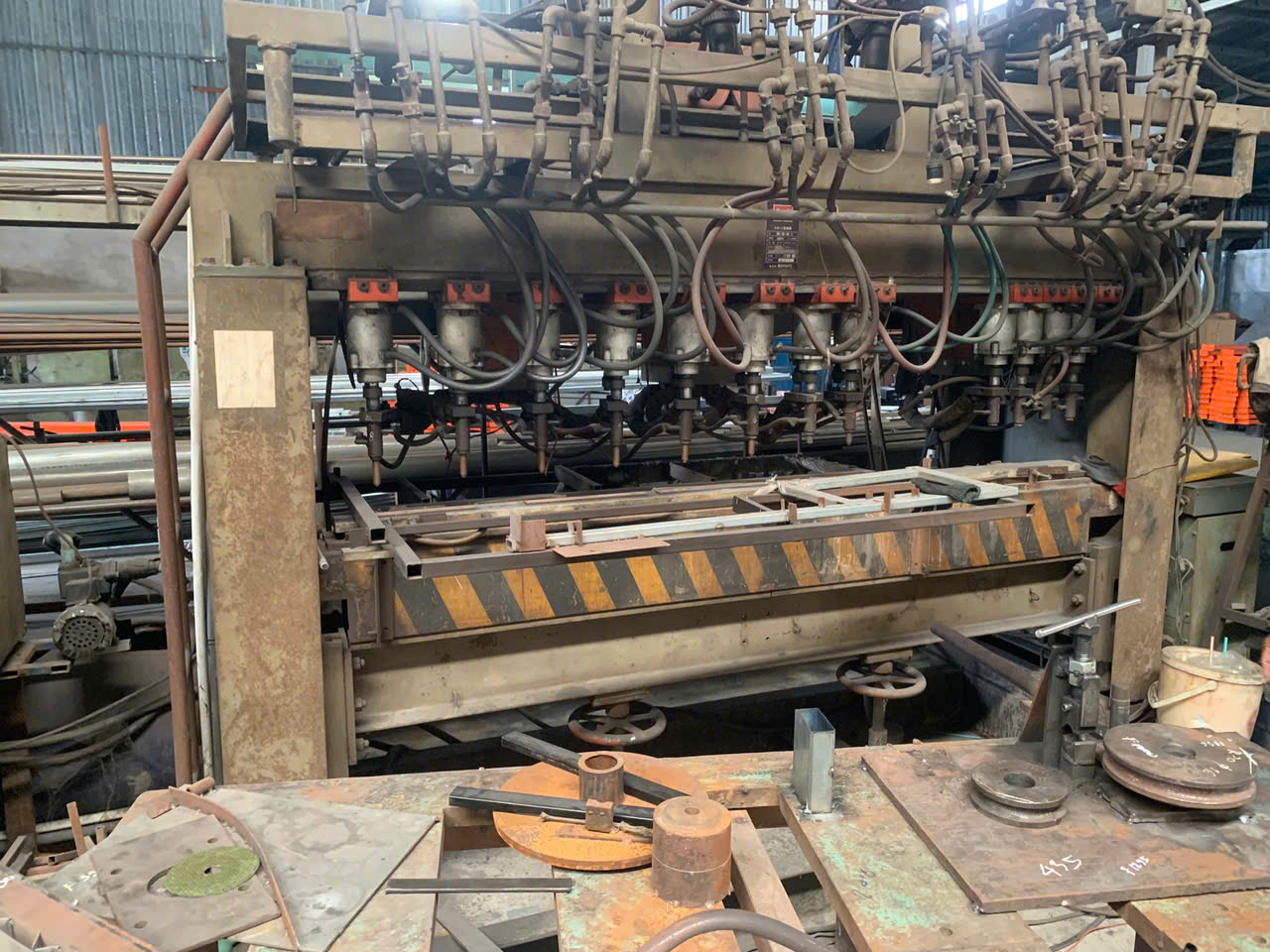
Co-development is where a welding parts supplier transforms from a cost center into a value creator. When our engineering team in China sits down with a supplier's welding engineers to review a new industrial metal frame assembly — with its multi-level angular form, reinforced joints, and pre-drilled mounting features — we are not just reviewing a drawing. We are optimizing for manufacturing efficiency, cost, and quality simultaneously.
Design for Manufacturability (DFM) Reviews
DFM is not a buzzword. It is a structured review where the supplier's welding experts evaluate the design and suggest changes that make the part easier, faster, and cheaper to produce — without sacrificing function. Design for Manufacturability (DFM) 8 Common DFM findings in welded assemblies include:
- Weld joint access issues where a torch or MIG gun cannot physically reach the joint
- Over-specified tolerances on non-critical dimensions that drive up inspection time
- Material substitutions that reduce cost without affecting strength (e.g., switching from a heavier gauge to a lighter one with a reinforced gusset)
- Joint redesigns that allow robotic welding instead of manual welding, improving consistency
The Co-Development Process
Our standard co-development workflow looks like this:
- Requirement sharing. The client sends functional requirements, load specs, and environmental conditions — not just a drawing.
- Joint design review. Our engineers and the supplier's team review the design together. We use video calls with shared screen markup.
- DFM report. The supplier issues a formal DFM report with recommended changes, estimated cost impact, and lead time implications.
- Prototype run. We produce a small batch (typically 5–10 pieces) for fit, form, and function testing.
- Iteration. Based on prototype feedback, we revise the design and run a second prototype if needed.
- Production approval. Once the client approves the final prototype, we move to PPAP and mass production.
Choosing the Right Collaboration Model
| Collaboration Level | Supplier Involvement | Buyer Benefit | Best For |
|---|---|---|---|
| Build-to-Print | Supplier follows drawing exactly | Fast if design is proven | Mature, validated designs |
| Build-to-Spec | Supplier has some process freedom | Lower cost, supplier optimizes methods | Functional parts with flexible form |
| Co-Development | Supplier contributes to design | Best quality, cost, and manufacturability | New products, complex assemblies |
| Full Design Delegation | Supplier owns design entirely | Buyer saves engineering resources | Commodity parts with standard functions |
Co-development works best when both sides bring technical expertise to the table. The buyer knows the application — how the welded frame will be loaded, what environment it operates in, what certifications it needs. The supplier knows the process — which welding consumables 9 perform best on that alloy, which joint geometry minimizes distortion, and how to sequence welds to control residual stress.
Metal fabrication is a craft. The best welded parts come from partnerships where the welder's knowledge of heat input, filler metal selection, and fixture design is respected and integrated into the engineering process. This is not about giving up control. It is about gaining insight that no drawing review alone can provide. Learning how to build long-term strategic partnerships with sheet metal fabrication suppliers reinforces many of these same principles.
When we manage co-development projects, we also consider sustainable manufacturing practices. Suppliers who optimize weld sequences reduce energy consumption. Suppliers who recommend near-net-shape cutting reduce material waste. These efficiencies align with the growing demand for environmentally responsible products — and they save money.
Conclusion
Building strategic partnerships with welding parts suppliers demands intentional effort across quality systems, communication discipline, financial flexibility, and co-development practices. The payoff is a supply chain that delivers consistent quality, shorter lead times, and lasting competitive advantage.
Frequently Asked Questions
How do I ensure my welding parts supplier consistently meets my strict quality and technical specifications?
Last year, our Vietnam office rejected three consecutive shipments of heavy-duty mounting brackets because the weld bead profiles did not match the drawing tolerances — a problem we traced back to a missing pre-production alignment step at the supplier's facility.
What can I do to minimize delivery delays and improve communication with my offshore welding partner?
One trade-off we weigh constantly is speed versus thoroughness. Rushing a welding supplier leads to missed details on reinforced gussets and precision-drilled holes. But slow, unclear communication leads to delays that ripple through the entire supply chain.
How can I secure open account payment terms with my supplier to better manage my business cash flow?
A buyer interaction I often recall is a purchasing manager who told me bluntly: "I can find a cheaper welder, but nobody else offers me 60-day terms. That is why I stay." Cash flow flexibility is not a perk — for many contract manufacturers, it is a strategic necessity.
Footnotes
1. Wikipedia offers a detailed explanation of the Production Part Approval Process (PPAP). ↩︎
2. Official American Welding Society page explaining the Certified Welder program. ↩︎
3. Official ISO page defining quality management and its importance for organizations. ↩︎
4. Official ISO page detailing the ISO 9001:2015 standard and its requirements. ↩︎
5. Wikipedia provides a comprehensive overview of First Article Inspection (FAI) processes. ↩︎
6. Wikipedia provides a general overview of the concept and importance of supply chain transparency. ↩︎
7. Replaced with an active page from trade.gov (International Trade Administration), an authoritative government source, that discusses various methods of payment, including open account terms. ↩︎
8. Replaced with the Wikipedia page for ‘Design for manufacturability’, which provides a comprehensive overview and aligns with the academic nature of the original failed URL. ↩︎
9. Authoritative industry body (TWI Global) explaining what welding consumables are. ↩︎