

A client once rejected an entire shipment of welding parts because the supplier’s welder qualifications had expired three weeks before production started — a costly lesson our team in Vietnam learned early on about certification requirements when sourcing welding parts.
Contract manufacturers meet special certification requirements when sourcing welding parts by verifying welder qualifications, validating Welding Procedure Specifications, conducting non-destructive testing, and partnering with suppliers who hold recognized certifications like AWS D1.1, ASME Section IX, ISO 3834, and Nadcap accreditation for regulated industries.
This article breaks down how to verify supplier certifications, what quality control processes to demand, how to manage risk with overseas welding suppliers, and how payment terms can coexist with strict inspection requirements. Let’s dig in.
How do I verify if a contract manufacturer in Vietnam truly meets my specific welding certification standards?
Last year, one of our U.S. clients asked us to audit a Vietnamese welding shop that claimed AS9100 certification 1. When our local team visited the facility, the certificate on the wall was valid — but it covered machining only, not welding. That single visit saved the client months of delays and thousands of dollars in potential rework.
Verify a contract manufacturer's welding certifications by requesting original certificates, cross-checking them against issuing body databases, conducting on-site audits of welder qualification records and Welding Procedure Specifications, and confirming that the certification scope covers your specific materials, processes, and joint positions.
Why Certification Scope Matters More Than the Certificate Itself
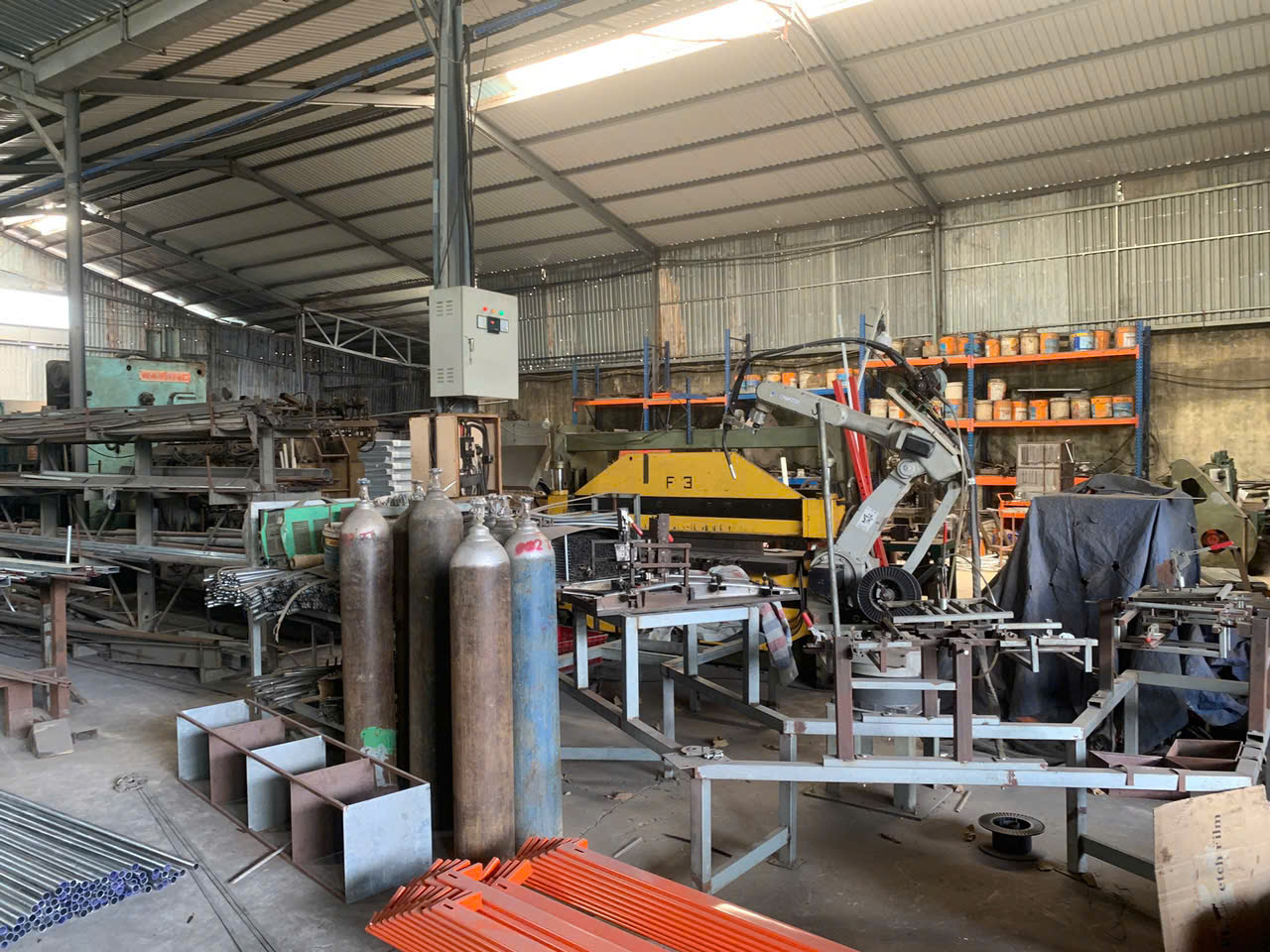
A certificate hanging on a wall does not tell you the full story. Every welding certification has a defined scope. AWS D1.1 2 covers structural steel welding, but it does not cover aluminum — that requires AWS D1.2. ASME Section IX 3 qualifies welding procedures for pressure vessels and piping, but only for the specific material groups, thicknesses, and positions tested. If your project calls for stainless steel TIG welding in the 6G position, the supplier must have a qualified WPS and welder qualification test records that match those exact parameters.
When our team conducts supplier qualification audits in Vietnam, we check three things first: the certificate itself, the scope description, and the expiration date. Then we dig deeper.
Key Documents to Request and Verify
Here is a practical checklist of documents you should request WPS and welder qualifications from suppliers before placing any welding order:
| Document | What It Proves | How to Verify |
|---|---|---|
| Welding Procedure Specification (WPS) 4 | The welding parameters are defined and documented | Review for material, filler metal, position, preheat, and interpass temperature |
| Procedure Qualification Record (PQR) 5 | The WPS was tested and passed destructive testing | Check test lab credentials and specimen results |
| Welder Qualification Test Record | The individual welder is qualified for the process/position | Confirm expiration dates and re-qualification schedule |
| ISO 9001 6 or AS9100 Certificate | Quality management system is in place | Cross-check on the certification body's public database |
| NDT Reports | Welds were inspected using non-destructive testing methods | Confirm NDT operator certifications (e.g., ASNT Level II) |
| Material Test Reports (MTRs) | Base and filler materials meet specifications | Match heat numbers to purchase orders |
On-Site Audit vs. Remote Verification
Remote verification works for checking certificate validity. You can look up ISO 9001 certificates on IAF CertSearch or check Nadcap accreditation 7 on the PRI website. But remote checks cannot tell you if the shop floor matches the paperwork.
Our Vietnam office performs on-site audits that include watching welders work, reviewing calibration records for welding equipment, and interviewing quality personnel. We look at whether the shop actually follows its own WPS during production — not just during audits. This is where many suppliers fall short. They have the right documents but do not follow them consistently.
For aerospace projects requiring AS9100 or Nadcap accreditation, on-site audits are not optional. They are essential. The same applies to ASME Section IX work, where code stamps and authorized inspector involvement must be verified in person.
What quality control processes should I expect from my sourcing partner to ensure my custom welding parts are right the first time?
Getting welding parts right the first time is the single most common request we hear from U.S. purchasing managers. One client told us he had been burned three times by different Asian suppliers who shipped parts with undercut, porosity, and incomplete fusion — defects that a basic visual inspection should have caught before packing.
Expect your sourcing partner to implement incoming material inspection, in-process weld monitoring, certified welding inspector review, non-destructive testing where required, dimensional verification, and a final inspection with documented results — all governed by a written quality control plan tied to your drawing specifications.

The Quality Control Process Flow
Quality control for welding parts is not a single checkpoint at the end of production. It is a series of gates. Here is how we structure it for our clients' custom welding projects:
| Stage | Activity | Responsible Party |
|---|---|---|
| Pre-Production | Review drawings, develop WPS, confirm welder qualifications | Engineering + QC Manager |
| Incoming Material | Verify MTRs, check material dimensions and condition | Incoming QC Inspector |
| First Article Inspection | Weld and inspect first piece to full drawing requirements | CWI or Certified Inspector |
| In-Process Monitoring | Check fit-up, preheat, interpass temperature, weld sequence | Welding Supervisor + QC |
| Post-Weld Inspection | Visual inspection per AWS D1.1 or applicable code | CWI |
| Non-Destructive Testing | UT, RT, MT, or PT as required by specification | Certified NDT Technician |
| Dimensional Inspection | Verify critical dimensions, GD&T callouts | QC Inspector with calibrated tools |
| Final Inspection | Full check against drawing and purchase order requirements | QC Manager |
| Documentation Package | Compile WPS, PQR, NDT reports, dimensional reports, MTRs | Quality Department |
Why First Article Inspection Is Non-Negotiable
We treat first article inspection as a PPAP-like gate. Before full production begins, the first welded assembly goes through every inspection step. This catches issues with fit-up, distortion, weld sequence, and dimensional accuracy before they multiply across hundreds of parts.
For one structural steel frame project — similar to the complex geometric assemblies of square and rectangular hollow tubing we regularly source — the first article revealed that thermal distortion shifted a mounting hole pattern by 1.5 mm. The welding sequence was adjusted, a fixture was built, and the remaining parts came out within tolerance. Without that first article gate, the entire batch would have needed rework.
The Role of Certified Welding Inspectors
A Certified Welding Inspector (CWI) 9 brings an independent eye. They evaluate welds against acceptance criteria defined in the applicable code — whether that is AWS D1.1 for structural steel, AWS D1.6 for stainless steel, or ASME Section IX for pressure components. They know what constitutes a rejectable defect versus an acceptable discontinuity.
Our approach is to have CWI-level inspection at the supplier's facility during production, not just at final inspection. This catches problems early. It also sends a clear message to the welding team that quality matters at every step.
Non-Destructive Testing Methods
NDT is where welding quality control gets technical. Non-Destructive Testing (NDT) 10 The method you need depends on the material, joint type, and specification requirements.
| NDT Method | Best For | Standard Reference |
|---|---|---|
| Visual Inspection (VT) | Surface defects, weld profile, undercut | AWS D1.1 Clause 6 |
| Liquid Penetrant Testing (PT) | Surface-breaking cracks in non-ferrous metals | ASTM E1417 |
| Magnetic Particle Testing (MT) | Surface and near-surface defects in ferromagnetic materials | ASTM E1444 |
| Ultrasonic Testing (UT) | Internal defects, lack of fusion, porosity | ASTM E164 |
| Radiographic Testing (RT) | Internal defects in critical welds | ASTM E1032 |
For aerospace welding parts requiring Nadcap accreditation, NDT must be performed by accredited labs or operators. This is not something you can skip or substitute.
How can I manage the risk of non-conforming welding parts when sourcing from overseas suppliers?
A conversation with a long-time client changed how we think about risk. He said: "I don't mind paying a bit more for the part. What I can't afford is the cost of shutting down my customer's assembly line because your welds failed inspection." That statement captures the real cost of non-conforming welding parts — it is never just the part itself.
Manage the risk of non-conforming welding parts by implementing supplier qualification audits, requiring qualified WPS and PQR documentation, conducting pre-shipment inspections, using third-party NDT when needed, establishing clear non-conformance reporting procedures, and building contractual protections including corrective action requirements.

Risk Management Starts Before You Place the Order
The biggest mistake buyers make is treating risk management as something that happens after a problem occurs. In our experience sourcing custom parts from Vietnam and other Asian countries, the most effective risk reduction happens during supplier selection and project setup.
Before we approve a welding supplier for a client's project, our team reviews the supplier's regulatory compliance history, quality management certifications, and welder qualification records. We also evaluate Vietnamese supplier capacity and their experience with similar materials and joint configurations. A shop that excels at carbon steel MIG welding may struggle with thin-gauge stainless steel TIG work. Matching the supplier's proven capability to the project's specific demands is the first risk filter.
Building a Non-Conformance Response Plan
Even with the best controls, non-conforming parts can happen. What separates a reliable sourcing partner from a problematic one is how they handle it. We establish non-conformance reporting (NCR) procedures with every supplier before production starts. The procedure defines:
- Who has authority to disposition non-conforming material (use-as-is, rework, scrap)
- Required root cause analysis methods (5-Why, fishbone diagram)
- Corrective action timelines and verification steps
- Communication protocols — how quickly the buyer is notified
For critical welding projects, we also agree on containment actions. If a weld defect is found mid-production, production stops until the root cause is identified. This prevents defective parts from shipping while the team investigates.
Pre-Shipment Inspection as Your Last Line of Defense
Our team in Vietnam performs pre-shipment inspections on every order before it leaves the supplier's facility. For welding parts, this includes dimensional checks, visual weld inspection, and review of all quality documentation. If NDT was required, we verify that the reports are complete and that any indications fall within acceptance criteria.
This step has caught issues that would have been expensive to resolve after the parts arrived in the United States. On one project involving heavy-duty L-shaped brackets and U-channel components, our inspector found that weld reinforcement on several pieces exceeded the maximum allowed by the drawing. The supplier ground the welds down and re-inspected before shipment. The client received conforming parts on time.
Contractual Protections
Beyond process controls, your purchase order and supply agreement should include clauses that protect you. Specify the applicable welding code, required certifications, inspection rights, and consequences for non-conformance. Make it clear that the supplier bears the cost of rework or replacement for parts that do not meet the agreed specifications.
Can I secure open account payment terms while still maintaining strict certification and inspection requirements for my welding projects?
This question comes up in nearly every initial conversation with new clients. They want the cash flow benefit of 60 to 90 day payment terms, but they worry that extended terms might weaken their leverage over quality. The concern is understandable — if you have already paid, what motivation does the supplier have to fix problems?
Yes, you can secure open account payment terms while maintaining strict certification and inspection requirements by partnering with a sourcing company that separates payment management from quality enforcement, contractually linking payment milestones to inspection approvals, and working with financially stable partners who can absorb the credit risk.
Why Payment Terms and Quality Are Not Mutually Exclusive
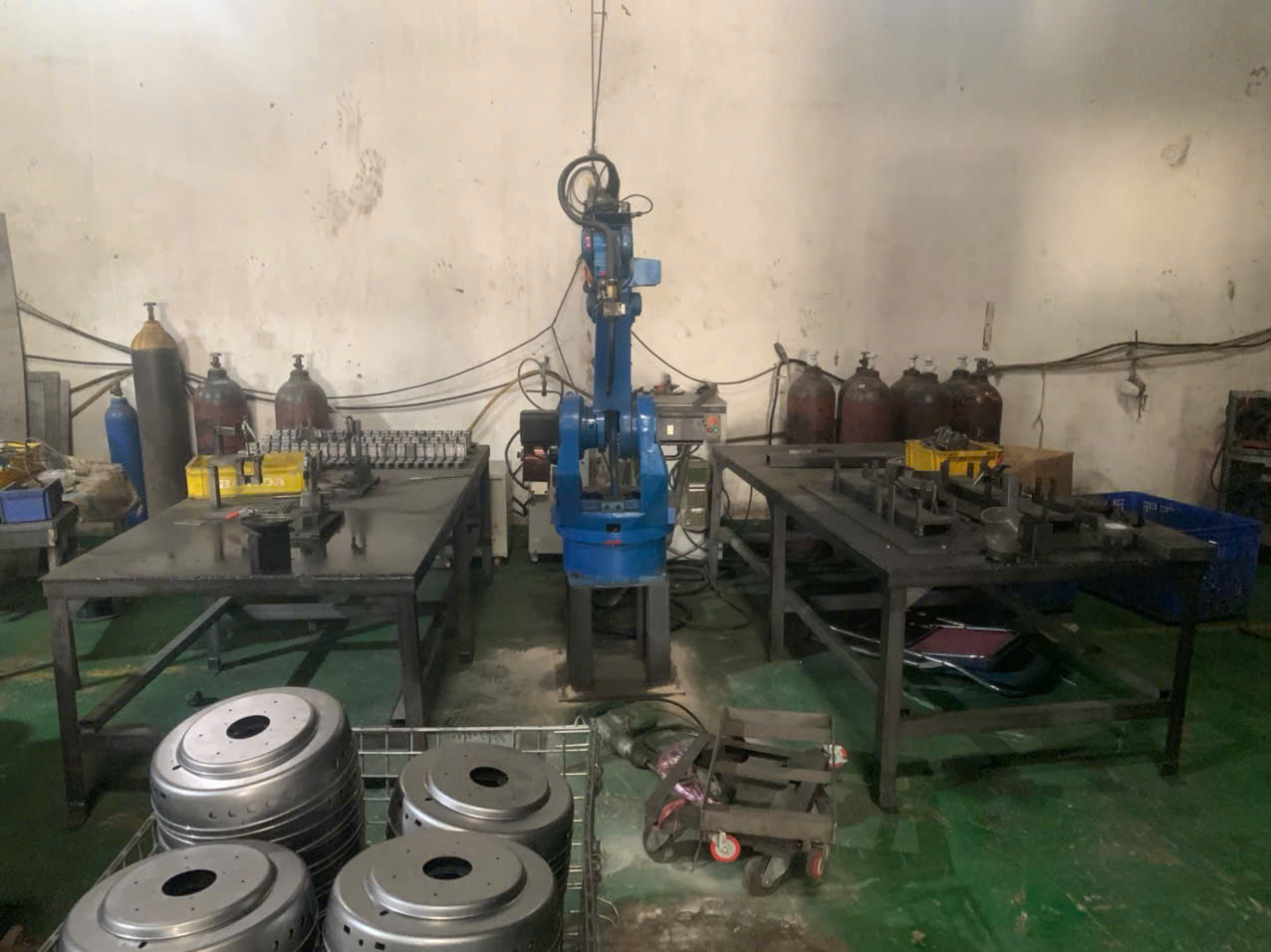
The assumption that strict payment terms are the only way to enforce quality is outdated. In modern contract manufacturing, quality is enforced through systems — not through withholding payment. A well-structured quality management system based on ISO 9001, combined with welding-specific controls like ISO 3834 or AWS code compliance, creates accountability that does not depend on payment timing.
Our business model is designed to address this exact tension. We offer open account terms — typically net 60 or net 90 — to qualified U.S. clients. At the same time, we maintain rigorous quality control processes at the supplier level. The two systems operate independently. The supplier gets paid based on production milestones that include inspection gates. The client pays us on agreed credit terms after receiving conforming goods.
How the Payment and Quality Structure Works Together
Here is how the flow typically works for a welding project:
| Step | Quality Gate | Payment Trigger |
|---|---|---|
| Order Placement | Drawing review and WPS approval | No payment due |
| First Article Approval | Full dimensional and weld inspection | Supplier receives partial payment |
| Production Complete | In-process inspection records verified | Supplier receives balance |
| Pre-Shipment Inspection | Final inspection passed, documents compiled | Goods ship to client |
| Client Receives Goods | Incoming inspection at client's facility | Client's net 60/90 payment clock starts |
This structure means the client does not pay until they have received inspected, conforming parts. And the supplier is held accountable through inspection gates before they receive full payment from us. Quality enforcement and cash flow management work in parallel.
Building Trust Through Transparency
Open account terms require trust. But trust does not mean blind faith. It means transparency. We provide clients with full documentation packages — WPS, PQR, welder qualification records, NDT reports, dimensional inspection reports, and photos. Every step is documented. If a question arises six months later about a weld on a specific bracket or frame assembly, we can trace it back to the welder, the procedure, and the inspection results.
This traceability is not just good practice. For clients in regulated industries requiring ASME Section IX compliance or AS9100-level quality management, it is mandatory. And it gives purchasing managers the confidence to approve open account terms because they can see — in documented detail — that the quality certifications system works.
The key insight is this: payment terms are a financial arrangement. Quality is a process discipline. When both are managed by a capable sourcing partner with boots on the ground, they reinforce each other rather than conflict.
Conclusion
Meeting special certification requirements when sourcing welding parts demands verified credentials, disciplined quality control, proactive risk management, and a sourcing partner who understands both the technical and commercial sides of the equation.
Frequently Asked Questions
How do I verify if a contract manufacturer in Vietnam truly meets my specific welding certification standards?
Last year, one of our U.S. clients asked us to audit a Vietnamese welding shop that claimed AS9100 certification 1 . When our local team visited the facility, the certificate on the wall was valid — but it covered machining only, not welding. That single visit saved the client months of delays and thousands of dollars in potential rework.
What quality control processes should I expect from my sourcing partner to ensure my custom welding parts are right the first time?
Getting welding parts right the first time is the single most common request we hear from U.S. purchasing managers. One client told us he had been burned three times by different Asian suppliers who shipped parts with undercut, porosity, and incomplete fusion — defects that a basic visual inspection should have caught before packing.
How can I manage the risk of non-conforming welding parts when sourcing from overseas suppliers?
A conversation with a long-time client changed how we think about risk. He said: "I don't mind paying a bit more for the part. What I can't afford is the cost of shutting down my customer's assembly line because your welds failed inspection." That statement captures the real cost of non-conforming welding parts — it is never just the part itself.
Footnotes
1. Quality management system standard specifically for the aerospace and defense industry. ↩︎
2. Official standard for structural steel welding from the American Welding Society. ↩︎
3. Explains qualification requirements for welding procedures and personnel for pressure equipment. ↩︎
4. Replaced with a comprehensive and accessible explanation of Welding Procedure Specification (WPS) from Wikipedia, citing industry standards. ↩︎
5. Record of welding variables and test results to qualify a WPS. ↩︎
6. International standard for quality management systems. ↩︎
7. Industry-managed program for aerospace and defense manufacturing process accreditation. ↩︎
8. International standard for quality requirements for fusion welding of metallic materials. ↩︎
9. Professional certification for individuals inspecting welds, offered by AWS. ↩︎
10. Group of analysis techniques to evaluate material properties without damage. ↩︎