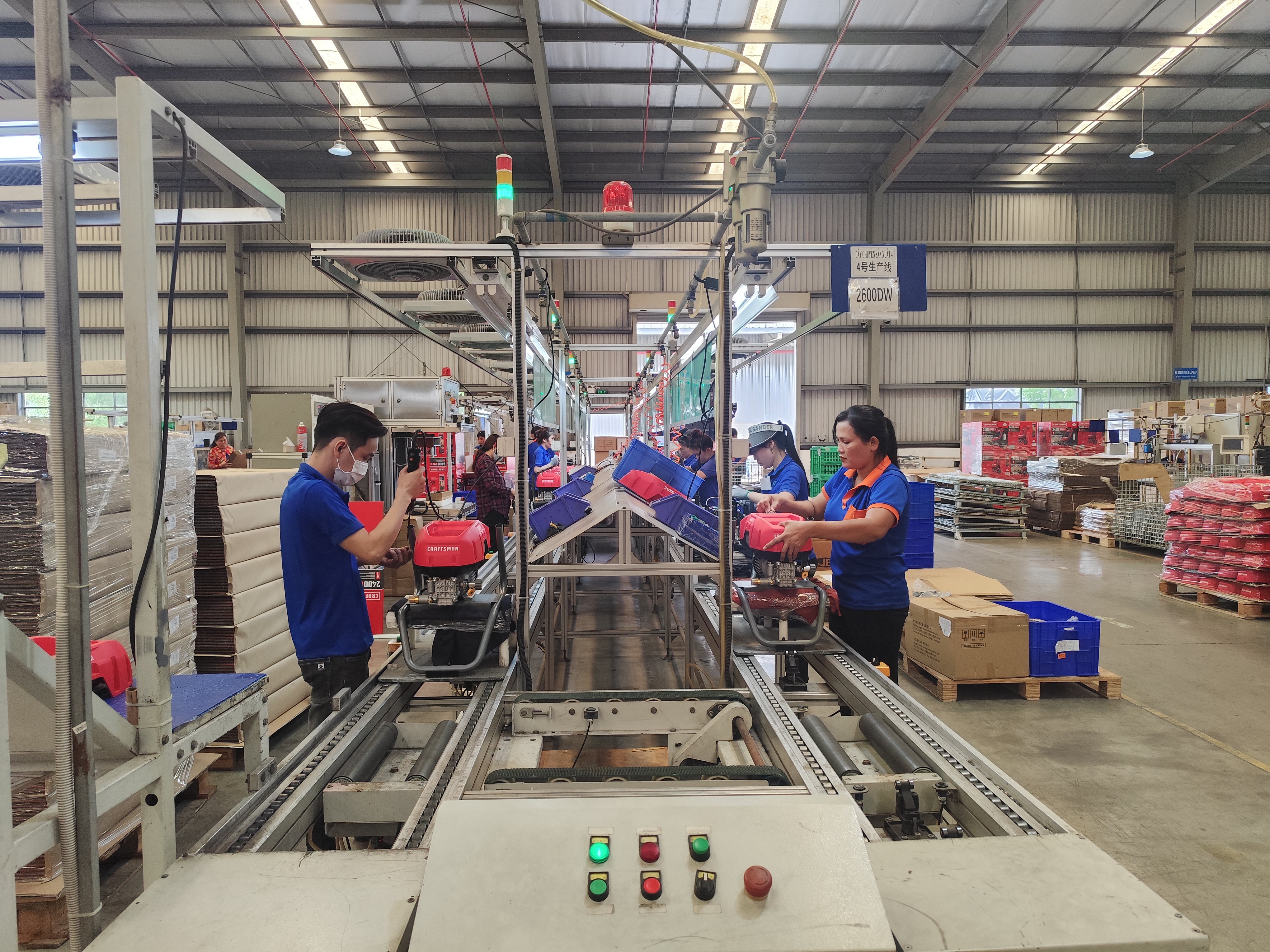

Every week, our team in Vietnam reviews quotes for custom sheet metal parts — and the gap between the cheapest and the best-value option often surprises buyers.
To control unit costs in quality sheet metal fabrication, focus on design for manufacturability, strategic material selection, batch production planning, rigorous quality control to eliminate rework, and partnering with a fabrication source that offers transparent pricing, open account terms, and end-to-end supply chain management.
Cost control does not mean cutting corners. It means making smarter decisions at every stage — from the CAD file to the shipping container. Below, I will walk through the four levers that drive the biggest savings on your next sheet metal project.
How can I optimize my part designs to lower sheet metal fabrication costs without sacrificing quality?
A few months ago, one of our U.S. clients sent over drawings for a set of mounting brackets with six different bend radii and decorative embossments on non-visible surfaces. Our engineering team in Ho Chi Minh City flagged twelve changes that could cut the unit price by nearly a third — without touching a single functional dimension.
Optimize part designs by simplifying geometry, standardizing bend radii and hole sizes, removing non-functional features, keeping wall thickness constant, and applying tolerances only where they affect fit or function. These design for manufacturability practices reduce tooling costs, machine time, and scrap.

Start With Geometry — Simpler Is Cheaper
Part complexity 1 is the single biggest cost driver in sheet metal work. Every additional bend, cutout, or embossment adds setup time, tool changes, and the risk of scrap. When we review drawings during our OEM co-development phase, the first question is always: "Does this feature serve a function, or is it just carried over from a previous revision?"
Flat or near-flat parts nest better on a sheet. Better nesting means higher material utilization and less waste. Our process optimization starts in CAD, where we run nesting algorithms 2 to arrange cutouts on the base sheet for maximum yield.
Standardize Bends, Holes, and Radii
Keeping bend radii consistent — and at least equal to the material thickness — avoids costly die changes. Here is a quick reference our engineers share with clients:
| Design Feature | Recommended Rule | Why It Matters |
|---|---|---|
| Internal bend radius | ≥ material thickness (min 0.030 in / 0.762 mm) | Prevents cracking and avoids custom tooling |
| Hole diameter | ≥ material thickness | Reduces burrs and punch wear |
| Hole spacing | ≥ 6× material thickness | Prevents deformation between holes |
| Hole-to-bend distance | ≥ 2× material thickness + bend radius | Avoids misshaping during bending |
| Hem return length | 4–6× material thickness | Ensures stiffness without cracking |
| Tolerances | Apply tight tolerances only on mating surfaces | Avoids unnecessary secondary operations |
If you use standard drill-bit sizes and off-the-shelf PEM fasteners 3, the fabricator does not need to order special tooling. That alone can save days on lead time and real dollars on tooling costs.
Material Selection: Cost vs. Performance
Material choice is the second lever. Many buyers default to stainless steel or aluminum when carbon steel would perform identically in the application. Here is the cost hierarchy we see across our Vietnam and broader Asian supplier base:
| Material | Relative Cost | Best Use Case |
|---|---|---|
| Carbon steel (e.g., SPCC, Q235) | Lowest | Indoor structures, brackets, enclosures with paint or powder coat |
| Stainless steel 304 4 | Medium | Mild corrosion environments, food-adjacent equipment |
| Stainless steel 316 | Medium-High | Marine, chemical, or high-corrosion environments |
| Aluminum (5052, 6061) | Highest | Weight-critical or highly conductive applications |
Choosing pre-plated steel can also eliminate a post-fabrication plating step. If the design allows riveted joints instead of welded ones, you skip both welding labor and the need to re-plate weld-affected zones. These finishing processes add up fast on a per-unit basis.
Consolidate Parts and Suppress Noise
Every separate part in an assembly adds a line item to the BOM, an inspection step, and a joining operation. When geometry allows, we recommend consolidating two or three stampings into a single bent-and-formed piece. That said, if the geometry is too complex for a single blank, forcing consolidation can backfire with higher scrap rates. It is a trade-off we evaluate case by case.
Also, suppress non-pertinent CAD data before sending files to the fabricator. Extra reference geometry, cosmetic annotations on hidden faces, and legacy revision clouds create confusion. A clean drawing gets a faster, more accurate quote.
How do I find a reliable fabrication partner in Vietnam that balances technical expertise with competitive pricing?
When our Singapore office first set up operations in Vietnam seven years ago, the landscape for precision sheet metal was still maturing. Today, the capability gap between a top-tier Vietnamese shop and a coastal Chinese factory has narrowed dramatically — but finding the right partner still takes discipline.
Find a reliable Vietnam fabrication partner by auditing their equipment, quality systems, and engineering communication skills. Request sample production runs, verify references from U.S. or European buyers, and confirm they can manage raw material prices and lead times through transparent supplier negotiation and proactive project management.

What to Look for in a Fabrication Partner
Not every shop that owns a fiber laser and a press brake can deliver complex, tight-tolerance sheet metal parts on time. Here is the checklist we use when qualifying fabricators for our clients:
- Equipment list and capacity. Confirm they have the right tonnage press brakes, laser wattage, and welding stations for your part size and material thickness.
- Engineering communication. Can their engineers read and mark up your drawings in English? Can they flag DFM issues before production starts? This is where most sourcing failures begin — missed notes, ignored GD&T callouts, or simple language barriers.
- Quality management system. Look for ISO 9001 at minimum. Ask to see their control plans, inspection records, and corrective-action logs from the past six months. Quality management system 5
- Reference customers. A shop that already exports to the U.S. or Europe understands Western quality expectations. Ask for two or three references you can call.
- Material sourcing transparency. Where do they buy steel and aluminum? Do they hold safety stock, or do they buy spot? This affects both raw material prices and lead time.
Why Vietnam — and Why Now
Vietnam offers a compelling combination for U.S. buyers looking to diversify away from a single-country supply chain. Labor costs are competitive. Import duties into the U.S. are often lower than those applied to Chinese-origin goods. And the manufacturing infrastructure — especially in the Ho Chi Minh City and Hanoi industrial corridors — has improved significantly.
Our local team of seven in Vietnam conducts on-site audits, manages PPAP documentation 6, and runs final inspections before shipment. That local presence is critical. Remote audits and video calls help, but nothing replaces walking the shop floor and checking fixtures in person.
Involve Your Partner Early
The biggest cost savings come from involving your fabrication partner during the design phase, not after drawings are released. A skilled fabricator can suggest material substitutions, flag impossible-to-hold tolerances, and recommend process changes — all of which lower cost before the first sheet of metal is cut. This is the co-development model we follow for every custom project. Production volume discussions also happen here, because batch size directly shapes the quoting strategy.
What quality control processes should I require to prevent expensive rework and late delivery penalties?
I learned this lesson the hard way on one of our early projects: a batch of 800 laser-cut and formed enclosures arrived at the client's warehouse in Texas with bend angles consistently 1.5 degrees out of spec. The rework cost more than the original fabrication. Since then, quality control has been non-negotiable at every stage.
Require a documented control plan covering incoming material inspection, in-process checks at each operation, first-article inspection reports (FAIR), final dimensional verification, and a clear corrective-action process. These steps catch defects early, prevent expensive rework, and protect your delivery schedule.
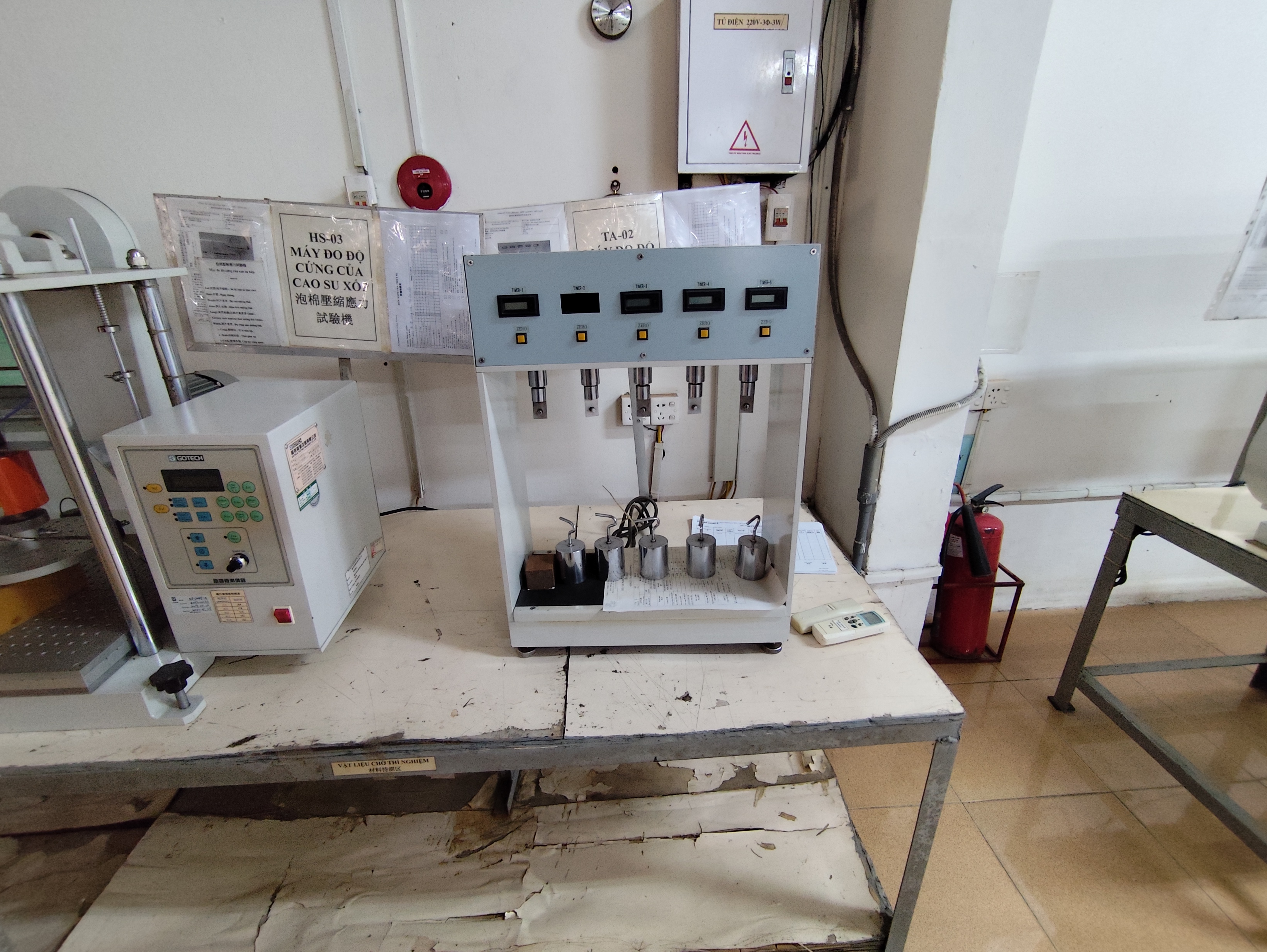
The Cost of Getting It Wrong
Rework is not just a line-item cost. It triggers a chain reaction: late delivery, expedited freight to recover the schedule, strained customer relationships, and sometimes contractual penalties. For a purchasing manager sourcing custom parts for redistribution, a single quality escape can damage credibility with the end customer.
A Practical QC Framework
Here is the quality control framework we deploy across our contract manufacturing projects:
| Stage | Inspection Activity | Key Tools |
|---|---|---|
| Incoming material | Verify mill certs, material grade, thickness, and surface condition | Calipers, micrometer, spectrometer |
| First article (FAIR) | Full dimensional layout of first 1–3 pieces against drawing | CMM, height gauge, protractor |
| In-process | Check critical dimensions every N pieces; monitor bend angles, hole positions | Go/no-go gauges, digital protractor |
| Welding / joining | Visual weld inspection; check for distortion, burn-through, porosity | Weld gauge, visual standards (AWS D1.1) |
| Finishing | Verify coating thickness, adhesion, color match | DFT gauge, cross-hatch adhesion test |
| Final / pre-ship | 100% visual + AQL sampling on dimensions; packaging audit | Per client spec or ISO 2859 sampling plan |
First-Article Inspection Is Your Safety Net
A proper FAIR locks in the process before mass production begins. It confirms that the tooling setup, material, and operator technique produce parts within spec. We require our fabricators to hold production until the FAIR is approved by both our QC team and the client. This "right first time" approach costs a few hours upfront but saves weeks of rework downstream.
Corrective Action — Close the Loop
When a defect does occur, you need a system to find the root cause, fix it, and verify the fix. We use 8D reports 7 for significant quality escapes. The fabricator documents the problem, contains affected inventory, identifies the root cause, implements corrective action, and provides evidence that the fix works. Without this loop, the same defect will reappear on the next order.
Process optimization also means continuous improvement. After each production run, we review yield data, scrap rates, and any deviations. Over time, this data builds a performance baseline that drives both quality and cost improvements.
How can I use open account payment terms and logistics management to reduce my total landed unit cost?
A conversation with a long-time client in the Midwest last year put this into perspective. He said, "The part price is only half the story. By the time I pay for wire transfers, freight, duties, and the cash sitting in the pipeline, my real unit cost is 20% higher than the quote." He was right — and that is exactly where supply chain management makes the difference.
Reduce total landed unit cost by negotiating open account payment terms (net 60–90 days) to free up working capital, consolidating shipments to lower per-unit freight, using full-container-load logistics, and working with a sourcing partner who manages door-to-door delivery, customs documentation, and duty optimization.
Payment Terms as a Cost Lever
Most Asian fabricators require T/T (telegraphic transfer) with 30% upfront and 70% before shipment. That means your cash is tied up for the entire production and transit cycle — often 10 to 14 weeks. Open account terms 8 (net 60 or net 90 days from shipment) shift the cash-flow burden off the buyer.
We offer open account terms to qualified U.S. clients because we understand the cash-flow pressure. When your money is not locked in a wire transfer for three months, you can deploy it elsewhere — or simply reduce your cost of capital. For a purchasing manager managing dozens of SKUs, this flexibility is material.
Freight and Logistics Optimization
Freight cost per unit drops dramatically when you move from LCL (less-than-container-load) to FCL (full-container-load). Here are rough benchmarks we see on the Vietnam-to-U.S. West Coast lane:
| Shipping Mode | Typical Cost per CBM (USD) | Best For |
|---|---|---|
| LCL (sea) | $80–$150 | Small orders, samples, mixed SKUs |
| FCL 20' (sea) | $40–$70 effective per CBM | Medium batches, single-project loads |
| FCL 40' (sea) | $25–$50 effective per CBM | Large batches, high-volume programs |
| Air freight | $4–$8 per kg | Urgent, lightweight, high-value parts |
Consolidating multiple part numbers into a single container — even across different projects — spreads the fixed shipping cost over more units. We coordinate this across our order book to help clients hit FCL thresholds.
Door-to-Door Management
Total landed cost includes origin trucking, export customs, ocean freight, destination customs, import duties, and last-mile delivery. Missing a single document — a commercial invoice error, a wrong HS code — can trigger customs holds, storage fees, and delivery delays. Our team handles this end to end, from the factory gate in Vietnam to the client's warehouse in the U.S.
Duty optimization is another lever. Proper HS code classification 9 can mean the difference between a 0% and a 25% duty rate. We work with licensed customs brokers to ensure every shipment is classified correctly.
Batch Planning and Supplier Negotiation
Planning production volume ahead of time gives the fabricator room to buy material in bulk at better raw material prices. It also allows them to schedule your job during lower-demand windows, which can shave cost. Step quotes — pricing at 100, 500, 1,000, and 5,000 pieces — reveal how setup costs amortize and where the sweet spot lies for your annual demand.
Long-term contracts or blanket orders with scheduled releases give both sides predictability. The fabricator locks in material pricing; you lock in unit cost. This kind of supplier negotiation is where a sourcing partner with local presence and established relationships adds tangible value. Understanding how to determine if a sheet metal fabrication lead time is reasonable also helps you plan these batches more effectively.
Conclusion
Control sheet metal fabrication unit costs by optimizing designs, choosing the right materials, enforcing quality control at every stage, and leveraging smart logistics and payment terms with a trusted sourcing partner.
Frequently Asked Questions
How can I optimize my part designs to lower sheet metal fabrication costs without sacrificing quality?
A few months ago, one of our U.S. clients sent over drawings for a set of mounting brackets with six different bend radii and decorative embossments on non-visible surfaces. Our engineering team in Ho Chi Minh City flagged twelve changes that could cut the unit price by nearly a third — without touching a single functional dimension.
How do I find a reliable fabrication partner in Vietnam that balances technical expertise with competitive pricing?
When our Singapore office first set up operations in Vietnam seven years ago, the landscape for precision sheet metal was still maturing. Today, the capability gap between a top-tier Vietnamese shop and a coastal Chinese factory has narrowed dramatically — but finding the right partner still takes discipline.
What quality control processes should I require to prevent expensive rework and late delivery penalties?
I learned this lesson the hard way on one of our early projects: a batch of 800 laser-cut and formed enclosures arrived at the client's warehouse in Texas with bend angles consistently 1.5 degrees out of spec. The rework cost more than the original fabrication. Since then, quality control has been non-negotiable at every stage.
Footnotes
1. Explains how design complexity impacts manufacturing costs and efficiency. ↩︎
2. Details how nesting algorithms optimize material utilization and reduce waste in manufacturing. ↩︎
3. Provides information on PEM fasteners, a common type of self-clinching fastener in sheet metal. ↩︎
4. Describes the properties, applications, and corrosion resistance of Stainless Steel 304. ↩︎
5. Defines quality management systems and their importance for consistent product delivery. ↩︎
6. Explains the Production Part Approval Process (PPAP) for validating supplier capabilities and part quality. ↩︎
7. Outlines the 8D problem-solving methodology for identifying root causes and implementing corrective actions. ↩︎
8. Clarifies open account payment terms in international trade, benefiting importer cash flow. ↩︎
9. Explains Harmonized System (HS) codes for product classification in international trade and duties. ↩︎