
Every week, our team reviews dozens of RFQs from U.S. purchasing managers—and the ones missing critical technical requirements always stall. sheet metal fabrication RFQs 1 Delays pile up. Costs balloon. Engineers get frustrated, and buyers lose confidence in their supply chain.
To define technical requirements in sheet metal fabrication RFQs, you must include complete CAD files, material specifications, tolerance standards, surface finish requirements, bend radius details, quality control expectations, volume forecasts, and logistics instructions—all in a single, well-organized package that eliminates ambiguity and enables accurate first-time quotes.
This guide walks through each critical area step by step. Whether you source custom brackets, housings, or complex multi-bend assemblies, these practices will help you get faster, more accurate quotes and avoid costly surprises down the line.
How do I specify tolerances and bend radii in my drawings to ensure the factory gets it right the first time?
A lesson we learned early in our co-development work with U.S. engineering firms: when a drawing shows a tight tolerance on every single dimension, the quote jumps—and so does the reject rate. The trick is knowing which dimensions truly matter and communicating that clearly.
Specify tolerances by separating general dimensions from critical ones using GD&T callouts, and define minimum bend radius based on material type and thickness. Include these details on a proper 2D drawing alongside your 3D CAD files so the fabricator can program tooling correctly the first time.

Why General vs. Critical Tolerances Matter
Not every dimension on a sheet metal part needs to be held to ±0.005". When everything is marked as critical, the shop must slow down, add inspection steps, and use tighter tooling. That drives cost up fast. Instead, call out only the features that affect fit, function, or assembly as critical. Let the rest fall under a general tolerance block—typically ±0.5 mm or ±0.020" for sheet metal.
Geometric Dimensioning and Tolerancing (GD&T) 2 is the clearest way to communicate this. Use position callouts for hole patterns, flatness for mating surfaces, and profile tolerances for complex contours. Our engineering team in Vietnam regularly encounters drawings that use outdated or inconsistent tolerance notation—this causes back-and-forth emails and delays the quote by days.
Bend Radius Guidelines
Bend radius 3 is one of the most overlooked specs in sheet metal RFQs. If you don't specify it, the fabricator will use a default radius based on their available tooling. That may not match your design intent. A good rule of thumb: the inside bend radius should be at least equal to the material thickness. For harder materials like stainless steel, go to 1.5× or 2× the thickness.
Here is a quick reference:
| Material | Thickness (mm) | Minimum Inside Bend Radius |
|---|---|---|
| Mild Steel (CR) | 1.0 | 1.0 mm (1× thickness) |
| Stainless Steel 304 | 1.5 | 2.25 mm (1.5× thickness) |
| Aluminum 5052 | 2.0 | 2.0 mm (1× thickness) |
| Aluminum 6061-T6 | 2.0 | 4.0 mm (2× thickness) |
| Copper | 1.0 | 0.5 mm (0.5× thickness) |
File Formats: What Fabricators Actually Need
Your drawings must be in a format the shop can use directly. Sending only a PDF or JPEG forces the fabricator to recreate the CAD model—adding cost and introducing errors. Here is what we recommend:
| Format | Type | Usability | Cost Impact |
|---|---|---|---|
| .STEP / .IGES | 3D CAD | Directly importable to CNC/laser | None—ideal |
| .DXF / .DWG | 2D CAD | Directly usable for flat patterns | None—ideal |
| PDF (with dims) | 2D reference | Supplementary only | Low if paired with CAD |
| JPEG / TIFF | Image | Must recreate CAD from scratch | High—adds cost and time |
| PDF/JPEG only | Image/reference | Requires full CAD reconstruction | Significant—delays quote |
Always pair your 3D model with a dimensioned 2D drawing. The 3D file drives CNC programming. The 2D drawing communicates tolerances, notes, surface finish requirements, and assembly instructions that 3D models cannot carry. For a deeper dive into which technical drawings and documents are needed for an accurate quote, we have a dedicated guide that covers this in detail.
Design for Manufacturability Feedback
One best practice: explicitly request design for manufacturability (DFM) feedback 4 in your RFQ. Ask the fabricator to flag any features that are difficult or expensive to produce. This can save you a revision cycle and reduce per-part cost. Our team routinely provides DFM suggestions during the quoting phase because catching a problem before tooling is far cheaper than catching it after.
What material and surface finish details should I include in my RFQ to avoid hidden costs later?
Last quarter, a client sent us an RFQ for a set of mounting brackets—similar to the heavy-duty gunmetal grey brackets we regularly produce—with "steel" listed as the material. No grade. No temper. No coating spec. Our team had to send five follow-up questions before we could even begin quoting. That added a week to the timeline.
Include the exact material grade, alloy, temper, and thickness in your RFQ. Specify surface finish requirements—powder coating color, plating type, pretreatment process—along with any regulatory compliance needs like RoHS or REACH. Attach a bill of materials listing every purchased component, hardware item, and customer-supplied part.

Material Specifications: Be Specific
"Aluminum" is not a material specification. "Aluminum 5052-H32, 2.0 mm thick" is. The difference between alloys can mean different formability, weld behavior, corrosion resistance, and cost. Here is what to include:
- Material type and grade (e.g., ASTM A36 steel, SS 304, Al 6061-T6)
- Thickness in mm or inches
- Temper or condition (annealed, half-hard, full-hard)
- Acceptable substitutions — state clearly if alternatives are allowed
- Certified Material Test Report (CMTR) — if your quality standards require it, note that the CMTR must include signed and dated chemical composition values
If your project uses customer-supplied materials or components—hydraulics, gaskets, hinges, EMI shielding—list them with exact part numbers in the bill of materials. Missing BOM items are one of the top causes of inaccurate quotes.
Surface Finish and Coating Details
Surface finish is where hidden costs often live. A part quoted as "painted" versus "powder-coated to RAL 7016, minimum 60 microns, with iron phosphate pretreatment" will have very different pricing. Be explicit about:
- Coating type: powder coat, wet paint, anodize, zinc plate, e-coat
- Color: RAL number or Pantone code
- Coating thickness: minimum and maximum
- Pretreatment: chromate conversion, iron phosphate wash, sandblast
- Approved coating suppliers: if you have a Qualified Product List (QPL), include it
- Cosmetic requirements: scratch-free, grain direction, polished vs. matte
For the mirrored mounting brackets shown in our product line—those with a matte, gunmetal grey finish—we specify sandblast plus powder coat in the internal work order. Without that level of detail from the buyer, we would have to assume a standard finish that might not match the end-use requirement.
Regulatory and Environmental Compliance
If your parts must comply with RoHS 5, REACH, or conflict mineral regulations, state this in the RFQ. These requirements affect material sourcing and can impact lead time. Some alloys or coatings are restricted under these standards, so the fabricator needs to know upfront. Supply chain transparency—including raw material origin—is increasingly requested by U.S. buyers, especially those supplying to defense or government end-users.
Packaging Requirements
Packaging is another area where costs hide. Standard bulk packaging is cheap. Custom foam-lined crates with moisture barriers are not. If your parts require special packaging, describe it in the RFQ: who provides it, who builds it, and whether the cost is included in the part price or quoted separately. Shipping instructions—destination, freight responsibility, Incoterms 6—should also be spelled out to avoid confusion later.
Which quality control and PPAP requirements do I need to list to guarantee my parts meet strict engineering standards?
During a recent project for a client distributing precision brackets to U.S. manufacturers, we discovered midway through production that the buyer expected a full PPAP Level 3 submission—but never mentioned it in the RFQ. We had to pause, collect dimensional data retroactively, and prepare documentation that should have been planned from the start. It cost us two weeks.
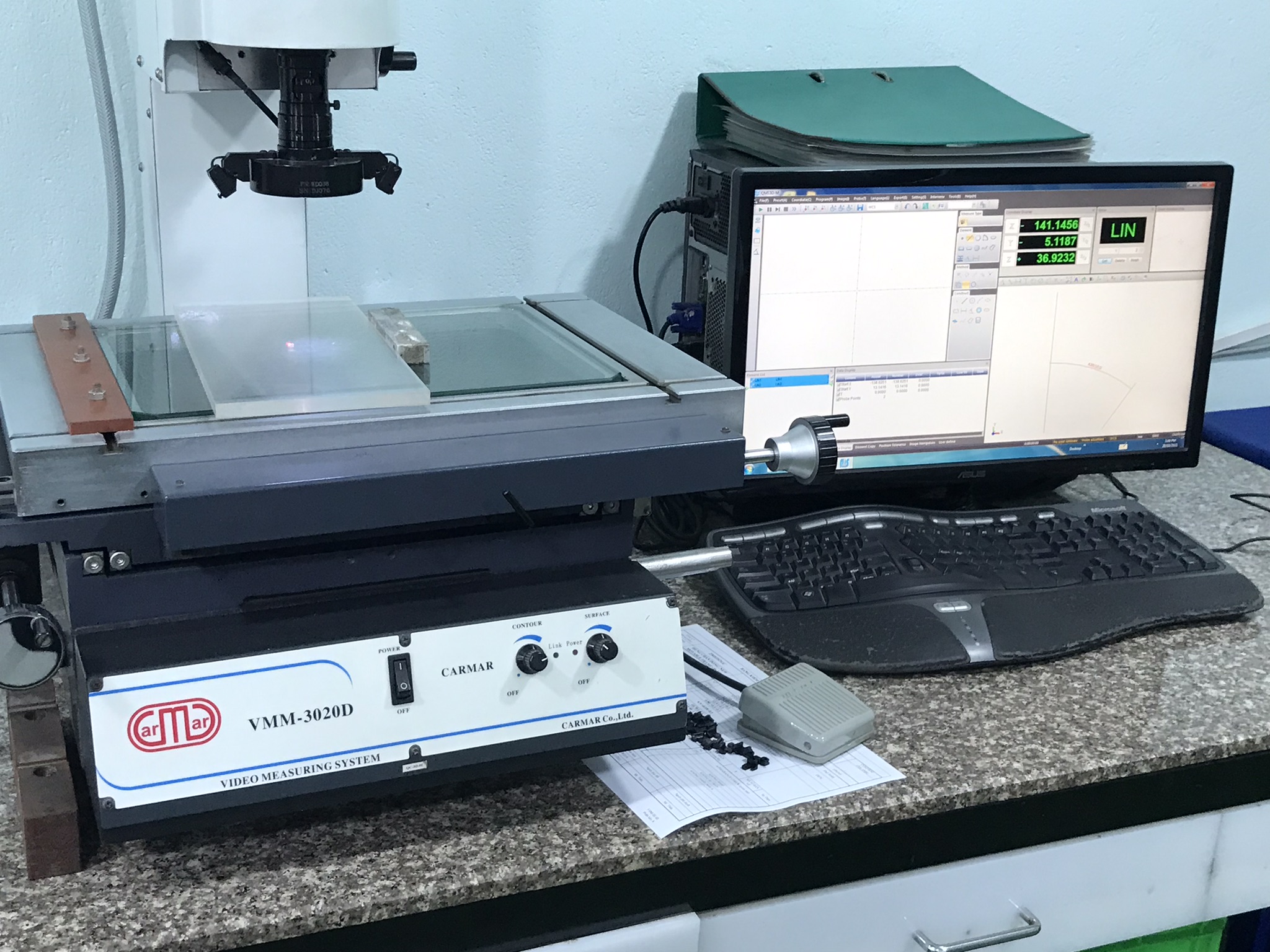
List your required quality certifications (ISO 9001, AS9100, ITAR), specify the PPAP submission level, define inspection criteria with acceptance sampling plans, and identify any testing procedures—including dimensional reports, material traceability, and first article inspection—so the fabricator builds quality into the process from day one.
Certifications and Compliance
Different industries demand different certifications. If your parts feed into aerospace, defense, or government contracts, the fabricator must hold the right certifications before they can even bid. State these requirements explicitly:
| Industry | Required Certifications | Additional Requirements |
|---|---|---|
| General Industrial | ISO 9001 | Standard QMS documentation |
| Aerospace | AS9100 | Full traceability, special process approvals |
| Defense / Military | ITAR registration | Controlled access, U.S. person requirement |
| Automotive | IATF 16949 | PPAP, APQP, control plans |
| Medical | ISO 13485 | Risk management, validation protocols |
Our Singapore headquarters coordinates quality documentation across our Vietnam and China offices. When a U.S. buyer specifies AS9100, we ensure the selected production facility holds the certification before we even begin quoting. This avoids the painful situation where a buyer awards a contract, only to discover the supplier cannot provide the required documentation.
PPAP Levels and What to Expect
The Production Part Approval Process (PPAP) 7 is standard in automotive but increasingly requested across all precision sheet metal work. There are five levels:
- Level 1: Part Submission Warrant (PSW) with appearance approval report
- Level 2: PSW with product samples and limited data
- Level 3: PSW with complete supporting data (most common)
- Level 4: PSW with full supporting data per customer direction
- Level 5: PSW with complete data available for review at the supplier's site
Most of our U.S. clients request Level 3. This includes dimensional results, material certifications, process flow diagrams, control plans, and measurement system analysis. If you need PPAP, state the level in the RFQ. The cost of preparing PPAP documentation is real—it adds engineering hours and inspection time—and the fabricator needs to include it in the quote.
Internal Specification Documents
Many buyers have internal specs—detailed protocols covering hardware installation torques, welding specifications, finishing standards, and inspection criteria—that go beyond what is on the drawing. These documents often sit with the engineering team and never make it to the purchasing manager sending the RFQ. If your company has such specs, ask your engineers for the current versions. Specs evolve with technology and material changes; an outdated document can lead to parts built to the wrong standard.
We always ask our clients: "Do you have any internal specifications beyond the drawing?" This one question has saved multiple projects from first-article rejection. If confidentiality is a concern, we sign NDAs before review. Transparent, engineer-led communication is the best practice here. Understanding what technical specifications to specify to avoid fabrication disputes can help prevent these costly miscommunications.
First Article Inspection
Define whether you require a First Article Inspection Report (FAIR) 8 and what format it should follow (AS9102 for aerospace, or a custom template). The FAIR documents that the first production parts meet all drawing requirements. It catches problems before full production begins—which is the whole point of getting it right the first time.
How can I communicate my volume and logistics needs to secure favorable credit terms and on-time delivery?
One trade-off we weigh constantly: a buyer who sends a clear volume forecast and logistics plan gets a sharper price and a more reliable delivery schedule. A buyer who says "we'll order as needed" gets a conservative quote with longer lead time buffers built in. The difference can be 10–15% on unit cost.
Communicate your volume needs by specifying exact order quantities, annual forecasts, and lot sizes. Define delivery dates, shipping destinations, Incoterms, and freight responsibility. Share your payment term expectations—such as net 60 or net 90—upfront so the fabricator can structure pricing and production scheduling accordingly.
Volume Details That Drive Pricing
Sheet metal fabrication pricing is heavily volume-dependent. Setup costs—programming, tooling, fixturing—are fixed. The more parts you spread them across, the lower the per-unit cost. But fabricators need to know the full picture:
- Order quantity: How many parts in this specific order?
- Annual volume: What is the total expected demand per year?
- Lot size: How many parts per release or shipment?
- Prototype vs. production: Is this a first run for validation, or a recurring production order?
A prototype run of 10 brackets will be quoted very differently from a production run of 5,000. If you plan to scale up, say so. The fabricator can quote tiered pricing and plan tooling investments that benefit both parties.
Lead Time and Delivery Scheduling
Missing due dates and delivery timelines are among the top causes of bid delays. Your RFQ should include:
- RFQ response deadline: When do you need the quote back?
- Required delivery date: When must parts arrive at your facility?
- Lead time constraints: Any hard deadlines driven by your own customer commitments?
Our team manages door-to-door logistics from Asian production facilities to U.S. destinations. We need to know the destination warehouse, whether you handle customs clearance or expect us to, and the Incoterm (FOB, CIF, DDP). Freight responsibility—who arranges and who pays—must be defined. Quotes that say "plus freight" versus "DDP Houston" produce very different landed costs.
Payment Terms and Credit
For established U.S. purchasing managers, payment terms matter. Many buyers we work with request 60–90 day open account terms. We offer this to qualified clients, but it factors into our pricing model. If you need extended credit terms, state it in the RFQ. This allows the fabricator to build the financing cost into the quote transparently, rather than surprising you—or themselves—after the contract is signed.
Putting It All Together: The RFQ Checklist
Before you send your next sheet metal fabrication RFQ, run through this list. For a comprehensive breakdown of what to include in a sheet metal fabrication inquiry for an accurate quote, we recommend reviewing our detailed checklist guide as well.
- Complete 2D drawing with dimensions, GD&T, and notes
- 3D CAD files 9 in STEP or IGES format
- Material grade, alloy, temper, and thickness
- Surface finish and coating specifications with color codes
- Bill of materials including all hardware and customer-supplied parts
- Tolerance standards—general and critical—clearly defined
- Bend radius specified per material
- Welding specifications and assembly instructions if applicable
- Quality certifications 10 required (ISO 9001, AS9100, ITAR)
- PPAP level and first article inspection requirements
- Order quantity, annual volume, and lot sizes
- Delivery date and lead time constraints
- Shipping destination, Incoterms, and freight responsibility
- Packaging requirements
- Payment term expectations
- RoHS / REACH / regulatory compliance needs
- Request for DFM feedback
Missing even one of these items is the number-one cause of delayed or inaccurate bids. The more complete your RFQ package, the faster and more competitive the quote you will receive.
Conclusion
A complete, well-structured RFQ is the single most effective tool for getting accurate sheet metal fabrication quotes, avoiding hidden costs, and ensuring on-time delivery of parts that meet your engineering standards the first time.
Frequently Asked Questions
How do I specify tolerances and bend radii in my drawings to ensure the factory gets it right the first time?
A lesson we learned early in our co-development work with U.S. engineering firms: when a drawing shows a tight tolerance on every single dimension, the quote jumps—and so does the reject rate. The trick is knowing which dimensions truly matter and communicating that clearly.
What material and surface finish details should I include in my RFQ to avoid hidden costs later?
Last quarter, a client sent us an RFQ for a set of mounting brackets—similar to the heavy-duty gunmetal grey brackets we regularly produce—with "steel" listed as the material. No grade. No temper. No coating spec. Our team had to send five follow-up questions before we could even begin quoting. That added a week to the timeline.
Which quality control and PPAP requirements do I need to list to guarantee my parts meet strict engineering standards?
During a recent project for a client distributing precision brackets to U.S. manufacturers, we discovered midway through production that the buyer expected a full PPAP Level 3 submission—but never mentioned it in the RFQ. We had to pause, collect dimensional data retroactively, and prepare documentation that should have been planned from the start. It cost us two weeks.
Footnotes
1. Provides comprehensive best practices for creating effective sheet metal fabrication RFQs. ↩︎
2. Provides the authoritative standard for Geometric Dimensioning and Tolerancing (GD&T) in engineering. ↩︎
3. Offers best practices and guidelines for specifying bend radius in sheet metal fabrication. ↩︎
4. Details DFM principles and their importance for optimizing product design and manufacturing. ↩︎
5. Replaced with an authoritative source from the European Commission on the RoHS Directive. ↩︎
6. Explains Incoterms rules for international trade, defining buyer and seller responsibilities. ↩︎
7. Explains the PPAP process, its levels, and importance in ensuring part quality. ↩︎
8. Details the AS9102 standard for First Article Inspection Reports in aerospace and defense. ↩︎
9. Explains various CAD file formats and their suitability for manufacturing processes. ↩︎
10. Discusses various quality certifications crucial for manufacturing, including ISO 9001 and AS9100. ↩︎