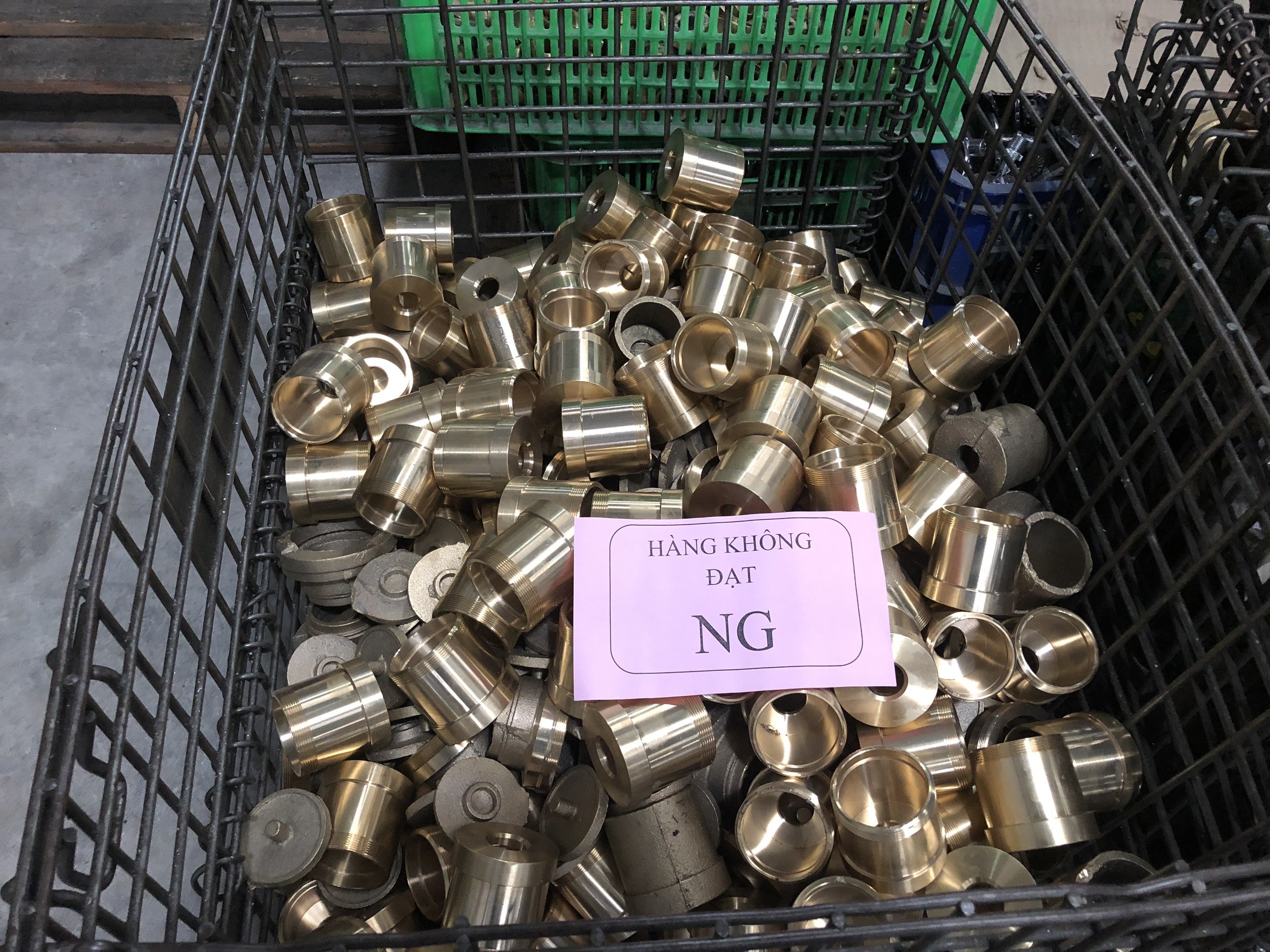

Every procurement manager I’ve worked with has faced the same frustration: stamping parts 1 quotes vary wildly, and without a clear framework, setting a reasonable budget feels like guesswork that leads to overspending or quality shortcuts.
A reasonable budget for stamping parts requires calculating total cost of ownership — not just unit price. You must combine tooling and die costs ($5,000–$100,000+), variable per-piece expenses ($0.50–$15.00), material utilization rate, secondary finishing operations, and logistics into one annual cost equation aligned with your production volume.
This guide breaks down each cost driver, reveals hidden expenses, and gives you practical tools to compare supplier quotes. Let’s walk through it step by step.
How do I calculate the true cost drivers behind stamping parts pricing?
A lesson we learned early when quoting custom brackets for a U.S. client: the piece price they saw on paper told only half the story. The real cost sat buried in tooling amortization, press utilization, and material scrap nobody had accounted for.
The true cost drivers behind stamping parts pricing are fixed costs (tooling design, die fabrication, setup) plus variable costs (raw material per piece, press time, labor, and scrap allowance). You calculate total cost by adding fixed costs to variable cost per unit multiplied by your annual volume.

The Fundamental Cost Formula
The formula is straightforward:
Total Cost = Fixed Costs (Design + Tooling + Setup) + (Variable Cost/Unit × Volume)
Fixed costs happen once. Variable costs repeat with every part. Understanding which bucket each expense falls into is the first step toward a realistic budget.
Fixed Costs: Tooling and Die Investment
Tooling is the single largest upfront expense. The type of die you need depends on part complexity, volume, and the number of forming operations.
| Die Type | Typical Cost Range | Best For |
|---|---|---|
| Simple Blanking Die | $5,000 – $15,000 | Flat parts, low complexity |
| Compound Die | $15,000 – $30,000 | Moderate complexity, medium volume |
| Progressive Die 2 Stamping | $30,000 – $100,000+ | High volume (10,000+/month), multi-step operations |
When our engineering team in Vietnam reviews a new project, we always recommend that clients think of tooling as an investment, not an expense. A $50,000 progressive die that produces 500,000 parts per year adds only $0.10 per piece in tooling cost. A $10,000 single-station die producing 5,000 parts per year adds $2.00 per piece. The math often surprises people.
Variable Costs: Material, Press Time, and Labor
Material typically accounts for 50% to 70% of the variable cost per piece. To budget accurately, you need to calculate:
- Gross material weight — including the engineered scrap (the skeleton left after blanking)
- Minus scrap recovery value — high-grade scrap from stainless steel or aluminum can offset 10–20% of material cost
- Press time — based on strokes per hour and press tonnage, adjusted for an OEE (Overall Equipment Effectiveness) of 80–85%
- Labor — operator cost per hour divided by parts produced per hour
Raw material price volatility is real. Steel and aluminum prices can swing 15–25% within a single year. We advise clients to build a 10–15% buffer into their material budget and use blanket purchase orders to lock pricing when markets are favorable.
Volume: The Multiplier That Changes Everything
Volume is the single most powerful lever in your stamping parts budget. Here's a general guideline:
| Annual Volume | Cost Behavior | Recommended Approach |
|---|---|---|
| Under 1,000 parts | Stamping rarely economical | Consider CNC machining or laser cutting |
| 1,000 – 10,000 parts | Break-even zone | Single-station or compound die; amortize carefully |
| 10,000 – 50,000 parts | Stamping becomes competitive | Progressive die may be justified |
| 50,000+ parts | Strong production volume discounts | Progressive or transfer die; lowest unit cost |
When current methods cost $2–$3 per part and annual volumes exceed 50,000 pieces, stamping almost always wins. The key is running the amortization math before committing.
What hidden costs should I factor into my stamping parts budget?
One of our U.S. clients once received a quote that looked 20% cheaper than our recommendation. Three months into production, rework charges, unexpected plating fees, and air freight for delayed deliveries pushed the real cost 35% higher. Hidden costs are the budget killers.
Hidden costs in stamping parts budgets include scrap and rework rates, secondary finishing operations (plating, heat treating, deburring), logistics and tariffs, quality inspection documentation, die maintenance intervals, and engineering change order fees. A budget missing these items can underestimate true costs by 15–40%.

Scrap, Rework, and Reject Rates
No stamping process produces zero defects. Even well-maintained tooling generates some scrap. You need to ask suppliers for their typical scrap rate and factor it into your cost model. A 3% scrap rate on a 100,000-piece order means you're paying for 3,000 parts you'll never use.
Rework is worse. If a dimensional tolerance is missed and parts need correction, the cost per reworked piece can exceed the original stamping cost. This is why we invest heavily in PPAP and process control at the front end — getting it right the first time saves exponentially more than fixing it later.
Secondary Operations
The base stamping quote often excludes:
- Heat treating — required for hardness or spring temper
- Plating or coating — zinc, nickel, powder coat, anodizing
- Deburring — removing sharp edges for safety or assembly
- Tapping or threading — adding threaded holes post-stamping
- Specialized packaging — anti-corrosion wrapping, custom trays
Each of these secondary finishing operations adds cost. When preparing a metal stamping RFQ, list every post-stamping requirement explicitly. Ask suppliers to quote "all-in" pricing so you can compare apples to apples.
Logistics, Tariffs, and Inventory Carrying Costs
Shipping from Asia to the U.S. involves ocean freight, customs brokerage 3, import duties, and inland delivery. These typically add $0.05–$0.50 per piece depending on part size and weight. Tariff rates vary by country of origin and HS code. Since our Singapore-based team sources from Vietnam, Taiwan, India, and China, we help clients navigate these differences to optimize landed cost.
Inventory carrying cost is another hidden line item. If you order 6 months of stock to get a volume discount, the warehousing and capital cost of that inventory can erode your savings.
Quality Assurance and Documentation
Meeting quality control standards — especially for automotive (IATF 16949) or aerospace applications — requires inspection labor, measurement equipment 4, and documentation. First article inspection reports, material certifications, and ongoing SPC data all have costs attached. Budget for them upfront.
The "Hidden Cost" Checklist
| Hidden Cost Item | Typical Impact on Budget | How to Mitigate |
|---|---|---|
| Scrap/Reject Rate | 2–5% of material cost | Require supplier scrap rate data; invest in PPAP |
| Secondary Operations | 10–30% added to base price | Include all finishing in RFQ scope |
| Logistics & Tariffs | $0.05–$0.50/piece | Compare landed costs, not FOB prices |
| Die Maintenance | $500–$5,000 per service interval | Clarify maintenance responsibility in contract |
| Engineering Changes | $1,000–$10,000 per change | Freeze design before tooling; use FEA simulation |
| Quality Documentation | 2–5% of order value | Define inspection standards in purchase order |
How do I compare quotes from Asian suppliers to set a realistic budget?
Last quarter, a purchasing manager sent me three quotes from different Asian suppliers for a set of mounting brackets similar to the ones we produce. The prices ranged from $0.85 to $2.40 per piece. His question was simple: "Which one should I trust?" The answer required looking far beyond the unit price.
To compare quotes from Asian suppliers, normalize every quote to an "all-in landed cost per piece" that includes tooling amortization, unit price, secondary operations, quality documentation, shipping, tariffs, and payment terms. Then evaluate supplier capability, communication responsiveness, and quality track record alongside price.

Step 1: Normalize the Quotes
Suppliers quote differently. One may include tooling in the piece price. Another may quote tooling separately but exclude plating. A third may quote FOB factory but not FOB port. You must break every quote into identical line items before comparing.
Create a comparison table like this:
| Cost Element | Supplier A (China) | Supplier B (Vietnam) | Supplier C (Taiwan) |
|---|---|---|---|
| Tooling Cost | $18,000 | $22,000 | $25,000 |
| Unit Price (FOB) | $0.85 | $1.10 | $1.40 |
| Plating/Finishing | Included | $0.15/pc extra | Included |
| Packaging | Standard | Standard | Custom tray (+$0.05) |
| Ocean Freight (per pc) | $0.12 | $0.08 | $0.10 |
| Import Tariff Rate | 25% | 0% | 0% |
| Landed Cost/Piece | $1.19 | $1.18 | $1.55 |
| Tooling Amortized (100k pcs) | $0.18 | $0.22 | $0.25 |
| Total All-In Cost/Piece | $1.37 | $1.40 | $1.80 |
In this example, Supplier A looks cheapest at unit price level. But once you add the 25% tariff, the gap with Supplier B nearly vanishes. And Supplier B — sourced from Vietnam — carries zero additional tariff risk.
Step 2: Evaluate Beyond Price
Price parity between two suppliers means the decision rests on non-price factors. From years of managing supplier relationships 5 across Asia, these are the factors I weigh:
- Communication quality — Do they respond within 24 hours? Do they ask clarifying questions about dimensional tolerances 6 and finish requirements?
- DFM feedback — Do they proactively suggest design changes that reduce cost or improve quality?
- Quality systems — Are they ISO 9001 or IATF 16949 certified? Do they have in-house inspection equipment?
- Payment terms — Can they offer 60–90 day open account terms? This impacts your cash flow significantly.
- Lead time reliability — Our Vietnam and China teams conduct supplier audits specifically to verify on-time delivery track records.
Step 3: Request Tooling ROI Scenarios
Ask each supplier to provide cost projections at multiple volume levels. A supplier who can show you the amortization curve — how your total cost per piece drops as volume increases — is a supplier who understands your business.
The ROI formula is simple: (Current Method Cost – Stamping Cost) × Annual Volume – Tooling Investment = Annual Savings
If your current CNC machining cost is $3.00/piece and the stamped alternative is $1.40/piece all-in, at 50,000 parts per year you save $80,000 annually minus tooling cost. Most tooling investments pay for themselves within the first year at these volumes.
How can I balance quality requirements with budget constraints when sourcing stamping parts?
A trade-off I think about on every project: tighter dimensional tolerances drive up tooling cost and slow production speed, but loosening tolerances risks functional failure at the customer's assembly line. Finding the sweet spot requires collaboration between engineering and procurement — and it starts earlier than most people think.
Balance quality and budget by engaging suppliers during the design phase for DFM feedback, specifying only the tolerances that matter functionally, investing in virtual prototyping (FEA) to prevent costly die modifications, and building scrap recovery and predictive die maintenance into your cost model to stabilize long-term pricing.

Design for Manufacturability (DFM): Your Biggest Cost Lever
The cheapest change you can make to a stamping part is the one you make on paper before tooling begins. Our engineering team reviews every drawing with a DFM checklist before we send it to any die maker. Key questions include:
- Can any non-essential features be eliminated?
- Can two separate stampings be consolidated into one?
- Are the specified tolerances truly required, or are they carried over from a machined part drawing?
- Can the material be changed to a lower-cost alloy that still meets functional needs?
Each "yes" answer reduces cost. We've seen DFM reviews cut 10–25% from initial estimates by removing unnecessary tight tolerances and simplifying bend sequences.
Tolerance Zones and Their Cost Impact
Not all dimensions on a stamping need tight tolerances. Identify critical-to-function (CTF) dimensions and allow standard stamping tolerances on everything else.
A general rule: holding ±0.1 mm on a stamped dimension costs significantly more than ±0.25 mm. It requires better tooling steel, more frequent die maintenance, and slower press speeds. On our production floor, we see this play out in machine hourly rates and reject rates.
Virtual Prototyping and FEA Simulation
Budgeting for upfront Finite Element Analysis 7 might seem like an added expense, but it prevents far costlier physical die modifications. A single die rework can cost $5,000–$15,000 and delay production by weeks. FEA simulates material flow, predicts springback, and identifies potential cracking — all before steel is cut.
Scrap Recovery as a Budget Tool
High-grade stamping scrap 8 — especially stainless steel or copper alloys — has real resale value. Suppliers increasingly offer remelt or repurchase programs. When evaluating your material utilization rate, factor in the scrap credit. On a stainless steel bracket project, scrap recovery can offset 8–15% of raw material cost.
Predictive Maintenance and Long-Term Stability
Industry 4.0 capabilities matter for budget stability. Suppliers using AI-driven predictive maintenance 9 on their dies experience less unplanned downtime, more consistent part quality, and more stable pricing over multi-year contracts. When comparing quotes, ask about maintenance tracking systems and how die life is monitored. A supplier who replaces worn tooling proactively will give you fewer surprises than one who runs dies until they fail.
Supply Chain Resilience
Finally, a reasonable budget includes a resilience multiplier. Geopolitical disruptions, shipping delays, and raw material shortages are not theoretical risks — they're recurring realities. Multi-sourcing or nearshoring strategies add upfront cost but protect against catastrophic supply failures. We help clients build dual-source strategies across Vietnam and other Asian markets precisely for this reason.
Conclusion
Setting a reasonable stamping parts budget means calculating total cost of ownership — tooling, material, volume effects, hidden costs, and quality investments — not chasing the lowest unit price on a quote. For a deeper dive into structuring your cost model, see our guide on how to develop a realistic procurement budget and cost structure for sourcing stamping parts.
Frequently Asked Questions
How do I calculate the true cost drivers behind stamping parts pricing?
A lesson we learned early when quoting custom brackets for a U.S. client: the piece price they saw on paper told only half the story. The real cost sat buried in tooling amortization, press utilization, and material scrap nobody had accounted for.
What hidden costs should I factor into my stamping parts budget?
One of our U.S. clients once received a quote that looked 20% cheaper than our recommendation. Three months into production, rework charges, unexpected plating fees, and air freight for delayed deliveries pushed the real cost 35% higher. Hidden costs are the budget killers.
How do I compare quotes from Asian suppliers to set a realistic budget?
Last quarter, a purchasing manager sent me three quotes from different Asian suppliers for a set of mounting brackets similar to the ones we produce. The prices ranged from $0.85 to $2.40 per piece. His question was simple: "Which one should I trust?" The answer required looking far beyond the unit price.
Footnotes
1. Defines the primary manufacturing process discussed in the article. ↩︎
2. Explains the specific tooling used for high-volume, multi-step stamping operations. ↩︎
3. Wikipedia explains the role of customs brokers in international trade and regulatory compliance. ↩︎
4. Links to the official body for measurement standards and calibration equipment. ↩︎
5. Describes the systematic approach to maintaining quality standards and communication in manufacturing. ↩︎
6. Wikipedia provides a comprehensive overview of engineering tolerances and their application in manufacturing. ↩︎
7. Wikipedia offers a detailed explanation of Finite Element Analysis (FEA) principles and engineering applications. ↩︎
8. Wikipedia’s entry for scrap metal provides context on industrial waste and material recovery in manufacturing. ↩︎
9. Explains the use of data and analytics to anticipate equipment failure in manufacturing. ↩︎