

One missing detail on a drawing nearly cost us a $40,000 order last year — a Vietnam supplier misread a tolerance callout, and parts arrived out of spec DFM (Design for Manufacturability) feedback report 1. That painful lesson reshaped how our team now builds qualification criteria for Vietnam sheet metal fabrication suppliers.
To develop qualification criteria for Vietnam sheet metal fabrication suppliers, evaluate six pillars: technical capability and equipment, quality management system and certifications, workforce expertise, cost efficiency, lead times and logistics, and compliance. Score each pillar, audit facilities, and validate with pilot orders before committing.
Vietnam now hosts over 500 metal fabricators spread across Hanoi, Ho Chi Minh City, Binh Duong, Dong Nai, and Hai Phong. Choosing the right one requires a structured approach. Below, I break down the key criteria our team uses when helping U.S. buyers source precision fabrication from Vietnam.
How do I evaluate the quality control and PPAP capabilities of a Vietnam sheet metal factory?
A buyer we work with in the Midwest once told me he had been burned three times by suppliers who claimed ISO 9001 certification 2 but could not produce a single control plan. That conversation led us to redesign our entire factory audit checklist for Vietnam suppliers.
Evaluate quality control by verifying ISO 9001 certification, reviewing documented inspection plans, confirming in-process and final inspection capabilities, and requiring full PPAP submissions — including control plans, measurement system analysis, dimensional reports, and material certifications — before approving production.
Why PPAP Matters for Sheet Metal
PPAP (Production Part Approval Process) 3 is not just an automotive formality. It proves a supplier can consistently reproduce your part. In Vietnam, many factories understand quality inspection at a basic level. But fewer can execute a full PPAP package with all required elements.
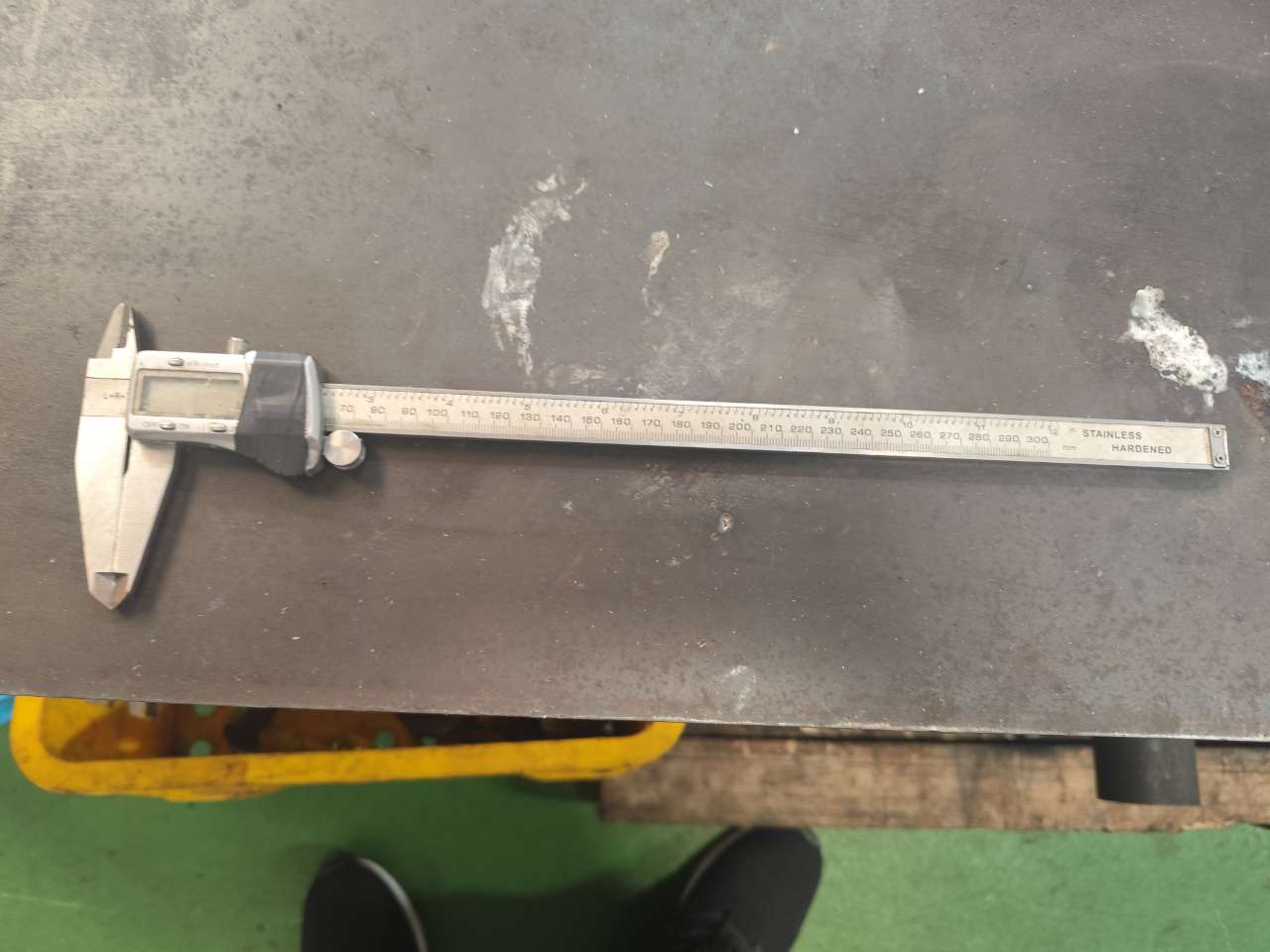
When our Vietnam office conducts a factory audit, we look for specific evidence. Can the factory show a process flow diagram? Do they have a control plan tied to your drawing's critical dimensions? Can they perform measurement system analysis 4 on their CMM or calipers? These are not abstract questions. They determine whether your first shipment arrives on spec or triggers a costly rejection.
Key Quality Control Checkpoints
| Checkpoint | What to Verify | Red Flag If Missing |
|---|---|---|
| ISO 9001 certification | Valid certificate, scope covers sheet metal fabrication | No certificate or expired |
| Incoming material inspection | Material certs checked against specs (CRS, HRS, SS 304/316, Al) | No incoming QC records |
| In-process inspection | Dimensional checks at critical forming/welding steps | Only final inspection exists |
| Final inspection | Full dimensional report per drawing with tolerances | Visual-only inspection |
| PPAP capability | Can produce control plan, PFMEA, MSA, dimensional layout | Never heard of PPAP |
| Material traceability | Heat lot numbers traced from raw material to finished part | No traceability system |
| Calibration records | Gauges and instruments calibrated on schedule | No calibration stickers |
Scoring Quality Capabilities
I recommend a simple 0–5 scoring system for each quality element. A score of 3 means the supplier meets the minimum. Below 3 means they need development. Above 3 means they are a strong candidate. Our team averages these scores across all checkpoints to create a composite quality rating.
One important note: Vietnamese fabricators often align their processes to JIS, GB, or ASTM standards 5. If your drawings reference ASME or specific Western tolerance standards, you need to confirm the supplier understands the difference. We always conduct an engineering review before sending drawings to a potential supplier. This step catches mismatches early and saves weeks of back-and-forth.
The supply chain risk management angle matters here too. If a supplier has no documented quality management system, any staff turnover or machine change can shift part quality without warning. Documented systems create consistency.
Can I secure open account payment terms to support my cash flow when sourcing from Vietnam?
Last quarter, a purchasing manager from Texas asked me point-blank: "Can I get Net 60 terms from a Vietnam factory I've never worked with?" The honest answer surprised him — and it is worth explaining.
Yes, you can secure open account payment terms (Net 60 or Net 90) when sourcing from Vietnam, but typically through an intermediary supply chain partner rather than directly from the factory. Most Vietnam factories require upfront deposits or T/T payment. A sourcing partner with local presence can bridge this gap and offer credit terms.
The Payment Reality in Vietnam
Most Vietnamese sheet metal factories operate on tight cash flow themselves. They buy raw materials — cold rolled steel 6, hot rolled steel, aluminum, stainless steel 304/316 — and need cash to fund production. So they typically ask for 30% to 50% deposit before production and balance before shipment. This is standard across the industry.
For U.S. buyers, especially those distributing custom parts to end-users, tying up cash in deposits creates real pressure. You might have 90-day receivables from your own customers but need to pay Vietnam suppliers within 30 days.
How an Intermediary Solves the Cash Flow Problem
This is one reason our business model exists. Because we have established relationships with Vietnam factories and our own office there with seven team members, we can pay suppliers on their terms while offering our U.S. clients Net 60 or Net 90 open account terms. The buyer gets the cash flow breathing room. The factory gets paid on time. Everyone wins.
| Payment Model | Who Pays Factory | Terms for U.S. Buyer | Risk for Buyer |
|---|---|---|---|
| Direct sourcing | Buyer pays factory directly | 30–50% deposit + balance before ship | High — limited recourse if quality fails |
| Through sourcing partner | Partner pays factory | Net 60 or Net 90 open account | Lower — partner manages quality and payment |
| Letter of Credit | Bank intermediary | LC terms (30–90 days) | Medium — bank fees add cost |
What to Ask About Payment Terms
When you evaluate a potential sourcing channel for Vietnam sheet metal, ask these questions:
- Can you offer open account terms? If so, what credit period?
- What is the deposit structure if paying the factory directly?
- Who holds liability if parts are non-conforming — before or after payment?
- Is there a credit application process?
The cost efficiency of Vietnam sourcing partly depends on how you structure payment. If you can avoid locking cash in deposits, your effective cost drops even if the unit price stays the same. This is a detail many buyers overlook when comparing quotes.
How do I ensure my Vietnam supplier has the professional expertise to interpret my complex engineering drawings?
During a recent project involving heavy-duty mounting brackets with multiple bends, weld joints, and tight-tolerance mounting holes, we discovered that two out of five shortlisted Vietnam factories misidentified a GD&T callout 7 on the drawing. Only one factory caught every detail on the first review.
Ensure your Vietnam supplier can interpret complex drawings by conducting a formal engineering review before production. Send your drawings and ask for a DFM (Design for Manufacturability) feedback report. Evaluate their responses for accuracy on tolerances, material specs, surface finish callouts, and GD&T symbols.
The Language and Standards Gap
Vietnamese engineers are generally well-trained. Many hold vocational certifications and some have international welding credentials. But they commonly work with JIS, GB, or ASTM standards. If your drawing uses ASME Y14.5 GD&T 8 or references proprietary material grades, there is a translation gap.
This does not mean Vietnam suppliers cannot meet Western technical specifications. It means you need to verify alignment explicitly. Our approach is straightforward: we send the drawing, ask the factory to mark up any questions, and review their feedback for accuracy. If a factory returns zero questions on a complex drawing, that is often a red flag — not a good sign.
Engineering Review Workflow
Here is the step-by-step process we follow:
- Send drawings with full specs — Include material grade, surface finish, tolerances, and any special requirements (e.g., RoHS compliance, PEM fastener installation).
- Request DFM feedback — Ask the factory to identify any features that are difficult to produce, suggest alternatives, and confirm they have the required manufacturing capabilities (laser cutting, CNC bending, MIG/TIG welding, powder coating, plating).
- Evaluate the response — Score the factory on accuracy, completeness, and turnaround time.
- Clarify standard alignment — If your drawing uses ASME tolerances, confirm the factory's measurement equipment and inspection methods match.
- Run a first-article sample — Before production, require a first-article inspection report 9 with dimensional data.
What Good DFM Feedback Looks Like
| Drawing Feature | Weak Response | Strong Response |
|---|---|---|
| Tight bend radius on 2mm CRS | "OK, can do" | "Minimum bend radius for 2mm CRS on our press brake is 1.5mm. Your drawing shows 1mm — recommend adjusting to 1.5mm." |
| GD&T position tolerance ±0.1mm on mounting holes | No comment | "We will use CNC punching for hole positions. Our CMM can verify position within ±0.05mm." |
| Surface finish: powder coat RAL 7016 | "We do powder coating" | "RAL 7016 available. Film thickness 60–80 microns standard. Please confirm if you need salt spray test hours." |
| Weld symbol — full penetration fillet weld | No comment | "Full pen fillet weld noted. We will use MIG welding with ER70S-6 wire. Weld will be ground flush per your note." |
Suppliers with genuine expertise ask smart questions. They do not just say yes. They push back where the design is impractical, and they confirm where they can exceed your requirements. This is how you separate factories with real production capacity and precision fabrication capability from those who simply want the order.
Our team uses simple technical English in all communications with Vietnam suppliers. We avoid complex commercial jargon. We confirm every detail in writing — email or documented messages. This practice has cut our miscommunication rate dramatically over the past two years.
What criteria should I use to audit a Vietnam supplier's project management and on-time delivery track record?
The most common complaint I hear from U.S. buyers is not about price. It is about delivery. "They promised four weeks. It took eight." This pattern repeats because many buyers skip the project management audit entirely and focus only on cost.
Audit a Vietnam supplier's project management by reviewing their past on-time delivery rate, verifying they use formal production scheduling tools, checking communication responsiveness, and defining clear milestone timelines for quotation, sampling, production, and shipping before placing your first order.
Why Delivery Delays Happen
Delivery delays from Vietnam sheet metal suppliers usually stem from three root causes: poor production planning, material procurement delays, and lack of proactive communication when problems arise. A factory might accept your order, then realize they need to source stainless steel 316 from a distant mill, adding two weeks they did not mention.
Our Vietnam office sees this regularly. The fix is not to hope for the best. It is to set explicit response-time expectations upfront and build accountability into the relationship.
Setting Milestone Timelines
Before placing an order, define expected timelines for each project phase. Then compare the supplier's actual performance against these benchmarks.
| Project Phase | Benchmark Timeline | What to Monitor |
|---|---|---|
| Quotation response | 2–3 business days | Did they meet the deadline? Was the quote detailed? |
| Engineering review / DFM | 3–5 business days | Quality and depth of feedback |
| Sample / first article | 10–15 business days | On-time delivery of sample with inspection report |
| Production (typical run) | 15–25 business days | Progress updates at defined intervals |
| Surface treatment | 3–5 business days | Included in production timeline or separate? |
| Packing and shipping | 3–5 business days | Export documentation ready on time? |
| Total lead time (port to port) | 5–8 weeks | Measured from PO to delivery at destination port |
Project Management Red Flags
Watch for these warning signs during your evaluation:
- No dedicated project manager assigned to your order. You should have one point of contact who owns your timeline.
- Vague delivery promises. "About four weeks" is not the same as "25 business days from PO confirmation."
- No production updates unless you ask. A good supplier sends weekly updates with photos during production.
- No contingency plan for material delays. Ask how they handle situations when raw material delivery is late.
Leveraging Export Experience
Suppliers with proven export experience to the U.S. and Europe typically have better logistics proficiency. They understand export documentation, container loading, and the importance of hitting vessel booking deadlines. Vietnam's geographic clustering around major seaports — especially in Ho Chi Minh City, Hai Phong, and Ba Ria-Vung Tau — gives well-located factories a logistics advantage.
When our team audits a Vietnam supplier's delivery track record, we ask for references from existing export customers. We also request a copy of their production schedule for the current month. If they cannot show one, they are likely managing orders informally — which means your order is at risk of slipping.
Long-term partnerships tend to produce better delivery performance. Vietnamese fabricators value commitment. When they see a buyer investing in the relationship — visiting the factory, providing forecasts, communicating consistently — they prioritize that buyer's orders. This is a cultural dynamic worth understanding and leveraging. Before committing to a long-term arrangement, it is also wise to evaluate the financial health of Vietnamese sheet metal fabrication suppliers to ensure they have the stability to support ongoing production.
Conclusion
Developing qualification criteria for Vietnam sheet metal fabrication suppliers requires a structured, multi-pillar approach — covering quality systems, engineering expertise, project management, payment terms, and delivery accountability. Build your framework, score rigorously, validate with pilot orders, and invest in long-term partnerships.
Frequently Asked Questions
How do I evaluate the quality control and PPAP capabilities of a Vietnam sheet metal factory?
A buyer we work with in the Midwest once told me he had been burned three times by suppliers who claimed ISO 9001 certification 2 but could not produce a single control plan. That conversation led us to redesign our entire factory audit checklist for Vietnam suppliers.
Can I secure open account payment terms to support my cash flow when sourcing from Vietnam?
Last quarter, a purchasing manager from Texas asked me point-blank: "Can I get Net 60 terms from a Vietnam factory I've never worked with?" The honest answer surprised him — and it is worth explaining.
How do I ensure my Vietnam supplier has the professional expertise to interpret my complex engineering drawings?
During a recent project involving heavy-duty mounting brackets with multiple bends, weld joints, and tight-tolerance mounting holes, we discovered that two out of five shortlisted Vietnam factories misidentified a GD&T callout 7 on the drawing. Only one factory caught every detail on the first review.
Footnotes
1. Defines the process of designing products for efficient and cost-effective manufacturing. ↩︎
2. Explains the international standard for quality management systems. ↩︎
3. Defines the process for approving production parts, ensuring consistency. ↩︎
4. Explains the process of evaluating measurement system variation for data integrity. ↩︎
5. Provides an overview of various international and national technical standards. ↩︎
6. Authoritative Wikipedia page explaining cold-formed steel, which includes cold-rolled steel, directly relevant to the anchor text. ↩︎
7. Explains the system for defining and communicating engineering tolerances. ↩︎
8. Refers to the authoritative standard for geometric dimensioning and tolerancing. ↩︎
9. Authoritative Wikipedia page explaining First Article Inspection (FAI) and First Article Inspection Report (FAIR), directly relevant to the anchor text. ↩︎